Green Chile Pork Posole with Hominy and Crispy Tortilla Strips
Hearty pork posole with roasted green chiles, chewy hominy, and crispy tortilla strips. A bold, satisfying stew ready in under 2 hours.
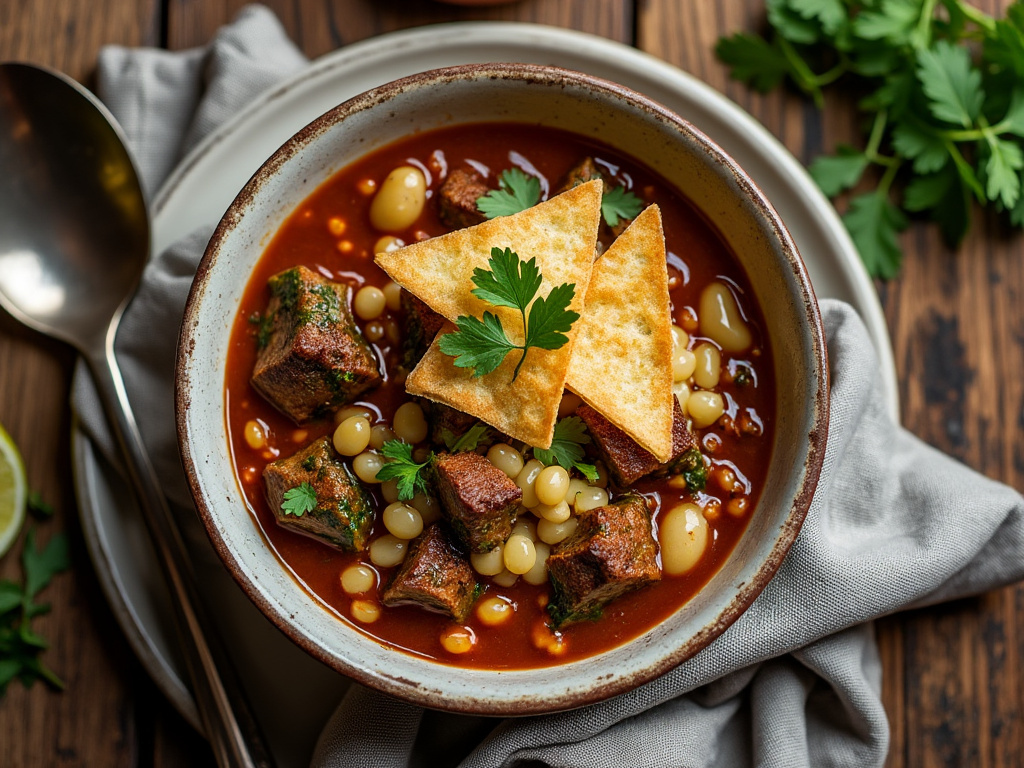
Posole is built on two things: deeply savory pork broth and the satisfying chew of hominy. This green version skips the red chile route entirely — instead, roasted Hatch (or Anaheim) chiles and tomatillos do the heavy lifting, giving the broth a bright, grassy heat that cuts through the richness of the pork shoulder. The hominy isn't a garnish here; it soaks up the broth and becomes the backbone of every spoonful.
This is a weekend-to-weeknight recipe. The hands-on time is about 25 minutes; the stove does the rest. Use bone-in pork shoulder for the most flavor — the collagen that melts off the bone makes the broth silky without any thickener. If your stew looks thin at the 60-minute mark, don't panic: pull the lid off for the last 20 minutes and it will tighten. Serve with shredded cabbage, sliced radishes, and a squeeze of lime — the cold crunch against the hot broth is the whole point.
Ingredients
- ▸ 2.5 lbs bone-in pork shoulder, cut into 3-inch chunks
- ▸ 2 tsp Diamond Crystal kosher salt, plus more to taste
- ▸ 1 tsp freshly ground black pepper
- ▸ 2 tbsp neutral oil (such as avocado or vegetable)
- ▸ 1 large yellow onion, roughly chopped
- ▸ 6 garlic cloves, smashed
- ▸ 1.5 tsp ground cumin
- ▸ 1 tsp dried oregano (Mexican oregano preferred)
- ▸ 0.5 tsp ground coriander
- ▸ 4 large Anaheim or Hatch green chiles (about 12 oz total)
- ▸ 1 jalapeño pepper
- ▸ 12 oz fresh tomatillos (about 8 medium), husked and halved
- ▸ 4 cups low-sodium chicken broth
- ▸ 2 cups water
- ▸ 2 cans (15 oz each) hominy, drained and rinsed
- ▸ 3 corn tortillas, cut into thin strips
- ▸ 1 tbsp neutral oil (for tortilla strips)
- ▸ 0.25 tsp fine sea salt (for tortilla strips)
- ▸ 2 cups shredded green cabbage (for serving)
- ▸ 6 radishes, thinly sliced (for serving)
- ▸ 1 lime, cut into wedges (for serving)
- ▸ 0.5 cup fresh cilantro leaves (for serving)
- ▸ 0.5 cup sour cream (for serving)
🛒 Links may earn us a small commission at no cost to you.
Recommended Gear
🛒 We may earn a small commission at no extra cost to you. We only recommend gear we'd use ourselves.
Instructions
Roast the Chiles and Tomatillos
- 1. Position an oven rack 4 inches from the broiler element and preheat the broiler to HIGH. Arrange the Anaheim chiles, jalapeño, and halved tomatillos cut-side down on a rimmed half sheet pan. Broil for 10-12 minutes, rotating the pan once at the halfway point, until the chile skins are blistered and blackened in spots and the tomatillos have softened and released their liquid — you'll smell a sharp, roasted vegetal aroma when they're ready.
- 2. Transfer the chiles and jalapeño to a medium bowl and cover tightly with plastic wrap. Let them steam for 10 minutes. Peel off and discard the charred skins — they should slip off easily. Remove the stems and seeds from both the Anaheim chiles and the jalapeño (leave the jalapeño seeds in if you want more heat). Transfer the peeled chiles and all the tomatillos with their juices into a blender. Blend on high until completely smooth, about 45 seconds. Set aside.
Sear the Pork
- 1. Pat the pork chunks completely dry with paper towels — this is non-negotiable for a good sear. Season all over with 2 tsp kosher salt and 1 tsp black pepper. Heat 2 tbsp oil in a 6-quart Dutch oven over medium-high heat until the oil shimmers and just begins to smoke.
- 2. Add the pork in a single layer — do this in two batches; don't crowd the pot. Sear undisturbed for 4-5 minutes per side until a deep mahogany crust forms and the pork releases cleanly from the pot bottom. You should hear an aggressive sizzle the moment the meat hits the oil. Transfer the seared pork to a plate and repeat with the second batch.
Build the Broth
- 1. Reduce the heat to medium. Add the chopped onion to the pot and cook, stirring occasionally, for 5-6 minutes until softened and lightly golden at the edges — they'll pick up some of the browned pork fond at the bottom of the pot. Add the smashed garlic, cumin, dried oregano, and coriander. Cook for 1 minute, stirring constantly, until the spices bloom and you smell a warm, toasted fragrance.
- 2. Pour the blended green chile and tomatillo purée into the pot. It will spit and steam aggressively — stand back for a moment. Stir to scrape up any remaining browned bits from the bottom of the pot. Cook the purée for 3-4 minutes, stirring frequently, until it darkens slightly in color and thickens just enough to coat the spoon.
- 3. Return the seared pork and any accumulated juices to the pot. Add 4 cups chicken broth and 2 cups water. Bring to a boil over high heat, then reduce to a gentle simmer. Partially cover the pot and cook for 60-70 minutes, adjusting heat as needed to maintain a steady simmer — you want small, lazy bubbles breaking the surface, not a hard rolling boil. The pork is done when it shreds easily when pressed with a fork.
Shred the Pork and Add Hominy
- 1. Use tongs to transfer the pork chunks to a cutting board. Using two forks, shred the meat into rough, bite-sized pieces, discarding any bones or large fat caps. Return the shredded pork to the pot. Add both cans of drained hominy and stir to combine.
- 2. Simmer uncovered for 15-20 minutes until the hominy is heated through and has absorbed some of the broth, and the liquid has reduced slightly to a glossy, savory consistency. Taste and add more salt as needed — don't skip this step, the seasoning makes or breaks the final bowl.
Make the Crispy Tortilla Strips
- 1. While the posole finishes, toss the corn tortilla strips with 1 tbsp oil and 0.25 tsp fine sea salt on the rimmed sheet pan. Spread in a single layer. Bake at 400°F (or use residual broiler heat, switching to bake mode) for 8-10 minutes, flipping once at the 5-minute mark, until the strips are golden, rigid, and audibly crisp when tapped. They will continue to crisp as they cool — pull them out before they look fully done.
Serve
- 1. Ladle the posole into wide bowls, making sure each serving gets a generous amount of hominy and shredded pork. Top with shredded cabbage, sliced radishes, a dollop of sour cream, fresh cilantro, and a handful of crispy tortilla strips. Serve immediately with lime wedges on the side — squeeze directly into the bowl at the table.
Cook's Notes
- Bone-in pork shoulder produces a significantly richer, silkier broth than boneless because of the collagen surrounding the bone. If you can only find boneless, add 1/2 tsp of unflavored gelatin bloomed in 2 tbsp cold water to the broth at the start of the braise to mimic that body.
- Mexican oregano has a more citrus-forward, slightly floral character than Mediterranean oregano and is worth seeking out in the Latin aisle of most grocery stores. It's not a dramatic difference, but it's a better match for the chile-forward broth.
- Don't rush the broiling step for the chiles — the char is the flavor. Pale, steamed chiles produce a flat, vegetal purée with none of the depth the recipe needs.
- The tortilla strips are best made right before serving. If you make them more than 30 minutes ahead, recrisp on a sheet pan at 375°F for 4-5 minutes before serving.
- This stew thickens considerably as it cools and even more overnight in the refrigerator. Add a splash of broth or water when reheating to loosen it back to soup consistency.
Pro Tips
- → If the green chile purée spatters too violently when it hits the hot pot, you probably have the heat too high — drop to medium-low. A gentle sizzle is what you want; aggressive spattering scorches the purée on the pot walls and makes cleanup a nightmare.
- → The single most common failure mode with posole is undersalting the broth. Taste it before you add the hominy AND again after — hominy dilutes the perceived salinity. You will almost always need more salt than you think.
- → If the broth hasn't reduced enough and looks thin at the 70-minute mark, pull the lid off entirely and crank the heat to medium for the final 20 minutes. A thin broth is always a reduction problem, not an ingredient problem.
- → Pressing the pork with a fork to test doneness is more reliable than timing alone — pork shoulder varies widely in fat content and collagen, which affects how quickly it breaks down. It should shred with almost no resistance; if it's fighting back, give it another 10-15 minutes.
- → For the deepest flavor in the sear, dry the pork chunks on a wire rack in the refrigerator, uncovered, for 1-2 hours before cooking. The drier the surface, the more aggressively it browns. Moisture is the enemy of a crust.
- → If you're serving this at a dinner party, the broth, pork, and hominy can all be made up to 2 days ahead and refrigerated. The fat from the pork will solidify on the surface — skim it off before reheating for a cleaner broth, or stir it back in if you want the richness.
What to Serve With This
A cold Mexican lager is the natural move here — Modelo Especial or Pacifico both have enough carbonation to scrub the chile heat off your palate between bites without competing with the broth. If you want something with more body, a Vienna lager (Negra Modelo works) echoes the toasty, caramel-adjacent depth in the pork without going too heavy.
For wine, lean toward a dry Albariño or an unoaked Viura from Spain. Both carry enough acidity to stand up to the tomatillo brightness and enough stone-fruit note to complement the roasted green chiles. Avoid anything oaky or tannic — it will clash with the vegetal chile character.
If you're skipping alcohol, make a simple agua fresca: blend 2 cups of fresh watermelon with 1 cup cold water, a squeeze of lime, and a pinch of salt. The sweetness cools the heat naturally and keeps things light against a rich bowl.
On the side, warm flour tortillas or thick corn tortillas toasted directly on a gas burner are all you need. A simple shredded cabbage slaw dressed with just lime juice and salt is a better choice than any heavy salad — it stays crisp in the bowl and provides textural contrast the posole needs.
Variations & Substitutions
For a fully vegetarian posole, swap the pork shoulder for two 15-oz cans of drained hominy (in addition to the recipe's hominy) plus two 15-oz cans of white navy beans. Use vegetable broth and add 2 tbsp of tamari and 1 tsp smoked paprika to replicate some of the savory depth. The cook time drops to 35 minutes since there's no meat to braise — taste aggressively and adjust salt at the end.
To use a slow cooker, sear the pork and bloom the spices on the stovetop as directed, then transfer everything to the slow cooker. Add the green chile mixture and broth, and cook on LOW for 7-8 hours or HIGH for 4-5. Shred the pork directly in the pot. Add hominy in the last 30 minutes of cooking so it doesn't go mushy.
For a smokier flavor profile, add 2 chipotles in adobo (seeded and minced) to the blender with the roasted chiles and tomatillos. This shifts the broth from bright-green to a deeper rust color and adds a distinctly smoky, medium heat. Reduce the fresh green chiles to 3 if you want to keep the heat level the same.
To scale this for a crowd, the recipe doubles cleanly in an 8-quart Dutch oven. Keep the sear time the same — work in more batches rather than crowding the pot. The braise time stays at 60-70 minutes; don't extend it thinking more time means more flavor, or the pork will shred before you want it to.
Frequently Asked Questions
Can I use canned green chiles instead of roasting fresh ones? ▼
Yes, two 7-oz cans of diced fire-roasted green chiles (like Ortega or 505 brand) are a solid substitute. Skip the roasting step and add them directly to the blender with the tomatillos. The flavor will be slightly milder and less complex, but the broth will still taste good — add an extra 1/4 tsp cumin to compensate for the lost char.
What cut of pork works best if I can't find bone-in shoulder? ▼
Boneless pork shoulder (also labeled Boston butt) is the next best option — use the same weight and method. Pork country-style ribs also work well and braise quickly. Avoid pork loin; it's too lean and will turn dry and chalky at the 60-minute mark.
How do I store and reheat leftovers? ▼
Store the posole and tortilla strips separately — the strips go soggy in the broth overnight. The stew keeps in an airtight container in the refrigerator for up to 4 days. Reheat in a saucepan over medium heat until it simmers, about 8 minutes, adding a splash of water or broth if it's thickened too much. Re-crisp the tortilla strips in a 375°F oven for 5 minutes.
Can I freeze this posole? ▼
The broth and pork freeze well for up to 3 months. Hominy softens slightly when frozen and thawed but remains perfectly edible — it just loses a bit of its chew. Freeze in quart containers. Thaw overnight in the refrigerator and reheat as above. Don't freeze the toppings.
My broth tastes thin and flat — how do I fix it? ▼
Two moves: remove the lid and let the broth reduce at a steady simmer for 15-20 minutes, and taste for salt — underseasoning almost always reads as thinness rather than lack of flavor. A squeeze of lime juice at the end also sharpens the whole bowl significantly. If it still tastes flat, stir in 1 tsp fish sauce; it disappears into the background and adds the savory depth the broth is missing.
How spicy is this recipe, and how do I adjust the heat? ▼
With Anaheim chiles and one jalapeño, this is a mild-to-medium heat level — most adults will find it comfortable. For more heat, add a second jalapeño or swap one Anaheim for a Hatch green chile. To dial it back, seed the jalapeño and use all Anaheim chiles with no jalapeño.
Can I make this a day ahead? ▼
This is actually better made a day ahead. The pork absorbs more of the broth overnight and the flavors meld considerably. Reheat gently over medium-low heat, stirring occasionally. Make the tortilla strips and toppings fresh before serving.
What if I can't find canned hominy at my grocery store? ▼
Most large supermarkets stock hominy in the canned goods aisle near other Mexican pantry items — look for Goya or Bush's brand. Dried hominy (also called dried maize pozolero) works, but it needs to be soaked overnight and simmered separately for 2-3 hours before adding to the stew. In a pinch, canned chickpeas won't replicate hominy's unique texture but provide a similar starchy bulk.
Can I make this in an Instant Pot? ▼
Yes. Sear the pork using the Sauté function, then add the green chile purée, broth, and spices. Seal and cook on HIGH pressure for 45 minutes with a 15-minute natural release. Shred the pork, switch back to Sauté, add the hominy, and simmer uncovered for 10 minutes to let it absorb flavor before serving.
Do I have to shred the pork, or can I cut it into chunks? ▼
Either works. Shredding gives you more surface area for the broth to cling to, which most people prefer. Cutting into 1-inch chunks produces a heartier, chunkier bowl closer to a traditional New Mexican style. If you're cubing it, pull the pork at the 55-minute mark before it's fully falling apart so the pieces hold their shape when sliced.
Enjoyed this recipe?
Daily Home Cookery is self-funded. If something you cooked here made dinner a little better, a coffee keeps the kitchen running.
☕ Buy me a coffeeYou Might Also Like
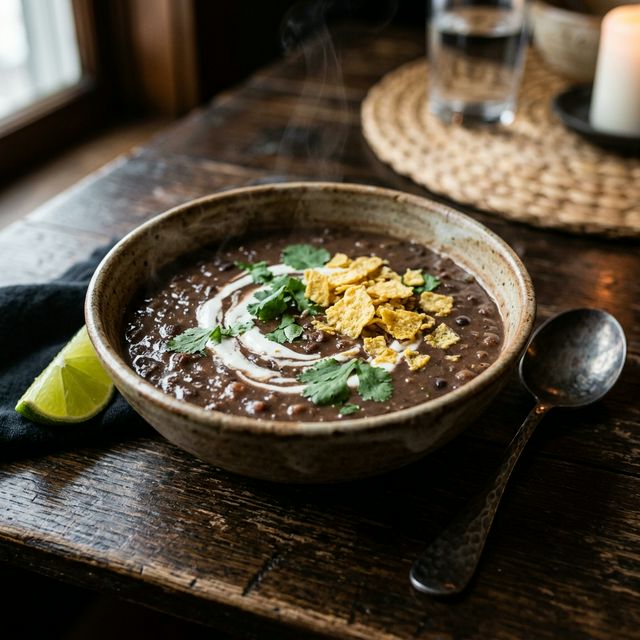
One-Pot Smoky Black Bean Soup
A thick, smoky black bean soup made in one Dutch oven in 30 minutes. Partial blending gives it a creamy-chunky texture. Great for weeknights and meal prep.

Chicken Tortilla Soup
A smoky, deeply spiced chicken tortilla soup with charred tomatoes, black beans, and crispy tortilla strips. Ready in 1 hour, weeknight-friendly.

Berbere-Spiced Red Lentil Soup with Crispy Fried Shallots and Lemon Yogurt
A deeply spiced Ethiopian-inspired red lentil soup topped with crispy fried shallots and cool lemon yogurt — weeknight-fast, meal-prep friendly.