Roasted Tomato Basil Soup
Roma tomatoes roasted at 425°F until charred, then blended with cream and fresh basil. Rich, silky, and ready in 40 minutes.
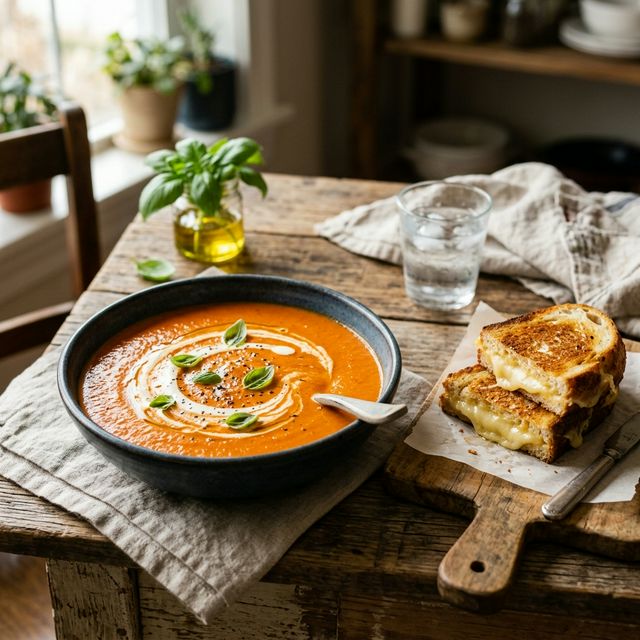
Roasting the tomatoes at 425°F before blending is the move that separates this from a can-of-crushed-tomatoes situation. The high heat concentrates the sugars, chars the edges, and pulls sweetness out of even mediocre Roma tomatoes — so don't skip that step or cut the roasting time short. What you end up with is a silky, deeply savory soup with a slight smokiness from the char, a creamy finish from the heavy cream, and brightness from fresh basil stirred in at the end. It's thick enough to feel substantial without being heavy.
This works on a Tuesday night (10 minutes of prep, then the oven does the work) and holds well in the fridge for four days, making it a solid meal-prep option. If the soup tastes flat after blending, it usually means it needs more salt — add it in small increments and simmer for another minute before tasting again.
Ingredients
- ▸ 2 lbs Roma tomatoes, halved
- ▸ 1 large onion, quartered
- ▸ 6 cloves garlic, peeled
- ▸ 3 tbsp olive oil
- ▸ 1 cup vegetable broth
- ▸ 1/4 cup heavy cream
- ▸ 1/4 cup fresh basil leaves
- ▸ 1 tsp sugar
- ▸ Salt and pepper to taste
🛒 Links may earn us a small commission at no cost to you.
Recommended Gear
🛒 We may earn a small commission at no extra cost to you. We only recommend gear we'd use ourselves.
Instructions
Roast
- 1. Preheat oven to 425°F. Place tomatoes (cut-side up), onion, and garlic on a sheet pan.
- 2. Drizzle with olive oil, season with salt, pepper, and sugar. Roast 30-35 minutes until charred.
Blend
- 1. Transfer roasted vegetables to a pot. Add broth.
- 2. Blend until smooth with an immersion blender (or regular blender in batches).
- 3. Stir in cream and torn basil. Simmer 5 minutes. Adjust seasoning.
Cook's Notes
- Place the tomatoes cut-side up on the sheet pan — this lets moisture evaporate from the flesh while the skin protects the bottom from burning too fast.
- Don't discard the pan drippings. Scrape all the caramelized juices into the pot with the vegetables; that's where most of the concentrated flavor lives.
- Add the basil after blending, not before — blending fresh herbs at high heat turns them dull green and slightly bitter.
- If the soup is too thick after blending, thin it with additional broth a tablespoon at a time rather than water, which dilutes flavor.
Pro Tips
- → Watch for dark brown (not black) edges on the tomatoes before pulling them from the oven. Black char turns bitter; deep amber char is what gives the soup its depth. If your oven runs hot, check at 28 minutes.
- → Use a rimmed sheet pan, not a flat baking sheet. The tomatoes release liquid as they roast, and a flat pan will send it straight into your oven.
- → When blending hot soup in a countertop blender, start on the lowest speed and vent the lid — remove the center cap and hold a towel over the hole. Hot liquid creates steam pressure that can cause the lid to pop off violently.
- → If the soup tastes one-dimensional after blending, it almost always needs salt, not more basil. Add salt in quarter-teaspoon increments, simmer for 30 seconds, and taste again before adding more cream.
- → For a smoother texture without straining, blend for at least 60 full seconds with an immersion blender. Thirty seconds leaves behind small fibrous bits from the tomato skin. If you want restaurant-level smoothness, pass the finished soup through a fine-mesh sieve.
- → The cream should go in off or at low heat — adding it to a hard boil can cause it to break and look curdled. Reduce to a gentle simmer first, then stir in the cream and basil.
What to Serve With This
A thick slice of sourdough or a good crusty baguette is the obvious move here, and it earns that status for a reason — the bread soaks up the cream-enriched broth without dissolving immediately. Tartine Bakery-style country loaf or any high-hydration sourdough works well. Avoid soft sandwich bread; it turns to mush before you finish the bowl.
For salad, go with something that has textural contrast and acidity. A simple arugula salad dressed with lemon juice and olive oil cuts through the richness of the cream. Shaved Parmesan on top adds salt and umami without competing with the basil.
On the drink side, a dry Provençal rosé handles the acidity of the tomatoes cleanly. If you want white wine, reach for an unoaked Chardonnay or a Vermentino — both have enough body without adding oak tannins that clash with tomato. For a non-alcoholic option, sparkling water with a squeeze of lemon keeps the palate fresh between spoonfuls.
If you're serving this as a starter at a dinner party, keep portions to about six ounces and pair with a cheese board heavy on aged Manchego or Gruyère. The nuttiness of those cheeses bridges the roasted tomato and the cream.
Variations & Substitutions
To make this dairy-free, swap the heavy cream for full-fat coconut cream (not coconut milk — too thin) at the same quarter-cup measurement. The coconut flavor is mild once it's simmered in, and the fat content keeps the texture close to the original. Cashew cream works too: blend half a cup of soaked raw cashews with a quarter cup of water until completely smooth, then stir in.
For a vegan version, the recipe is already vegetable broth-based, so the only swap needed is the cream substitution above. Double-check your vegetable broth — some contain honey or other animal products.
If you want more depth, roast a halved red bell pepper alongside the tomatoes. It adds sweetness and a slightly different char note without changing the character of the soup. For a spicy version, add one seeded dried ancho chile to the pot when you add the broth, let it steep for five minutes, then blend it in.
Scaling up: this doubles cleanly. Use a half-sheet pan (18x13 inches) to avoid crowding — if tomatoes are too close together, they steam instead of roast and you lose the char. Roasting time stays the same at 30-35 minutes.
Frequently Asked Questions
How long does this soup keep in the refrigerator? ▼
Stored in an airtight container, it keeps for four days. The flavor actually improves on day two once everything has had time to meld. Give it a stir when reheating — the cream can settle slightly at the bottom.
Can I freeze this soup? ▼
Yes, but freeze it before adding the cream. Heavy cream can separate when frozen and thawed, giving you a grainy texture. Freeze the blended tomato-broth base for up to three months, then stir in fresh cream when reheating.
Can I make this ahead for a dinner party? ▼
Roast and blend the vegetables up to two days in advance, then refrigerate the base. On the day of serving, reheat gently over medium-low heat, stir in the cream and basil, and simmer for five minutes. The basil should always go in fresh.
What if I don't have an immersion blender? ▼
Use a standard blender, but work in batches — fill it no more than halfway with hot liquid. Hold a folded kitchen towel firmly over the lid before blending; hot liquid expands and can blow the top off. A Vitamix or Blendtec will give you the smoothest result.
Can I use canned tomatoes instead of fresh Roma tomatoes? ▼
You can, but you'll lose the roasted flavor that defines this recipe. If you go that route, use two 14-ounce cans of whole San Marzano tomatoes, drain them slightly, and roast at 425°F for 20 minutes on a sheet pan to get some caramelization. Fresh Roma tomatoes are worth the effort here.
My soup came out thin — what went wrong? ▼
The most common cause is tomatoes that released too much water during roasting, usually from overcrowding the pan. Simmer the blended soup uncovered for an additional 10-15 minutes over medium heat to reduce it. Next time, use a larger pan and give the tomatoes more space.
Can I use dried basil instead of fresh? ▼
Not recommended. Dried basil loses its brightness and tends to taste dusty in a finished soup. If fresh basil isn't available, fresh thyme or a small amount of fresh flat-leaf parsley are better substitutes. Add them at the same stage — stirred in at the end.
What does the sugar do? ▼
It balances acidity, not sweetness. Roma tomatoes can be quite tart, especially out of peak season, and a teaspoon of sugar evens that out without making the soup taste sweet. If your tomatoes are very ripe and flavorful, you can cut it to half a teaspoon.
Can I double the recipe? ▼
Yes — use two half-sheet pans and roast both at 425°F simultaneously, rotating racks halfway through. Blending time will increase; an immersion blender handles large volumes better than a countertop blender in this case. Simmering time after adding cream stays the same.
Enjoyed this recipe?
Daily Home Cookery is self-funded. If something you cooked here made dinner a little better, a coffee keeps the kitchen running.
☕ Buy me a coffeeYou Might Also Like
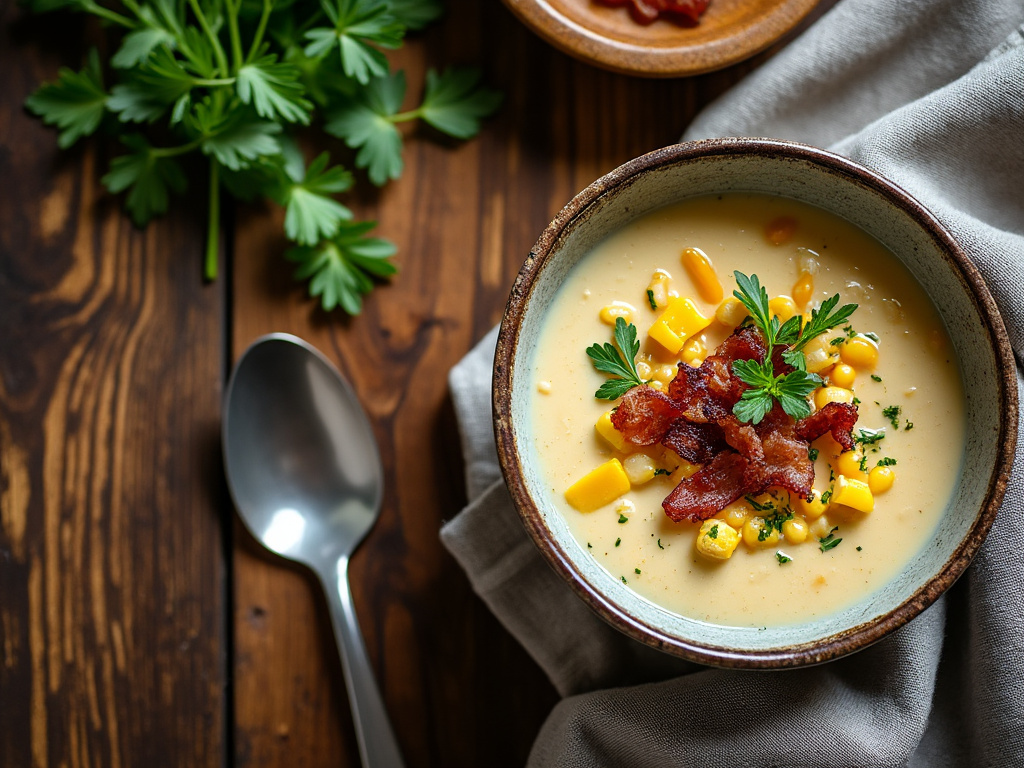
Smoked Gouda and Poblano Corn Chowder
Rich, smoky corn chowder with charred poblanos, bacon, and melted smoked Gouda. Done in one pot in under an hour.
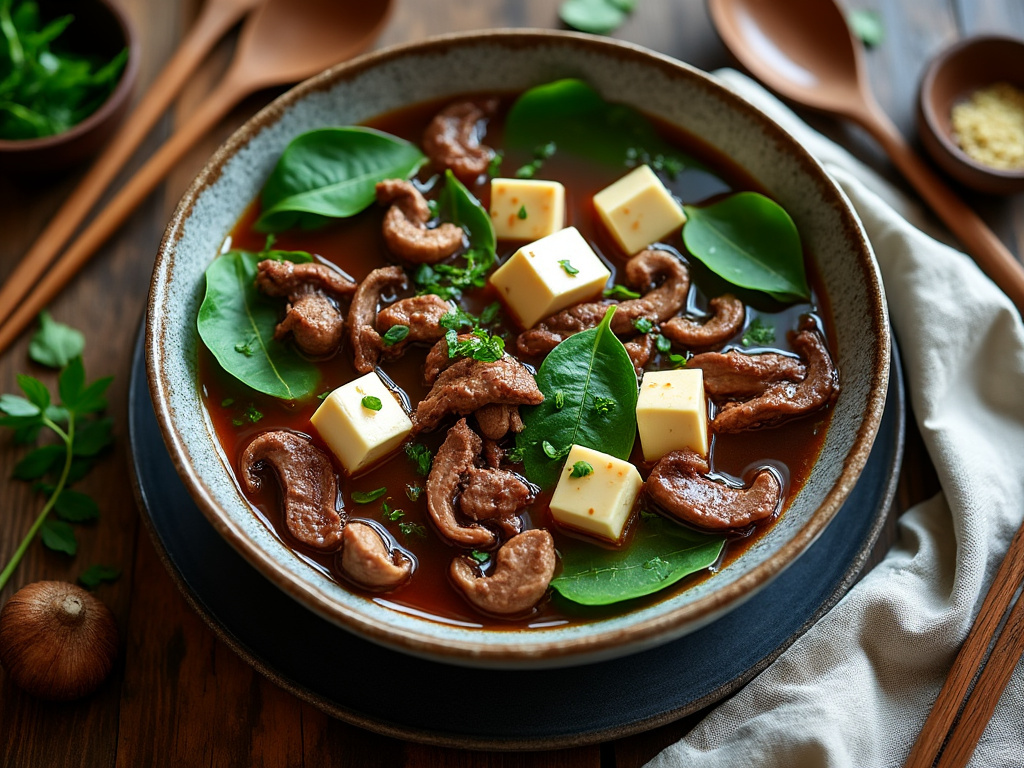
Sichuan-Spiced Beef and Tofu Hot Pot with Sesame Broth
A deeply aromatic Sichuan hot pot with thinly sliced beef, silken tofu, and a numbing sesame-chili broth. Ready in 65 minutes.
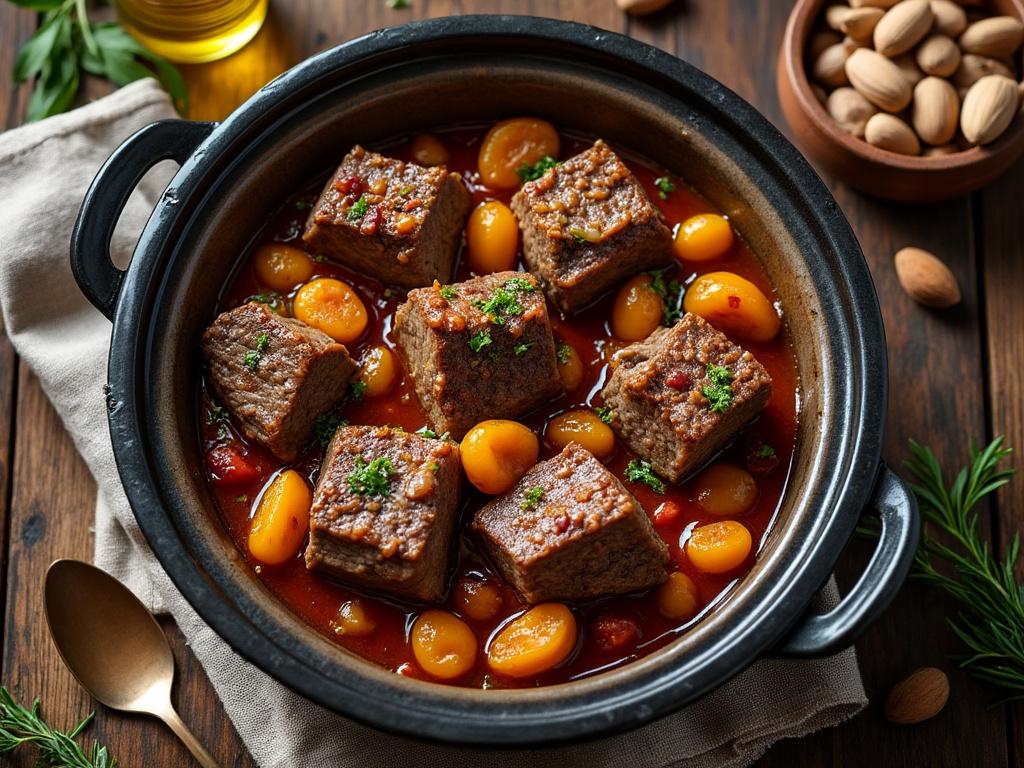
Moroccan Spiced Lamb Tagine with Apricots and Almonds
Braised lamb shoulder with saffron, dried apricots, cumin, and cinnamon — a make-ahead tagine with deep flavor and a sauce worth soaking up.