Charred Cabbage Soup with Smoked Bacon and White Miso
Deeply savory charred cabbage soup with smoked bacon, white miso, and a splash of apple cider vinegar. Ready in under an hour.
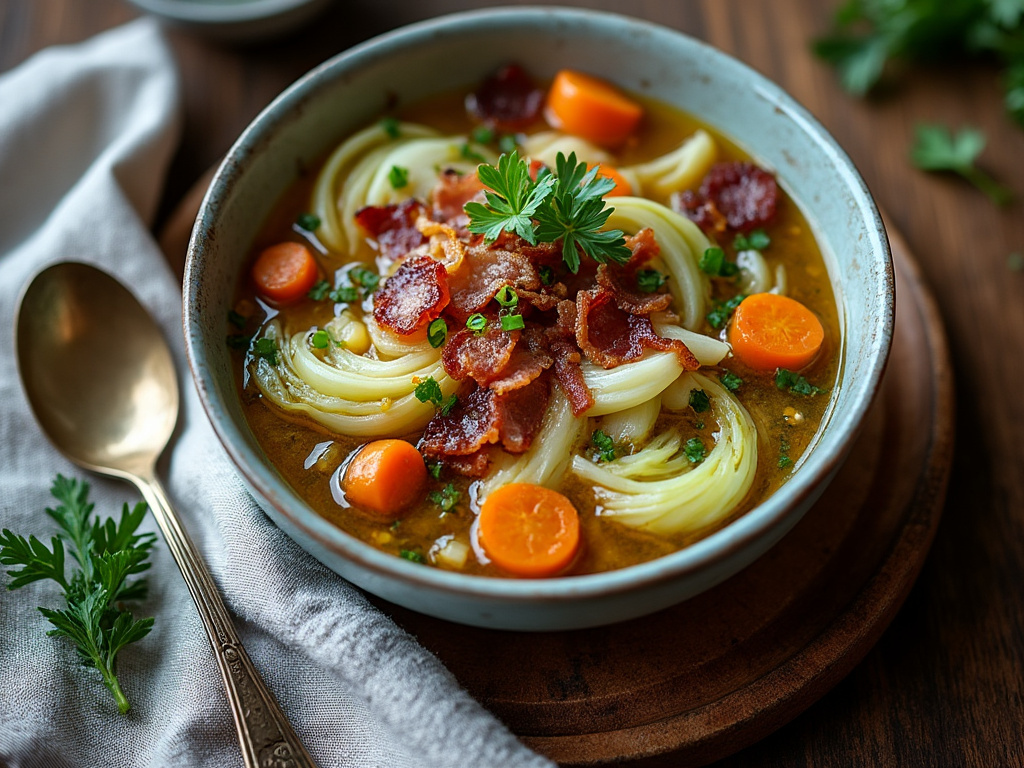
<p>Cabbage, when charred rather than just sweated, takes on a smoky bitterness that gives this soup an unusual depth for something built from pantry staples. The technique here is aggressive dry heat — you want the cabbage genuinely blackened at the edges before it goes into the pot. That char doesn't disappear into the broth; it anchors the whole flavor.</p><p>Smoked bacon lays down a fat base, white miso adds umami without any Asian-fusion signaling, and a small hit of apple cider vinegar at the end keeps it from going flat. The result is thick, almost stewy, and excellent with crusty bread on the side. This is a Tuesday night soup — straightforward, under an hour, and the kind of thing that tastes even better on day two. If your broth reduces too fast and the soup looks dry before the cabbage is tender, add stock in 1/2-cup increments and drop the heat slightly.</p>
Ingredients
- ▸ 6 strips thick-cut smoked bacon, cut into 1/2-inch lardons
- ▸ 1 small green cabbage (about 2 lbs), cored and cut into rough 1-inch pieces
- ▸ 1 large yellow onion, diced
- ▸ 4 garlic cloves, thinly sliced
- ▸ 2 medium carrots, peeled and cut into 1/2-inch rounds
- ▸ 2 celery stalks, sliced 1/4-inch thick
- ▸ 1 tsp caraway seeds
- ▸ 1/2 tsp freshly ground black pepper
- ▸ 1/4 tsp red pepper flakes
- ▸ 4 cups low-sodium chicken stock
- ▸ 2 cups water
- ▸ 2 tbsp white miso paste
- ▸ 1.5 tbsp apple cider vinegar
- ▸ 1 tbsp neutral oil (such as avocado or grapeseed), for charring if needed
- ▸ 2 tbsp flat-leaf parsley, roughly chopped
- ▸ 1/2 tsp Diamond Crystal kosher salt, plus more to taste
🛒 Links may earn us a small commission at no cost to you.
Recommended Gear
🛒 We may earn a small commission at no extra cost to you. We only recommend gear we'd use ourselves.
Instructions
Char the Cabbage
- 1. Heat your 12-inch cast iron skillet over high heat for 2 full minutes until it's genuinely ripping hot — hold your hand 3 inches above the surface and you should feel intense radiant heat. Add 1 tbsp neutral oil and immediately add half the cabbage pieces in a single layer. Do not stir. Cook 3–4 minutes until the bottom faces are deeply blackened and the kitchen smells slightly smoky and sweet, not burnt. Flip with tongs, char the other side for 2 minutes, then transfer to a bowl. Repeat with the second batch, adding a small drizzle more oil if the pan looks dry.
- 2. Reduce the skillet heat to medium. Add the bacon lardons and cook 5–7 minutes, stirring occasionally, until the fat has rendered and the pieces are browned and crisp — you'll hear a steady sizzle drop in volume as the moisture cooks off. Transfer bacon with a slotted spoon to a paper towel-lined plate. Reserve 2 tbsp of the rendered bacon fat in the skillet; discard the rest or save for another use.
Build the Base
- 1. Set your Dutch oven over medium heat and add the reserved bacon fat. Add the diced onion and 1/2 tsp kosher salt. Cook 6–8 minutes, stirring every couple of minutes, until the onion is translucent and starting to go golden at the edges — it should smell sweet and savory, not raw.
- 2. Add the sliced garlic, carrots, celery, caraway seeds, black pepper, and red pepper flakes. Stir to coat everything in the fat and cook 2–3 minutes until the garlic is fragrant and just starting to color. You'll smell the caraway bloom — nutty and slightly anise-like.
- 3. Add the charred cabbage and most of the bacon (reserve a small handful for garnish) to the Dutch oven. Stir to combine everything and press it down lightly so it starts to compact.
Simmer the Soup
- 1. Pour in the chicken stock and water. Bring to a boil over medium-high heat — this should take about 5 minutes. You'll see the broth take on a light amber color from the charred cabbage immediately.
- 2. Reduce heat to medium-low and simmer uncovered for 25–30 minutes, until the cabbage is fully tender and collapses when pressed with a spoon and the broth has reduced slightly and deepened in color. Stir every 10 minutes so nothing catches on the bottom.
- 3. Ladle out about 1/2 cup of hot broth into a small bowl. Whisk in the white miso paste until fully dissolved with no lumps — this prevents the miso from clumping when it hits the pot. Pour the miso slurry back into the soup and stir to combine. Do not boil again after adding miso; high heat destroys its flavor compounds.
Finish and Serve
- 1. Add the apple cider vinegar and stir. Taste the soup — it should be savory, smoky, and just slightly tangy. Adjust salt if needed, adding 1/4 tsp at a time. If it tastes flat, add a few more drops of vinegar before reaching for more salt.
- 2. Ladle into deep bowls. Top each with a few pieces of the reserved crispy bacon and a scatter of chopped flat-leaf parsley. Serve immediately with crusty bread for the broth.
Cook's Notes
- Don't rush the charring step — a pale golden edge on the cabbage is not the same thing. You want actual black char on at least 30% of the surface area of each piece. That's what gives the broth its distinctive smoky depth.
- Dissolve the miso in a small amount of hot broth before adding it to the pot. Adding it directly to simmering liquid leaves clumps and uneven saltiness throughout the soup.
- This soup thickens as it sits — leftovers will be noticeably denser than the freshly made version. Always loosen with a splash of water or stock before reheating.
- Caraway seeds are not optional here — they pull the cabbage and bacon together with a faintly rye-bread note. Don't substitute fennel seed; the flavor profile shifts too far.
- If you're making this for meal prep, hold the parsley garnish and reserved bacon separately and add fresh when serving to preserve texture.
Pro Tips
- → The biggest failure mode in this recipe is steaming the cabbage instead of charring it. This happens when the pan isn't hot enough before the cabbage goes in, or when you crowd the pan and the moisture can't escape. If you see the cabbage releasing steam and going limp before any browning appears, crank the heat and wait — don't stir.
- → If the soup tastes aggressively salty after adding the miso, it's usually because the bacon stock was already high-sodium. Next time use unsalted stock, or add the miso in two stages, tasting after each. Right now, a squeeze of lemon juice (not more vinegar) can bring the salt back into balance.
- → The rendered bacon fat is a key flavor carrier — don't swap it for olive oil. If your bacon strips are very lean and barely render 1 tbsp of fat, supplement with 1 tbsp of good-quality lard or unsalted butter to get the base right.
- → For a slightly creamier texture without adding dairy, take a potato masher to the pot for 4–5 rough mashes after the simmer. This breaks down some of the cabbage and carrot pieces into the broth without full blending, giving you a thicker, richer consistency.
- → Caraway seeds release their flavor better if you toast them dry in the skillet for 60 seconds before adding to the pot. The seeds should smell fragrant and slightly sweet — pull them off immediately if they start to smoke.
- → If your miso paste has been sitting in the fridge for more than 6 months, taste it before using — older miso can turn very sharp and salty. You may need to reduce the quantity to 1 tbsp and compensate with a small splash of soy sauce for the same umami effect without the over-salting.
What to Serve With This
<p>Crusty sourdough is the obvious call here and the right one — you need something with enough structure to hold up against the broth without going immediately soggy. A thick slice of toasted Tartine-style country loaf, rubbed with a cut garlic clove and drizzled with good olive oil, works better than a soft baguette. The bread catches the bacon-laced broth and earns its place on the plate.</p><p>On the drink side, a dry, unoaked white wine with some acidity cuts through the miso's saltiness cleanly. A Muscadet Sèvre et Maine or an Alsatian Pinot Blanc are both solid choices — not too fruity, not too neutral. If you prefer beer, a German-style Kellerbier or an unfiltered lager brings a subtle yeasty note that echoes the fermented miso without competing with the smoke.</p><p>A simple radicchio and shaved fennel salad dressed with lemon and olive oil makes a smart first course. The bitterness of the radicchio mirrors the charred cabbage, and the anise of the fennel adds contrast. Keep the dressing light — this soup is rich enough that you don't want a creamy salad in front of it.</p><p>For a non-alcoholic pairing, a tall glass of cold sparkling water with a slice of lemon is genuinely the best move — the carbonation refreshes the palate between spoons of the thick, savory broth without adding sweetness that would muddy the miso.</p>
Variations & Substitutions
<p>To make this dairy-free and fully gluten-free, the recipe is almost there already — just confirm your miso is certified gluten-free (South River brand makes a reliable GF white miso). The bacon renders its own fat so no butter is needed, and the broth is naturally clean. Skip any bread pairing made with wheat and serve with rice crackers or a grain bowl on the side.</p><p>For a vegetarian version, replace the smoked bacon with 2 tbsp of smoked olive oil plus 1/2 tsp smoked paprika rendered in a dry pan for 30 seconds. Use a good vegetable stock — Pacific Foods Organic is consistent. The miso still carries the umami load, but add 1 tbsp of soy sauce along with it to compensate for the depth the bacon fat provides. This swap works well; the char on the cabbage does a lot of heavy lifting regardless.</p><p>Want more body? Add 1 cup of rinsed canned cannellini beans in the last 10 minutes of simmering — they'll partially break down and give the broth a slightly creamy texture without any actual cream. Alternatively, stir in 1/2 cup of cooked pearl barley for a heartier, grain-forward version that scales well as a meal-prep lunch.</p><p>To scale this for 8 servings, double every ingredient and use a 7-quart Dutch oven. Keep the charring in two batches — don't crowd the pan or the cabbage steams instead of chars. The miso increases proportionally, but taste before adding all of it; two cooks' pots of doubled stock may not need the full doubled amount of salt.</p>
Frequently Asked Questions
Can I make this soup ahead of time? ▼
Yes — this soup actually improves after a night in the fridge. The miso and bacon fat redistribute into the broth and the flavors tighten up noticeably. Store it in an airtight container for up to 4 days. Add a small splash of water or stock when reheating, as it thickens considerably once cold.
Can I freeze charred cabbage soup? ▼
You can, but the texture of the cabbage softens significantly after freezing and thawing — it goes from tender-with-some-bite to quite silky. That's not necessarily bad, but it's a different soup. Freeze in portions for up to 2 months and reheat gently on the stovetop over medium-low heat, stirring occasionally.
What kind of cabbage works best? ▼
Green cabbage is the right call here — it holds up to charring and simmering without turning to mush the way Napa or savoy would. Savoy is too delicate and will essentially disintegrate. Red cabbage works in a pinch but will turn the broth a murky purple, which affects presentation more than flavor.
My soup tastes flat — what went wrong? ▼
Two likely culprits: the cabbage didn't get hot enough to actually char (it just steamed), or you skipped the apple cider vinegar finish. The vinegar at the end is not optional — it lifts the whole pot. Taste, add vinegar in 1/2 tsp increments, and if it still seems dull, add a touch more miso stirred into a ladle of hot broth first before returning it to the pot.
Can I use red or yellow miso instead of white? ▼
White (shiro) miso is deliberately mild here so it adds savory depth without overpowering the smoky char. Red miso is considerably saltier and more pungent — if you use it, cut the quantity to 1 tbsp and taste carefully before adding more. Yellow miso is a reasonable middle-ground substitute at the same quantity listed.
What can I use instead of smoked bacon? ▼
Lardons, pancetta (though it lacks smoke), or thick-cut smoked slab bacon all work. If using pancetta, add 1/4 tsp smoked paprika when you add the garlic to restore the smoky backbone. Turkey bacon won't render enough fat — you'd need to supplement with 1 tbsp of neutral oil.
How do I reheat leftovers without overcooking the cabbage? ▼
Reheat in a saucepan over medium-low heat with a splash of water or stock, stirring gently. Don't bring it to a rolling boil — the cabbage is already cooked through and a hard boil will push it from tender to completely soft. Three to four minutes of gentle warming is enough.
Can I use pre-shredded coleslaw mix instead of cutting a whole cabbage? ▼
Technically yes, but the shreds are cut too thin and too uniform to char properly in a skillet — they'll wilt and steam instead of blackening at the edges. For the charring technique to work, you need roughly cut 1-inch pieces with some flat surface area against the hot pan. Buy a small whole cabbage; it's the one ingredient not worth substituting here.
Is this soup spicy? ▼
As written, no — it's smoky, savory, and slightly tangy. If you want heat, add 1/4 tsp red pepper flakes when you sauté the garlic, or finish each bowl with a small spoonful of chili crisp. A pinch of white pepper stirred in at the end also adds a different kind of sharpness without making it conventionally spicy.
Can I make this in an Instant Pot? ▼
You can pressure-cook the simmering phase, but you still need to char the cabbage on the stovetop in a skillet first — the Instant Pot will not char anything. After charring and sautéing the aromatics using the Sauté function, add the stock, seal, and pressure-cook on High for 8 minutes with a quick release. Stir in miso and vinegar after opening the lid.
Enjoyed this recipe?
Daily Home Cookery is self-funded. If something you cooked here made dinner a little better, a coffee keeps the kitchen running.
☕ Buy me a coffeeYou Might Also Like
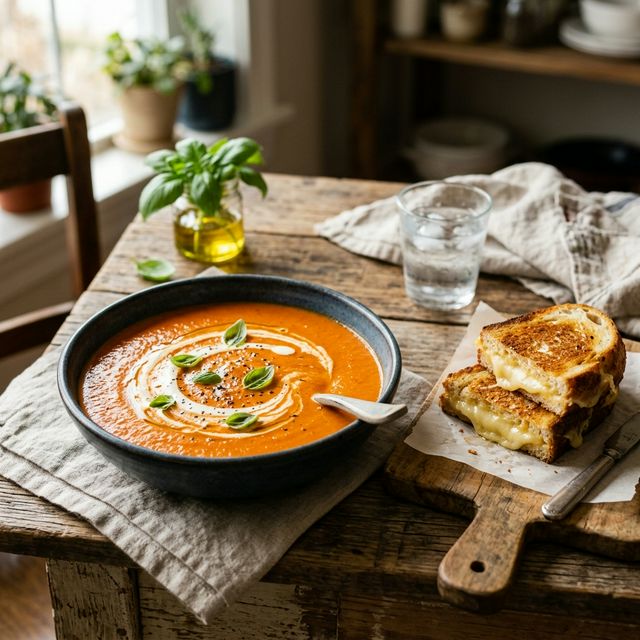
Roasted Tomato Basil Soup
Roma tomatoes roasted at 425°F until charred, then blended with cream and fresh basil. Rich, silky, and ready in 40 minutes.
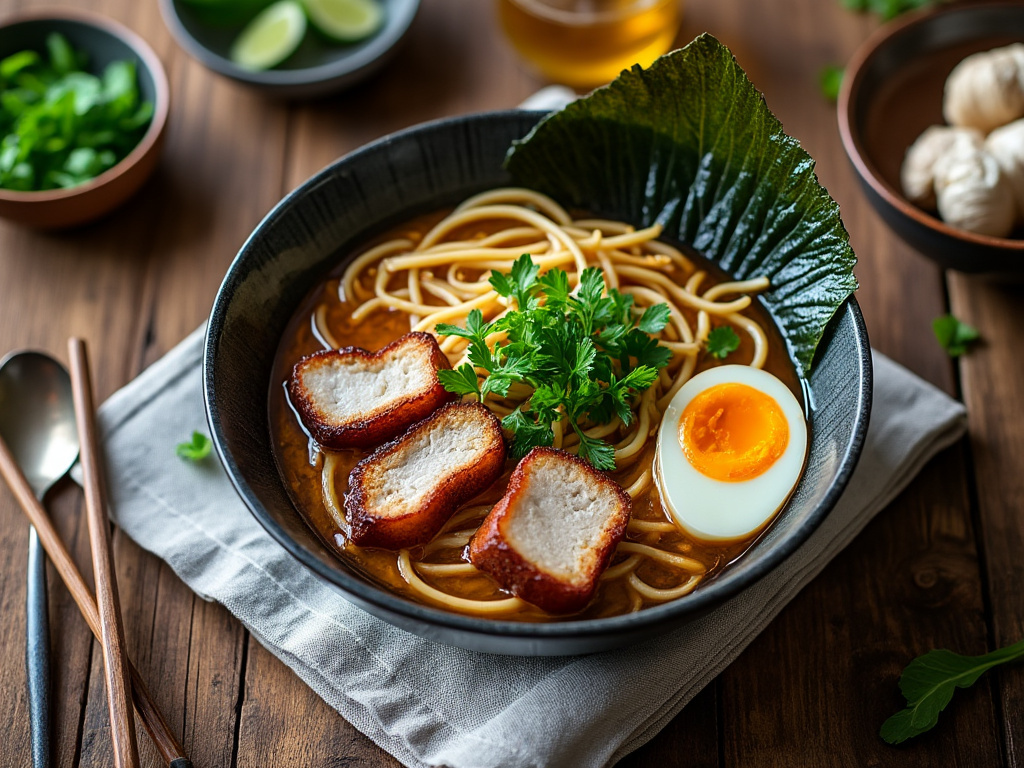
Miso Caramel Pork Belly Ramen with Soft-Boiled Eggs and Scallion Oil
Rich miso broth, lacquered caramel pork belly, and scallion oil come together in this deeply satisfying homemade ramen. Weeknight-achievable in 2 hours.
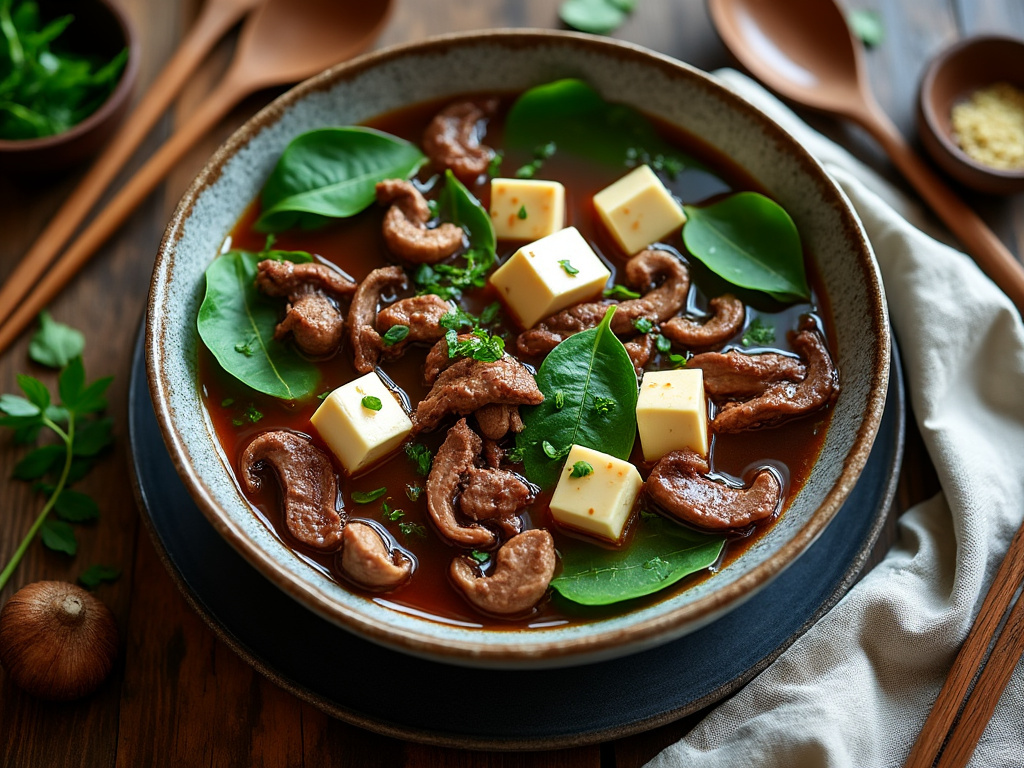
Sichuan-Spiced Beef and Tofu Hot Pot with Sesame Broth
A deeply aromatic Sichuan hot pot with thinly sliced beef, silken tofu, and a numbing sesame-chili broth. Ready in 65 minutes.