Crispy Rice Cakes with Gochujang Braised Pork Belly and Pickled Daikon
Pan-fried tteok meet sticky gochujang-braised pork belly and quick pickled daikon in this bold, satisfying Korean-inspired skillet dinner.
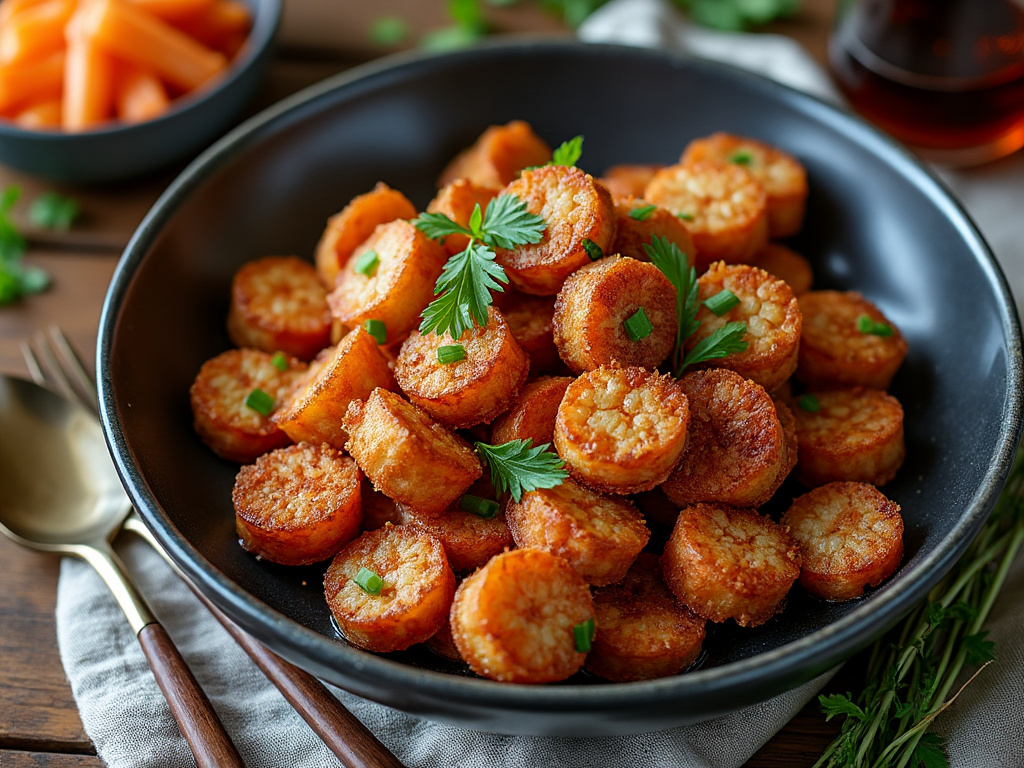
Tteok — Korean rice cakes — have a dense, chewy bite that holds up under high heat better than pasta or dumplings. Pan-fry them in a dry skillet until they blister and crackle, and that exterior gives you something to work with: a shell that resists the braising liquid long enough to stay distinct on the plate. That contrast — crisp outside, yielding center — is the structural point of this dish.
The pork belly braises in a gochujang-soy-mirin sauce that goes sticky and lacquered after about 75 minutes. The rendered fat mingles with the braising liquid and keeps everything glossy without needing a butter finish. Quick-pickled daikon cuts through the richness — two tablespoons of rice vinegar and a teaspoon of sugar is all it takes. This is a weekend project that eats like comfort food, and it reheats well enough to be worth doubling for meal prep. If the sauce reduces too fast and starts scorching on the bottom, add 2 tablespoons of water and drop the heat immediately.
Ingredients
- ▸ 1.25 lb pork belly, skin-on, cut into 2-inch chunks
- ▸ 1 lb fresh tteokbokki rice cakes (refrigerated)
- ▸ 3 tbsp gochujang
- ▸ 3 tbsp soy sauce
- ▸ 2 tbsp mirin
- ▸ 1 tbsp toasted sesame oil
- ▸ 1 tbsp brown sugar
- ▸ 4 garlic cloves, finely grated
- ▸ 1 tbsp fresh ginger, finely grated
- ▸ 1 cup low-sodium chicken stock
- ▸ 2 tbsp neutral oil, divided (such as grapeseed or avocado oil)
- ▸ 6 oz daikon radish, peeled and cut into thin matchsticks
- ▸ 2 tbsp unseasoned rice vinegar
- ▸ 1 tsp granulated sugar
- ▸ 1 tsp Diamond Crystal kosher salt, plus more to taste
- ▸ 3 scallions, thinly sliced on the bias
- ▸ 1 tbsp toasted sesame seeds
- ▸ 1 tsp gochugaru (Korean chili flakes), for finishing
🛒 Links may earn us a small commission at no cost to you.
Recommended Gear
🛒 We may earn a small commission at no extra cost to you. We only recommend gear we'd use ourselves.
Instructions
Pickle the Daikon
- 1. In a small bowl, combine the daikon matchsticks, rice vinegar, granulated sugar, and 1 tsp kosher salt. Toss well and set aside at room temperature for at least 20 minutes — the daikon will turn translucent at the edges and soften slightly while keeping its snap. Give it a stir every 5 minutes if you're around.
Sear the Pork Belly
- 1. Pat the pork belly chunks completely dry with paper towels — surface moisture is the enemy of a good sear. Season lightly with kosher salt on all sides.
- 2. Heat 1 tbsp neutral oil in the Dutch oven over medium-high heat until the oil shimmers and just begins to smoke, about 2 minutes. Add the pork belly in a single layer without crowding — work in two batches if needed. Sear undisturbed for 3–4 minutes per side until deep brown and crackling; you'll hear a loud sizzle drop to a steady hiss as the fat renders. Transfer to a plate.
Build and Braise
- 1. Reduce heat to medium. Pour off all but 1 tablespoon of the fat left in the pot. Add the grated garlic and ginger, stirring constantly for 45 seconds until fragrant and golden at the edges — don't let it darken past toasty or it'll turn bitter.
- 2. In a small bowl, whisk together the gochujang, soy sauce, mirin, sesame oil, and brown sugar until smooth. Pour this into the pot and stir to coat the bottom, scraping up any browned bits. The sauce will bubble immediately and smell deeply savory and slightly sweet.
- 3. Return the seared pork belly to the pot. Pour in the chicken stock — the liquid should come about halfway up the pork. Bring to a boil, then reduce heat to low, cover tightly, and braise for 75 minutes. Check at 45 minutes; if the liquid is reducing too fast and the bottom looks sticky, add 3 tablespoons of water and lower the heat.
- 4. After 75 minutes, remove the lid and check the pork — a skewer should slide through with zero resistance. Increase heat to medium and cook uncovered for 10–12 more minutes, spooning the sauce over the pork frequently, until the braising liquid thickens to a lacquered, glossy glaze that coats the back of a spoon.
Crisp the Rice Cakes
- 1. While the pork finishes, heat the remaining 1 tbsp neutral oil in a 12-inch cast iron skillet over medium-high heat until rippling, about 90 seconds. Add the tteok in a single layer — don't stir. Let them sit undisturbed for 2–3 minutes until the undersides are golden brown and blistered with crispy patches. Flip with tongs and repeat on the second side for another 2 minutes. They should feel slightly firm on the outside but give a little when pressed. Transfer to a plate.
Assemble and Serve
- 1. Add the crisped rice cakes directly to the pot with the braised pork. Gently fold them into the sauce over low heat for 1–2 minutes, just until coated and warmed through — you want them glossy but not completely soft.
- 2. Divide into bowls. Top each serving with a heap of pickled daikon, a scatter of sliced scallions, a sprinkle of toasted sesame seeds, and a pinch of gochugaru for color and heat. Serve immediately.
Cook's Notes
- Dry the pork belly chunks thoroughly before searing — any surface moisture causes steaming instead of browning, and you'll lose the fond that flavors the braising liquid.
- Don't skip the uncovered reduction step at the end. That's when the sauce goes from thin and brothy to sticky and lacquered — it makes a significant difference to the final dish.
- The pickled daikon can be made up to 2 days ahead and stored in the fridge in a sealed jar. The flavor deepens overnight.
- If your tteok have been refrigerated for more than a day, they may stick together in the package. Separate them gently under warm running water before pan-frying.
- Leftovers store well — keep pork and rice cakes together in the braising sauce, refrigerated up to 3 days. The tteok will firm up when cold; reheat covered over medium-low with a splash of water.
Pro Tips
- → The single most common failure in this recipe is adding the tteok to the braise too early. If they go in while the liquid is still thin and watery, they absorb too much, turn mushy, and lose all the texture you built by pan-frying. Always crisp them separately and fold in at the very end.
- → If your braising sauce breaks — meaning the fat separates and you see pools of orange oil floating on a thin liquid — the heat was too high for too long. Pull the pot off the heat for 5 minutes, then stir vigorously with a wooden spoon over low heat. The emulsion usually comes back together.
- → Pork belly varies a lot by butcher — thicker-cut slabs (over 1.5 inches) will need closer to 90 minutes to become truly tender. Thin-cut belly from a supermarket pack might be done in 60. Go by the skewer test, not the clock.
- → For maximum crisping on the tteok, make sure the skillet is fully preheated before they go in. A drop of water flicked onto the surface should evaporate in under a second. If the tteok stick to the pan during the first minute, they're not ready to flip yet — wait another 30 seconds and they'll release cleanly.
- → Gochujang brands vary significantly in heat level and sweetness. Haechandle (the tub with the green lid) is moderate and reliable. CJ Beksul is slightly hotter. Adjust the amount in the sauce by 1/2 tablespoon in either direction based on your brand and tolerance.
- → If you want the pork belly skin to stay slightly chewy rather than going completely soft, add it to the braise skin-side up for the entire cooking time so it's not submerged in liquid. It won't be crispy — this is a braise — but it'll have more structural integrity than if it sits in the sauce the whole time.
What to Serve With This
Serve with a simple steamed short-grain rice on the side — Koshihikari or Calrose both work — to catch the braising sauce that pools on the plate. The starchiness of the rice doesn't compete with the tteok; it just soaks up what would otherwise go to waste.
For drinks, a cold Korean lager like Hite or Cass balances the gochujang heat with clean carbonation and a light malt backbone. If you want wine, reach for an off-dry Alsatian Gewurztraminer — the lychee and rose notes in the grape play directly off the fermented chili paste without trying to overpower it. Avoid anything tannic: the pork fat and soy will make a bold red taste metallic.
A non-alcoholic option that actually works here is barley tea (boricha) served cold — it has a toasty, slightly bitter quality that scrubs the palate between bites without sweetness competing with the sauce.
A small side of blanched spinach dressed with sesame oil and a pinch of Diamond Crystal kosher salt rounds out the plate. The mild bitterness and neutral sesame give your mouth a reset point between bites of pork. Skip elaborate salads — this dish doesn't need more components, it needs contrast.
Variations & Substitutions
For a lighter version, swap pork belly for skinless bone-in chicken thighs. Use the same braising liquid and reduce the cook time to 40 minutes at the same temperature. The sauce won't get quite as glossy since there's less rendered fat, so finish with 1 tablespoon of cold unsalted butter stirred in off the heat to bring it back together.
To make this gluten-free, replace the soy sauce with tamari at a 1:1 ratio — the flavor is nearly identical. Check your gochujang label: most Korean brands like Haechandle or CJ are gluten-free, but some domestic versions add wheat starch as a thickener. If you can't find tteok that's certified gluten-free, thick-cut rice noodles seared briefly in a dry pan approximate the texture.
For a vegetarian version, cut a 14-oz block of extra-firm tofu into 1-inch planks, press it for 20 minutes, and braise in the same sauce for 25 minutes. Add 1 tablespoon of white miso to the braising liquid to replace the depth the pork fat provides. Sear the tofu separately before braising so it holds its shape.
If you can't find fresh or refrigerated tteok, dried tteok works — soak in warm water for 20 minutes before pan-frying. The texture is slightly less chewy but still holds up in the sauce. Don't skip the soaking step or they'll be gummy in the center.
Frequently Asked Questions
Where do I find tteok (rice cakes)? ▼
Look in the refrigerated section of any Korean or Asian grocery store — they're usually labeled 'tteokbokki rice cakes' and come in vacuum-sealed packages. Some larger H Mart locations also carry fresh tteok at the prepared foods counter. In a pinch, check the freezer aisle; frozen tteok works fine, just thaw fully before pan-frying.
Can I make the pork belly ahead of time? ▼
Yes, and it actually improves overnight. Braise the pork belly through to completion, let it cool in the braising liquid, and refrigerate up to 3 days. The fat will solidify on top — skim it before reheating. Reheat covered over medium-low heat with a splash of water until warmed through, about 8–10 minutes.
Can I freeze the braised pork belly? ▼
Freeze the braised pork belly (without the tteok) in its sauce for up to 2 months. Thaw overnight in the refrigerator and reheat gently. Don't freeze the rice cakes after they've been cooked — they turn rubbery and watery when thawed. Cook fresh tteok when you're ready to serve.
How do I know when the pork belly is done braising? ▼
The pork belly is done when a chopstick or skewer slides through the meat with almost no resistance, around 75–90 minutes. The braising liquid should be reduced by about half and coat the back of a spoon. If the liquid reduces before the pork is tender, add water in 1/4-cup increments.
My sauce is too spicy — how do I dial it back? ▼
Reduce the gochujang to 1.5 tablespoons instead of 3 and add 1 tablespoon of tomato paste to keep the body and color. You can also stir in 1 teaspoon of honey at the end to round off the heat. Don't add dairy — it'll break the sauce and change the texture.
Can I use pork shoulder instead of pork belly? ▼
Yes. Use a 1.5 lb piece of boneless pork shoulder cut into 2-inch chunks. The texture will be slightly drier since there's less intramuscular fat, but it still braises well. Increase the braising time by 15 minutes and check for tenderness before reducing the sauce.
How long does the pickled daikon keep? ▼
The quick-pickled daikon keeps refrigerated in a sealed jar for up to 5 days. The flavor actually sharpens after 24 hours, so making it a day ahead is smart. It will soften slightly over time — if you want more crunch, make it the same day you're serving.
Can I double the recipe for a crowd? ▼
Yes — double all ingredients and use a larger Dutch oven (at least 6 quarts). The braising time stays the same. For the tteok, work in two or three batches; overcrowding the pan prevents crisping and they'll steam instead of sear. Don't skip the batching step even if it takes longer.
What's the difference between gochujang and gochugaru, and can I substitute one for the other? ▼
Gochujang is a fermented paste — thick, savory, and slightly sweet — while gochugaru is a dried chili flake that's pure heat with no added fermentation or sweetness. They're not interchangeable in this recipe. If you don't have gochujang, use 2 tablespoons of sriracha plus 1 tablespoon of white miso as a rough substitute — it won't be identical but it'll hold the sauce together.
Enjoyed this recipe?
Daily Home Cookery is self-funded. If something you cooked here made dinner a little better, a coffee keeps the kitchen running.
☕ Buy me a coffeeYou Might Also Like
Caramelized Onion and Beef French Onion Soup Dumplings (Gyoza-Style)
Pan-fried gyoza stuffed with caramelized onions, beef, and Gruyère — all the soul of French onion soup in a crispy dumpling.
Taiwanese Braised Pork Rice (Lu Rou Fan) with Pickled Mustard Greens
Meltingly tender soy-braised pork belly over steamed rice with pickled mustard greens — a Taiwanese comfort food classic ready in 90 minutes.
Crispy Honey Garlic Chicken Thighs
Bone-in chicken thighs seared until the skin cracks, then glazed with honey, soy, and garlic and finished in a 400°F oven. Ready in 50 minutes.