Smoked Paprika Braised Short Ribs with Creamy Polenta
Fall-off-the-bone braised beef short ribs with smoked paprika, red wine, and silky Parmesan polenta. A proper weekend dinner worth every minute.
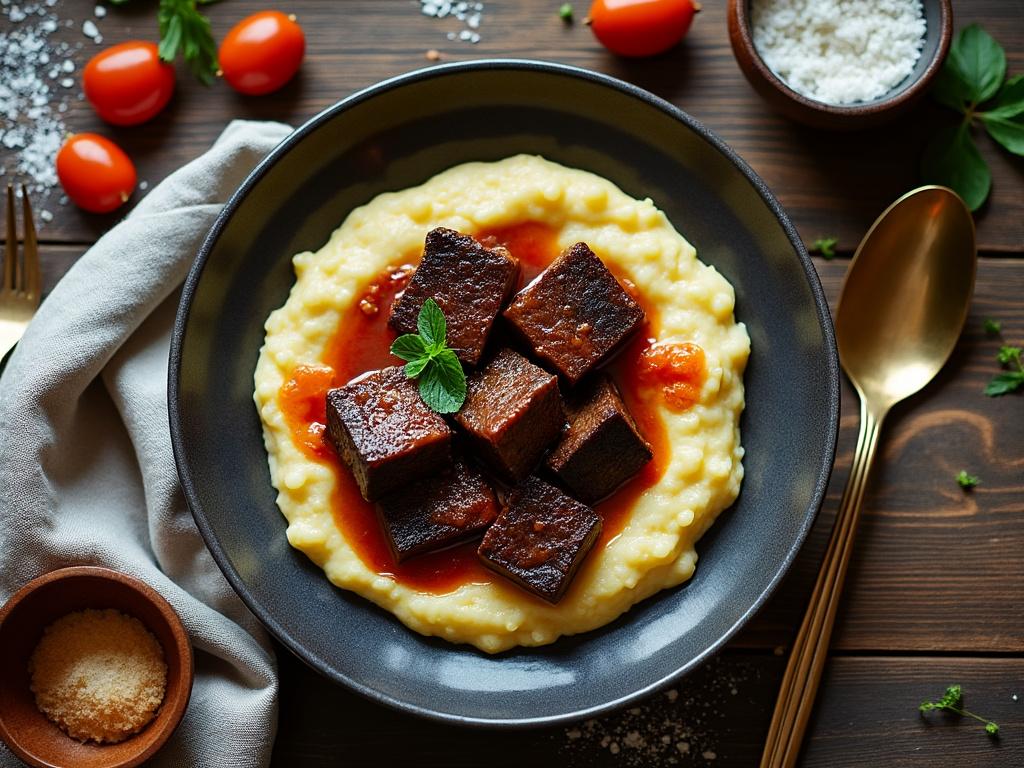
Bone-in beef short ribs release a thick, sticky braising liquid that no other cut can replicate — the collagen melts into the sauce over three-plus hours and you end up with something close to a self-made demi-glace. The technique here is a hard sear before the braise, which builds the fond that carries the whole dish. Don't skip it and don't rush it; pale ribs going into the pot mean a flat-tasting sauce coming out.
Smoked paprika and a full bottle of dry red wine give the braise a deep, slightly smoky backbone without tipping into barbecue territory. Expect rich, fork-tender beef over a polenta that's loose and creamy — not a stiff cake. This is a Saturday or Sunday dinner, full stop. The ribs actually benefit from being made a day ahead, so it's also a legitimate dinner-party move: braise Friday, skim, reheat gently, serve Saturday. If your sauce looks thin at the end, pull the ribs out and reduce the liquid hard at high heat for 8–10 minutes until it coats a spoon.
Ingredients
- ▸ 4 lbs bone-in beef short ribs (English cut, 4–5 ribs)
- ▸ 2 tsp Diamond Crystal kosher salt
- ▸ 1 tsp freshly ground black pepper
- ▸ 2 tbsp all-purpose flour
- ▸ 2 tbsp neutral oil (such as avocado or canola)
- ▸ 1 medium yellow onion, diced (about 1 cup)
- ▸ 2 medium carrots, diced (about 3/4 cup)
- ▸ 3 celery stalks, diced (about 3/4 cup)
- ▸ 6 garlic cloves, minced
- ▸ 2 tbsp tomato paste
- ▸ 2 tsp smoked paprika
- ▸ 1 tsp dried thyme
- ▸ 1/2 tsp cayenne pepper
- ▸ 750 ml dry red wine (one bottle, such as Côtes du Rhône)
- ▸ 1 cup low-sodium beef stock
- ▸ 2 sprigs fresh rosemary
- ▸ 2 bay leaves
- ▸ 1 1/2 cups stone-ground polenta (not instant)
- ▸ 6 cups whole milk
- ▸ 2 cups water
- ▸ 1 tsp kosher salt (for polenta)
- ▸ 4 tbsp Kerrygold unsalted butter, cut into cubes
- ▸ 1/2 cup finely grated Parmesan cheese
- ▸ 2 tbsp fresh flat-leaf parsley, finely chopped (for garnish)
🛒 Links may earn us a small commission at no cost to you.
Recommended Gear
🛒 We may earn a small commission at no extra cost to you. We only recommend gear we'd use ourselves.
Instructions
Prep
- 1. Preheat your oven to 325°F (163°C) with a rack in the lower third. Pat the short ribs completely dry with paper towels — any surface moisture will steam instead of sear. Season all sides generously with 2 tsp kosher salt and 1 tsp black pepper, pressing the seasoning in. Dust each rib lightly with flour, shaking off any excess, until you have a thin, even coating.
- 2. Heat 2 tbsp neutral oil in your Dutch oven over medium-high heat until the oil shimmers and a flick of water evaporates instantly on contact, about 2 minutes. You want the pan genuinely hot before the ribs go in.
Sear the Ribs
- 1. Working in batches of 2–3 ribs (do not crowd the pot), sear the ribs on all four meaty sides until deep mahogany brown with a firm crust, about 3–4 minutes per side. The ribs should release from the pot naturally when ready — if they stick and resist, wait another 30 seconds. You should hear a constant, aggressive sizzle and the kitchen will smell of caramelizing beef. Transfer seared ribs to a plate; repeat with remaining ribs.
- 2. Reduce heat to medium. Pour off all but 1 tbsp of fat from the pot. Add the diced onion, carrot, and celery. Cook, stirring occasionally and scraping up the brown bits from the bottom, until the vegetables soften and begin to turn golden at the edges, about 6–7 minutes — the fond should be releasing and the onion should smell sweet.
- 3. Add the minced garlic, tomato paste, smoked paprika, dried thyme, and cayenne. Stir constantly and cook until the tomato paste darkens from bright red to brick-red and sticks slightly to the bottom of the pot, about 2 minutes. The mixture should smell toasty and sharp.
Build and Braise
- 1. Pour in the entire bottle of red wine. Bring to a boil over high heat, scraping the bottom of the pot thoroughly to release all remaining fond — this is flavor you cannot afford to leave behind. Boil for 3 minutes until the sharp alcohol smell softens and the liquid reduces slightly.
- 2. Add the beef stock, rosemary sprigs, and bay leaves. Nestle the seared ribs back into the pot, bone-side up, in a single layer. The liquid should come about two-thirds up the sides of the ribs — if not, add a splash more stock. Bring to a bare simmer on the stovetop.
- 3. Cover the Dutch oven with its lid and transfer to the oven. Braise at 325°F for 2.5 to 3 hours. Check at 2.5 hours: the ribs are done when a paring knife slides into the meat with zero resistance and the meat is visibly pulling away from the bone. If there's any tightness, return to the oven for another 20–30 minutes.
Finish the Sauce
- 1. Carefully remove the ribs to a plate and tent loosely with foil to rest. Discard the rosemary sprigs and bay leaves. Pour the braising liquid through a fine-mesh strainer into a medium saucepan, pressing the solids to extract all the liquid. Discard the strained solids. Skim visible fat from the surface with a ladle, or if making ahead, refrigerate and lift the solidified fat off the next day. Bring the strained liquid to a boil over high heat and reduce for 8–10 minutes until it lightly coats the back of a spoon and turns glossy — it should smell intensely savory and slightly winey.
Make the Polenta
- 1. Combine 6 cups whole milk and 2 cups water in a heavy 4-quart saucepan over medium-high heat. Add 1 tsp kosher salt. Bring to a simmer — small bubbles around the edge, steam rising — then gradually whisk in the stone-ground polenta in a slow, steady stream to prevent lumps. Reduce heat to low immediately.
- 2. Cook the polenta, stirring vigorously with a wooden spoon every 3–4 minutes, for 30–35 minutes until it thickens enough that it pulls away from the sides of the pan and a spoon dragged through it leaves a clean track for 2–3 seconds before the polenta slowly closes back in. It should smell of warm corn and cream. Remove from heat.
- 3. Stir in the Kerrygold butter cubes one at a time until each one melts and disappears, then fold in the Parmesan. Taste and adjust salt. The polenta should be silky and pourable — if it's too stiff, thin it with a splash of warm milk until it flows off the spoon slowly.
Serve
- 1. Spoon a generous mound of creamy polenta into wide, shallow bowls. Set one short rib on top, bone-side up. Ladle 3–4 tbsp of the reduced braising sauce over the rib and onto the polenta. Finish with a scatter of fresh flat-leaf parsley. Serve immediately — polenta waits for no one.
Cook's Notes
- Dry the ribs thoroughly before seasoning — any moisture on the surface creates steam in the pan and prevents the Maillard reaction that gives the crust its color and the sauce its depth.
- Stone-ground polenta needs near-constant attention in the last 10 minutes; it scorches fast on the bottom if left unattended. A heat diffuser under the pot helps if you have one.
- If you're making the ribs a day ahead, leave them in the unstrained braising liquid overnight in the fridge — the collagen in the liquid will firm up like jello, which is exactly what you want. Reheat and strain the next day.
- Don't reduce the wine before adding it to the pot if you want a slightly fresher, fruit-forward sauce; boil it longer (5 minutes) if you want a more concentrated, mellow braise.
- The polenta recipe makes a generous amount — leftovers can be spread into a greased baking dish, chilled until firm, then cut into squares and pan-fried in butter for a completely different meal.
Pro Tips
- → If the sear isn't developing after 3 minutes — the ribs look gray instead of brown — your pan wasn't hot enough or the ribs were too wet. Don't try to fix it mid-sear; let them go another 2 minutes and accept a lighter crust. The braise will still build flavor, just less aggressively.
- → The flour dredge is thin by design — it's not a full breading. It gives the sear surface a slight texture and helps the sauce cling, but too much flour will make the braising liquid murky and starchy. Shake off everything that doesn't stick.
- → If the sauce is too salty after reducing (this happens when using regular-sodium stock), add a splash of cold water and 1 tsp red wine vinegar. The acid brightens the sauce and the dilution pulls back the salt without wrecking the body.
- → Polenta seizes up fast once the butter and cheese go in. Have your bowls warm (run hot water over them and dry them just before serving), the ribs rested and ready, and the sauce hot before you finish the polenta. You want everything plated within 4–5 minutes of that last step.
- → The braising liquid is the whole point — don't skip the straining and reducing step even if you're short on time. An unreduced braising liquid is thin and loose; 10 minutes of hard reduction transforms it into something that clings to the meat and the polenta properly.
- → If the short ribs fall completely off the bone when you try to move them, they're slightly over-braised but still excellent. Use a wide spatula to transfer them to the plate instead of tongs, and don't try to sit the bone upright in the bowl — just lay the rib flat and pour sauce over it.
What to Serve With This
A full-bodied red wine is the obvious match, and this dish is specific enough that the choice matters. Reach for a Côtes du Rhône or a Grenache-heavy Southern Rhône blend — the earthiness and moderate tannin complement the smoked paprika without fighting the beef's richness. Château Pesquié Terrasses Côtes du Ventoux is widely available and hits the mark at a reasonable price. If you prefer Italian, a Barbera d'Asti has enough acidity to cut through the fat while its dark fruit mirrors the red wine in the braise itself.
For a non-alcoholic option, a sparkling water with a squeeze of orange and a few drops of Angostura bitters gives you the bitter contrast the meal needs to stay balanced over multiple bites.
On the side, keep it simple. A sharp, underdressed bitter green salad — radicchio, Belgian endive, or frisée with a lemon-shallot vinaigrette — cuts the richness cleanly and gives the plate some textural contrast. Avoid anything starchy since the polenta is already substantial.
Crusty sourdough bread belongs on the table strictly for sauce work. You will have leftover braising liquid in the bowl; a thick slice of toasted bread is the right tool for it. A Tartine-style open-crumb loaf is ideal, but any bakery sourdough with a real crust does the job.
Variations & Substitutions
To make this gluten-free, the recipe is nearly there already — just double-check that your beef stock is certified gluten-free (some commercial stocks use wheat-based caramel color). Swap the all-purpose flour used for dredging the ribs with rice flour at a 1:1 ratio; it sears just as well and disappears into the sauce completely.
For a dairy-free version, replace the Kerrygold butter and Parmesan in the polenta with 3 tbsp good olive oil and 3 tbsp nutritional yeast. The polenta will be slightly less rich but still creamy if you use full-fat oat milk (Oatly Barista works well here) in place of whole milk at the same 1:1 ratio. The nutritional yeast brings a savory, umami note that does real work in the absence of aged cheese.
To scale up for six to eight people, increase the short ribs to 5–6 lbs and use a 7-quart or larger Dutch oven. Keep the wine at one bottle but increase the beef stock to 2 cups. Braising time stays the same — the extra ribs pack tightly and braise at the same rate. Scale the polenta proportionally: 2 cups polenta to 8 cups liquid for six servings.
For a spicier, more North African direction, add 1 tsp harissa paste and 1/2 tsp ground cumin to the tomato paste step. Serve over couscous instead of polenta with a handful of fresh cilantro and sliced preserved lemon on top.
Frequently Asked Questions
Can I make the short ribs a day ahead? ▼
Yes, and it's actually recommended. After the braise is done, cool the ribs in the liquid, then refrigerate overnight. The fat will solidify on the surface and lift off in one clean layer. Reheat the ribs gently in the braising liquid on the stovetop over low heat, covered, for about 20–25 minutes until warmed through.
Can I use boneless short ribs instead of bone-in? ▼
You can, but bone-in ribs produce a more gelatinous, richer sauce because the bones release collagen during the long braise. Boneless short ribs will still taste good, but reduce the cook time by about 30–40 minutes and check for tenderness earlier. Use the same weight — 3.5 lbs boneless for this recipe.
What red wine should I use for braising? ▼
Use a dry, medium-to-full-bodied red you'd actually drink — nothing expensive, but nothing you'd dump in a drain either. A $12–15 Côtes du Rhône, Merlot, or Cabernet Sauvignon all work well. Avoid 'cooking wine' from a shelf-stable bottle; the salt content will throw off the seasoning.
My braising liquid is too thin at the end. How do I fix it? ▼
Remove the ribs and any solids and strain the liquid into a wide saucepan. Boil it hard over high heat, unchecked, for 8–12 minutes until it reduces by roughly one-third and coats the back of a spoon. Return the ribs to the sauce to reheat before serving.
Can I make this in a slow cooker? ▼
Yes. Complete the searing and sautéing steps in a skillet on the stovetop, then transfer everything to a 6-quart slow cooker. Cook on LOW for 8 hours or HIGH for 5 hours. The sauce will be thinner than oven-braised — pour it into a saucepan and reduce on the stovetop for 10 minutes before serving.
How do I store and reheat leftovers? ▼
Store ribs submerged in their braising liquid in an airtight container in the refrigerator for up to 4 days. Reheat covered on the stovetop over low-medium heat for 15–20 minutes. Store polenta separately — it will firm up in the fridge, so reheat it in a saucepan with a splash of milk or water, stirring constantly over medium heat until loosened.
Can I freeze the braised short ribs? ▼
Yes. Freeze ribs in their braising liquid in a freezer-safe container for up to 3 months. Thaw overnight in the refrigerator before reheating. The texture of the beef holds up well to freezing; the sauce may separate slightly but will come back together with gentle stirring as it heats.
What if I don't have a Dutch oven? ▼
A deep, oven-safe braising pan or a large stainless steel roasting pan with a tight-fitting lid or heavy-duty foil will work. The key is a tight seal to trap steam during the braise. If using foil, double-layer it and press it firmly around the edges of the pan.
Can I substitute instant polenta for stone-ground? ▼
Instant polenta (like Valsugana) cooks in 5 minutes instead of 30–40 and has a finer, slightly less complex texture. It will still taste good under the rich braise — use the same liquid ratios but follow the package's timing. Stone-ground polenta has a more pronounced corn flavor and better texture if you have the time.
How do I know when the short ribs are done? ▼
The ribs are done when they offer zero resistance to a paring knife and the meat is visibly pulling away from the bone. If you tug at the meat with tongs and it threatens to fall off, you're there. Don't rely solely on time — ovens vary, and rib thickness varies. Start checking at the 2.5-hour mark.
Enjoyed this recipe?
Daily Home Cookery is self-funded. If something you cooked here made dinner a little better, a coffee keeps the kitchen running.
☕ Buy me a coffeeYou Might Also Like
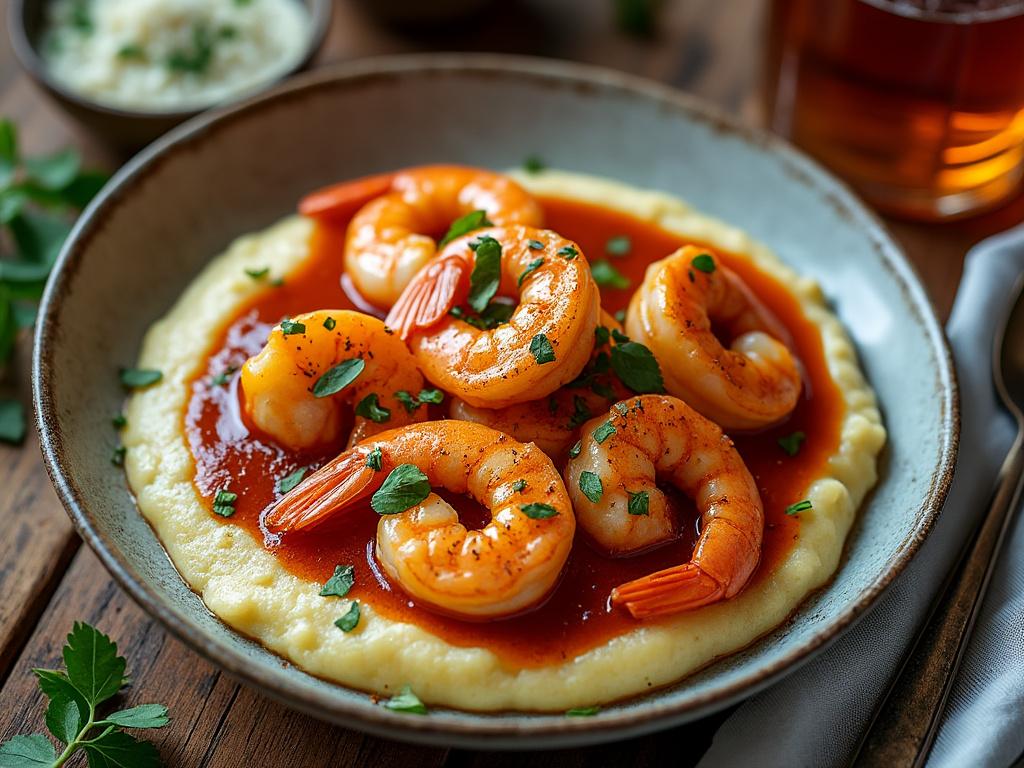
Smoked Paprika Shrimp and Grits with Roasted Pepper Gravy
Creamy stone-ground grits, bold smoked paprika shrimp, and a silky roasted red pepper gravy — a Southern classic done right.
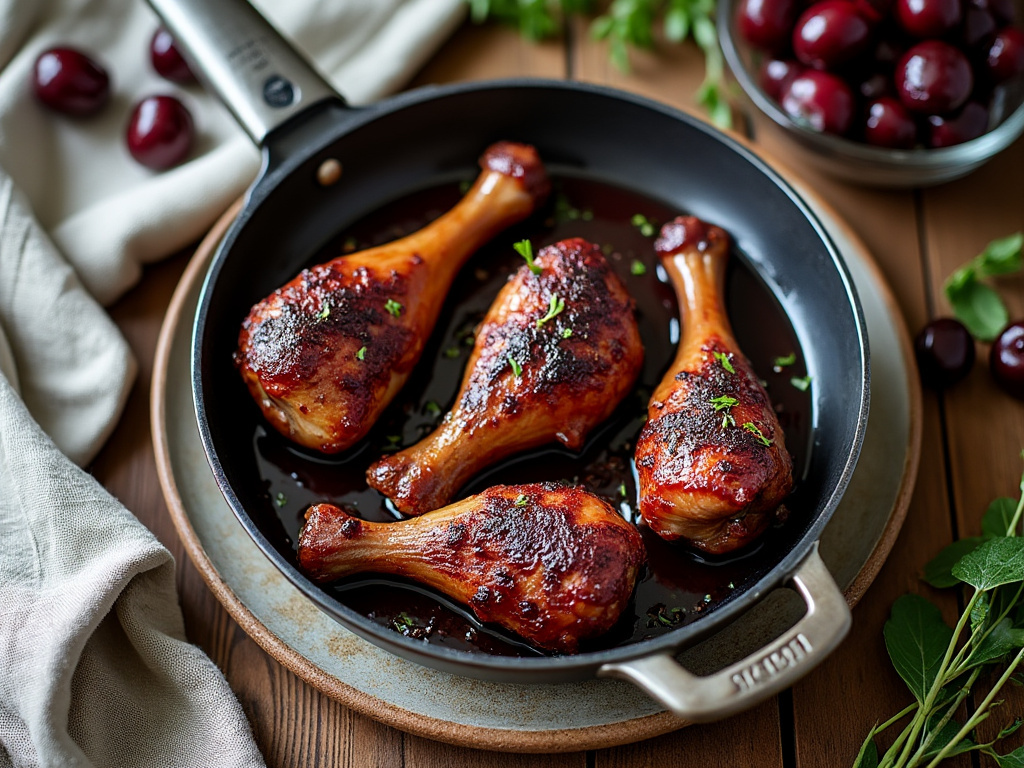
Crispy Skin Duck Legs with Cherry-Red Wine Pan Sauce
Duck legs with shatteringly crispy skin and a glossy cherry-red wine pan sauce — a restaurant-worthy dinner you can nail at home.
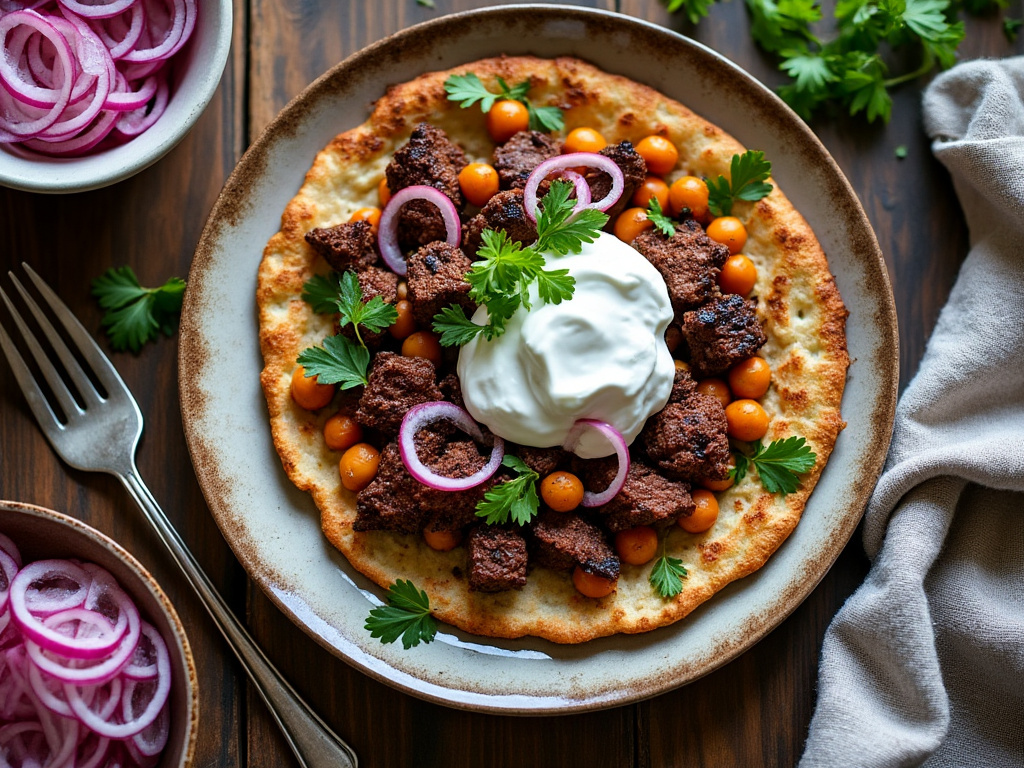
Berbere-Spiced Lamb and Chickpea Flatbread with Yogurt and Quick-Pickled Red Onion
Spiced ground lamb and crispy chickpeas on skillet flatbread, topped with cool yogurt and tangy pickled onion. Weeknight dinner in 55 minutes.