Crispy Polenta with Wild Mushrooms and Truffle Oil
Seared polenta squares topped with cremini, oyster, and shiitake mushrooms in a white wine pan sauce, finished with truffle oil. A solid vegetarian dinner.
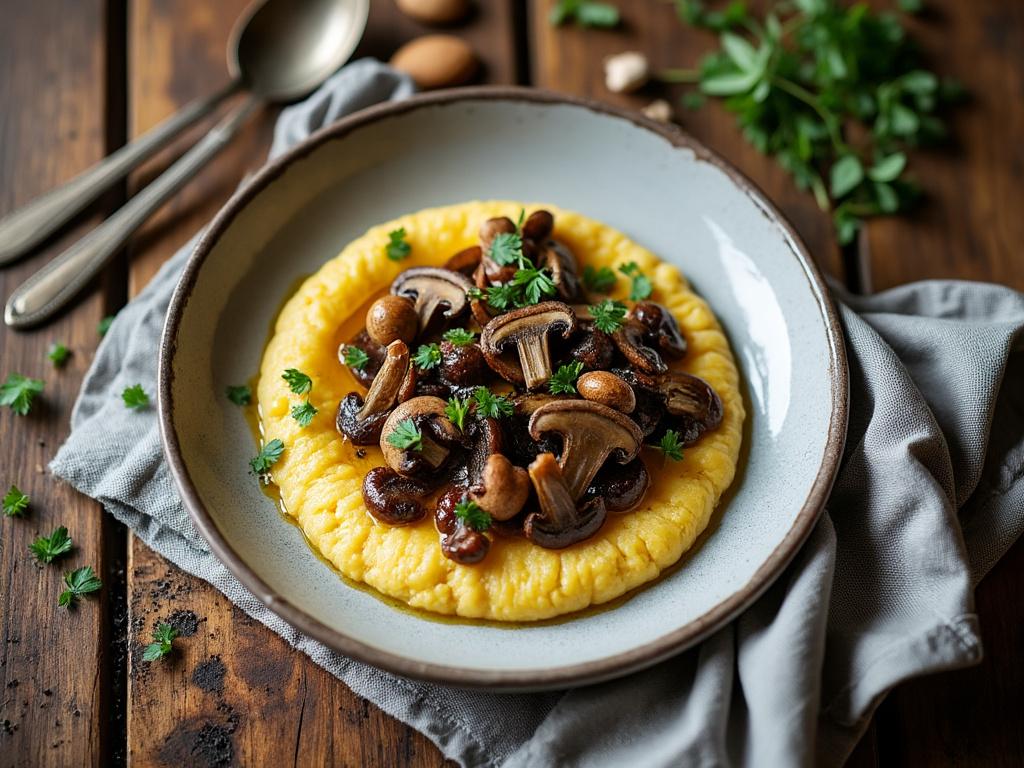
Polenta has two lives: soft and creamy straight from the pot, or sliced and seared into something with real structural integrity. This recipe uses both in sequence — the polenta is cooked creamy with broth, milk, butter, and Parmesan, then cooled and pan-fried until the outside snaps when you press it. That chilled-then-seared method is the whole point. Without the cooling step, the polenta won't hold its shape in the pan and you'll get mush with a crust.
On top goes a pound of mixed cremini, oyster, and shiitake mushrooms, cooked until they've shed their moisture and started actually browning — not steaming. White wine and a splash of balsamic give the pan sauce some sharpness to balance the truffle oil drizzled at the end. This is a solid vegetarian dinner party main or a weekend project meal; it's too involved for a Tuesday but straightforward once you understand the timing. If your polenta sticks to the pan when searing, it's not ready to flip — give it another minute and it will release cleanly.
Ingredients
- ▸ 4 cups vegetable broth
- ▸ 1 cup whole milk
- ▸ 1 tsp kosher salt
- ▸ 1/2 tsp black pepper
- ▸ 1 cup polenta (cornmeal)
- ▸ 4 tbsp unsalted butter, divided
- ▸ 1/2 cup grated Parmesan cheese
- ▸ 1 lb mixed fresh mushrooms (cremini, oyster, shiitake), sliced
- ▸ 3 cloves garlic, minced
- ▸ 2 tbsp fresh thyme leaves
- ▸ 1/4 cup dry white wine
- ▸ 2 tbsp truffle oil
- ▸ 1 tbsp balsamic vinegar
- ▸ 2 tbsp olive oil
- ▸ 1/4 tsp red pepper flakes
🛒 Links may earn us a small commission at no cost to you.
Recommended Gear
🛒 We may earn a small commission at no extra cost to you. We only recommend gear we'd use ourselves.
Instructions
Cook the Polenta
- 1. Bring broth, milk, salt, and pepper to a simmer in a large pot over medium heat, about 3-4 minutes.
- 2. Slowly whisk in polenta, stirring constantly to avoid lumps. Reduce heat to low.
- 3. Cook for 20-25 minutes, stirring every 2-3 minutes, until the mixture pulls away from the sides of the pot and is thick and creamy.
- 4. Stir in 2 tbsp butter and Parmesan cheese until fully melted.
- 5. Pour polenta into a parchment-lined 8x8-inch baking pan. Smooth the top and let cool to room temperature, about 15 minutes.
Prepare the Mushrooms
- 1. While polenta cools, heat olive oil and remaining 2 tbsp butter in a large skillet over medium-high heat, about 1 minute.
- 2. Add mushrooms and cook undisturbed for 3-4 minutes until the bottoms are golden brown.
- 3. Stir and cook for another 3-4 minutes until all mushrooms release their moisture and begin to brown.
- 4. Add minced garlic and thyme, cooking for 1 minute until fragrant.
- 5. Pour in white wine and let it reduce by half, about 2 minutes.
- 6. Stir in balsamic vinegar and red pepper flakes. Season with salt and pepper to taste. Keep warm on low heat.
Crisp the Polenta and Serve
- 1. Once cooled, turn polenta out onto a cutting board and cut into 8 squares or 12 triangles.
- 2. Heat a clean skillet over medium-high heat with a light coat of olive oil, about 1 minute until shimmering.
- 3. Working in batches, sear polenta pieces for 3-4 minutes per side until golden brown and crispy.
- 4. Arrange polenta on serving plates, top with warm mushroom mixture and pan juices, then drizzle with truffle oil.
- 5. Serve immediately while polenta is still crispy.
Cook's Notes
- Use a heavy-bottomed pot — enameled cast iron or a tri-ply stainless saucepan — when cooking the polenta. Thin pots cause hot spots that scorch the bottom before the polenta is fully cooked.
- Parchment is non-negotiable for lining the baking pan. Greased foil or an unlined pan will make turning out the polenta slab a frustrating mess.
- Don't skip the balsamic vinegar in the mushroom step — just one tablespoon adds the acidity that keeps the dish from feeling one-note and rich.
- Add truffle oil only after plating, never into the hot pan. Heat destroys the volatile compounds that give truffle oil its aroma, and you'll lose the point of using it.
- If you want sharper edges on your polenta pieces, use a sharp chef's knife and wipe the blade clean between cuts. A dull knife drags and compresses the edges.
Pro Tips
- → The polenta is done when it pulls away from the sides of the pot in a clean mass and holds a shape when you drag the spoon through the center. If it's still flowing like thick batter after 25 minutes, your heat is too low — bump it up slightly and stir constantly.
- → Sear polenta in a cast-iron or stainless skillet, not nonstick. Nonstick won't get hot enough to form a proper crust, and the polenta will stick to a cold pan regardless of material — always heat the pan and oil first until shimmering.
- → The single biggest failure mode for the mushroom step is adding too many mushrooms at once. One pound of sliced mushrooms is a lot of volume — if your skillet is smaller than 12 inches, cook in two batches. Crowded mushrooms steam and turn gray; uncrowded mushrooms brown and turn nutty.
- → If your seared polenta crust tears when you flip it, it's not ready. A properly seared piece will release from the pan on its own when the crust has formed. Force-flipping at 2 minutes will leave you with polenta stuck to the pan and a broken piece on the spatula.
- → Minced garlic burns fast in a hot skillet. After adding garlic and thyme to the mushrooms, watch for the 60-second mark — you want it fragrant and golden, not dark brown, which turns bitter and sharp in a bad way.
- → If the finished dish sits for more than 5 minutes before serving, the polenta crust softens under the moisture from the mushroom mixture. Either serve immediately or keep the mushrooms warm in a separate pan and plate to order.
What to Serve With This
A simple arugula salad dressed with lemon juice and good olive oil works well alongside this dish. The bitterness of the arugula cuts through the richness of the Parmesan polenta and the earthiness of the mushrooms without competing for attention. Shaved fennel added to that salad introduces a mild anise note that plays nicely against the thyme in the mushroom mixture.
For wine, reach for a Burgundy-style Pinot Noir or a Barbera d'Asti — both have enough acidity to handle the balsamic and enough earthiness to echo the mushrooms without being overwhelmed by the truffle oil. If you want white, a Vermentino or unoaked Chardonnay keeps things clean. For non-alcoholic pairings, a sparkling water with a squeeze of lemon and a few drops of white balsamic gives you the same acid contrast without alcohol.
A good crusty bread — a demi-baguette or sourdough boule — is useful for dragging through the pan juices left on the plate. You want something with a firm crust that won't go soggy immediately. Avoid anything too soft or enriched like brioche, which would make the whole plate feel heavy.
If you're serving this as a starter rather than a main, reduce to two polenta pieces per person and pair with a light soup like a roasted tomato or simple vegetable broth to start the meal.
Variations & Substitutions
This recipe is already vegetarian, but it's straightforward to make it fully vegan. Swap the whole milk for unsweetened oat milk (Oatly barista works well here because it's higher fat) and replace both the butter and Parmesan with vegan alternatives — Miyoko's cultured butter and Violife Parmesan shreds both melt into polenta without issues. The sear still works the same way. The mushroom step needs no changes.
For a dairy-free but non-vegan version, skip the milk entirely and use 5 cups of vegetable broth instead of 4. The polenta will be slightly less rich but still holds its shape for searing. Leave out the Parmesan or add a tablespoon of nutritional yeast at the end for a savory note.
Seasonal swaps for the mushroom topping give this recipe range throughout the year. In fall, add diced roasted butternut squash to the mushroom mixture. In spring, swap shiitake for ramps or morels when they're available. In summer, a handful of fresh corn kernels thrown into the pan after the wine reduces adds sweetness that works with the truffle oil.
To scale for 8 people, double the polenta ingredients and use a 9x13-inch baking pan instead of 8x8 — the depth stays similar so cooling time doesn't change much. Double the mushroom mixture in a 12-inch skillet working in two batches to avoid steaming instead of browning.
Frequently Asked Questions
Can I make the polenta ahead of time? ▼
Yes — the polenta actually benefits from being made a day ahead. Cook it, pour it into the lined pan, cool to room temperature, then cover with plastic wrap and refrigerate overnight. Cold polenta firms up more than room-temperature polenta, which means it sears even better the next day.
How do I store leftovers? ▼
Store seared polenta pieces and mushrooms separately in airtight containers in the refrigerator for up to 3 days. The polenta will soften after sitting with the mushroom juices, so keep them apart until you're ready to reheat.
What's the best way to reheat the seared polenta? ▼
Re-crisp it in a dry skillet over medium heat for 2-3 minutes per side — don't use the microwave, which makes it rubbery. Reheat the mushroom mixture separately in a small saucepan over low heat with a splash of water or broth to loosen it, then assemble and add truffle oil fresh.
Can I freeze the polenta? ▼
You can freeze the uncooked, cooled polenta slab (before searing) for up to 1 month. Wrap it tightly in plastic wrap and then foil. Thaw overnight in the refrigerator before cutting and searing. Seared polenta doesn't freeze well — the texture becomes grainy when thawed.
Can I use instant polenta instead of regular? ▼
You can, but instant polenta (like Bob's Red Mill Quick Cooking) cooks in 5 minutes instead of 20-25. The texture is slightly less dense, which means it may not hold together quite as firmly when searing. Let it cool completely — overnight in the fridge is ideal — before cutting.
My mushrooms are releasing a lot of liquid and steaming instead of browning. What went wrong? ▼
The pan wasn't hot enough, or the pan was too small and the mushrooms were crowded. Use a 12-inch skillet, make sure the oil-butter mixture is shimmering before the mushrooms go in, and don't stir for the first 3-4 minutes. If the liquid has already accumulated, turn the heat to high and cook until it evaporates before continuing.
Can I use dried mushrooms instead of fresh? ▼
You can supplement with dried mushrooms — rehydrate 1 oz of dried porcini in 1/2 cup hot water for 20 minutes, then chop them and add to the skillet along with the fresh mushrooms. Strain the soaking liquid through a coffee filter and add it in place of or in addition to the white wine for deeper flavor.
What can I use instead of truffle oil? ▼
Skip it rather than substitute a cheap version — most grocery-store truffle oils are artificially flavored and can taste synthetic, especially on a dish where the oil is added raw at the end. A drizzle of good finishing olive oil plus a few extra thyme leaves is a better call if you don't have quality truffle oil on hand.
The polenta is sticking to the parchment when I try to turn it out. What should I do? ▼
Let it cool longer. Polenta needs to be fully set — no jiggling in the center — before it will release cleanly. If it's still sticking, run a thin spatula or offset knife around the edges and along the bottom before inverting. Refrigerating for 30 minutes usually solves the problem.
Can I grill the polenta instead of pan-searing it? ▼
Yes. Brush the polenta pieces with olive oil and grill over medium-high heat for 3-4 minutes per side on a well-oiled grate. You'll get grill marks instead of an all-over golden crust, but the result works well, especially in summer when you want to keep heat outside.
Enjoyed this recipe?
Daily Home Cookery is self-funded. If something you cooked here made dinner a little better, a coffee keeps the kitchen running.
☕ Buy me a coffeeYou Might Also Like
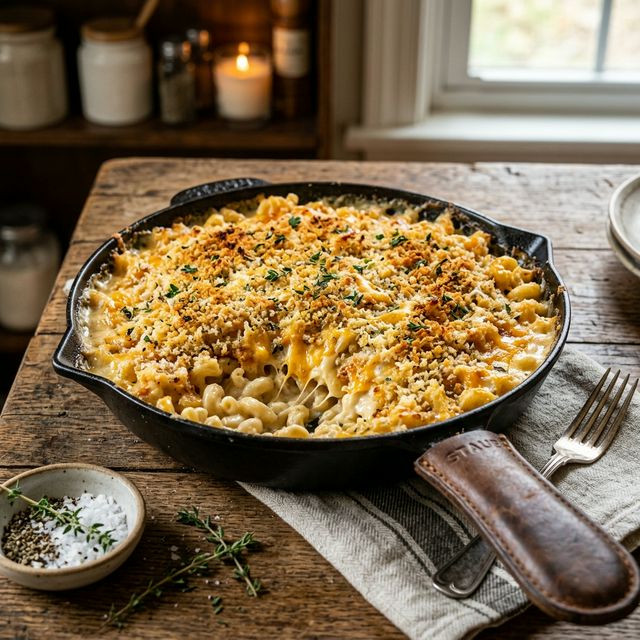
Cast Iron Mac and Cheese
Stovetop cheddar-gruyere sauce, elbow macaroni, and a buttered panko crust baked in cast iron. Ready in 40 minutes, crispy on top, creamy all the way through.
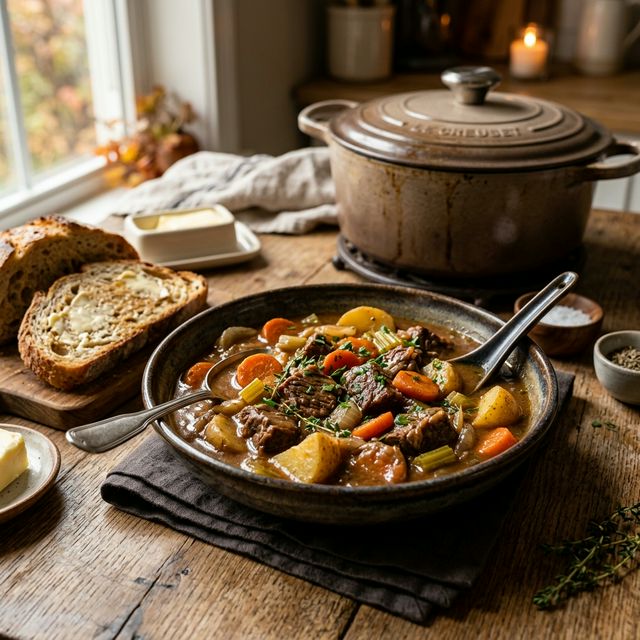
Slow Cooker Beef Stew
Tender beef chuck, potatoes, and carrots in a thick, savory broth. 20 min prep, 8 hrs on LOW. Real searing step included — no bland shortcuts.
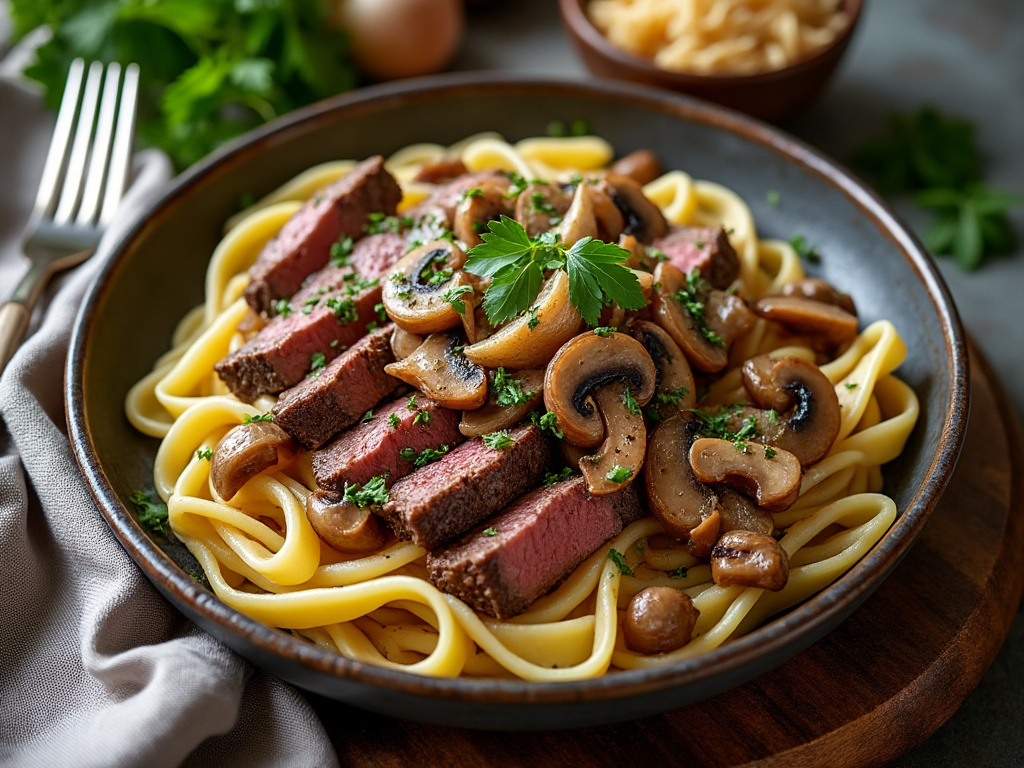
Caramelized Shallot and Gruyère Beef Stroganoff
Rich beef stroganoff with caramelized shallots, Gruyère, and tender sirloin — a weeknight dinner that tastes like it took all day.