Cast Iron Mac and Cheese
Stovetop cheddar-gruyere sauce, elbow macaroni, and a buttered panko crust baked in cast iron. Ready in 40 minutes, crispy on top, creamy all the way through.
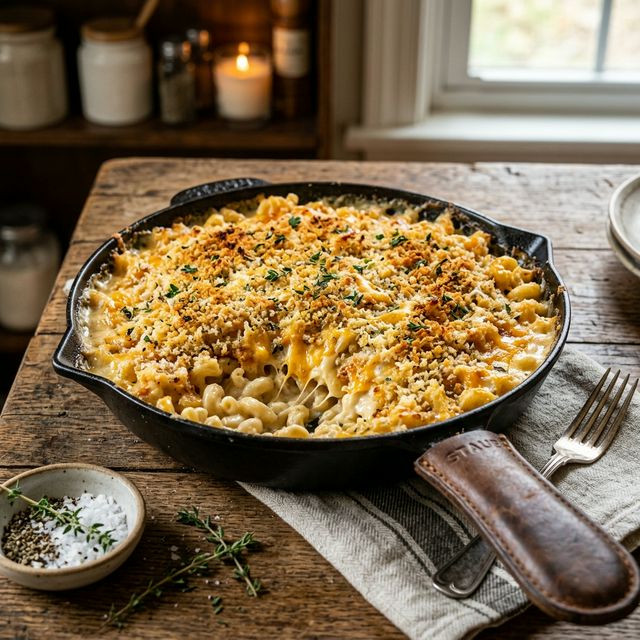
Cast iron mac and cheese gives you a stovetop cheese sauce and an oven-baked crust in a single pan that goes straight to the table. The critical move here is pulling the macaroni one minute before al dente — it keeps cooking in the sauce and in the oven, so you avoid the gluey, overcooked mush that ruins most baked mac. The cheese blend does real work: sharp cheddar brings sharpness and color, gruyere adds a nutty depth that cheddar alone can't, and cream cheese gives the sauce a silky body that holds together under oven heat without breaking. Mustard powder sharpens the whole thing without tasting like mustard. You end up with a creamy interior and a panko crust that audibly crunches when you spoon through it.
This is a weeknight dish that looks like you tried harder than you did — one skillet, about 40 minutes total. If your sauce looks grainy after adding the cheese, the milk was too hot; pull it completely off the heat, wait 60 seconds, then stir in the cheese slowly.
Ingredients
- ▸ 1 lb elbow macaroni
- ▸ 3 tbsp butter
- ▸ 3 tbsp all-purpose flour
- ▸ 2.5 cups whole milk
- ▸ 8 oz sharp cheddar, shredded
- ▸ 4 oz gruyere, shredded
- ▸ 4 oz cream cheese
- ▸ 1 tsp mustard powder
- ▸ 1/2 tsp garlic powder
- ▸ 1 cup panko breadcrumbs
- ▸ 2 tbsp melted butter
- ▸ Salt and pepper to taste
🛒 Links may earn us a small commission at no cost to you.
Recommended Gear
🛒 We may earn a small commission at no extra cost to you. We only recommend gear we'd use ourselves.
Instructions
Make the Pasta
- 1. Preheat oven to 375°F. Cook macaroni 1 minute short of al dente. Drain and set aside.
Make the Cheese Sauce
- 1. In a saucepan, melt 3 tbsp butter over medium heat. Whisk in flour and cook 1 minute.
- 2. Gradually whisk in milk. Cook 5-7 minutes, stirring constantly, until thickened.
- 3. Remove from heat. Stir in cheddar, gruyere, cream cheese, mustard powder, garlic powder, salt, and pepper until smooth.
- 4. Fold in the cooked pasta.
Bake
- 1. Transfer to a cast iron skillet. Mix panko with melted butter and spread over the top.
- 2. Bake 20-25 minutes until bubbly and golden.
Cook's Notes
- Shred all your cheese from blocks before you start. Pre-shredded cheese has cellulose coating that prevents it from melting smoothly into the sauce.
- Whole milk is not optional here — lower-fat milk produces a thinner sauce that can turn watery in the oven. If whole milk isn't available, half-and-half works.
- Season the pasta water aggressively with salt. The macaroni absorbs water as it cooks, and under-seasoned pasta will dull the whole dish even with a well-seasoned sauce.
- Let the finished skillet sit for 5 minutes before serving. The sauce tightens slightly as it cools and portions more cleanly.
Pro Tips
- → When you whisk flour into the butter, cook it for a full minute while stirring — you should smell it go from raw flour to something slightly nutty. Skipping this step leaves a starchy, pasty taste in the finished sauce.
- → Add milk to the roux gradually, whisking constantly with each addition. If you pour it all in at once, you risk lumps that are hard to smooth out. A flat whisk works better than a balloon whisk here for getting into the pan corners.
- → The cream cheese should be at room temperature before it goes into the sauce. Cold cream cheese will clump rather than melt evenly. Cut it into small cubes to speed up incorporation.
- → Don't skip tossing the panko with melted butter before spreading it on top. Dry panko goes on golden but turns dusty and pale instead of crisping properly. Every breadcrumb should look lightly coated.
- → If the skillet edges look like they're burning before the center bubbles, your oven runs hot. Drop to 350°F and add 5–8 minutes. Alternatively, move the skillet to a lower rack.
- → For extra crust surface area, use a wider, shallower skillet rather than a deep one. A 12-inch cast iron gives you more panko-covered top relative to the pasta below, which is the part most people fight over.
What to Serve With This
A sharp green salad cuts through the richness without competing with it. Dress arugula or baby romaine with a simple red wine vinaigrette — the acid does the same job a squeeze of lemon would do on fried fish. Skip creamy dressings entirely; they'll make the meal feel heavy before you're halfway through.
For a hot vegetable side, roasted broccoli at 425°F works well. The charred edges bring a slight bitterness that balances the cheese sauce. Brussels sprouts with a little balsamic do the same job. Avoid anything buttery or cream-based on the side — the skillet already has that covered.
Beer pairs better than wine here. A cold American amber ale or a malty lager (Yuengling Traditional Lager or Samuel Adams Boston Lager) doesn't fight the cheddar the way a tannic red would. If you want wine, go with a dry Alsatian Riesling or a white Burgundy — both have the acid and body to handle the gruyere without clashing. For non-alcoholic, sparkling water with a slice of green apple works surprisingly well — the carbonation cuts grease and the apple note echoes the gruyere.
Skip additional bread at the table. The panko crust is already doing that job. If someone insists, a plain sourdough slice is fine, but garlic bread will just double down on what's already in the bowl.
Variations & Substitutions
To make this gluten-free, swap the all-purpose flour for a 1:1 gluten-free blend like Bob's Red Mill or King Arthur Measure for Measure — the roux behaves nearly identically. Replace the elbow macaroni with Jovial or Barilla gluten-free elbows, and use gluten-free panko (Ian's brand holds up well under the broiler). Everything else in the recipe stays the same.
For a dairy-free version, use Miyoko's Creamery oat milk butter for the roux, full-fat oat milk in place of whole milk, and a combination of Violife cheddar-style shreds and Kite Hill cream cheese. Skip the gruyere entirely — there's no dairy-free equivalent that melts cleanly — and compensate with an extra 2 oz of the cheddar-style shreds and a splash of apple cider vinegar to sharpen the flavor. It won't be identical, but it's a functional and good mac.
For a spicier version, stir 1–2 tsp of Frank's RedHot or a half teaspoon of cayenne into the cheese sauce before folding in the pasta. Crispy crumbled bacon pressed into the panko topping before baking is a reliable addition that adds salt and texture without changing the structure. A smoked paprika and gruyere version — substitute smoked gouda for the gruyere at equal weight — gives the whole skillet a different, smokier character that works well in colder months.
To scale up for 8 servings, double every ingredient and use a 12-inch skillet or a 9x13-inch baking dish. Increase the bake time by 8–10 minutes and check for bubbling edges before pulling it out.
Frequently Asked Questions
Can I make this ahead of time? ▼
Yes. Make the cheese sauce and fold in the pasta, then transfer to the skillet and refrigerate uncovered for up to 24 hours. Add the panko topping just before baking. Pull it from the fridge 20 minutes before it goes in the oven so it doesn't bake unevenly from cold.
How do I store leftovers? ▼
Transfer leftovers to an airtight container and refrigerate for up to 4 days. The cast iron skillet is not ideal for storage — acid from the cheese sauce can strip the seasoning if left sitting. Use a glass or plastic container instead.
What's the best way to reheat it? ▼
Reheat individual portions in a small saucepan over low heat with a splash of whole milk, stirring constantly until loose and creamy. The microwave works in a pinch but kills the crust texture. If you want to revive the crust, spread reheated mac in a baking dish, top with fresh buttered panko, and broil for 3–4 minutes.
Can I freeze this? ▼
You can freeze it, but the texture degrades noticeably — the sauce tends to separate and the pasta gets soft. If you do freeze it, portion it into airtight containers and freeze for up to 2 months. Reheat from frozen in a 350°F oven covered with foil, then uncover for the last 10 minutes.
Can I substitute the gruyere? ▼
Yes. Fontina is the closest swap — it melts cleanly and has a similar mild nuttiness. Swiss or Emmental work too but are milder. Avoid pre-shredded bags of any cheese for the sauce; the anti-caking coating prevents smooth melting.
What if I don't have a cast iron skillet? ▼
A 2-quart baking dish or a 9x13-inch pan both work. The cast iron retains heat better and gives you slightly crispier edges, but the result in a ceramic or glass dish is still solid. Add 5 minutes to the bake time if using glass.
My cheese sauce is grainy. What went wrong? ▼
Grainy sauce means the cheese hit milk that was too hot and the proteins seized. Take the pan completely off the heat, let it cool for a full minute, then add the cheese in small handfuls while stirring constantly. If it's already grainy, a tablespoon of cream cheese whisked in can help smooth it out.
Can I use a different pasta shape? ▼
Cavatappi and small shells both hold the sauce well and are good substitutes. Avoid large pasta shapes — they make portioning awkward and the sauce-to-pasta ratio feels off. Whatever shape you use, pull it one minute short of the package's al dente time.
How do I know when it's done baking? ▼
Look for active bubbling at the edges of the skillet and a deep golden-brown crust on the panko — not just lightly toasted, but genuinely golden. If the top is browning too fast before the interior bubbles, loosely tent it with foil for the last 5 minutes.
Enjoyed this recipe?
Daily Home Cookery is self-funded. If something you cooked here made dinner a little better, a coffee keeps the kitchen running.
☕ Buy me a coffeeYou Might Also Like
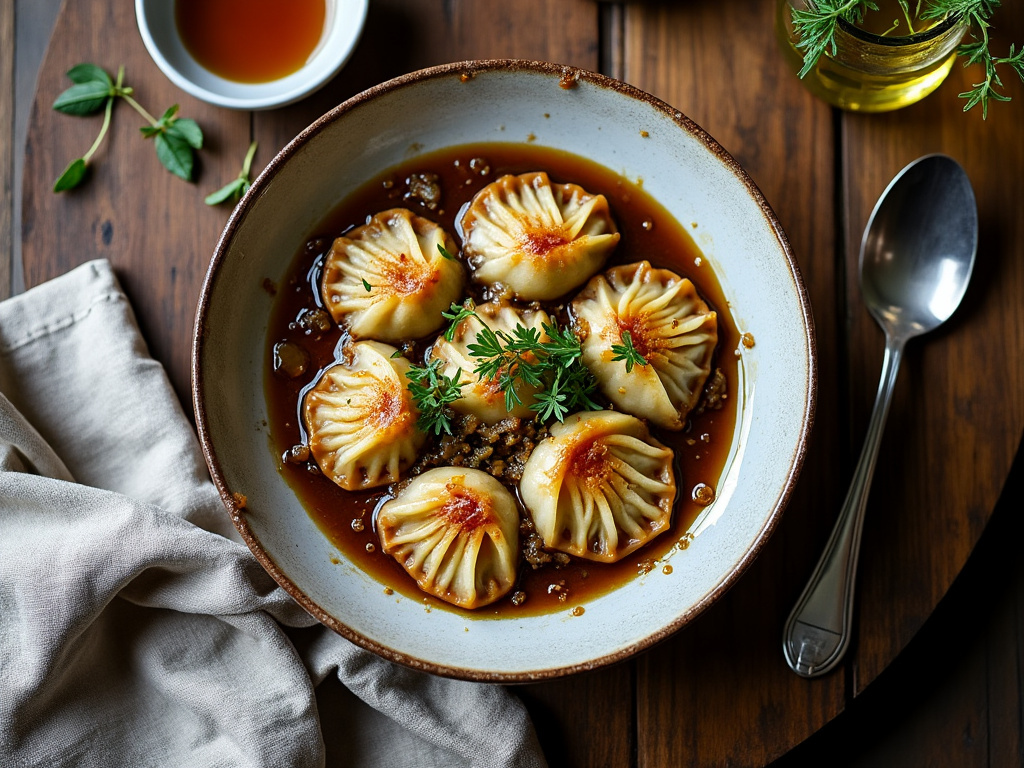
Caramelized Onion and Beef French Onion Soup Dumplings (Gyoza-Style)
Pan-fried gyoza stuffed with caramelized onions, beef, and Gruyère — all the soul of French onion soup in a crispy dumpling.
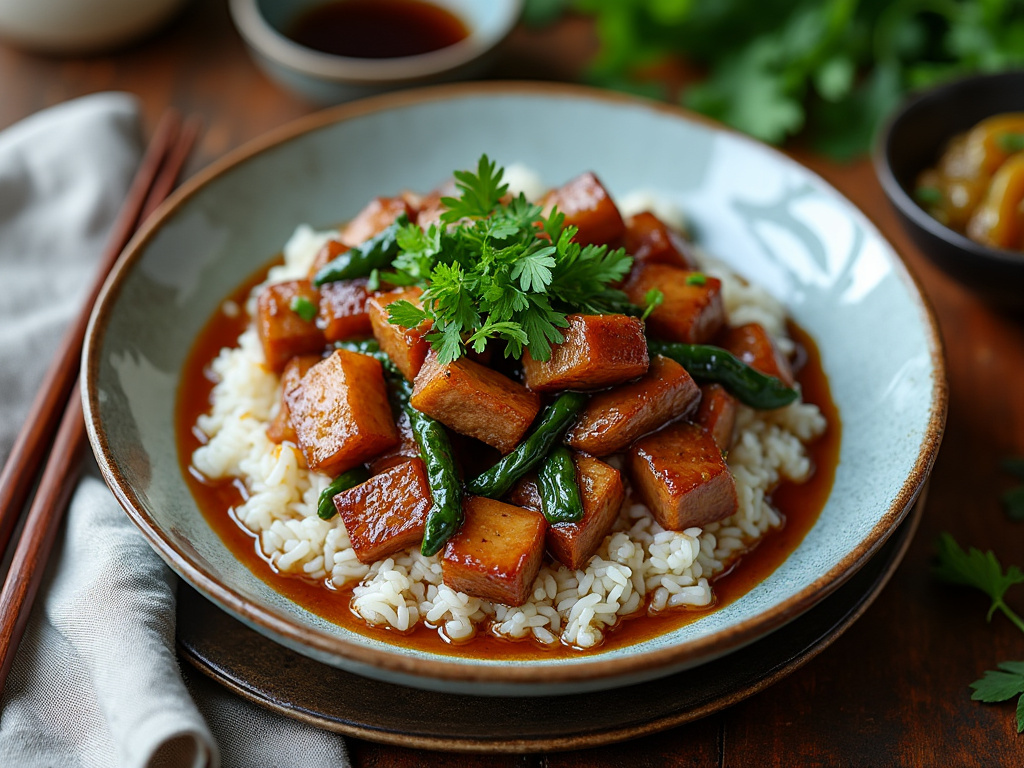
Taiwanese Braised Pork Rice (Lu Rou Fan) with Pickled Mustard Greens
Meltingly tender soy-braised pork belly over steamed rice with pickled mustard greens — a Taiwanese comfort food classic ready in 90 minutes.
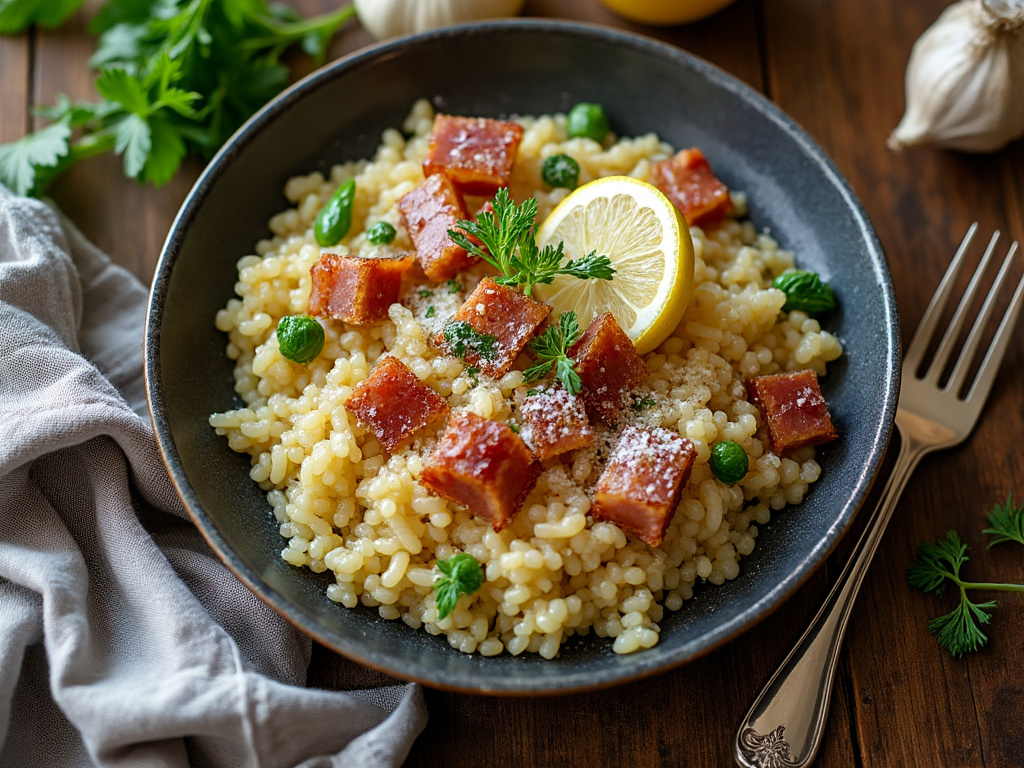
Crispy Pancetta and Leek Risotto with Lemon and Parmesan
A creamy, restaurant-worthy risotto with crispy pancetta, sweet leeks, and bright lemon. Ready in 50 minutes on the stovetop.