Slow Cooker Beef Stew
Tender beef chuck, potatoes, and carrots in a thick, savory broth. 20 min prep, 8 hrs on LOW. Real searing step included — no bland shortcuts.
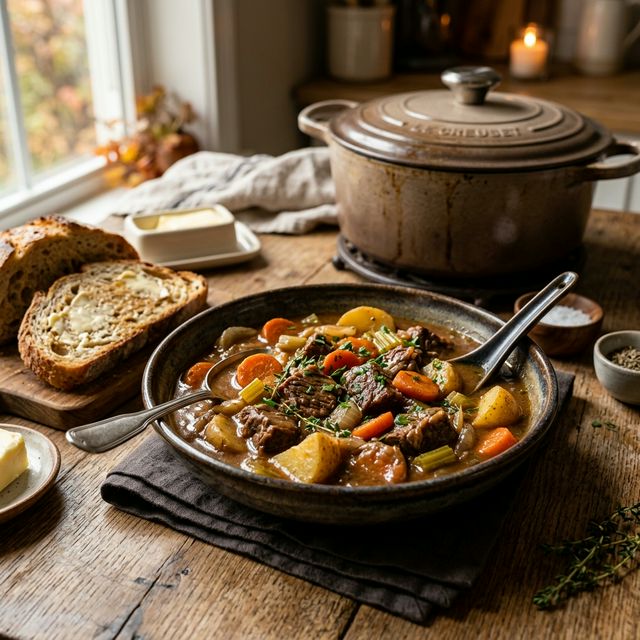
Beef stew from a slow cooker earns its place on a weeknight rotation because the work is front-loaded — twenty minutes of prep and one pan to wash, then eight hours of hands-off cooking. The single technique that separates a good version from a forgettable one is searing the flour-dusted chuck in batches over genuinely high heat. That crust isn't just color; it's the Maillard reaction building the savory backbone that carries the whole stew. Skip it and you get a pale, one-dimensional broth.
After eight hours on LOW, the chuck breaks down into tender, pull-apart pieces surrounded by a thickened, rust-colored broth that's rich from the Worcestershire and tomato paste. Potatoes and carrots hold their shape but yield easily to a fork. This is a Sunday-night dinner or a meal-prep anchor — it reheats well on the stovetop and actually improves overnight. If the broth tastes thin at the end, whisk a teaspoon of tomato paste into a ladleful of liquid and stir it back in, then let it sit on HIGH for another fifteen minutes with the lid cracked.
Ingredients
- ▸ 2 lbs beef chuck, cut into 1.5-inch cubes
- ▸ 4 medium potatoes, quartered
- ▸ 4 carrots, cut into chunks
- ▸ 2 celery stalks, sliced
- ▸ 1 large onion, diced
- ▸ 3 cloves garlic, minced
- ▸ 2 cups beef broth
- ▸ 1 can (6 oz) tomato paste
- ▸ 2 tbsp Worcestershire sauce
- ▸ 2 tbsp all-purpose flour
- ▸ 1 tsp dried thyme
- ▸ 1 bay leaf
- ▸ Salt and pepper
- ▸ 2 tbsp olive oil
🛒 Links may earn us a small commission at no cost to you.
Recommended Gear
🛒 We may earn a small commission at no extra cost to you. We only recommend gear we'd use ourselves.
Instructions
Sear the Beef
- 1. Toss beef cubes with flour, salt, and pepper.
- 2. Heat olive oil in a skillet over high heat. Sear beef in batches until browned on all sides, about 3 minutes per batch. Transfer to slow cooker.
Build the Stew
- 1. Add potatoes, carrots, celery, onion, and garlic to the slow cooker.
- 2. Mix beef broth, tomato paste, Worcestershire sauce, and thyme. Pour over everything.
- 3. Tuck in the bay leaf.
- 4. Cook on LOW for 8 hours or HIGH for 4-5 hours.
- 5. Remove bay leaf. Adjust seasoning before serving.
Cook's Notes
- Cut the chuck yourself from a whole roast rather than buying pre-cut stew meat — you get uniform 1.5-inch cubes that sear and cook evenly, and you can trim excess hard fat while you're at it.
- Don't crowd the pan when searing; work in two or three batches depending on your skillet size. Crowding drops the pan temperature and you'll steam the beef instead of browning it.
- Yukon Gold potatoes hold their shape better than russets during the long cook — worth using if you have the option.
- The bay leaf matters more than it seems. It adds a quiet herbal background note. Just don't forget to fish it out before serving.
Pro Tips
- → Your skillet needs to be genuinely hot before the beef goes in — a drop of water should evaporate immediately on contact. If the oil is just shimmering rather than nearly smoking, you won't get real browning, and the stew will taste flat.
- → The flour on the beef cubes is your primary thickener. If it scorches in the pan (dark, acrid smell rather than nutty), deglaze the skillet with a splash of broth and pour those drippings into the slow cooker — the fond still has flavor, and a little browning won't wreck the stew.
- → If your stew tastes underseasoned at the end, add salt in small increments and let it sit for a minute before tasting again. The long cook concentrates flavors, but the potatoes absorb salt aggressively and can mask how much you've already added.
- → Tomato paste directly into liquid can leave raw, metallic spots in the flavor if it doesn't cook out. Whisking it thoroughly into the broth before pouring it over everything ensures it distributes evenly and mellows during the cook.
- → Resist lifting the lid during cooking. Every peek drops the internal temperature by roughly 15–20°F and adds 20–30 minutes to the total cook time. Trust the process.
- → If the beef chunks are falling apart too early — say, around the 6-hour mark on LOW — it means your slow cooker runs hot. Switch it off and let the stew rest on WARM for the remaining time to prevent the meat from going mushy.
What to Serve With This
Crusty bread is the obvious move here, and it's obvious for good reason. A sourdough boule or a French baguette from a bakery — not the pre-sliced sandwich loaf — gives you something sturdy enough to drag through the broth without dissolving. The slight tang of sourdough cuts through the richness of the chuck fat in a way that plain white bread doesn't.
If you want a green vegetable on the table, keep it simple. Steamed green beans or a quick sauté of broccolini with garlic take under ten minutes and don't compete with the stew. A plain green salad with a sharp red wine vinaigrette works the same way — the acid resets your palate between bites of the heavier stew.
For wine, reach for a medium-bodied red with enough acidity to handle the Worcestershire and tomato paste. A Côtes du Rhône or a domestic Grenache blend lands in the right range without overpowering the dish. If you want something with more tannin, a Malbec works. For a non-alcoholic option, a sparkling water with a squeeze of lemon does the same acidic reset job without any fuss.
A dark, malty beer — an Irish stout or an English brown ale — also pairs well. The roasted grain notes echo the seared beef, and the low bitterness keeps it from clashing with the sweet carrots.
Variations & Substitutions
To make this gluten-free, swap the all-purpose flour for a 1:1 ratio of rice flour or certified GF cornstarch when dredging the beef. Both brown adequately at high heat. Check your Worcestershire sauce label — most standard brands like Lea & Perrins contain trace malt vinegar, so swap to a certified GF version if that's a concern.
For a vegetarian version, replace the beef chuck with 2 lbs of cremini or portobello mushrooms (quartered) plus one 15-oz can of chickpeas, drained. Use vegetable broth instead of beef broth and add 1 tablespoon of soy sauce to compensate for the lost umami. Cook on LOW for 6 hours rather than 8 — vegetables don't need the full chuck-breaking time.
For a regional flavor shift, a French-style daube is easy to pull from this base: swap the beef broth for 1½ cups of dry red wine plus ½ cup of broth, add ½ cup of pitted Kalamata olives and 1 teaspoon of orange zest in the last hour, and replace the thyme with herbes de Provence.
Scaling up to serve 8 is straightforward — double every ingredient and use a 7- or 8-quart slow cooker. Cook time stays the same. Scaling down to 2 servings is trickier; a standard 6-quart cooker runs too hot with a small load. Use a 3-quart slow cooker or halve the recipe and cook it in a covered Dutch oven at 300°F for 2½ to 3 hours instead.
Frequently Asked Questions
Can I make this the night before? ▼
Yes, and it's one of the better make-ahead stews precisely because the flavors tighten up overnight. Refrigerate it fully cooled in a sealed container. The fat will solidify on top and lift off easily before reheating, which actually gives you better control over richness.
How do I store and reheat leftovers? ▼
Store in an airtight container in the refrigerator for up to 4 days. Reheat gently on the stovetop over medium-low heat, stirring occasionally and adding a splash of beef broth if the stew has thickened too much overnight. Microwave reheating works but can make the beef texture rubbery if you go above medium power.
Can I freeze this stew? ▼
You can, but potatoes don't freeze well — they turn grainy and waterlogged. If you're planning to freeze, cook the stew without the potatoes and add freshly cooked potato chunks when you reheat. Freeze in portions for up to 3 months in freezer-safe containers, leaving an inch of headspace.
Do I really need to sear the beef first? ▼
Yes. This isn't about looks — the sear develops depth of flavor through the Maillard reaction that eight hours in a slow cooker cannot replicate. The flour coating also helps thicken the broth. Skipping it produces a noticeably thinner, blander stew.
What if my stew is too thin at the end? ▼
Remove the lid, switch to HIGH, and cook for an additional 20–30 minutes to let some liquid evaporate. Alternatively, whisk 1 tablespoon of cornstarch with 2 tablespoons of cold water and stir the slurry in during the last 30 minutes on HIGH. The flour from the sear step usually handles thickening, but heavily marbled chuck can release extra liquid.
What cut of beef works best here? ▼
Chuck is the right choice — it has enough intramuscular fat and connective tissue to stay moist and become tender over a long cook. Lean cuts like sirloin or round will turn dry and stringy after 8 hours. Don't be tempted by pre-cut 'stew meat' at the supermarket; it's often a random mix of scraps and cooks unevenly.
Can I cook this on HIGH instead of LOW? ▼
Yes, 4 to 5 hours on HIGH will get you there. The texture of the beef is slightly less yielding than the LOW version — still good, but the LOW setting gives the collagen in the chuck more time to convert to gelatin, which adds body to the broth. Use HIGH when you're short on time.
Can I add wine to this recipe? ▼
Substitute ½ cup of the beef broth with ½ cup of dry red wine — Cabernet Sauvignon or Merlot work well. Add it to the broth mixture before pouring over the beef and vegetables. It deepens the flavor without making the stew taste boozy after the long cook.
What size slow cooker do I need? ▼
A 6-quart slow cooker is the right size for this recipe as written. The insert should be at least half full but no more than two-thirds full for proper heat circulation. A 4-quart will be too tight with 2 pounds of beef plus all the vegetables.
Enjoyed this recipe?
Daily Home Cookery is self-funded. If something you cooked here made dinner a little better, a coffee keeps the kitchen running.
☕ Buy me a coffeeYou Might Also Like
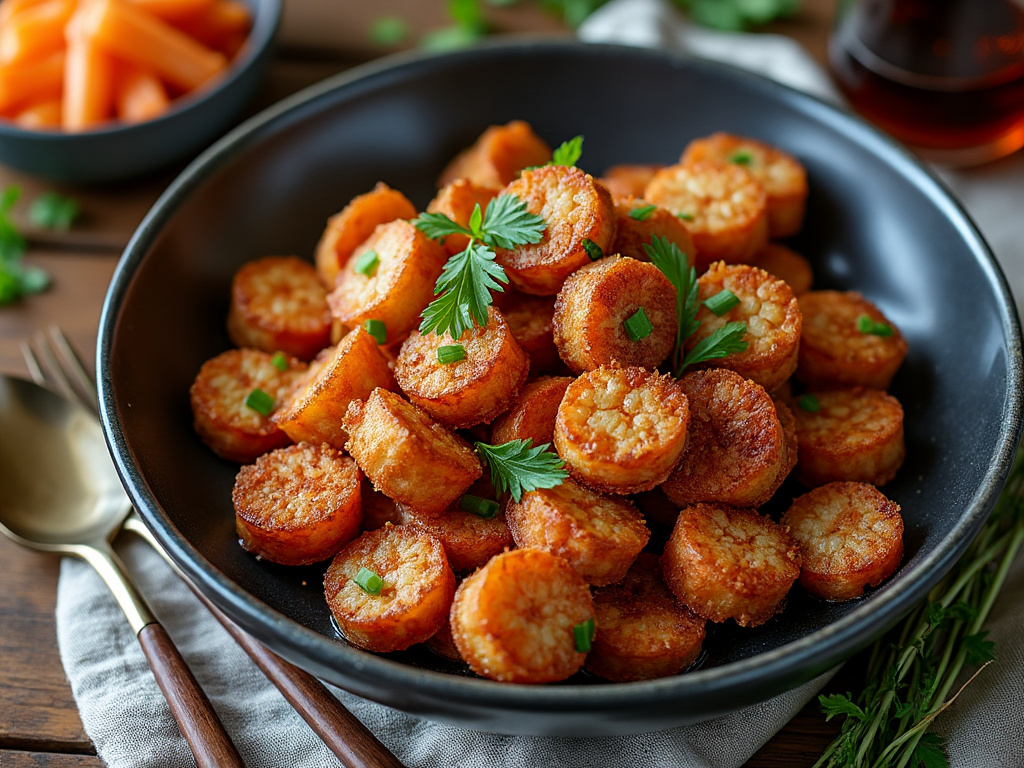
Crispy Rice Cakes with Gochujang Braised Pork Belly and Pickled Daikon
Pan-fried tteok meet sticky gochujang-braised pork belly and quick pickled daikon in this bold, satisfying Korean-inspired skillet dinner.
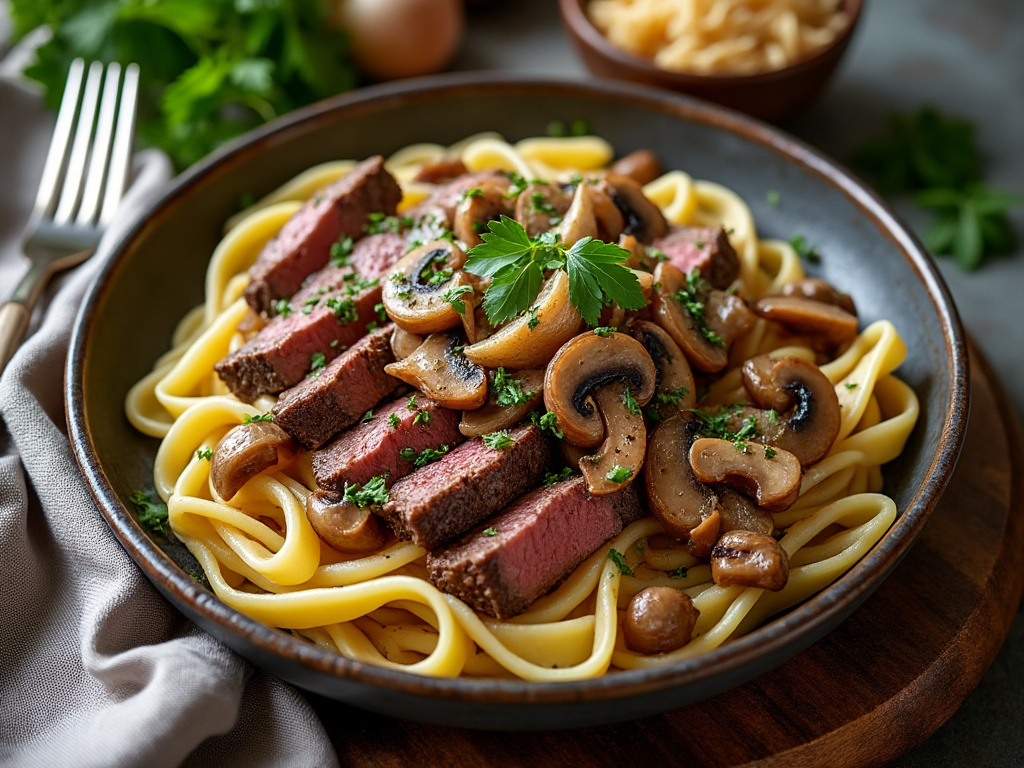
Caramelized Shallot and Gruyère Beef Stroganoff
Rich beef stroganoff with caramelized shallots, Gruyère, and tender sirloin — a weeknight dinner that tastes like it took all day.
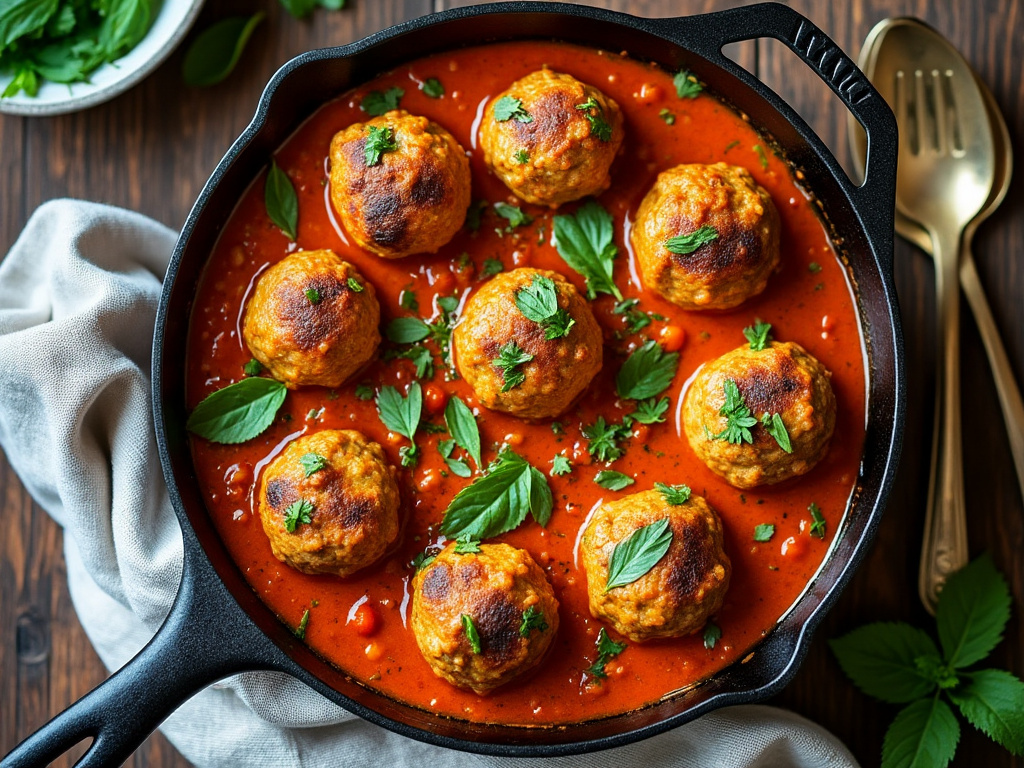
Skillet Butter Chicken Meatballs with Spiced Tomato Cream Sauce
Tender spiced chicken meatballs simmered in a rich, garam masala tomato cream sauce — weeknight dinner done in one skillet, 55 minutes total.