Smoky Chorizo and White Bean Stew
A 40-minute Dutch oven stew with Spanish chorizo, cannellini beans, fire-roasted tomatoes, and Tuscan kale. One pot, deep flavor, weeknight-ready.
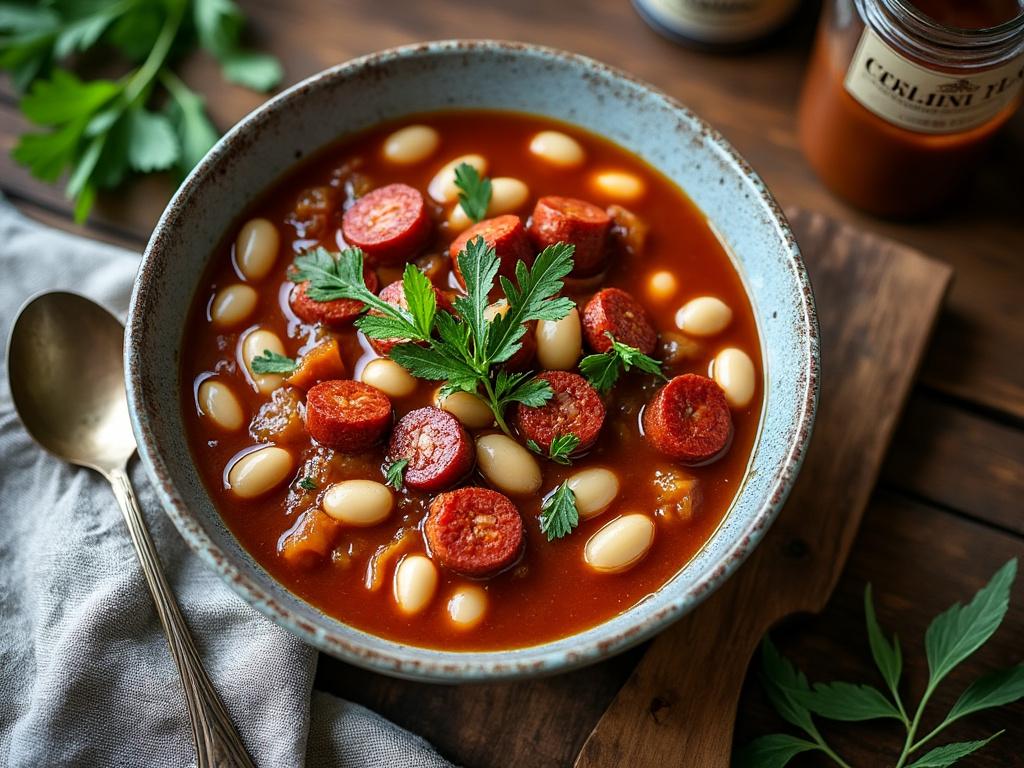
This stew works because of one foundational decision: you render the cured chorizo first and cook everything else in the fat it leaves behind. That brick-red, paprika-saturated oil becomes the flavor base for the entire pot — the onions soften in it, the tomato paste toasts in it, and the beans absorb it during the simmer. The result is a broth that tastes like it cooked for hours even though it's done in 40 minutes. Flavor-wise, you get deep smokiness from the chorizo and paprika, a slight tang from fire-roasted tomatoes and lemon, and substantial body from the cannellini beans. The kale adds texture without turning to mush if you add it at the end as written.
This is a confident weeknight dinner — one Dutch oven, minimal cleanup, feeds four without fuss. It also holds well for meal prep; the flavors actually improve by day two. If your stew tastes flat after the full simmer, don't reach for more salt first — squeeze in an extra hit of lemon juice. Acid often does more work than salt in a dish this rich.
Ingredients
- ▸ 7 oz cured Spanish chorizo, sliced into 1/4-inch coins
- ▸ 2 tbsp olive oil
- ▸ 1 large yellow onion, diced (about 1.5 cups)
- ▸ 4 garlic cloves, minced
- ▸ 2 tbsp tomato paste
- ▸ 1.5 tsp smoked paprika
- ▸ 1/2 tsp ground cumin
- ▸ 1/4 tsp black pepper
- ▸ 1/3 cup dry sherry
- ▸ 2 cans (15 oz each) cannellini beans, drained and rinsed
- ▸ 3 cups low-sodium chicken broth
- ▸ 1 can (14.5 oz) diced fire-roasted tomatoes
- ▸ 1 tsp Diamond Crystal kosher salt, plus more to taste
- ▸ 4 oz Tuscan kale (lacinato), stems removed, leaves torn into 2-inch pieces
- ▸ 2 tbsp fresh lemon juice (from 1 lemon)
- ▸ 2 tbsp fresh flat-leaf parsley, roughly chopped
🛒 Links may earn us a small commission at no cost to you.
Recommended Gear
🛒 We may earn a small commission at no extra cost to you. We only recommend gear we'd use ourselves.
Instructions
Prep
- 1. Slice the chorizo into 1/4-inch coins and set aside. Dice the onion, mince the garlic, strip the kale leaves from their stems, and tear the leaves into roughly 2-inch pieces. Drain and rinse the cannellini beans in a fine mesh strainer under cold water until the water runs clear — this removes excess sodium and the starchy canning liquid that would make your broth cloudy.
- 2. Measure the tomato paste, smoked paprika, cumin, and black pepper into a small bowl so they're ready to add together — this prevents any one spice from scorching while you're fumbling for the others.
Build the Base
- 1. Heat the Dutch oven over medium-high heat. Add the olive oil and let it shimmer for 30 seconds, then add the chorizo coins in a single layer. Cook for 3–4 minutes without moving them, until the undersides are deeply browned and the rendered fat has turned a vivid brick-red color. Flip and cook 1–2 minutes more. The chorizo should sizzle loudly and smell intensely smoky and paprika-rich. Use a slotted spoon to transfer the coins to a plate — leave every drop of the red fat in the pot.
- 2. Reduce heat to medium and add the diced onion to the chorizo fat. Cook, stirring occasionally, for 6–7 minutes until the onion is soft and translucent at the edges, with the occasional golden spot. The sizzle will quiet from aggressive to a steady, gentle sound. Add the garlic and cook for 60 seconds more, stirring constantly, until you smell it bloom and turn fragrant but not bitter.
- 3. Add the tomato paste, smoked paprika, cumin, and black pepper directly onto the onion mixture. Stir everything together and cook for 90 seconds, pressing the tomato paste against the bottom of the pot. It will darken from bright red to a deeper, rusty color and the raw tomato smell will shift to something toasty and slightly sweet — this is the caramelization you want.
- 4. Pour in the dry sherry and use your wooden spoon to scrape up any browned bits stuck to the bottom of the pot. The liquid will bubble aggressively for 30–45 seconds. Cook until the sherry has reduced by about half and the sharp alcohol smell has mellowed, about 1 minute.
Simmer
- 1. Add the drained cannellini beans, diced fire-roasted tomatoes (with their juices), chicken broth, and 1 tsp kosher salt. Stir well to combine, then add the reserved chorizo back in. Bring the stew to a boil — you'll hear a full rolling bubble and see the surface actively churning, about 4–5 minutes.
- 2. Reduce the heat to medium-low and simmer uncovered for 20 minutes, stirring every 5 minutes or so. The broth should maintain a steady, gentle simmer with small bubbles breaking at the surface. By the end, the liquid will have reduced slightly and taken on a deeper color; a spoon dragged across the bottom of the pot will leave a trail for 1–2 seconds before the stew flows back in.
Finish and Serve
- 1. Add the torn kale to the pot in two or three batches, pressing each addition down into the hot broth. Cook for 4–5 minutes until the kale is fully wilted and tender but still has a slight chew — a piece pulled out and tasted should offer light resistance but no rawness.
- 2. Remove the pot from heat. Stir in the lemon juice and taste carefully for salt — add more in 1/4-tsp increments if the flavor seems muted. The stew should taste bright, smoky, and complete. Ladle into bowls, scatter the chopped parsley over each portion, and serve immediately with thick-cut bread alongside.
Cook's Notes
- Rinse the canned cannellini beans thoroughly in a fine-mesh strainer — the starchy canning liquid will cloud the broth if it goes into the pot.
- Pre-measure the tomato paste, smoked paprika, cumin, and black pepper into a single small bowl before you start cooking; you'll have roughly 90 seconds to add them and stir before the garlic risks burning.
- Use Diamond Crystal kosher salt as written — it's less dense than Morton's. If using Morton's, reduce the initial salt to 3/4 tsp and adjust at the end.
- This stew thickens noticeably as it cools. If reheating leftovers, add a splash of chicken broth and stir over medium-low heat before serving.
Pro Tips
- → Don't crowd the chorizo when you first add it to the pot — a single layer with no coins overlapping gives you proper browning. If your Dutch oven is smaller than 5 quarts, brown the chorizo in two batches rather than stacking them.
- → The tomato paste must darken and lose its raw smell before you add liquid. If it's still bright red and smells sharp after 90 seconds, give it another 30 seconds. Undercooked tomato paste makes the whole stew taste slightly metallic.
- → When you add the sherry, if it doesn't bubble aggressively, your pan isn't hot enough. Bring the heat back up to medium-high first — you need enough heat to evaporate the alcohol within about 60 seconds, not let it slowly steam off.
- → If the stew tastes complete but somehow flat after finishing, the culprit is almost always acid. The 2 tablespoons of lemon juice are specified for a reason — add them and taste again before adjusting salt.
- → Add the kale in batches rather than all at once; dumping the full 4 oz in at once drops the broth temperature quickly and the leaves on the bottom get overcooked before the leaves on top have even wilted.
- → A spoon dragged across the pot bottom that leaves a 1–2 second trail is your visual cue that the broth has reduced correctly. If it flows back immediately, simmer for another 5 minutes uncovered.
What to Serve With This
Thick-cut crusty bread is non-negotiable here. You want something sturdy enough to drag through the broth without disintegrating — a sourdough boule or a good ciabatta from a local bakery both work. The open crumb soaks up the smoky, tomato-forward broth without turning immediately to paste. Toast it lightly if the loaf is a day old.
For wine, lean toward a Spanish Garnacha or a young Tempranillo. Both have enough fruit to stand up against the smokiness without overwhelming the kale's slight bitterness. If you'd rather go white, a dry, unoaked Albariño cuts through the richness cleanly. On the beer side, a smoked porter or a malty amber ale echoes the paprika notes without fighting them.
For a non-alcoholic option, sparkling water with a wedge of lemon on the side keeps things clean and gives your palate a reset between bites. A dry, unsweetened sparkling grape juice also works surprisingly well alongside the tomato-heavy broth.
If you want a vegetable side, keep it simple. Roasted broccolini with a pinch of chili flake and lemon takes about 15 minutes in a 425°F oven and finishes around the same time as the stew. A sharp, simply dressed arugula salad — just lemon juice, olive oil, and salt — provides bitterness that contrasts nicely with the stew's richness.
Variations & Substitutions
To make this vegetarian, skip the chorizo entirely and use 3 tablespoons of olive oil to build your base. Add 1.5 teaspoons of smoked paprika and a pinch of cayenne directly to the oil with the onions. Swap the chicken broth for a well-seasoned vegetable broth — Swanson's unsalted vegetable broth is a reliable choice. You'll lose the rendered fat's depth, so compensate by adding 2 teaspoons of soy sauce along with the tomatoes; it adds umami without tasting like soy.
For a spicier version, substitute half of the cured chorizo with fresh Mexican chorizo (remove the casings and crumble it into the pot instead of slicing). It renders differently — more loose and textured — and adds a sharper heat. Reduce the smoked paprika to 1 teaspoon since fresh chorizo already carries significant spice.
This recipe scales cleanly. For 2 servings, halve every ingredient and use a 3.5-quart saucepan instead of a full Dutch oven; reduce the uncovered simmer to 12–15 minutes. For 8 servings, double everything and expect the simmer time to extend by about 5–8 minutes since there's more liquid to reduce.
In winter, swap the kale for escarole or Swiss chard — both wilt at the same rate and tolerate the heat without going slimy. In summer, skip the kale and stir in 2 cups of baby spinach off the heat; it wilts in about 60 seconds and keeps things lighter.
Frequently Asked Questions
How long does this stew keep in the refrigerator? ▼
Stored in an airtight container, it keeps well for up to 4 days. The beans will absorb more broth as it sits, so stir in a splash of chicken broth when reheating to loosen it back to the right consistency. The flavor actually improves on day two once the spices have had time to meld.
Can I freeze this stew? ▼
Yes, but with a caveat: cannellini beans can become grainy after freezing and thawing. It's still edible, but the texture won't be as creamy. If you plan to freeze it, slightly undercook the beans during the simmer and freeze in portions of 1–2 cups. Thaw overnight in the refrigerator and reheat gently on the stovetop over medium-low heat.
Can I make this ahead for a dinner party? ▼
Make the stew through the end of the simmer step (before adding the kale) up to 2 days ahead. Refrigerate it covered. When ready to serve, bring it back to a simmer over medium heat, then add the kale and finish with lemon juice as written. This approach actually produces better flavor than cooking it all at once.
What if I can't find cured Spanish chorizo? ▼
Look for Goya or Palacios brand chorizo in the international foods aisle — both are widely available and behave correctly in this recipe. Don't substitute raw Mexican chorizo without adjusting the method; it needs to be crumbled and cooked through rather than seared in coins and removed. Portuguese chouriço is a workable substitute with a slightly different spice profile.
Can I use dried beans instead of canned? ▼
Yes. Use 1 cup of dried cannellini beans, soaked overnight and cooked separately until just tender before adding. Don't use the cooking liquid in place of broth — it'll cloud the stew and muddy the flavor. Dried beans give a slightly better texture, but the difference is modest and the convenience of canned is real.
My stew looks too thin after the simmer. How do I fix it? ▼
Use a fork or the back of a spoon to mash about 1/2 cup of the beans directly in the pot — this releases their starch and thickens the broth quickly without adding any ingredients. Alternatively, continue simmering uncovered for another 5–10 minutes. Don't add a flour slurry; it'll dull the flavor.
Can I use a different pot if I don't have a Dutch oven? ▼
A heavy-bottomed stainless steel saucepan of at least 5-quart capacity works fine. Avoid thin pots — they create hot spots that will scorch the tomato paste. A large straight-sided skillet can also work for the initial rendering and building steps, though you'll need to transfer everything to a pot for the simmer.
What can I use instead of dry sherry? ▼
Dry white wine is the closest substitute — use the same amount. A dry Vermouth also works well. If you want a non-alcoholic option, use 2 tablespoons of white wine vinegar diluted with 2 tablespoons of water, added right before the broth. It provides the deglazing acid you need without the alcohol.
The garlic burned before I could add the spices. What went wrong? ▼
Garlic goes from fragrant to bitter in under 60 seconds at medium heat if the pan is too hot. After adding the garlic, your heat should be a steady medium — not medium-high. If it does burn, discard the contents of the pot and start the base again; burnt garlic permeates everything and can't be corrected. The chorizo fat can be saved and strained if you caught it early.
Can I use a different green instead of Tuscan kale? ▼
Tuscan kale (lacinato) holds up better than curly kale in a hot broth, but either works. Escarole and Swiss chard are good alternatives with a milder flavor. Baby spinach can be used but add it off the heat — it wilts in about 60 seconds and will turn army-green and slimy if cooked longer.
Enjoyed this recipe?
Daily Home Cookery is self-funded. If something you cooked here made dinner a little better, a coffee keeps the kitchen running.
☕ Buy me a coffeeYou Might Also Like
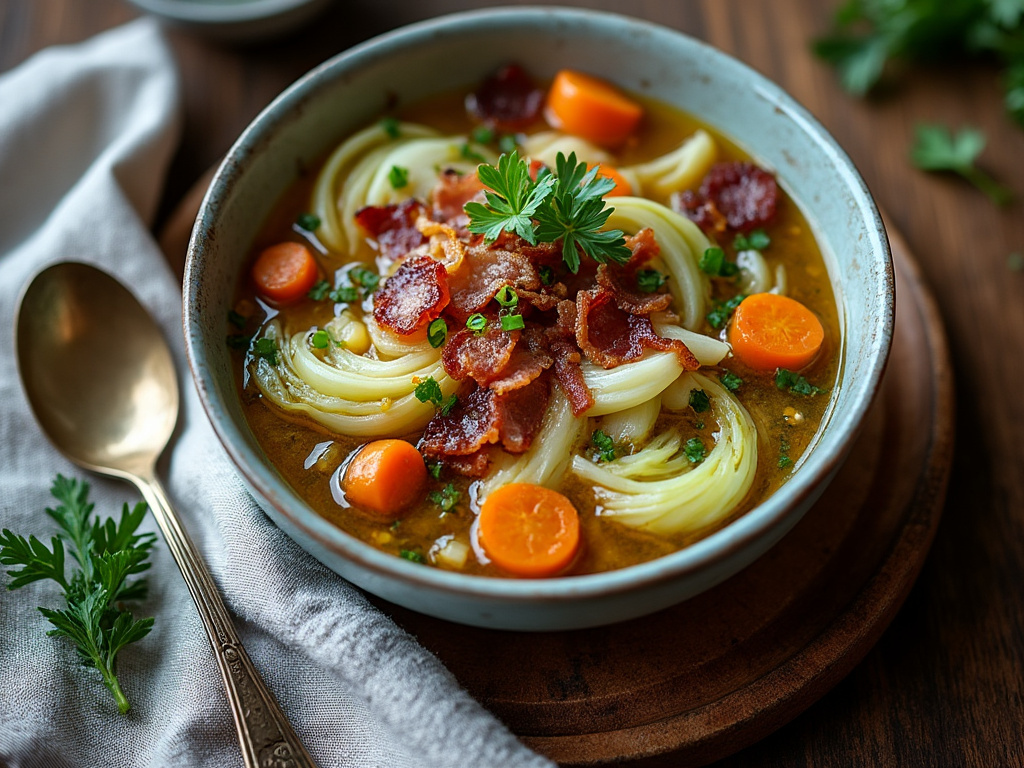
Charred Cabbage Soup with Smoked Bacon and White Miso
Deeply savory charred cabbage soup with smoked bacon, white miso, and a splash of apple cider vinegar. Ready in under an hour.
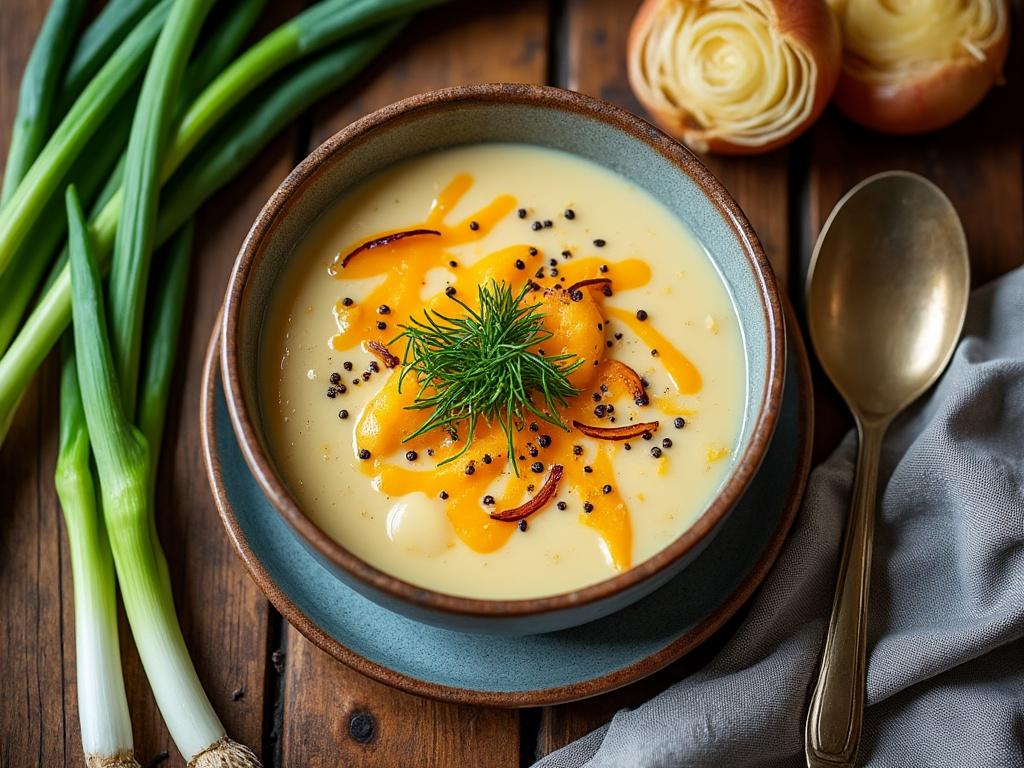
Charred Green Onion and Cheddar Potato Soup
A thick, smoky potato soup with broiler-charred green onions and sharp cheddar. Ready in 60 minutes, weeknight-friendly.
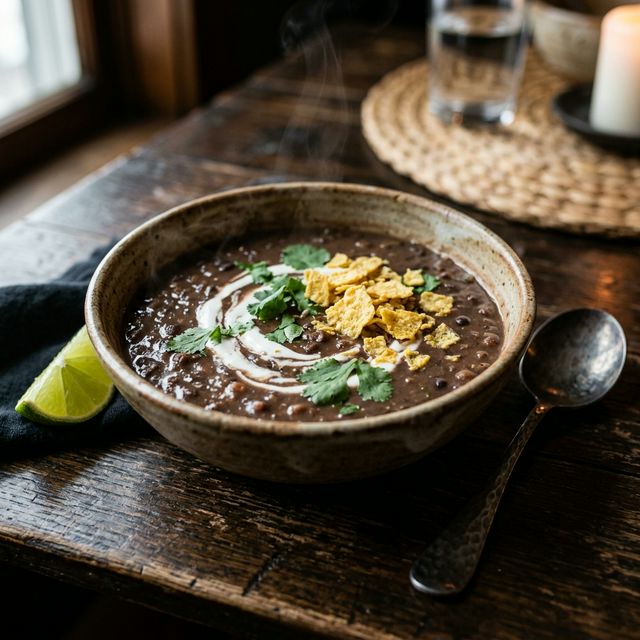
One-Pot Smoky Black Bean Soup
A thick, smoky black bean soup made in one Dutch oven in 30 minutes. Partial blending gives it a creamy-chunky texture. Great for weeknights and meal prep.