Caramelized Fennel and Ricotta Galette with Hot Italian Sausage
Buttery free-form galette filled with sweet caramelized fennel, creamy ricotta, and spicy Italian sausage. A stunning weeknight or dinner party centerpiece.

A galette forgives where a tart tin punishes — the rough, folded edges are the point, not the flaw. This one layers slow-cooked fennel (genuinely sweet after 25 minutes in a hot skillet) with whole-milk ricotta and crumbled hot Italian sausage on a shatteringly crisp all-butter crust. The key is patience with the fennel: pull it too early and it stays sharp and vegetal; let it go until the edges are deep amber and the strands collapse into jammy ribbons, and you get something that tastes almost nothing like raw fennel.
The ricotta layer acts as both a flavor base and a moisture barrier, keeping the pastry crisp even after resting. Serve this for a casual dinner party with a bitter green salad, or slice it for an assertive weeknight meal that reheats well the next day. If your butter flakes disappear from the pastry during rolling — the dough warmed up — slide the sheet into the freezer for 10 minutes before continuing.
Ingredients
- ▸ 1.5 cups all-purpose flour
- ▸ 1 tbsp granulated sugar
- ▸ 0.75 tsp Diamond Crystal kosher salt
- ▸ 0.5 cup unsalted Kerrygold butter, cut into 1/2-inch cubes and frozen for 20 minutes
- ▸ 3 tbsp ice water
- ▸ 1 tbsp apple cider vinegar
- ▸ 1 cup whole-milk ricotta, drained
- ▸ 1 large egg yolk
- ▸ 1 tsp lemon zest
- ▸ 0.25 tsp black pepper
- ▸ 0.5 tsp kosher salt, for filling
- ▸ 2 medium fennel bulbs, trimmed, cored, and thinly sliced (about 3 cups sliced)
- ▸ 2 tbsp olive oil
- ▸ 1 tbsp unsalted butter
- ▸ 3 garlic cloves, thinly sliced
- ▸ 0.5 tsp crushed red pepper flakes
- ▸ 0.25 tsp fennel seeds
- ▸ 0.5 tsp kosher salt, for fennel
- ▸ 8 oz hot Italian sausage, casings removed
- ▸ 2 tbsp grated Pecorino Romano
- ▸ 1 large egg, beaten with 1 tbsp water (egg wash)
- ▸ 1 tbsp honey, for finishing
- ▸ 2 tbsp fresh flat-leaf parsley, roughly torn
🛒 Links may earn us a small commission at no cost to you.
Recommended Gear
🛒 We may earn a small commission at no extra cost to you. We only recommend gear we'd use ourselves.
Instructions
Make the Crust
- 1. Combine the flour, sugar, and 3/4 tsp kosher salt in a food processor. Pulse 3 times to mix. Scatter the frozen butter cubes over the flour mixture and pulse 10–12 times until the butter is reduced to pea-sized and lentil-sized pieces — you should still see distinct chunks, not a uniform sandy texture. Transfer to a large bowl.
- 2. Mix the ice water and apple cider vinegar together in a small cup. Drizzle half over the flour-butter mixture and toss with a fork. Add the remaining liquid 1 tablespoon at a time, tossing between additions, until the dough just holds together when you pinch a piece — it should look shaggy, not smooth. Dump onto a lightly floured surface, press into a flat disc, wrap tightly in plastic wrap, and refrigerate for at least 1 hour or up to 3 days.
- 3. Drain the ricotta through a fine mesh strainer set over a bowl for 15 minutes. You should see liquid pooling in the bowl beneath it — this step is not optional. Transfer drained ricotta to a medium bowl. Stir in the egg yolk, lemon zest, black pepper, and 1/2 tsp kosher salt until combined. Set aside.
Cook the Filling
- 1. Heat a 12-inch skillet over medium heat. Add the olive oil and 1 tbsp butter; when the butter foams and subsides, add the sliced fennel and 1/2 tsp kosher salt. Toss to coat. Cook undisturbed for 5 minutes until the bottom layer turns golden, then stir and continue cooking, stirring every 3–4 minutes, for a total of 22–25 minutes. The fennel is ready when it has collapsed to about one-third its original volume, the strands are soft and jammy, and the edges are deep amber — it should smell sweet and slightly caramelized, not sharp.
- 2. Add the sliced garlic, red pepper flakes, and fennel seeds to the pan. Stir and cook for 90 seconds until the garlic is pale gold and fragrant. Scrape the entire mixture onto a plate and spread it out to cool.
- 3. Return the skillet to medium-high heat without wiping it out. Add the sausage and break it into small crumbles with a wooden spoon. Cook for 5–6 minutes, stirring occasionally, until it's deep brown with crispy edges — you should hear active sizzling throughout. Drain excess fat on paper towels and set aside to cool slightly.
Assemble the Galette
- 1. Preheat the oven to 400°F. Place a rimmed half sheet pan on the center rack to preheat for at least 10 minutes. Remove the dough from the fridge and let it sit at room temperature for 5 minutes. On a lightly floured sheet of parchment paper, roll the dough into a rough 13-inch circle about 1/8-inch thick — imperfect edges are fine. If the dough tears, press it back together with cold fingers and a drop of water.
- 2. Spread the ricotta mixture evenly over the dough, leaving a 2-inch border all around. Scatter the cooled caramelized fennel over the ricotta in an even layer, then distribute the sausage crumbles over the fennel. Dust the top with the grated Pecorino Romano.
- 3. Fold the dough border up and over the outer edge of the filling, pleating it every 2 inches as you go. Press each pleat firmly so it holds — loose pleats will unfold in the oven. Brush the folded crust edge generously with egg wash; it should glisten. Slide the parchment with the galette onto the preheated sheet pan.
Bake and Finish
- 1. Bake at 400°F for 35–40 minutes until the crust is a deep, uniform golden brown on top and you can see the underside is the same color when you lift an edge with a spatula. The Pecorino will be lightly golden and the filling should be set and lightly puffed. If the edges are browning faster than the bottom, tent loosely with foil for the last 8 minutes.
- 2. Remove from the oven and immediately drizzle the honey in a thin stream over the hot filling — it will melt into the savory elements and add a subtle gloss. Let the galette rest on the pan for 10 minutes before sliding onto a cutting board. Scatter torn parsley over the top, slice into wedges, and serve warm.
Cook's Notes
- Don't rush the fennel. Twenty-five minutes feels long, but pulling it early means sharp, vegetal filling rather than the sweet, jammy base this recipe depends on.
- The apple cider vinegar in the crust inhibits gluten development and keeps the pastry tender — don't substitute white vinegar or lemon juice, which are too sharp.
- Cool the filling components before assembling. Hot filling on raw dough steams the pastry from the inside and produces a soft, pallid crust.
- If you have leftover galette, reheat slices uncovered on a sheet pan at 375°F for 8–10 minutes. The crust comes back crispier than straight from the fridge.
- Fennel fronds are edible and good — if yours came with fronds attached, roughly chop 2 tablespoons and add them with the parsley as a finishing garnish.
Pro Tips
- → Freeze the butter cubes for a full 20 minutes before making the dough — visible butter streaks in the finished dough are what create distinct flaky layers. If the dough ever feels warm or the butter starts to look greasy instead of chunky during mixing, stop immediately and refrigerate for 15 minutes before continuing.
- → If your sausage releases a lot of fat while browning, tip the pan and spoon off the excess before it re-absorbs. Too much residual fat in the filling will migrate into the crust and make it greasy rather than flaky.
- → The preheated sheet pan is doing real work here — it acts like a baking stone for the galette bottom. Skipping this step is the most common reason home cooks end up with a raw or pale underside. Don't skip it.
- → If the galette crust cracks when you fold it, your dough is too cold or too dry. Let it rest another 3 minutes at room temperature, then use a wet fingertip to seal the crack before folding. A crack that goes through to the filling will leak ricotta into the pan — patch it with a small scrap of dough pressed firmly over the gap.
- → The honey drizzle goes on immediately out of the oven, not after resting. The residual heat from the pan and filling melts it into a thin glaze that integrates into the dish. Adding it to a cooled galette just makes it sit on top in visible droplets.
- → Whole-milk ricotta brands vary significantly in moisture content. Galbani tends to be wetter; Calabro and BelGioioso are firmer. If you're using a wetter brand, drain it in the strainer for 30 minutes rather than 15, and press gently with a spoon to release moisture.
What to Serve With This
A dry, medium-bodied white wine with good acidity is the right call here. Vermentino from Sardinia or a Sicilian Grillo both have enough herbal backbone to mirror the fennel without competing with the sausage fat. If you want red, go light: a chilled Cerasuolo d'Abruzzo or a Beaujolais Villages cuts through the ricotta's richness without overwhelming the pastry.
For beer, reach for a crisp Italian lager — Peroni or Nastro Azzurro — whose carbonation scrubs the palate clean between bites. A dry hard cider, specifically something on the tart side like Angry Orchard's Crisp Apple or a local farmhouse variety, echoes the slight sweetness of the caramelized fennel.
On the table, serve the galette alongside a simple bitter green salad: radicchio, endive, or arugula dressed with nothing more than good olive oil, a squeeze of lemon, and flaky salt. The bitterness provides direct contrast to the sweet fennel and fatty sausage. A bowl of Castelvetrano olives on the side keeps things in the Italian lane without adding a second cooking project.
For a non-alcoholic option, sparkling water with a slice of orange and a few fennel fronds in the glass is surprisingly well-matched — the citrus lifts the whole plate.
Variations & Substitutions
For a vegetarian version, skip the sausage and replace it with 1 cup of cooked and drained Puy lentils tossed with 1 teaspoon smoked paprika, 1/2 teaspoon fennel seed, and 1/4 teaspoon chili flakes. The lentils provide the same textural contrast the sausage crumbles give, and the fennel seed reinforces the main filling flavor. Add 2 ounces of crumbled feta on top of the ricotta layer for extra savory depth.
To make this gluten-free, substitute the all-purpose flour in the crust with 1 cup (120g) of Cup4Cup multipurpose flour and 1/2 cup (60g) fine almond flour. The almond flour adds a slight nuttiness and helps the crust hold together without xanthan gum. Keep everything cold — gluten-free pastry is less forgiving and tears more easily, so handle it gently and patch cracks with cold water and a fingertip.
For a dairy-free adaptation, use Kite Hill almond milk ricotta (1 cup) and swap the egg wash for 2 tablespoons of oat milk brushed on the crust. The almond ricotta is softer than whole-milk ricotta, so drain it in a fine mesh strainer for 15 minutes before using to avoid a wet filling.
To scale up for six to eight people, make two galettes rather than one larger one — scaling the crust thinner risks a soggy bottom. Double all ingredients and work the dough in two separate batches.
Frequently Asked Questions
Can I make the galette dough ahead of time? ▼
Yes — the dough keeps refrigerated for up to 3 days tightly wrapped in plastic wrap, or frozen for up to 1 month. Thaw frozen dough overnight in the fridge, not on the counter. Cold dough rolls more cleanly and produces flakier layers, so making it a day ahead actually improves the result.
Can I use mild Italian sausage instead of hot? ▼
Absolutely. Mild sausage works well — the recipe just loses a little heat. To compensate, add 1/4 teaspoon crushed red pepper flakes to the fennel while it cooks, or finish the baked galette with a drizzle of chili oil. The sweet fennel and creamy ricotta need some contrast, so don't skip the heat entirely.
How do I store and reheat leftovers? ▼
Store leftover galette slices in an airtight container in the fridge for up to 3 days. Reheat on a rimmed sheet pan in a 375°F oven for 8–10 minutes — this crisps the crust back up. Avoid the microwave; it turns the pastry soft and chewy. The filling actually intensifies in flavor overnight.
Can I freeze the assembled, unbaked galette? ▼
Yes. Assemble the galette on a parchment-lined sheet pan, freeze until solid (about 2 hours), then transfer to a zip-lock freezer bag for up to 6 weeks. Bake directly from frozen at 400°F, adding 12–15 minutes to the bake time. The crust may need tenting with foil in the last 10 minutes to prevent over-browning.
My crust cracked badly when I folded the edges. What went wrong? ▼
The dough was too cold or dry. Let it sit at room temperature for 5 minutes before folding, and use your fingertips to warm any crack slightly before pressing it closed. A small bowl of cold water nearby helps — dip your finger and use it as a sealant on cracks. If the crack goes all the way through to the filling, patch it with a scrap of dough pressed firmly over the gap.
Can I use store-bought pie dough or puff pastry? ▼
Refrigerated pie dough (Pillsbury is a reliable option) works in a pinch and cuts prep time to under 10 minutes. Puff pastry produces a very different result — it puffs dramatically and can make the filling slide, so it's not recommended for this recipe. If using store-bought pie dough, brush the outer crust with egg wash and proceed with the same bake temperature and time.
The filling was watery and made the crust soggy. How do I prevent this? ▼
Two culprits: underdrained ricotta or under-cooked fennel. Press whole-milk ricotta through a fine mesh strainer for at least 15 minutes before using. Cook the fennel until all visible moisture has evaporated from the pan and the edges are caramelized — if there's still liquid pooling around it, keep cooking. A soggy galette can be salvaged by returning it to a 425°F oven for 5–8 more minutes directly on the oven rack (no pan).
Can I add other vegetables to the filling? ▼
Yes — thinly sliced leeks (1 medium, cleaned and sliced) can be cooked alongside the fennel and add a mild sweetness. Roasted red peppers (2 tablespoons, drained and roughly chopped) layer in well without adding moisture. Avoid raw zucchini, mushrooms, or tomatoes — they release too much water during baking and will steam the crust from underneath.
What's the best way to get a really crispy bottom crust? ▼
Preheat your sheet pan in the oven for at least 10 minutes before sliding the galette onto it — this gives immediate bottom heat. You can also bake the galette directly on a preheated pizza stone if you have one. Use parchment underneath for easy transfer, but don't double-pan (two stacked sheet pans insulate the bottom and prevent crisping).
How do I know when the galette is fully baked? ▼
The crust should be a deep, uniform golden brown all the way to the folded edges — not pale tan. Lift the edge of the galette with a spatula: the underside should be the same color as the top. The ricotta filling will look set and slightly puffed, and you should hear a faint sizzle from the butter in the crust when it comes out of the oven.
Enjoyed this recipe?
Daily Home Cookery is self-funded. If something you cooked here made dinner a little better, a coffee keeps the kitchen running.
☕ Buy me a coffeeYou Might Also Like
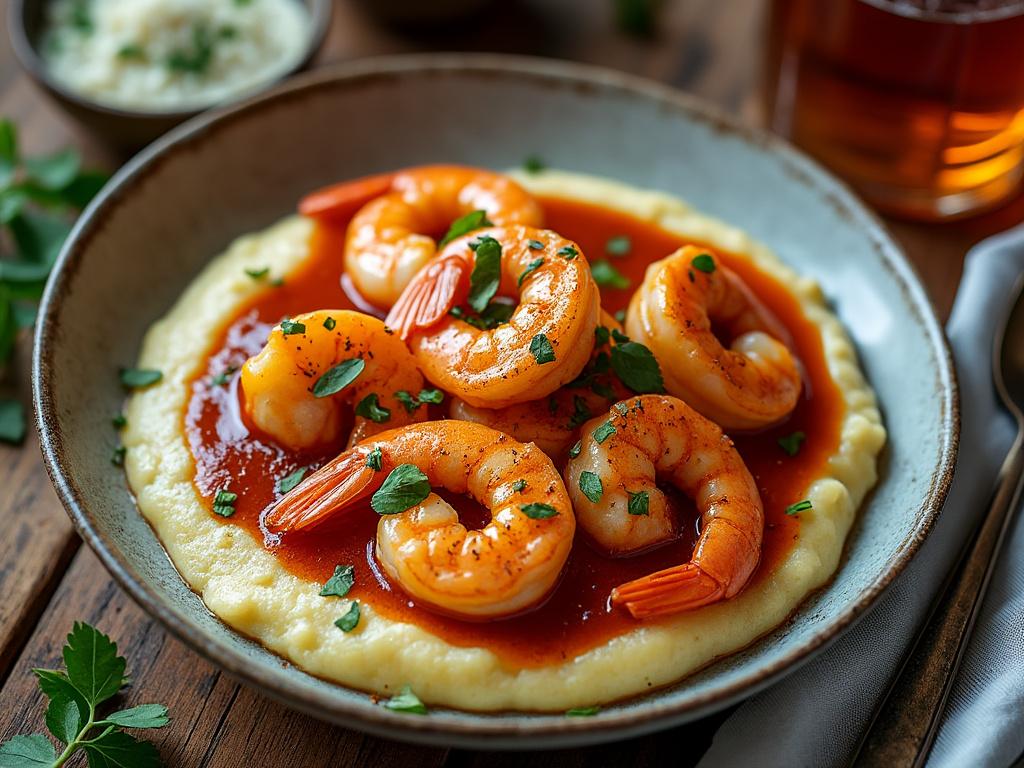
Smoked Paprika Shrimp and Grits with Roasted Pepper Gravy
Creamy stone-ground grits, bold smoked paprika shrimp, and a silky roasted red pepper gravy — a Southern classic done right.
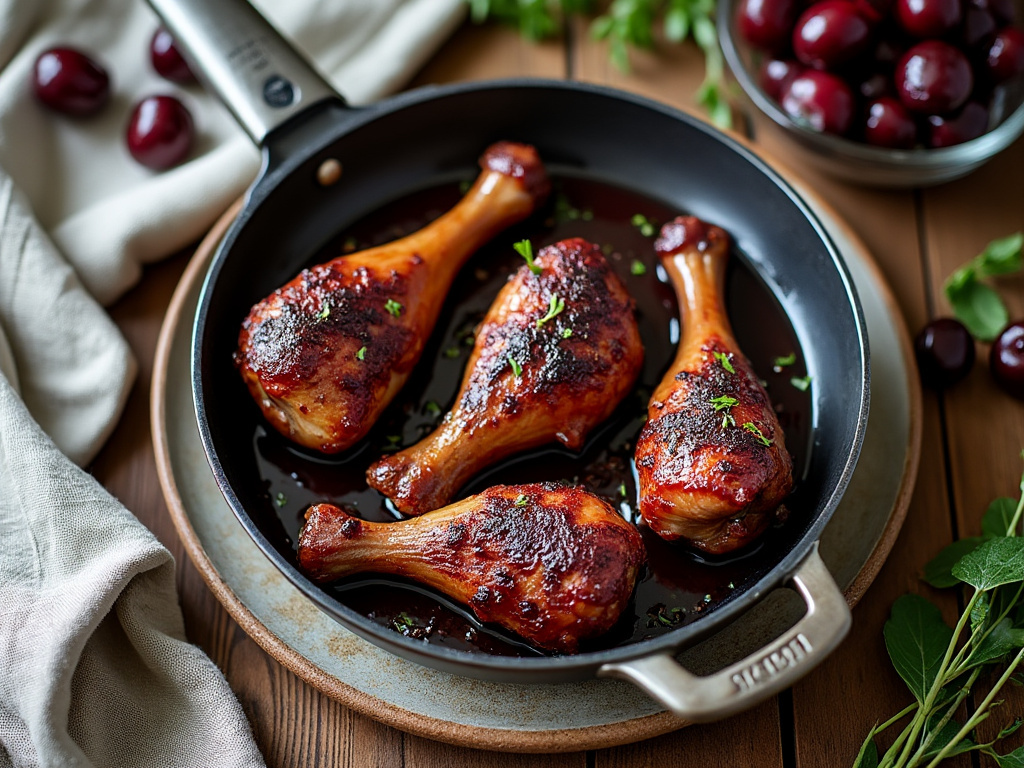
Crispy Skin Duck Legs with Cherry-Red Wine Pan Sauce
Duck legs with shatteringly crispy skin and a glossy cherry-red wine pan sauce — a restaurant-worthy dinner you can nail at home.

Charred Radicchio and Soppressata Pizza with Hot Honey and Fresh Mozzarella
Bitter charred radicchio, spicy soppressata, fresh mozzarella, and hot honey on a blistered crust — a bold, fast weeknight pizza.