Crispy Pancetta and Leek Risotto with Lemon and Parmesan
A creamy, restaurant-worthy risotto with crispy pancetta, sweet leeks, and bright lemon. Ready in 50 minutes on the stovetop.
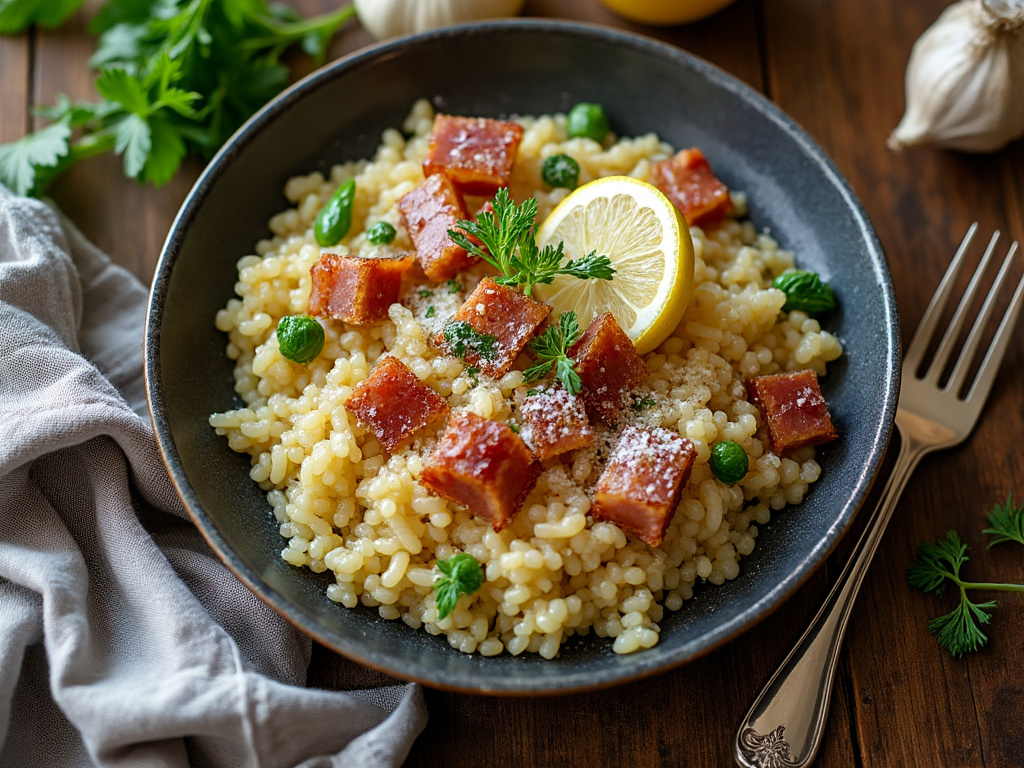
Risotto has a reputation for being fussy, but the technique is actually simple — it just demands your attention. This one builds on a base of slowly softened leeks and white wine, then layers in salty, shatteringly crisp pancetta and a hit of lemon zest at the finish to cut through the richness. The result is deeply savory with a clean, bright edge.
The key is warm stock. Add cold broth to hot rice and the starch seizes up instead of releasing gradually — that's how you end up with gluey, uneven texture. Keep your broth at a bare simmer in a separate pot the entire time. This is a confident weeknight dinner for two or a relaxed dinner party starter for four. If your risotto tightens up before serving, add a splash of warm stock and stir — it loosens right back up.
Ingredients
- ▸ 150 g pancetta, cut into 1/2-inch cubes
- ▸ 2 tbsp unsalted Kerrygold butter, divided
- ▸ 1 tbsp olive oil
- ▸ 2 medium leeks, white and light green parts only, halved lengthwise and sliced into 1/4-inch half-moons (about 2 cups)
- ▸ 3 cloves garlic, minced
- ▸ 300 g Arborio rice
- ▸ 120 ml dry white wine (such as Pinot Grigio or Sauvignon Blanc)
- ▸ 1.2 liters low-sodium chicken stock, kept warm
- ▸ 80 g Parmigiano-Reggiano, finely grated, plus more for serving
- ▸ 1 tsp lemon zest (from 1 medium lemon)
- ▸ 1 tbsp fresh lemon juice
- ▸ 1/2 tsp Diamond Crystal kosher salt, plus more to taste
- ▸ 1/4 tsp freshly ground black pepper
- ▸ 2 tbsp fresh flat-leaf parsley, finely chopped
🛒 Links may earn us a small commission at no cost to you.
Recommended Gear
🛒 We may earn a small commission at no extra cost to you. We only recommend gear we'd use ourselves.
Instructions
Prep
- 1. Pour the chicken stock into a medium saucepan and set over low heat. Keep it at a bare, lazy simmer throughout cooking — you should see the occasional bubble but no rolling boil. Warm stock is non-negotiable here.
- 2. Wash the sliced leeks in a bowl of cold water, swishing to dislodge any grit. Lift them out with your hands and pat dry with a clean towel. Grit in risotto is a dealbreaker.
Render the Pancetta
- 1. Set your wide skillet over medium heat. Add the pancetta cubes and cook, stirring occasionally, until deeply golden and crispy on most sides — about 6-8 minutes. The fat should be mostly rendered; you'll hear the sizzle slow down as it crisps. Use a slotted spoon to transfer the pancetta to a paper-towel-lined plate. Leave all the rendered fat in the pan.
Build the Base
- 1. Add 1 tbsp of the butter and the olive oil to the pancetta fat over medium heat. Once the butter is melted and foamy, add the leeks and 1/4 tsp salt. Cook, stirring often, until the leeks are completely softened, silky, and just starting to turn pale gold at the edges — about 8 minutes. They should smell sweet and oniony, not sharp.
- 2. Add the garlic and stir for 60 seconds until fragrant. Don't let it brown — golden is fine, dark brown will make the base bitter.
- 3. Add the Arborio rice and stir to coat every grain in the fat. Toast the rice for 2 minutes, stirring constantly, until the edges of the grains turn translucent and the pan smells faintly nutty.
Cook the Risotto
- 1. Pour in the white wine and stir until fully absorbed — about 90 seconds. The pan will hiss and steam; scrape up any bits stuck to the bottom. The sharp wine smell should cook off, leaving a milder acidity.
- 2. Add a full ladle (about 120ml) of warm stock and stir gently but consistently, keeping the rice moving. Once the stock is absorbed and you can drag a spoon through the center and see the pan briefly before it fills back in — about 3 minutes — add another ladle. Repeat this process, one ladle at a time, for 18-22 minutes total. The rice should be creamy throughout and just barely al dente at the center — a slight resistance when you bite a grain, not crunch and not mush.
- 3. When the rice is done, the mixture should be loose enough to spread slightly when you shake the pan — it will tighten as it sits. Remove the pan from heat.
Finish and Serve
- 1. Add the remaining 1 tbsp butter, the grated Parmesan, lemon zest, and lemon juice. Stir vigorously for 30-45 seconds — this is the mantecatura, where you're emulsifying fat into starch to create that glossy, creamy finish. Taste and adjust salt and pepper.
- 2. Fold in three-quarters of the crispy pancetta and all the parsley. Spoon immediately into warm shallow bowls. Top each portion with the remaining pancetta and an extra grating of Parmesan. Serve within 2 minutes — risotto waits for no one.
Cook's Notes
- Always use warm stock. Cold stock lowers the pan temperature and disrupts starch release, leading to uneven, gluey rice. Keep it at a low simmer in a separate pot the entire time.
- Don't rinse the Arborio rice before cooking. The surface starch is what creates the creamy texture — rinsing washes it away.
- Pull the risotto off heat when it's slightly looser than you want it. It tightens noticeably in the 1-2 minutes between pan and bowl.
- Save your Parmesan rinds in the freezer and drop one into the simmering stock — it adds a quiet, savory depth to the base without much effort.
- The pancetta can be crisped up to 2 hours ahead and held at room temperature on a paper towel. Don't refrigerate it or it loses its crunch.
Pro Tips
- → If the risotto seizes up and goes stiff before you finish adding all the stock, don't panic — add a ladle of hot stock and stir firmly over medium heat for 2 minutes. It will loosen. This usually happens when the heat is too high and the liquid is evaporating faster than the starch is releasing.
- → The mantecatura (final butter-and-cheese stir) only works properly off the heat. If the pan is still on the burner, the fat separates instead of emulsifying and you get a greasy, broken finish rather than a creamy one.
- → Taste the risotto two ladles before you think it's done — Arborio from different brands absorbs at slightly different rates. You may need anywhere from 1 to 1.2 liters of stock depending on humidity, pan width, and heat level.
- → Wide pans cook risotto faster than narrow, deep pots because more surface area means faster evaporation. If you only have a Dutch oven, reduce your heat slightly and expect the process to take 3-5 minutes longer.
- → If your leeks have any green parts creeping past light green, cut them off. Dark green leek tops are fibrous and bitter and won't soften properly in 8 minutes — they'll give you chewy green threads in an otherwise silky dish.
- → For a richer finish, swap the final tablespoon of butter for 2 tbsp of cold, cubed Kerrygold butter and stir it in vigorously. The cold fat emulsifies more thoroughly than room-temperature butter and gives a noticeably glossier result.
What to Serve With This
A dry, unoaked Italian white is the natural partner here. Pinot Grigio from Friuli (look for Livio Felluga or Santa Margherita) has the acidity to cut the butter and Parmesan without overwhelming the delicate leek flavor. If you prefer something with a bit more body, a Vermentino from Sardinia works beautifully — it has a slight bitter-almond finish that echoes the lemon zest.
For beer drinkers, a Kölsch-style ale is the call. It's light enough not to compete with the creaminess, and its subtle fruitiness picks up the leek and white wine notes in the dish. Avoid anything heavily hopped — IPAs will clash with the Parmesan.
On the non-alcoholic side, sparkling water with a squeeze of lemon mirrors what the wine would do — keeps the palate clean between bites. A dry cucumber-elderflower spritz also works if you want something with a little more interest.
For sides, keep it simple. A small arugula salad dressed with just lemon juice and good olive oil gives you peppery contrast against the creamy rice. Avoid anything starchy or heavy alongside — risotto is already substantial. A few slices of crusty bread for mopping the bowl is all you need.
Variations & Substitutions
To make this vegetarian, swap the pancetta for 150g of finely diced cremini or shiitake mushrooms, crisped in 1 tbsp olive oil until deeply browned — about 8 minutes. Use vegetable stock in place of chicken stock, and add 1 tbsp white miso stirred into the final butter mount for the umami depth the pancetta normally provides.
For a dairy-free version, replace the butter with 3 tbsp good olive oil (add it in two stages — one at the start, one at the finish) and swap the Parmesan for 3 tbsp nutritional yeast plus 1 tsp white miso paste. The texture won't be quite as silky, but the flavor holds up well. Skip the Parmesan rind in the stock.
Want more protein? Stir in 200g of cooked, peeled large shrimp in the final 2 minutes of cooking — just enough to warm through. They'll tighten up and turn rubbery if they cook longer than that. A pinch of chili flakes added with the leeks tilts the whole dish in a coastal Italian direction.
To scale up for 6 people, increase the Arborio to 450g and use 1.8 liters of stock. Keep the wine the same — adding more makes it too acidic. You'll need a wider, deeper pot (at least 5-quart) so the rice cooks in an even layer and steam escapes properly.
Frequently Asked Questions
Can I make risotto ahead of time? ▼
You can par-cook it — cook the risotto until it's about 80% done (still slightly underdone in the center), then spread it onto a rimmed sheet pan, drizzle with a little olive oil to prevent sticking, and refrigerate for up to 24 hours. When ready to serve, reheat it in a wide pan with a ladleful of warm stock, stirring constantly for 3-4 minutes until creamy and fully cooked through. The final texture is about 90% as good as fresh.
What's the best rice for risotto? ▼
Arborio is the most accessible and works well here. Carnaroli is slightly better — it has a firmer center and releases starch more gradually, giving you a creamier result with more control. Vialone Nano is a third option, popular in Veneto, and produces a slightly looser, soupier risotto. Avoid long-grain rice like basmati — it doesn't have the right starch structure.
Can I use a different cured pork? ▼
Yes. Guanciale (cured pork cheek) is richer and fattier than pancetta and works beautifully. Regular diced bacon is a fine substitute but has a smokier flavor that shifts the profile. If using bacon, choose an unsmoked variety or reduce the amount to 80g so it doesn't overpower the leeks.
My risotto turned out soupy. What went wrong? ▼
You likely added too much stock in the final ladles, or you served it too quickly after finishing. Risotto tightens as it sits, so pull it off the heat when it's just slightly looser than you want it — it firms up in the 1-2 minutes between pan and plate. If it's genuinely too thin, keep stirring over medium heat for another 2-3 minutes without adding more stock.
My risotto turned out gluey and stiff. What happened? ▼
This usually means the heat was too high and the stock was added too fast, or you stirred too aggressively and over-developed the starch. Keep the heat at medium throughout — never high — and add stock in measured 120ml additions, waiting for each to absorb before adding the next. Gentle, frequent stirring (not constant frantic stirring) is the goal.
Can I freeze leftover risotto? ▼
Technically yes, but the texture degrades significantly — the rice grains turn mushy on reheating. A better use of leftovers is to form cold risotto into patties, coat them lightly in breadcrumbs, and pan-fry in olive oil until golden. These arancini-style cakes are genuinely excellent and worth making intentionally.
What can I use instead of dry white wine? ▼
Use an equal amount (120ml) of dry vermouth — it's more concentrated, so the flavor actually comes through more clearly. Alternatively, use 80ml of fresh lemon juice diluted with 40ml of water for an alcohol-free version. Don't skip the acid entirely; it's what keeps the finished dish from tasting flat and heavy.
How do I store and reheat leftovers? ▼
Store in an airtight container in the refrigerator for up to 2 days. To reheat, transfer to a wide skillet over medium-low heat with 2-3 tbsp of warm water or stock per serving. Stir gently for 3-5 minutes until heated through and creamy again. Don't reheat in the microwave if you can avoid it — the steam distribution is uneven and you'll get rubbery patches.
Can I use pre-grated Parmesan from the store? ▼
Avoid it. Pre-grated Parmesan contains anti-caking agents (usually cellulose) that prevent it from melting smoothly into the risotto — you'll get a grainy, slightly chalky texture. Buy a block of Parmigiano-Reggiano and grate it yourself on the fine side of a box grater right before you need it. The difference is significant.
Do I need to use homemade stock? ▼
No, store-bought works fine. Use a good-quality low-sodium chicken stock — Swanson or Pacific Foods are reliable. Avoid the concentrated gelatinous stock pots unless you dilute them properly; they tend to make the finished risotto too salty once reduced. If your stock is very salty, hold back the added salt until the very end and taste carefully.
Enjoyed this recipe?
Daily Home Cookery is self-funded. If something you cooked here made dinner a little better, a coffee keeps the kitchen running.
☕ Buy me a coffeeYou Might Also Like
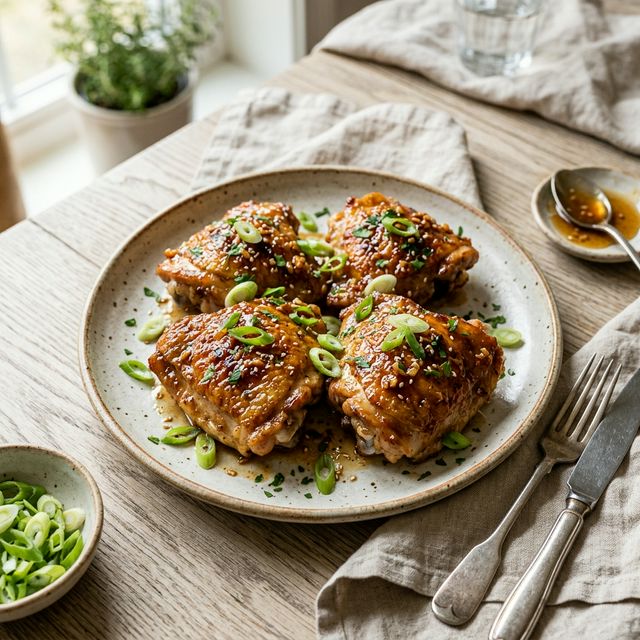
Crispy Honey Garlic Chicken Thighs
Bone-in chicken thighs seared until the skin cracks, then glazed with honey, soy, and garlic and finished in a 400°F oven. Ready in 50 minutes.
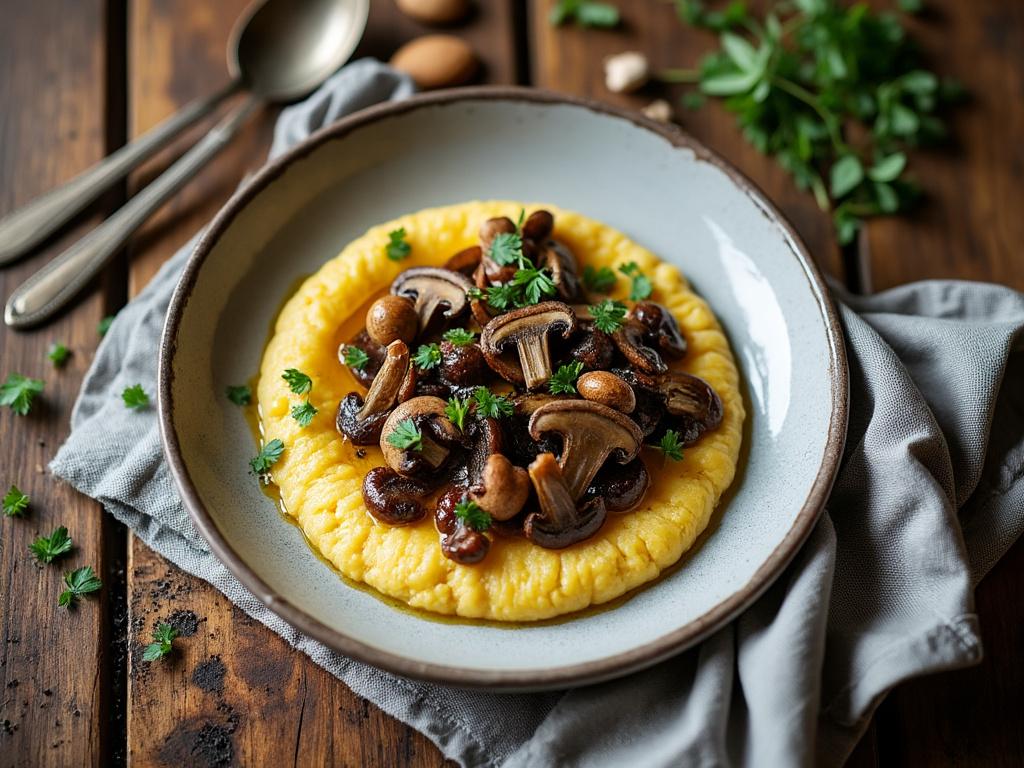
Crispy Polenta with Wild Mushrooms and Truffle Oil
Seared polenta squares topped with cremini, oyster, and shiitake mushrooms in a white wine pan sauce, finished with truffle oil. A solid vegetarian dinner.

Cider-Braised Pork Shoulder with Fennel and Apple
Tender braised pork shoulder slow-cooked in hard cider with fennel and apple. A hands-off Sunday dinner with incredible pan sauce.