Butter-Basted Skillet Steak with Blue Cheese Compound Butter and Watercress
Cast iron butter-basted ribeye with tangy blue cheese compound butter and peppery watercress. Restaurant technique, done at home in 15 minutes.
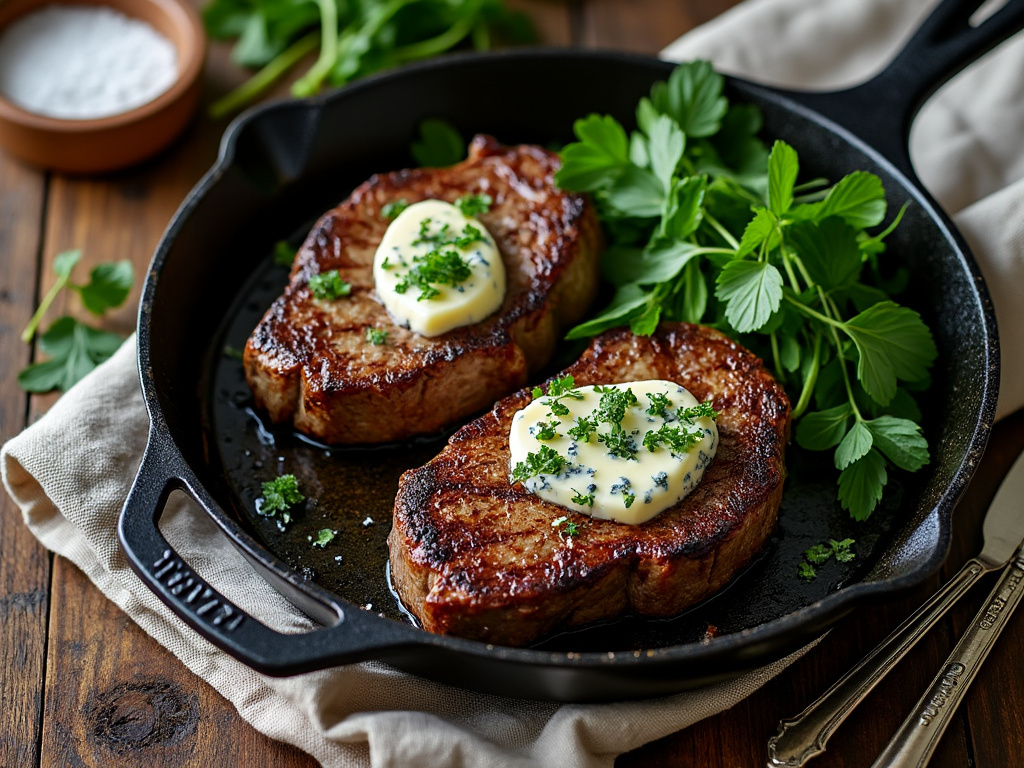
A ribeye cooked in a screaming-hot cast iron skillet develops a crust that an oven or grill simply can't replicate — the direct contact sears every millimeter of surface fat, which bastes the meat as it renders. The technique here is relentless: hot pan, dry steak, no touching, then a flood of butter with aromatics to finish. The compound butter is what makes this more than just a pan-fried steak. Gorgonzola dolce — the younger, creamier style — blends into soft unsalted butter with fresh thyme and a hit of Worcestershire, then hardens in the fridge until you need it. It melts into the resting steak like a sauce you didn't have to make.
Expect a deep mahogany crust, medium-rare pink interior, and a sharp, savory punch from the butter cutting the richness of the beef. This is a weeknight dinner that eats like a Saturday night. If your steak is releasing liquid into the pan and steaming instead of searing, your pan wasn't hot enough — pull the steak, crank the heat for two more minutes, then try again.
Ingredients
- ▸ 2 bone-in or boneless ribeye steaks (1.25 inches thick, about 12 oz each)
- ▸ 1.5 tsp Diamond Crystal kosher salt
- ▸ 1 tsp coarsely ground black pepper
- ▸ 1 tbsp avocado oil
- ▸ 3 tbsp unsalted butter, divided (for basting)
- ▸ 3 garlic cloves, smashed and peeled
- ▸ 4 sprigs fresh thyme
- ▸ 1 sprig fresh rosemary
- ▸ 4 tbsp unsalted Kerrygold butter, softened to room temperature
- ▸ 2 oz Gorgonzola dolce, crumbled
- ▸ 1 tsp fresh thyme leaves, finely chopped
- ▸ 0.5 tsp Worcestershire sauce
- ▸ 0.25 tsp black pepper
- ▸ 2 cups fresh watercress, thick stems removed
- ▸ 1 tsp fresh lemon juice
- ▸ 1 tsp extra-virgin olive oil
- ▸ 0.25 tsp flaky sea salt (for finishing)
🛒 Links may earn us a small commission at no cost to you.
Recommended Gear
🛒 We may earn a small commission at no extra cost to you. We only recommend gear we'd use ourselves.
Instructions
Make the Compound Butter
- 1. In a small bowl, mash together the 4 tbsp softened Kerrygold butter, Gorgonzola dolce, chopped thyme, Worcestershire sauce, and 1/4 tsp black pepper using a fork until fully combined — no streaks of cheese should remain, and the mixture should look pale with green flecks, about 2 minutes of mixing.
- 2. Scrape the butter onto a sheet of plastic wrap, roll it into a tight 1-inch-diameter log, twist the ends closed, and refrigerate for at least 30 minutes until firm. The butter needs to hold its shape when sliced — if it's still soft, it'll melt unevenly on the steak.
Prep the Steaks
- 1. Remove the steaks from the refrigerator 30-45 minutes before cooking. Pat them aggressively dry on all sides with paper towels — any surface moisture will steam instead of sear, and you'll lose the crust. The surface should look matte, not shiny.
- 2. Season both sides and the edges of each steak evenly with 1.5 tsp kosher salt and 1 tsp black pepper, pressing gently so the seasoning adheres. Set on a wire rack and let sit at room temperature while the pan heats.
Sear the Steaks
- 1. Place the cast iron skillet over high heat for 3 full minutes — it should be visibly smoking and a drop of water should vaporize instantly on contact. Add 1 tbsp avocado oil and swirl to coat; the oil will begin rippling immediately.
- 2. Lay the steaks away from you into the pan. Do not move them. Sear undisturbed for 3 minutes until a deep mahogany crust forms and the steak releases cleanly from the pan when you gently nudge it with tongs — if it resists, give it another 30 seconds.
- 3. Flip the steaks and sear the second side for 2 minutes. Then use tongs to hold each steak on its fat-cap edge for 30-45 seconds per edge until the fat renders and turns golden — you'll hear it sizzling and the fat will look translucent rather than white and raw.
Butter-Baste
- 1. Reduce heat to medium-high. Add 3 tbsp butter, the smashed garlic cloves, thyme sprigs, and rosemary to the pan. The butter will foam vigorously — tilt the pan toward you at a 30-degree angle and use a large spoon to scoop the foaming butter over the tops of the steaks continuously for 90 seconds. The butter should smell nutty and the garlic golden, not brown.
- 2. Check internal temperature by inserting your thermometer horizontally through the side of each steak. Pull at 125°F for medium-rare. Transfer steaks to a wire rack and immediately top each with a 1/2-inch slice of the chilled compound butter — it will begin melting slowly as the steak rests. Rest for 5 full minutes; do not cut early or you'll lose the juices.
Dress the Watercress and Serve
- 1. While the steak rests, toss the watercress with 1 tsp lemon juice and 1 tsp olive oil in a small bowl — just enough to lightly coat the leaves. They should stay crisp and bright green, not wilted.
- 2. Transfer the rested steaks to plates, spoon any pan juices and melted compound butter from the rack over the top, and finish with a pinch of flaky sea salt. Pile the watercress alongside. Serve immediately.
Cook's Notes
- Dry brining the steaks — salting them uncovered on a rack in the refrigerator for up to 24 hours before cooking — gives you an even better crust and more seasoned interior than seasoning right before cooking.
- The compound butter recipe makes more than you need for two steaks; freeze the rest wrapped in plastic for up to 6 weeks.
- If your steaks are thinner than 1 inch, reduce the first sear to 2 minutes per side and skip the edge-searing step — they'll overcook quickly.
- Don't discard the basting butter and aromatics in the pan — strain out the garlic and herbs, then drizzle the brown butter over the watercress instead of olive oil for richer greens.
- Bone-in ribeyes (cowboy cut) take about 1-2 extra minutes of searing per side due to the bone conducting heat differently; use the thermometer, not time, as your guide.
Pro Tips
- → If the butter turns dark brown and smells burnt during basting, you've got too much heat — pull the pan off the burner for 15 seconds, add a fresh tablespoon of cold butter to drop the temperature, then continue basting. Burnt butter has a harsh, bitter finish that ruins the sauce.
- → The single biggest reason home cooks get a grey band under the crust instead of edge-to-edge pink is cooking a cold steak — the outside overcooks before the center comes up to temperature. The 30-45 minute rest at room temperature is not optional.
- → Cast iron retains heat unevenly when first placed on a burner — use a circular motion with a kitchen towel to season it evenly, or preheat it in a 500°F oven for 10 minutes before transferring to the stovetop. This gives you an even sear across the full surface.
- → Gorgonzola dolce is softer and younger than aged Gorgonzola piccante — if you accidentally buy the aged version, the compound butter will be gritty and too sharp. Look for the word 'dolce' on the label, or ask at the deli counter for the creamier style.
- → Basting with a spoon is an active, physical task — if you stop, the butter pools and the aromatics scorch. Keep the spoon moving for the full 90 seconds, and tilt the pan continuously so the butter flows toward the spoon.
- → If your steak has a thick fat cap on one side, score it shallowly with a knife in 3-4 places before cooking to prevent it from curling the meat upward and losing contact with the pan surface.
What to Serve With This
Pour a bold red with enough tannin to stand up to the fat — a Napa Cabernet Sauvignon or an Argentine Malbec from Mendoza both work well here. The tannins bind to the beef proteins, scrubbing the palate between bites, while the dark fruit echoes the char on the crust. Avoid anything too light or too acidic; a Pinot Noir will get lost next to Gorgonzola.
If you're going non-alcoholic, a strongly brewed unsweetened black tea with a squeeze of lemon plays the same role — tannins, acid, clean finish. It sounds plain but it works.
For sides, make thick-cut oven fries from russet potatoes tossed in duck fat at 425°F — they can roast while the steak rests. Alternatively, a simple white bean mash with roasted garlic soaks up the compound butter that runs off the steak. Avoid anything cream-heavy on the side; the butter is already doing that work.
The watercress on the plate isn't decoration. Dress it with just a squeeze of lemon and a few drops of olive oil — its bitterness and pepper cut through the richness and reset the palate for the next bite. A wedge salad with shaved radish would serve the same purpose if watercress isn't available.
Variations & Substitutions
For a dairy-free version, skip the compound butter entirely and make a chimichurri instead: blend 1 cup packed flat-leaf parsley, 3 garlic cloves, 2 tbsp red wine vinegar, 1/2 tsp red pepper flakes, and 1/3 cup olive oil. It won't melt into the steak the same way, but the acid and herb cut through the fat effectively. Use 2 tbsp of a neutral oil like avocado oil for basting in place of butter.
Swap the ribeye for a New York strip if you want less fat marbling and a firmer chew, or use a hanger steak for a more mineral, intense flavor — reduce cook time by about 1 minute per side since hanger is thinner. A flat iron steak is the most affordable cut that responds well to this method; it has good marbling but needs to be sliced against the grain or it turns tough.
For a different compound butter profile, replace the Gorgonzola with 2 tbsp finely chopped sun-dried tomatoes and 1 tsp smoked paprika for a Spanish-leaning variation. Or go classic steakhouse: use 1 tbsp prepared horseradish and 1 tsp Dijon instead of the blue cheese, which pairs especially well with the strip cut.
To scale for four people, use two pans simultaneously rather than cooking steaks in batches — a resting steak loses heat fast, and you want everyone eating at the same time. Double the compound butter recipe; it keeps in the freezer for 6 weeks wrapped in plastic.
Frequently Asked Questions
Can I use a different pan if I don't have cast iron? ▼
A heavy stainless steel skillet (like All-Clad) is the best substitute — it gets nearly as hot and holds heat well. Avoid non-stick pans entirely; they can't handle the 500°F+ temperatures needed for a proper crust, and the coating will degrade. Carbon steel is another excellent option if you have it.
How far in advance can I make the compound butter? ▼
Up to 5 days in the refrigerator wrapped tightly in plastic wrap, or up to 6 weeks in the freezer. Slice off discs straight from frozen — they'll melt on the hot steak just fine. Make a double or triple batch and keep it in the freezer; it's useful on roasted vegetables, grilled corn, and pasta.
My steak is thick — how do I know when it's done without cutting into it? ▼
Use an instant-read thermometer (Thermapen or similar). Pull the steak at 125°F for medium-rare — carryover cooking during the 5-minute rest will bring it to 130°F. For medium, pull at 130°F. Insert the probe horizontally through the side of the steak, not from the top, to reach the true center.
Can I make this ahead for a dinner party? ▼
The compound butter can be made days ahead, which is the real time-saver. The steak itself should be cooked to order — it takes 12 minutes total and rests for 5, so it's manageable even for guests. You can bring the steaks to room temperature and season them up to 45 minutes ahead so you're not scrambling.
What if my kitchen fills with smoke? ▼
That's expected with a properly hot pan and a fatty cut like ribeye — turn on your range hood at full power before you start and open a window. If you don't have a hood, crack the back door. The smoke is a sign the pan is at the right temperature; a pan that doesn't smoke won't give you a proper crust.
Can I use salted butter for the compound butter? ▼
Use unsalted — Kerrygold is the recommendation here for its higher fat content and flavor. Salted butter makes the compound butter unpredictable in saltiness, especially since Gorgonzola is already quite salty. You want control over the seasoning.
My crust isn't forming and the steak is sticking — what happened? ▼
Almost always one of two causes: the pan wasn't hot enough, or the steak had surface moisture (from the fridge or from not patting it dry). Pat the steak completely dry with paper towels before seasoning, and wait until the pan is visibly smoking before adding oil. If it's sticking, don't force it — a properly seared steak releases on its own when the crust has formed.
Can I use crumbled blue cheese instead of Gorgonzola dolce? ▼
Yes, any soft blue cheese works — Roquefort gives a sharper, saltier result, while Danish blue is milder and more approachable. Avoid very dry, crumbly blue cheeses like Maytag if you can; they don't incorporate smoothly into the butter. If that's all you have, let the butter soften fully at room temperature before mixing so the cheese can blend in.
How do I store and reheat leftover steak? ▼
Store sliced or whole leftover steak in an airtight container in the fridge for up to 3 days. For reheating, avoid the microwave — it turns the crust rubbery. Instead, warm slices in a dry skillet over medium heat for 60-90 seconds per side, or use a 275°F oven for 10-12 minutes until just warmed through. Leftover steak is also excellent cold, sliced thin over a salad.
Enjoyed this recipe?
Daily Home Cookery is self-funded. If something you cooked here made dinner a little better, a coffee keeps the kitchen running.
☕ Buy me a coffeeYou Might Also Like
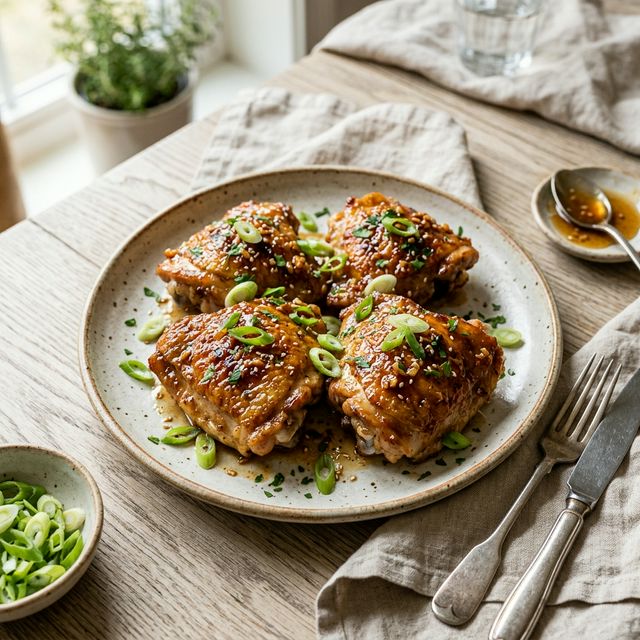
Crispy Honey Garlic Chicken Thighs
Bone-in chicken thighs seared until the skin cracks, then glazed with honey, soy, and garlic and finished in a 400°F oven. Ready in 50 minutes.

Caramelized Onion and Gruyère Soup Dumplings (Steamed Bao Style)
Steamed soup dumplings filled with jammy caramelized onions, Gruyère, and a liquid beef aspic center. A French onion twist on a classic technique.
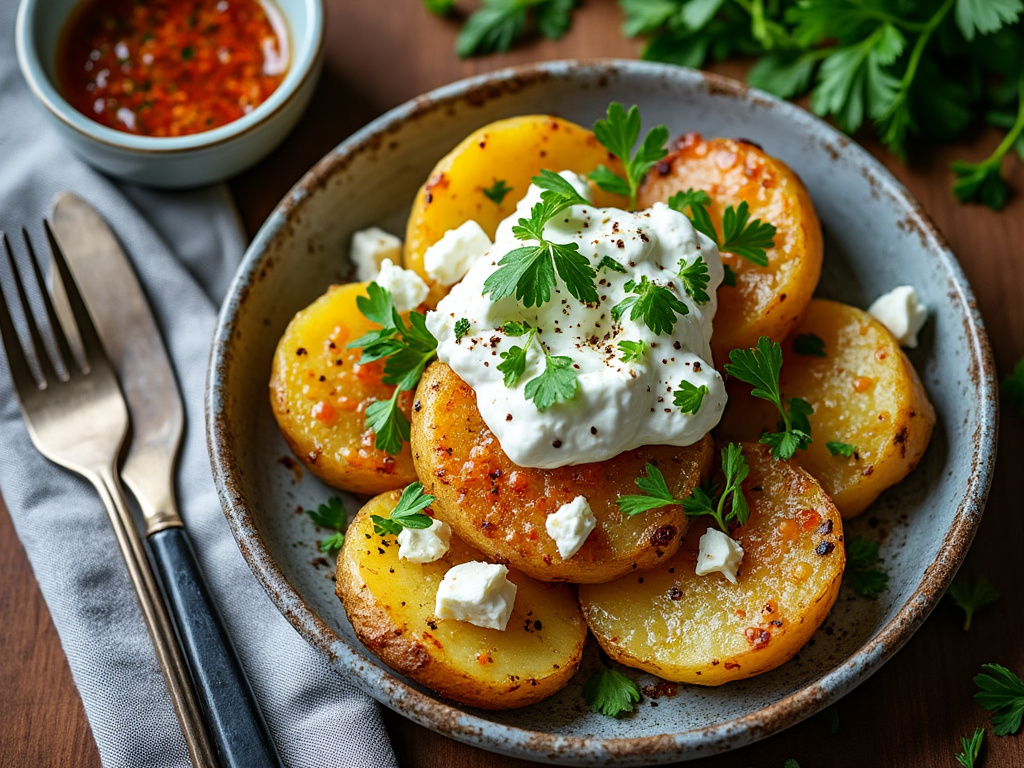
Smashed Potatoes with Whipped Feta, Chili Oil, and Fresh Herbs
Crispy smashed potatoes on a bed of tangy whipped feta, finished with chili oil and fresh herbs. A weeknight side that earns the plate.