Cider-Braised Pork Shoulder with Fennel and Apple
Tender braised pork shoulder slow-cooked in hard cider with fennel and apple. A hands-off Sunday dinner with incredible pan sauce.
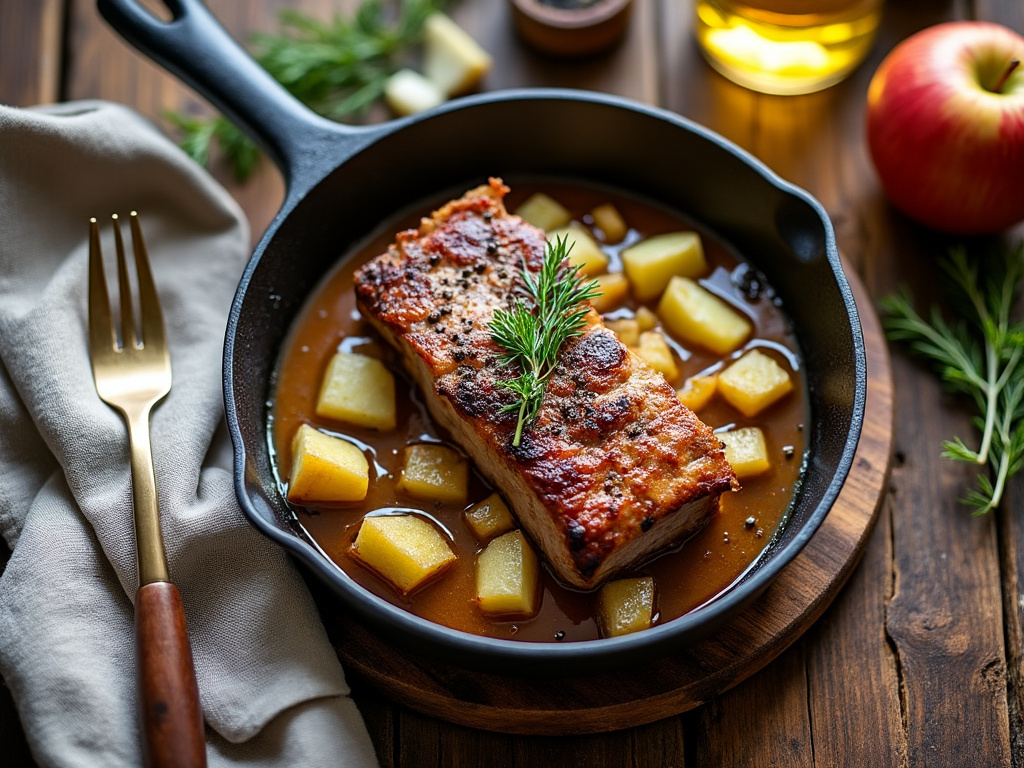
Pork shoulder and hard cider are a natural match — the apple-forward acidity cuts through the fat while the braising liquid reduces into a glossy, savory-sweet sauce. What makes this recipe work is a proper sear before the liquid goes in: you need a dark mahogany crust on the meat, not just a pale tan surface. That Maillard crust contributes most of the sauce's depth. Expect tender, pull-apart pork with a sauce that's bright from cider, aromatic from fennel seed, and slightly sweet from sliced apples that melt into the braise.
This is a Sunday dinner or dinner-party dish that requires almost no active effort after the initial sear. Two hours in a Dutch oven and the braise does all the work. If the sauce tastes flat before serving, add a splash of apple cider vinegar — half a teaspoon at a time — and it'll wake right up.
Ingredients
- ▸ 3.5 lb bone-in pork shoulder (pork butt)
- ▸ 2 tsp Diamond Crystal kosher salt
- ▸ 1 tsp freshly ground black pepper
- ▸ 1 tsp fennel seed, lightly crushed
- ▸ 2 tbsp neutral oil (such as avocado or canola)
- ▸ 1 large yellow onion, halved and sliced 1/2-inch thick
- ▸ 1 large fennel bulb, cored and sliced 1/2-inch thick (fronds reserved for garnish)
- ▸ 4 garlic cloves, smashed and peeled
- ▸ 2 tbsp tomato paste
- ▸ 1.5 cups dry hard cider (such as Angry Orchard Crisp Apple)
- ▸ 1 cup low-sodium chicken stock
- ▸ 2 sprigs fresh thyme
- ▸ 1 bay leaf
- ▸ 2 medium Honeycrisp or Granny Smith apples, cored and sliced into 8 wedges each
- ▸ 1 tbsp apple cider vinegar
- ▸ 1 tbsp unsalted Kerrygold butter
- ▸ 1 tsp whole-grain Dijon mustard
🛒 Links may earn us a small commission at no cost to you.
Recommended Gear
🛒 We may earn a small commission at no extra cost to you. We only recommend gear we'd use ourselves.
Instructions
Prep
- 1. Preheat the oven to 325°F with a rack positioned in the lower third. Pat the pork shoulder thoroughly dry with paper towels — press firmly on all sides. Wet meat won't sear. Season all over with the kosher salt, black pepper, and crushed fennel seed, pressing the spices into the surface. Let it sit at room temperature for at least 15 minutes while you prep the vegetables.
- 2. Halve and slice the onion into 1/2-inch strips. Core and slice the fennel bulb into 1/2-inch wedges. Smash and peel the garlic cloves. Core the apples and cut each into 8 wedges. Set everything in separate piles — they go in at different times.
Sear
- 1. Heat the Dutch oven over medium-high heat until a drop of water skitters and evaporates immediately, about 2 minutes. Add the neutral oil and swirl to coat. Lay the pork shoulder fat-side down into the pot — it should hiss loudly on contact. If it doesn't, your pan isn't hot enough. Sear undisturbed for 5–6 minutes until deeply mahogany brown and releasing cleanly from the pan.
- 2. Flip and sear the remaining sides, 3–4 minutes per side, until all surfaces are a uniform dark caramel brown. You should smell a nutty, savory crust developing — not burning. Transfer the seared pork to a plate and set aside. Reduce the heat to medium.
- 3. Add the sliced onion and fennel to the fat in the pot. Stir to coat, scraping up any brown bits from the bottom. Cook 5–7 minutes, stirring occasionally, until the onion is translucent and the fennel edges are beginning to soften and turn golden. Add the garlic and cook 1 more minute until fragrant — you'll smell it sharpen and sweeten.
- 4. Push the vegetables to the side and add the tomato paste directly to the cleared center of the pot. Let it cook for 90 seconds, pressing and spreading it against the hot surface until it deepens from bright red to rust-orange and smells slightly jammy. Stir it into the vegetables.
Braise
- 1. Pour in the hard cider and chicken stock. Scrape the bottom of the pot firmly with a wooden spoon — every brown bit loosens into the liquid. Add the thyme sprigs and bay leaf. Return the pork to the pot, fat-side up, nestling it into the liquid. The liquid should come about halfway up the sides of the pork, not cover it entirely. Bring to a gentle simmer — you should see small bubbles breaking the surface, not a rolling boil.
- 2. Cover the Dutch oven tightly and transfer to the oven. Braise for 2 hours without opening the lid. Patience here — every time you check, you drop the temperature and extend the cook.
- 3. After 2 hours, uncover and add the apple wedges around the pork, pressing them gently into the liquid. Re-cover and braise an additional 30–45 minutes. The pork is done when a skewer or fork slides in with zero resistance and the internal temperature reads 200–205°F. The apples should be completely soft and partially dissolved into the braising liquid.
Finish and Serve
- 1. Transfer the pork to a cutting board and tent loosely with foil to rest for 10–15 minutes. Discard the thyme sprigs and bay leaf. Skim visible fat from the surface of the braising liquid using a ladle.
- 2. Set the Dutch oven on the stovetop over medium-high heat. Simmer the braising liquid uncovered for 8–10 minutes, stirring occasionally, until it reduces slightly and coats the back of a spoon with a light gloss. Remove from heat. Stir in the apple cider vinegar, butter, and whole-grain mustard. Taste — the sauce should be savory, slightly tart, and rounded. Adjust salt if needed.
- 3. Pull the pork into large chunks using two forks or your hands — the bone will slide out cleanly. Arrange the pork on a platter or directly over mashed potatoes. Spoon the fennel, apple, and onions from the pot over the meat, then ladle the sauce generously over everything. Garnish with torn fennel fronds and serve immediately.
Cook's Notes
- Don't skip drying the pork — surface moisture steams the meat instead of searing it, and you'll never get the crust you need for a good sauce.
- The apples go in during the last 30–45 minutes only; add them earlier and they disintegrate completely before the pork is done.
- For make-ahead: braise fully, cool to room temp, refrigerate overnight in the liquid. Skim the solid fat cap the next day, then reheat covered at 300°F for 30–40 minutes.
- Use bone-in pork shoulder if you can find it — the bone contributes gelatin that gives the sauce a silkier body.
- Whole-grain mustard at the end is non-negotiable — it emulsifies the sauce slightly and adds a pop of sharpness that keeps the dish from feeling one-note.
Pro Tips
- → If your sear is producing gray steamed pork instead of a brown crust, your pan wasn't hot enough or the meat was too wet — blot it again and raise the heat before trying to sear the next side.
- → The sauce will look thin when it comes out of the oven — that's normal. The stovetop reduction at the end is what concentrates it; don't skip those 8–10 minutes of simmering.
- → If the sauce tastes flat even after the vinegar and mustard, it almost always means the braising liquid was too diluted. Next time, reduce by 1/4 cup the liquid going in; this time, just simmer it longer.
- → Adding butter off-heat (not back on the burner) is intentional — you want to swirl it in while the sauce is hot but not boiling, which keeps it emulsified and glossy rather than greasy and broken.
- → Bone-in shoulder will take 15–20 minutes longer than boneless — don't rely on time alone, rely on the skewer test and the thermometer reading.
- → If you're serving for a dinner party, the resting step isn't optional. Pork shoulder that goes straight from braise to plate will be waterlogged and fall apart in a messy way; 10–15 minutes of rest lets the juices redistribute and makes plating cleaner.
What to Serve With This
Serve the pork over creamy mashed potatoes or soft polenta, which absorb the braising sauce and round out the acidity. Celery root mash works especially well here — its subtle anise flavor echoes the fennel already in the braise. Spoon sauce generously; you want every bite coated.
For wine, reach for an off-dry Alsatian Pinot Gris or a Chenin Blanc from the Loire Valley — both have the apple-pear fruit and slight richness to match the pork without overwhelming the sauce. If you prefer red, a light-bodied Gamay (Beaujolais Villages works) keeps things fresh rather than tannic. On the beer side, a dry English-style cider or a farmhouse saison complements without redundancy.
A simple bitter green salad — arugula with a sharp Dijon vinaigrette — makes an excellent contrast. The peppery bite of arugula and the vinegar cut through the richness between bites. Avoid anything creamy or starchy on the side; you already have richness from the pork and sauce.
For bread, a crusty sourdough baguette or a thick-sliced country loaf to mop the plate is all you need. Don't skip it — the sauce is the best part.
Variations & Substitutions
For a dairy-free, gluten-free version, this recipe is already both — just confirm your chicken stock is gluten-free (Swanson and Pacific brands both are). The only modification is to skip any butter finish in the sauce if strict dairy-free, though the sauce still reduces beautifully without it.
If you want a deeper, more savory profile, swap the hard cider for 1.5 cups dry white wine plus 0.5 cup apple juice. The result is less sweet and more complex — better if you're pairing with bold reds. Alternatively, for a fall-spiced version, add 1 cinnamon stick and 3 whole cloves to the braising liquid and remove before serving. This pushes the dish toward harvest territory and pairs well with cranberry sauce on the side.
For a smaller weeknight-friendly cut, use bone-in country-style pork ribs (about 3 lbs total) and reduce braising time to 1 hour 15 minutes at the same temperature. Check for tenderness at 1 hour — a skewer should slide through with no resistance.
To make this ahead for a dinner party, braise the pork through to completion, refrigerate overnight in the liquid, and skim the solidified fat cap the next day. Reheat at 300°F covered for 30–40 minutes. The flavor actually improves after resting overnight, and the sauce will be cleaner after defatting.
Frequently Asked Questions
What cut of pork works best for this recipe? ▼
Bone-in pork shoulder (also sold as pork butt or Boston butt) is ideal — the bone adds gelatin to the braising liquid, which gives the sauce body. A boneless shoulder works fine too; just reduce braising time by about 20 minutes and check tenderness early. Avoid pork loin — it's too lean and will dry out completely during a 3-hour braise.
What kind of hard cider should I use? ▼
Use a dry or off-dry hard cider, not a sweet dessert cider. Angry Orchard Crisp Apple or Woodchuck Amber are both widely available and work well. Avoid anything labeled 'extra sweet' — it'll make the sauce cloying. A 12-oz bottle is all you need; drink the rest while you cook.
Can I make this in a slow cooker instead? ▼
Yes — sear the pork in a skillet first (do not skip this step), then transfer everything to a slow cooker. Cook on LOW for 7–8 hours or HIGH for 4–5 hours. The sauce won't reduce as much, so after cooking, strain the liquid into a saucepan and simmer it on the stovetop for 10–15 minutes until slightly thickened before serving.
How do I know when the pork is done? ▼
The meat is done when a fork or wooden skewer slides in with zero resistance — not just some resistance, none. The internal temperature should be at least 195°F, but 200–205°F is better for pull-apart texture. If it's still firm at 3 hours, give it another 20–30 minutes; pork shoulder is forgiving and almost impossible to overcook in a braise.
Can I freeze the leftovers? ▼
Absolutely. Shred the leftover pork, combine with sauce, and freeze in airtight containers for up to 3 months. Reheat gently in a covered saucepan over medium-low heat, adding a splash of chicken stock or water if the sauce has thickened too much. Frozen braised pork also makes excellent tacos, sandwiches, or a quick pasta sauce.
My sauce is too thin. How do I fix it? ▼
If the sauce isn't reducing to a glossy consistency, remove the pork and simmer the liquid uncovered at medium-high heat for 10–15 minutes until it coats the back of a spoon. You can also whisk in 1 teaspoon of cold butter at the very end — it won't thicken dramatically, but it adds sheen and rounds the flavor.
Can I use apple juice instead of hard cider? ▼
You can, but the result will be notably sweeter and less complex because you're losing the fermented tartness that balances the pork fat. If you use apple juice, add 1 tablespoon of apple cider vinegar to the braising liquid to compensate. Half apple juice and half chicken stock is another solid non-alcoholic option.
How do I store and reheat leftovers? ▼
Store the pork submerged in its braising liquid in an airtight container in the refrigerator for up to 4 days. Reheat covered in a 300°F oven for 25–30 minutes, or in a saucepan over medium-low heat. Reheating in liquid keeps the meat moist — never reheat pork shoulder dry or it will tighten up and taste stringy.
Can I double the recipe? ▼
Yes, but use two separate 5–6 quart Dutch ovens rather than cramming a larger amount into one pot. Overcrowding prevents proper searing and the steam from two large pieces will stew rather than braise the exterior. Keep all other ratios the same and check for doneness at the same time — larger cuts may need an extra 30 minutes.
Enjoyed this recipe?
Daily Home Cookery is self-funded. If something you cooked here made dinner a little better, a coffee keeps the kitchen running.
☕ Buy me a coffeeYou Might Also Like

Charred Corn and Poblano Green Chile Enchiladas with Tomatillo Cream Sauce
Charred corn and poblano enchiladas smothered in a tangy tomatillo cream sauce. A vegetarian weeknight dinner that delivers real depth.
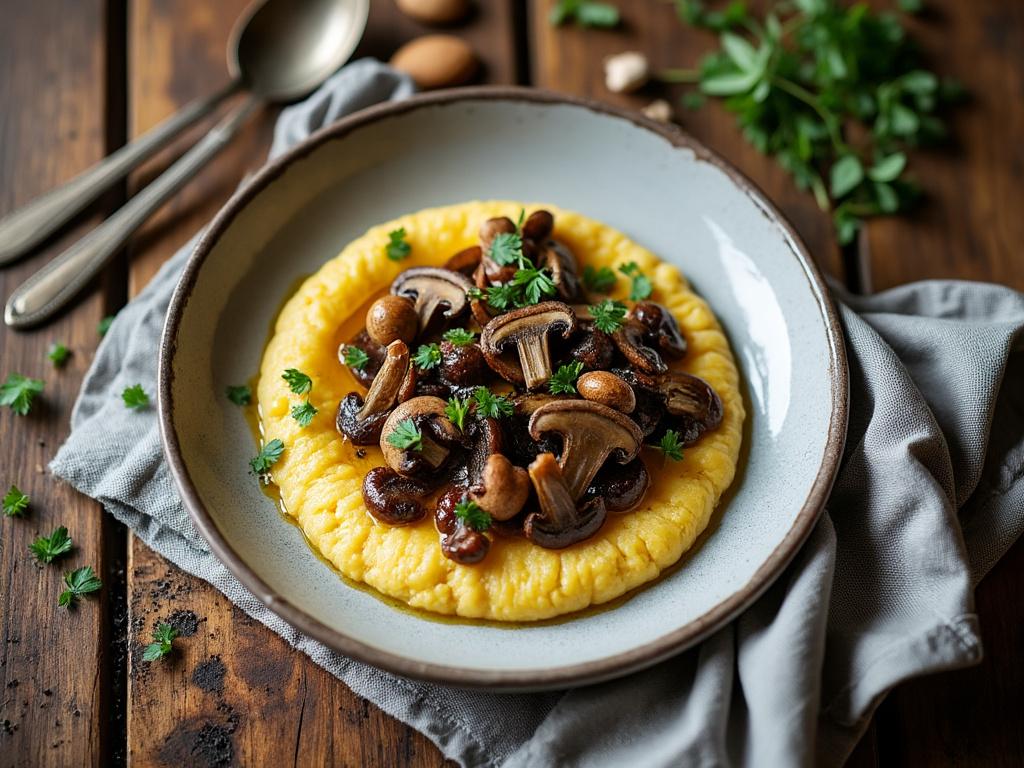
Crispy Polenta with Wild Mushrooms and Truffle Oil
Seared polenta squares topped with cremini, oyster, and shiitake mushrooms in a white wine pan sauce, finished with truffle oil. A solid vegetarian dinner.
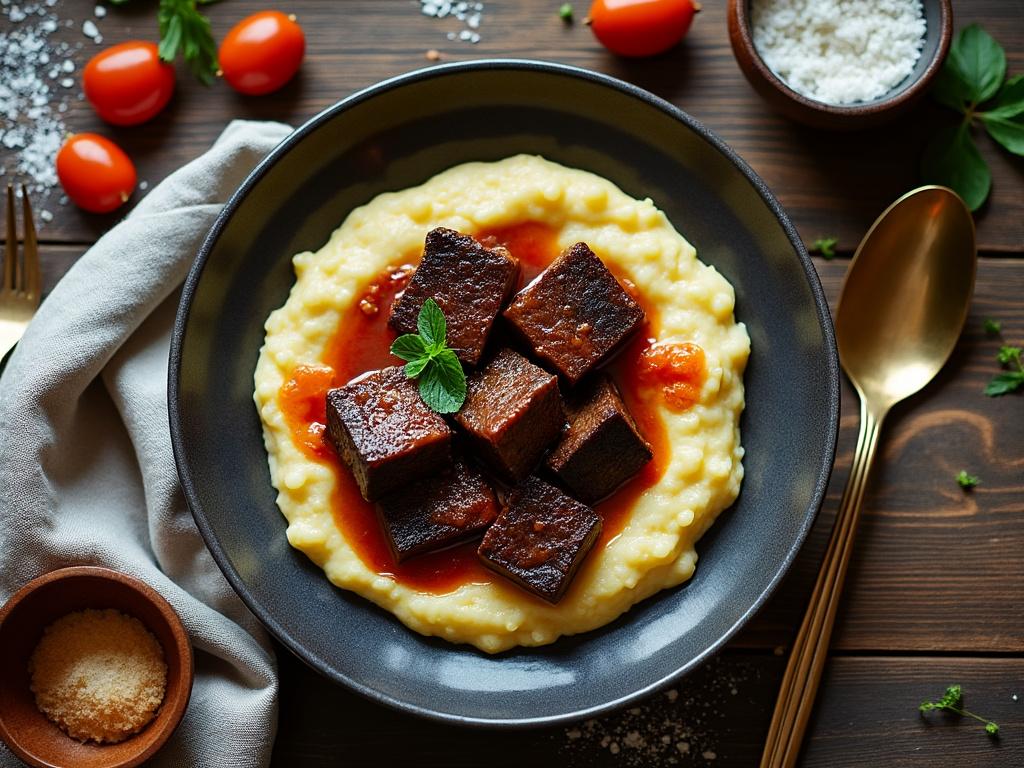
Smoked Paprika Braised Short Ribs with Creamy Polenta
Fall-off-the-bone braised beef short ribs with smoked paprika, red wine, and silky Parmesan polenta. A proper weekend dinner worth every minute.