No-Knead Dutch Oven Bread
Crusty, chewy Dutch oven bread with just flour, salt, yeast, and water. Mix it the night before — no kneading, no fuss. Step-by-step with troubleshooting tips.
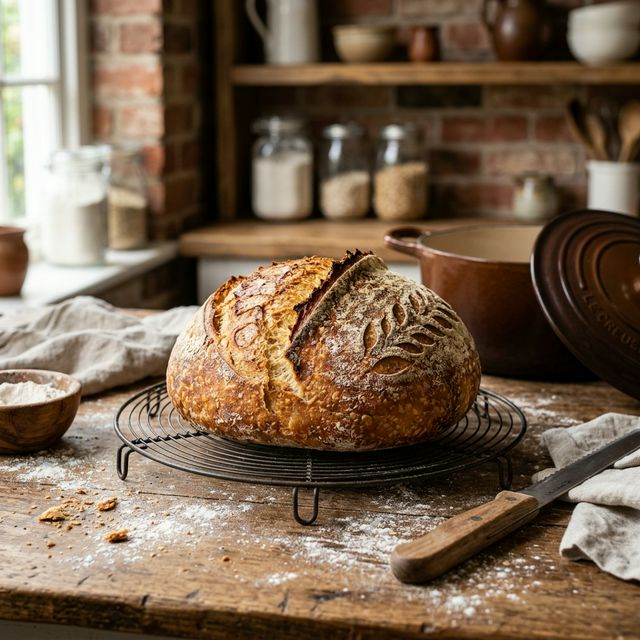
Four ingredients, one bowl, zero kneading — and yet this bread comes out with a crackly, mahogany crust and an open, chewy crumb that most home bakers only get from sourdough or bakery loaves. The secret is time doing the work that your hands would normally do: a long, slow 12-to-18-hour fermentation develops gluten structure and complex flavor without any effort from you. The Dutch oven traps steam in the first 30 minutes, mimicking a professional deck oven and giving you that dramatic oven spring and shattering crust. The result is a rustic round loaf — slightly tangy, with a tender but substantial interior — that fits a lazy Sunday morning or a weeknight dinner party equally well. If your dough looks almost liquid and soupy after the overnight rest, don't panic: flour your surface generously and use a bench scraper to fold it; it will tighten up. If it barely rose at all, your water was probably too hot and killed the yeast — start over with water closer to 110°F.
Ingredients
- ▸ 3 cups all-purpose flour
- ▸ 1.5 tsp kosher salt
- ▸ 1/2 tsp instant yeast
- ▸ 1.5 cups warm water (110°F)
🛒 Links may earn us a small commission at no cost to you.
Recommended Gear
🛒 We may earn a small commission at no extra cost to you. We only recommend gear we'd use ourselves.
Instructions
Mix (Night Before)
- 1. In a large bowl, whisk together flour, salt, and yeast.
- 2. Add warm water. Stir with a wooden spoon until a shaggy dough forms. Don't worry about lumps.
- 3. Cover with plastic wrap. Let rest at room temperature 12-18 hours.
Shape and Bake (Next Day)
- 1. Dough will be bubbly and doubled. Turn out onto a floured surface.
- 2. Fold dough over itself a few times. Shape into a round ball. Place on parchment paper.
- 3. Cover loosely with a towel. Let rise 30 minutes.
- 4. Meanwhile, place Dutch oven (lid on) in oven and preheat to 450°F for 30 minutes.
- 5. Carefully lower dough (on parchment) into the hot Dutch oven. Cover with lid.
- 6. Bake covered 30 minutes. Remove lid and bake 15 more minutes until deeply golden.
Cook's Notes
- Use a kitchen thermometer to verify your water temperature. 110°F feels warm but not hot on your wrist — but guessing is how you kill yeast or stall fermentation.
- Parchment paper is non-negotiable here. Lowering a floppy, wet dough ball into a 450°F cast iron pot without it is how burns happen. Cut your parchment slightly larger than the dough so you have handles.
- The dough will look too wet and sticky when you turn it out — that's correct. Resist adding extra flour. A well-floured surface and a bench scraper let you shape it without incorporating dry flour that would tighten the crumb.
- Let the finished loaf cool for at least 20 minutes before slicing. Cutting too early releases steam trapped in the crumb and makes it gummy.
Pro Tips
- → Preheat the Dutch oven for the full 30 minutes, not the same 30 minutes the dough does its second rise. Start the oven when you begin the second rise so timing lines up — a cold or underheated Dutch oven means no oven spring and a pale, thick crust.
- → When you fold the dough before shaping, don't overwork it. Four to six folds, then flip it seam-side down and use your hands to drag it toward you on the counter to build surface tension. That taut skin is what gives you a good rise and ear.
- → If the dough tears instead of folding cleanly during shaping, it's too cold. Let it sit uncovered on the counter for 10 minutes before trying again — cold dough is stiff and uncooperative.
- → Score the top of the dough right before baking with a sharp knife, razor blade, or bread lame — a single slash about ½ inch deep across the center. This controls where the loaf opens and prevents random splits along the sides.
- → The 'deeply golden' cue at the end of baking means dark amber, not pale tan. Most home bakers pull bread too early. An instant-read thermometer inserted into the center should read 200-210°F for a fully baked interior.
- → If your loaf is browning too fast on the bottom, slide a second sheet pan under the Dutch oven on the same rack. The extra layer of metal buffers direct oven-floor heat.
What to Serve With This
This bread is built for tearing, so serve it alongside something worth dunking. A simple bowl of tomato soup — whether homemade or a good canned variety like Muir Glen — is the obvious match because the bread's chewy crumb holds up to liquid without dissolving immediately. The slight tang from the long ferment also cuts through cream-based soups beautifully.
For a full dinner, pair it with a braise or stew: braised short ribs, a white bean and sausage cassoulet, or a simple French onion soup poured over a slice in the bowl. The bread's mild flavor doesn't compete with assertive proteins or rich sauces — it supports them.
On the drinks side, a medium-bodied red like a Côtes du Rhône or a Barbera d'Asti works with the earthy, slightly yeasty character of the loaf. If you're going non-alcoholic, sparkling water with a squeeze of lemon keeps the palate clean between bites of a richly topped slice.
For a simpler setup — cheese board, olive oil dip, or just good salted butter — this bread does the heavy lifting on its own. A sharp aged cheddar, a wedge of Manchego, or a creamy Brie all make strong companions. A dry cider, like a French-style Breton variety, is an underrated pairing here: the apple acidity echoes the fermented notes in the bread.
Variations & Substitutions
The base recipe is dairy-free and vegan as written, so no swaps needed there. For a gluten-free version, this particular method does not translate directly — no-knead bread relies on gluten development for structure, and a 1:1 GF flour blend will produce a dense, gummy result. If you need gluten-free, look for a recipe specifically formulated for GF flour with added psyllium husk for binding.
For a whole wheat variation, swap up to 1 cup of the all-purpose flour for whole wheat flour — King Arthur's whole wheat works well here. Going beyond 1 cup starts to weigh down the crumb and reduces oven spring noticeably. You can compensate slightly by bumping the water to 1 ⅔ cups, since whole wheat absorbs more liquid.
For flavor variants, add 1 tablespoon of fresh rosemary and ½ cup of roughly chopped Kalamata olives to the dry ingredients before mixing. The olives add salt, so reduce the kosher salt to 1 teaspoon. A garlic and herb version works well with 4 minced garlic cloves and 1 teaspoon dried thyme mixed into the dough.
This recipe makes a small-ish loaf suited for 4 people. To scale up, you can double the recipe — but you'll need a 7- or 8-quart Dutch oven instead of a standard 5-quart to avoid the dough pressing against the walls as it expands. Bake time stays roughly the same; check for deep browning at the 15-minute uncovered mark.
Frequently Asked Questions
How do I store leftover bread? ▼
Store the loaf cut-side down on a cutting board at room temperature, loosely covered with a clean kitchen towel. Avoid plastic wrap — it traps moisture and softens the crust. It's best within 2 days but stays edible for up to 3.
Can I freeze this bread? ▼
Yes. Let the loaf cool completely, then slice it and freeze in a zip-top bag with the air pressed out. Slices reheat directly from frozen in a 375°F oven for 8-10 minutes. Freezing a whole unsliced loaf works too, but takes longer to thaw evenly.
How do I reheat a stale loaf? ▼
Run the cut end briefly under tap water — just a light splash — then place the whole loaf in a 400°F oven directly on the rack for 8 minutes. The steam from the water revives the crust dramatically. Don't microwave it; you'll get rubber.
Can I shorten the rise time? ▼
Not really without changing the recipe. You could increase the yeast to 1 teaspoon and do a 2-hour room temperature rise, but you'll lose most of the flavor complexity that makes this loaf interesting. The long, slow fermentation is the point.
Can I use active dry yeast instead of instant? ▼
Yes. Use the same amount — ½ teaspoon — but dissolve it in the warm water first and let it sit for 5 minutes until foamy before adding it to the flour. This just confirms the yeast is alive before you commit 18 hours to the dough.
What if I don't have a Dutch oven? ▼
You need a vessel that traps steam in the first 30 minutes. A heavy oven-safe pot with a tight-fitting lid (like a Lodge cast iron combo cooker or even an oven-safe stockpot) works. Without a lid situation at all, the crust won't develop properly and you'll get a flat, pale loaf.
My dough didn't rise overnight. What went wrong? ▼
Most likely your water was too hot and killed the yeast — anything above 120°F will do it. Water that's too cold (below 90°F) will just make the rise very slow rather than killing it outright. Check your yeast's expiration date too; old yeast is a common culprit.
Can I prep the dough and bake it later than 18 hours? ▼
You can go up to 24 hours without major issues. Past that, the dough becomes overly acidic and sticky, and the gluten structure can break down, making shaping difficult. If you need to delay, move the covered bowl to the refrigerator after 12 hours to slow fermentation.
Why is my crust soft instead of crackly? ▼
Two causes: the Dutch oven wasn't fully preheated (it needs a full 30 minutes at 450°F), or you covered the bread after baking. Once it comes out of the oven, set it on a wire rack with airflow underneath — never trap it under a towel while warm or the steam will kill the crust.
Can I use bread flour instead of all-purpose? ▼
Yes, and it's actually a slight upgrade — bread flour has more protein, which means better gluten development and a slightly chewier crumb. Use the same 3-cup measurement. You may need an extra tablespoon or two of water since bread flour absorbs slightly more liquid.
Enjoyed this recipe?
Daily Home Cookery is self-funded. If something you cooked here made dinner a little better, a coffee keeps the kitchen running.
☕ Buy me a coffeeYou Might Also Like
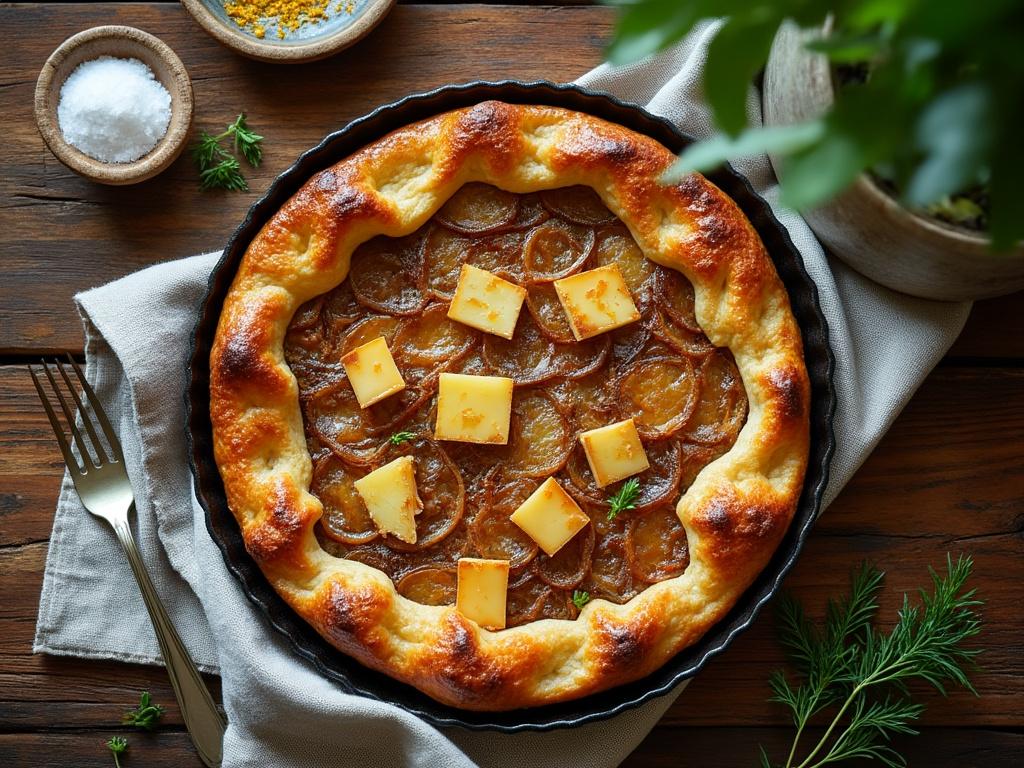
Caramelized Onion and Gruyère Tart
A buttery short-crust tart filled with slow-cooked caramelized onions, Gruyère, and a firm, sliceable custard. Make-ahead friendly for dinner parties.
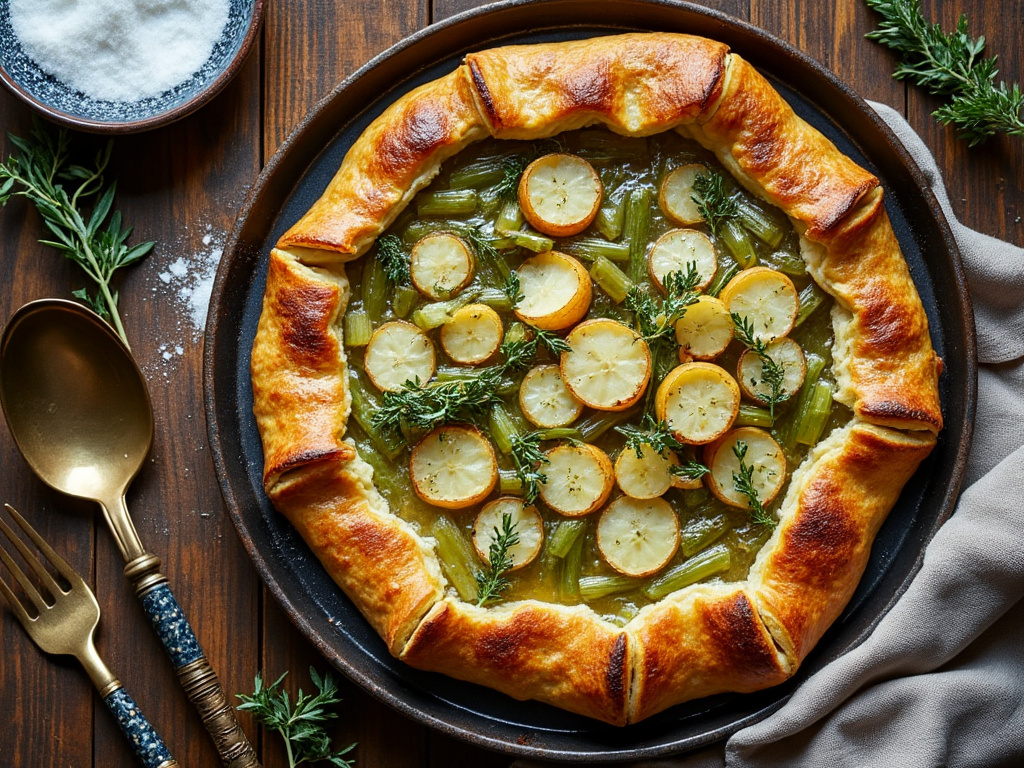
Charred Leek and Potato Galette with Gruyère and Thyme
A flaky free-form galette filled with caramelized leeks, thinly sliced potato, and nutty Gruyère — impressive enough for a dinner party, easy enough for Sunday.
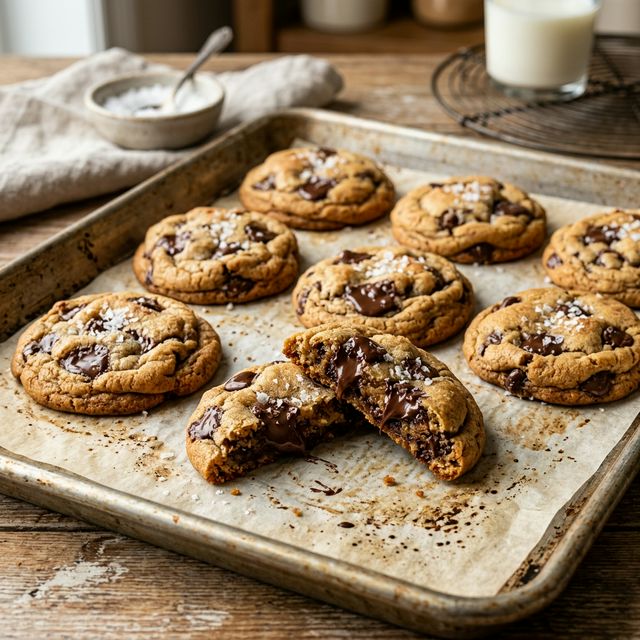
Brown Butter Chocolate Chip Cookies
Brown butter adds deep, nutty flavor to these chewy chocolate chip cookies. Chilled dough, flaky sea salt finish, and a 12-minute bake.