Smoky Eggplant and Lamb Bolognese
Ground lamb and charred eggplant make a deeply savory bolognese. Rich, meaty sauce with pappardelle — ready in under 80 minutes.
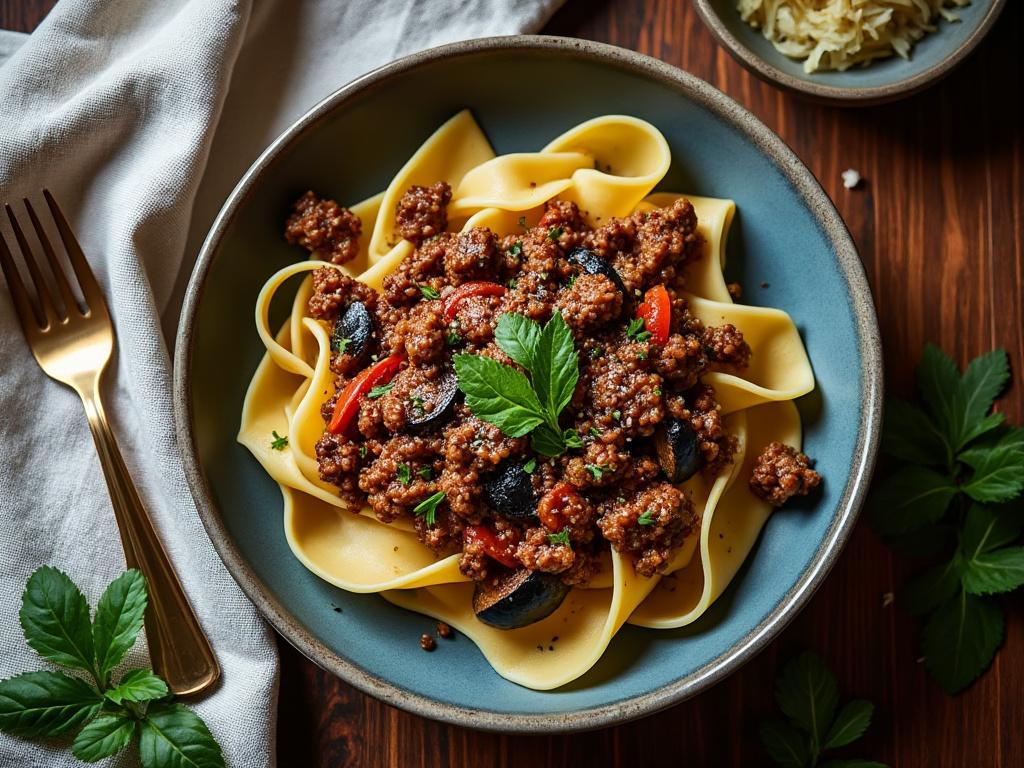
<p>Ground lamb has a natural earthiness that beef can't replicate — and when you pair it with charred eggplant and a hit of smoked paprika, the sauce reads as deeply complex without being fussy. The trick here is browning the eggplant separately in a dry skillet until the exterior scorches slightly. That char is what gives the finished sauce its smoky backbone; skip that step and you lose half the dish.</p><p>Expect a meaty, thick sauce with a silky body — the eggplant practically dissolves once simmered, adding richness without announcing itself. Toss it with wide pappardelle or rigatoni, and it holds up fine for meal prep (the sauce actually improves overnight). If your eggplant releases a lot of liquid and the sauce looks watery at the 20-minute mark, crank the heat and stir until it tightens — don't panic, it will reduce.</p>
Ingredients
- ▸ 1 lb ground lamb
- ▸ 1 medium eggplant (about 1 lb), cut into 1/2-inch dice
- ▸ 12 oz pappardelle pasta
- ▸ 1 medium yellow onion, finely diced
- ▸ 4 cloves garlic, minced
- ▸ 2 tbsp tomato paste
- ▸ 1 28-oz can San Marzano whole peeled tomatoes, crushed by hand
- ▸ 1/2 cup dry red wine
- ▸ 2 tsp smoked paprika
- ▸ 1 tsp Diamond Crystal kosher salt, plus more for pasta water
- ▸ 1/2 tsp black pepper
- ▸ 1/4 tsp crushed red pepper flakes
- ▸ 4 sprigs fresh thyme
- ▸ 2 tbsp extra-virgin olive oil, divided
- ▸ 1 tbsp unsalted Kerrygold butter
- ▸ 2 oz Parmigiano-Reggiano, finely grated, plus more for serving
- ▸ 1/4 cup fresh flat-leaf parsley, roughly chopped
🛒 Links may earn us a small commission at no cost to you.
Recommended Gear
🛒 We may earn a small commission at no extra cost to you. We only recommend gear we'd use ourselves.
Instructions
Char the Eggplant
- 1. Heat the 12-inch skillet over high heat for 2 minutes until it's visibly smoking. Add 1 tbsp olive oil, then spread the diced eggplant in a single layer — work in two batches if needed. Cook without stirring for 3-4 minutes until the undersides are deep brown and slightly charred, and the eggplant smells nutty and caramelized. Stir once, cook another 2 minutes, then transfer to a plate. The eggplant should be soft and collapsing at the edges.
- 2. Reduce the heat to medium-high. Add the remaining 1 tbsp olive oil to the same skillet. Add the ground lamb and press it into an even layer. Cook undisturbed for 4-5 minutes until the bottom is deeply browned — you should hear a consistent sizzle, not steaming. Break the meat apart with a wooden spoon and cook another 3 minutes until no pink remains.
- 3. Tilt the skillet and spoon off all but 1 tablespoon of the rendered fat. The remaining fat should look golden, not greasy-white.
Build the Sauce
- 1. Reduce heat to medium. Add the diced onion to the lamb and cook for 5-6 minutes, stirring occasionally, until the onion is translucent and soft — it should smell sweet and no longer sharp. Add the minced garlic and cook for 60 seconds until fragrant, stirring constantly so it doesn't scorch.
- 2. Add the tomato paste, smoked paprika, red pepper flakes, salt, and black pepper. Stir constantly for 2 minutes until the tomato paste turns a dark brick-red and begins sticking slightly to the bottom of the pan — that fond is flavor, not a problem.
- 3. Pour in the red wine and scrape up all the browned bits from the bottom. Cook for 3 minutes until the wine reduces by half and the sharp alcohol smell softens to something warm and rounded.
- 4. Add the crushed San Marzano tomatoes, charred eggplant, and thyme sprigs. Stir to combine. Bring to a gentle boil, then reduce heat to medium-low and simmer uncovered for 25-30 minutes, stirring every 5 minutes, until the sauce thickens and the eggplant has broken down almost completely into the sauce. The surface should bubble lazily and the color will deepen to a rich terracotta. Remove and discard the thyme sprigs.
Cook the Pasta
- 1. While the sauce simmers, bring a large pot of water to a rolling boil. Salt it heavily — the water should taste noticeably salty, like mild seawater. Add the pappardelle and cook according to package directions until just al dente (usually 8-10 minutes). Before draining, ladle out 1 cup of starchy pasta water and set it aside.
- 2. Drain the pappardelle in a colander. Do not rinse.
Finish and Serve
- 1. Add the butter to the sauce and stir until melted and glossy, about 30 seconds. Add the drained pappardelle directly to the skillet. Toss vigorously over medium heat for 1-2 minutes, adding pasta water 2-3 tablespoons at a time until the sauce coats every strand and looks silky rather than soupy or dry.
- 2. Remove from heat. Add the grated Parmigiano-Reggiano and half the parsley. Toss once more — the cheese should melt into the sauce immediately, not clump. Divide among warm bowls, top with remaining parsley and an extra shower of Parmigiano, and serve immediately.
Cook's Notes
- Don't skip charring the eggplant in a dry, screaming-hot pan — that step is the entire source of smokiness in the dish. A nonstick pan won't get hot enough; use stainless steel or cast iron.
- Salt your pasta water generously. Under-salted pasta will make the whole dish taste flat no matter how good the sauce is.
- The sauce keeps for 4 days refrigerated and freezes well for up to 3 months. Store it separately from the pasta — pasta stored in sauce turns mushy.
- If your sauce looks watery at the 20-minute mark, remove the lid entirely and increase heat slightly to medium. Stir more frequently and give it another 10 minutes.
- Use a block of Parmigiano-Reggiano and grate it yourself on a Microplane — pre-shredded cheese has cellulose coating that prevents it from melting smoothly into the sauce.
Pro Tips
- → If the sauce breaks and looks greasy (fat pooling on top), add 2-3 tablespoons of pasta water and stir vigorously over medium heat — the starch in the water re-emulsifies the fat back into the sauce within 60 seconds.
- → Brown the lamb in a completely dry pan before adding oil; the fat rendering from the lamb itself is enough to start the browning, and adding oil too early lowers the pan temperature and promotes steaming instead of searing.
- → For maximum depth of flavor, let the tomato paste cook long enough to turn dark and stick slightly — most home cooks pull it too early. If it's still orange-red, keep going.
- → Pappardelle varies wildly by brand: Rustichella d'Abruzzo holds its texture well under a heavy sauce; De Cecco is a reliable supermarket backup. Avoid fresh refrigerated pasta here — it overcooks quickly and turns gummy when tossed in the skillet.
- → If you're scaling this up for 8 servings, brown the lamb and eggplant in separate batches in the same skillet before combining — adding twice the volume kills your pan temperature and you'll end up braising instead of browning.
- → Finishing the pasta in the sauce (rather than just saucing it in the bowl) is the difference between pasta with sauce on top and pasta that tastes like it was cooked as one dish. Don't skip the 2-minute toss in the skillet.
What to Serve With This
<p>A full-bodied red with savory depth is the right call here. Côtes du Rhône — something like Château Pesquié — works well because the grenache-syrah blend echoes the smokiness without steamrolling the lamb's brightness. If you want something more wallet-friendly, a Montepulciano d'Abruzzo around $12 has the acidity to cut through the fat and hold up to the sauce's weight.</p><p>For a non-alcoholic option, a sparkling water with a squeeze of blood orange keeps the palate fresh between bites. The carbonation does some of the same work as acidity in wine — it clears the richness so each forkful tastes like the first.</p><p>On the table, a simple green salad with radicchio, shaved fennel, and a sharp red-wine vinaigrette gives the meal contrast — bitter against savory, crunchy against soft. Don't add a creamy dressing; you don't need more richness.</p><p>Crusty bread is worth having, specifically a sourdough boule or a sturdy ciabatta. You'll want something to drag through the sauce left in the bowl. Avoid soft dinner rolls — they absorb the sauce instead of pulling it up cleanly.</p>
Variations & Substitutions
<p>For a fully vegetarian version, replace the ground lamb with 1 lb of finely chopped cremini mushrooms and 1 cup of green or brown lentils (rinsed). Brown the mushrooms in two batches in the same skillet you'd use for the lamb, getting them deeply golden before adding aromatics. The lentils go in with the tomatoes and add protein and texture. Add an extra tablespoon of smoked paprika to compensate for the missing lamb fat.</p><p>Dairy-free cooks should skip the Parmigiano finish and swap in 2 tbsp of nutritional yeast stirred into the sauce just before tossing with pasta. It adds a nutty, savory note that reads close enough. Use a good olive oil drizzle instead of butter at plating.</p><p>For a gluten-free version, use Jovial brand brown rice pappardelle or Tinkyáda rigatoni — both hold up to this heavy sauce without going mushy. Cook them 1 minute less than the package says and finish them directly in the sauce with a splash of pasta water.</p><p>If you want to deepen the spice profile toward North African territory, add 1 tsp ground cinnamon, 1/2 tsp ground cumin, and 1/4 tsp cayenne along with the paprika. Top with a spoon of full-fat Greek yogurt and a handful of torn fresh mint instead of Parmigiano. Same technique, very different result.</p>
Frequently Asked Questions
Can I make the sauce ahead of time? ▼
Yes — and it's better the next day. Cook the sauce fully, let it cool completely, and refrigerate in an airtight container for up to 4 days. Reheat it gently in a wide skillet over medium-low, adding a splash of water or stock to loosen it back to saucing consistency.
Can I freeze the bolognese? ▼
Absolutely. Freeze the sauce (without pasta) in a zip-lock bag or freezer container for up to 3 months. Thaw overnight in the fridge and reheat on the stovetop. The texture may be slightly looser after freezing — just simmer uncovered for 5 minutes to tighten it back up.
Can I substitute ground beef for the lamb? ▼
You can, but you'll lose the specific earthiness that makes this recipe distinct. If you go that route, use 80/20 ground beef and add an extra 1/2 tsp of smoked paprika to compensate. The sauce will still be good, just different in character.
My sauce is too oily. What happened? ▼
Ground lamb is fattier than beef — if you don't drain excess fat after browning, it separates into the sauce. Tilt the skillet after browning the meat and spoon off all but about 1 tablespoon of fat before adding aromatics. You can also blot with a paper towel if needed.
What pasta shape works best besides pappardelle? ▼
Rigatoni is the best backup — the ridges and tubes grab the chunky sauce. Tagliatelle is a close second. Avoid thin pasta like spaghetti or linguine; this sauce is too heavy and will slide right off.
Do I have to salt and drain the eggplant first? ▼
Not for this recipe. You're charring the eggplant in a dry pan over high heat, which draws out moisture quickly through evaporation. Salting is useful for raw preparations; here, the heat does the work. Salting first would actually make the eggplant too wet to char properly.
Can I double this recipe for a crowd? ▼
Yes. Use a 7-quart Dutch oven or a wide 12-inch deep skillet. Brown the lamb and eggplant in batches — crowding the pan creates steam instead of browning. Everything else scales 1:1. Simmer time stays the same.
What canned tomatoes should I use? ▼
San Marzano whole peeled tomatoes (DOP certified) are the best choice — they're less acidic and have more flesh than standard canned tomatoes. Crush them by hand before adding. If you can't find them, Muir Glen fire-roasted diced tomatoes add a subtle smokiness that works well with this recipe.
Can I use dried herbs instead of fresh thyme? ▼
Yes — use 1/2 tsp dried thyme in place of the fresh sprigs. Add it with the smoked paprika so it blooms in the oil. Dried herbs are more concentrated, so don't double the amount.
Enjoyed this recipe?
Daily Home Cookery is self-funded. If something you cooked here made dinner a little better, a coffee keeps the kitchen running.
☕ Buy me a coffeeYou Might Also Like
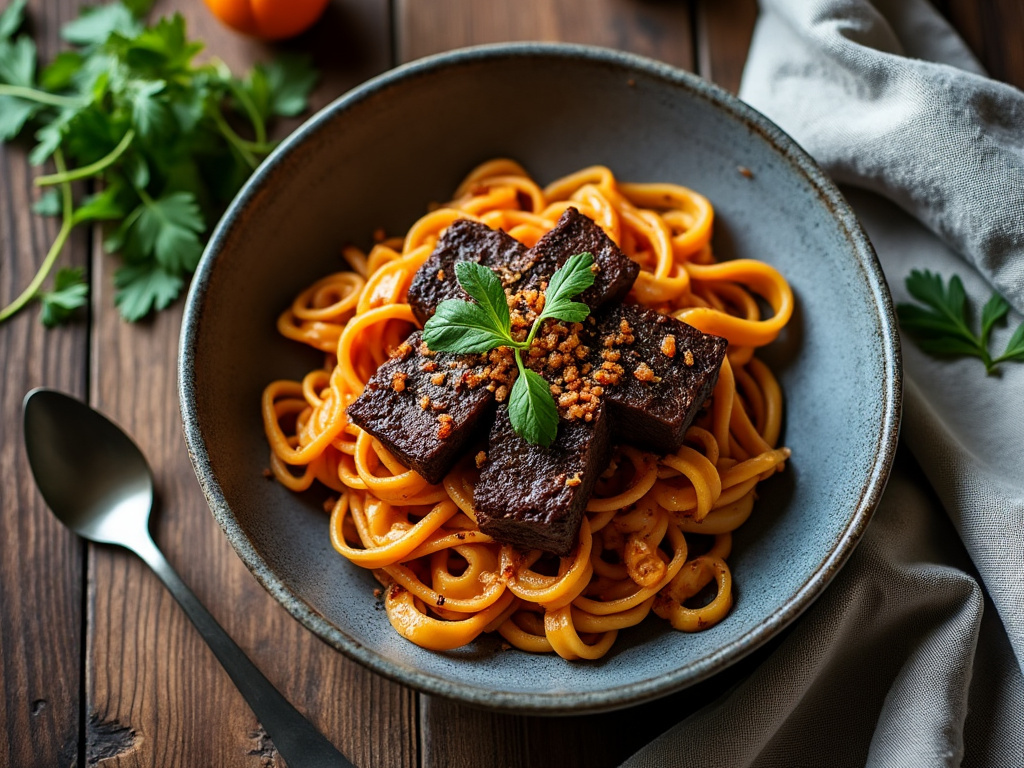
Gochujang Braised Beef Short Rib Ragu with Pappardelle and Crispy Shallots
Deep, sticky short rib ragu with gochujang heat and wide pappardelle. A slow braise that pays off hard on a weekend dinner table.
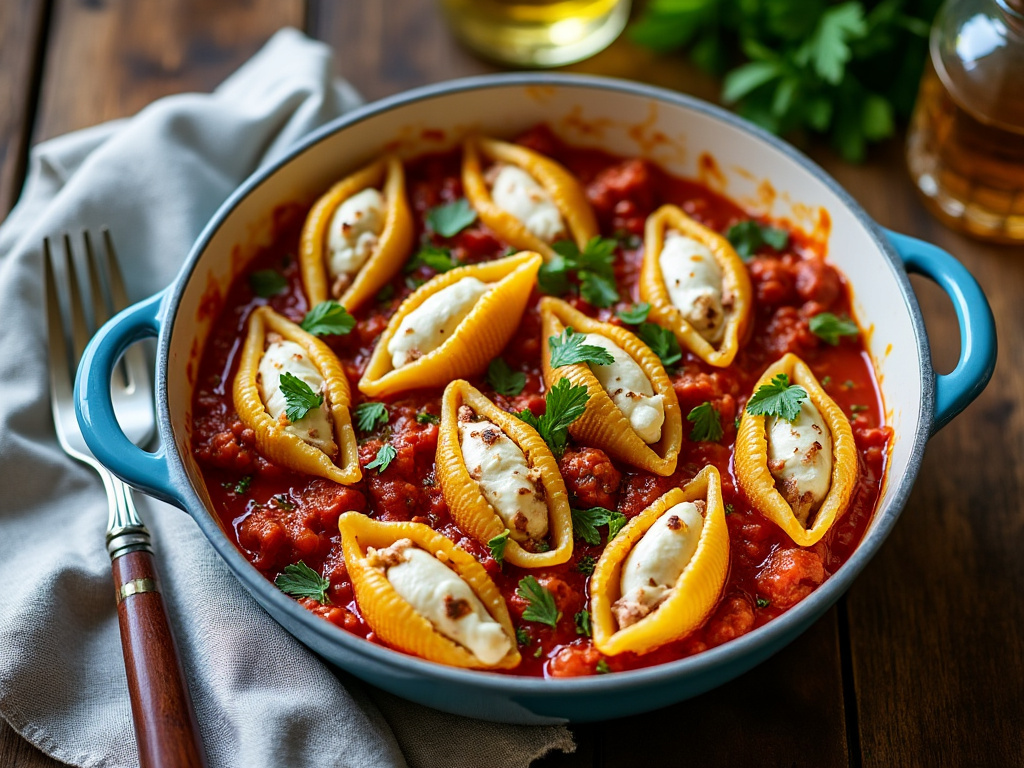
Baked Ricotta-Stuffed Shells with Spicy Sausage Ragù
Giant pasta shells stuffed with herbed ricotta, baked in a spicy Italian sausage ragù. A crowd-ready dinner that reheats beautifully.
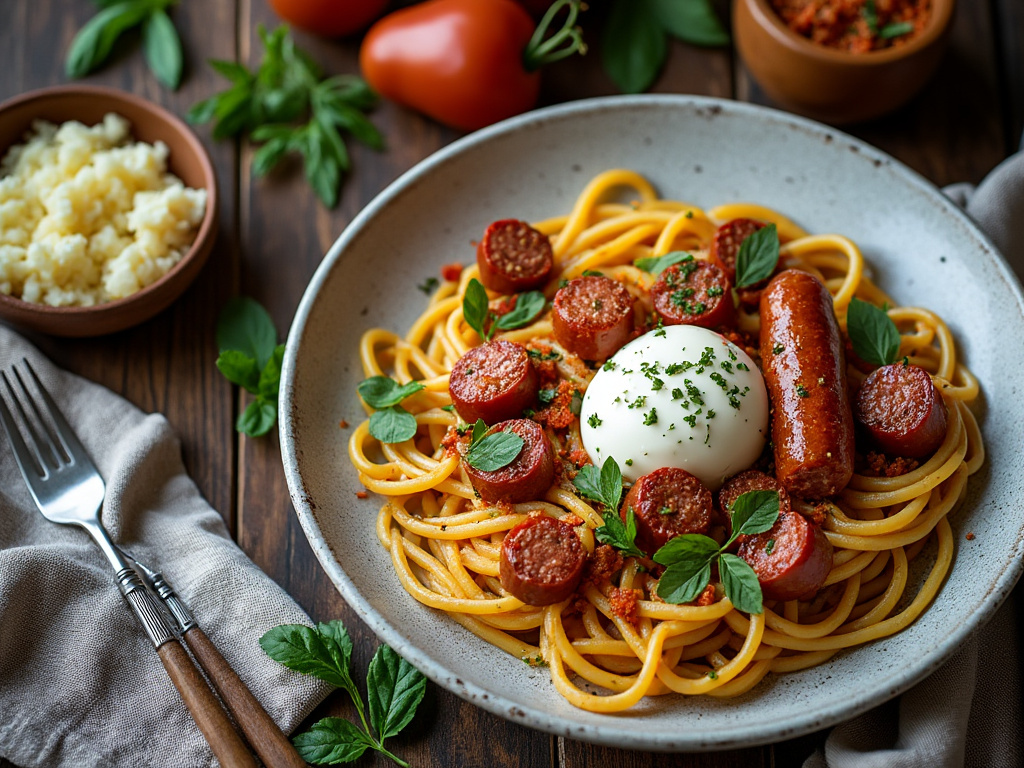
Mafaldine with Slow-Cooked Fennel Sausage, Nduja, and Burrata
Mafaldine pasta with slow-cooked fennel sausage, spreadable nduja, and torn burrata. Rich, spicy, and ready in under an hour.