Thai Basil Pork Fried Rice with Crispy Shallots and Runny Egg
High-heat Thai basil pork fried rice with ground pork, fish sauce, and crispy shallots — weeknight dinner in 35 minutes.
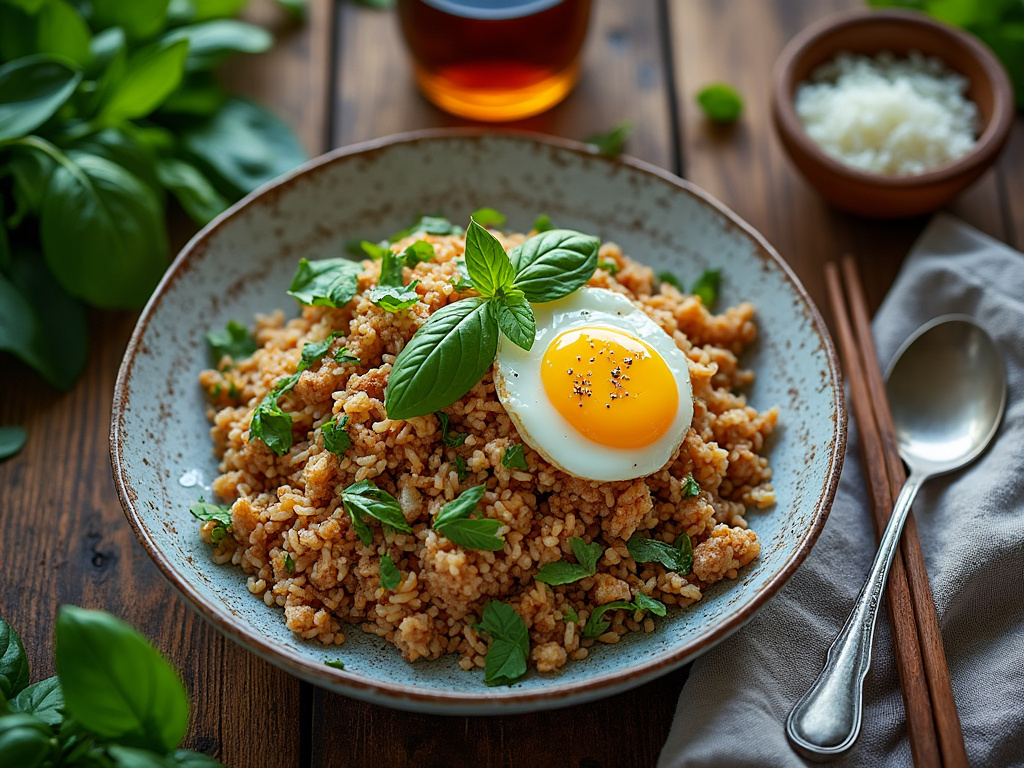
This is not the greasy takeout version. Thai basil fried rice — khao pad krapao — is a high-heat, fast-moving dish where ground pork goes from raw to caramelized in under five minutes, and the whole thing comes together before your skillet has time to cool. The technique that makes it work: day-old rice, cooked cold from the fridge, plus a ripping-hot wok or 12-inch carbon steel pan. Wet rice steams. Dry, cold rice fries. That difference is the entire recipe.
Expect savory, slightly funky depth from the fish sauce and oyster sauce combination, a clean punch of Thai basil hitting your nose right as it wilts into the pork, and just enough chili heat to make the back of your throat warm. The fried egg on top, yolk still runny, acts as a sauce once broken. This is a serious weeknight dinner — fast, filling, made from pantry staples. If the rice clumps in the pan, press it flat with your spatula and let it sit undisturbed for 30 seconds before tossing; that contact heat breaks the clumps apart.
Ingredients
- ▸ 4 cups cooked jasmine rice, day-old and cold
- ▸ 1 lb ground pork (80/20)
- ▸ 4 large eggs
- ▸ 1 cup fresh Thai basil leaves, loosely packed
- ▸ 4 cloves garlic, minced
- ▸ 2 Thai bird's eye chilies, thinly sliced (seeds in for heat, removed for mild)
- ▸ 3 tbsp oyster sauce
- ▸ 2 tbsp fish sauce (Tiparos brand recommended)
- ▸ 1 tbsp soy sauce
- ▸ 1 tsp white sugar
- ▸ 1 tbsp neutral oil for the rice (such as avocado or canola)
- ▸ 1 tbsp neutral oil for the eggs
- ▸ 3 medium shallots, thinly sliced into rings
- ▸ 1/3 cup neutral oil for frying shallots
- ▸ 2 tbsp neutral oil for frying pork
- ▸ 1/4 tsp white pepper
- ▸ 4 lime wedges, for serving
🛒 Links may earn us a small commission at no cost to you.
Recommended Gear
🛒 We may earn a small commission at no extra cost to you. We only recommend gear we'd use ourselves.
Instructions
Prep
- 1. Combine the oyster sauce, fish sauce, soy sauce, and white sugar in a small bowl. Stir until the sugar dissolves completely — the mixture should look glossy and smell sharp. Set it next to the stove; you'll add it fast and you won't have time to measure mid-cook.
- 2. Break the cold rice apart with your hands into loose, individual grains over a sheet pan. Any large clumps left intact will stay clumped in the wok. The rice should feel dry and slightly firm between your fingers.
Fry the Shallots
- 1. Add the 1/3 cup of neutral oil to a small saucepan over medium heat. Add the shallot rings and bring to a gentle sizzle. Cook, stirring occasionally, for 8–10 minutes until the shallots turn deep golden and the sizzling slows — the moisture is gone when the bubbling quiets. Pull them immediately with a spider strainer onto a paper towel-lined plate; they continue to darken off heat. Season with a pinch of salt. They should crisp within 2 minutes of cooling.
Cook the Pork
- 1. Heat the wok or skillet over high heat for 2 full minutes — the pan should just begin to smoke. Add 2 tbsp neutral oil and swirl to coat. Add the ground pork in a single press-flat layer; do not stir for 60 seconds. You want aggressive browning, not gentle cooking — it should spit and sizzle loudly.
- 2. Break the pork apart and continue cooking, stirring every 30 seconds, until no pink remains and the edges of the meat are lightly caramelized, about 3–4 minutes total. Push the pork to the outer edge of the wok.
- 3. Add the remaining 1 tbsp oil to the center of the wok. Add the garlic and sliced chilies and stir-fry for 30–45 seconds until fragrant and the garlic turns pale golden — it should smell sharp and sweet simultaneously. Toss the garlic into the pork.
Fry the Rice
- 1. Add all the cold rice to the wok at once. Press it flat with your spatula and let it sit undisturbed for 45 seconds — you should hear it crackle against the hot metal. Then toss vigorously, breaking up any remaining clumps, for 2 minutes until the rice is evenly hot and some grains have taken on a pale golden color.
- 2. Pour the sauce mixture over the rice. Toss continuously for 60–90 seconds until every grain is coated and the sauce has absorbed — no visible pooling liquid, and the rice should smell slightly caramelized and savory. Add the white pepper and toss once more.
- 3. Remove the wok from heat. Fold in the Thai basil leaves and toss until just wilted, about 20–30 seconds — they should turn bright, glossy green and release a strong anise-herb scent. Do not cook further; residual heat is enough.
Fry the Eggs
- 1. Heat a nonstick skillet over medium-high heat and add 1 tbsp oil. When the oil shimmers and a drop of water sizzles immediately on contact, crack in the eggs one at a time. Fry until the whites are set and opaque with lacy, crisp edges, and the yolks are still soft and jiggly in the center, about 2 minutes. Season each egg with a pinch of salt.
Plate and Serve
- 1. Divide the fried rice among four bowls or plates. Top each with one fried egg, a generous handful of crispy shallots, and a lime wedge on the side. Serve immediately — squeeze the lime directly over the egg and rice right before eating.
Cook's Notes
- Day-old jasmine rice is non-negotiable for texture. If you're planning ahead, cook the rice the night before, spread it on a sheet pan, cool completely, then refrigerate uncovered overnight.
- Thai bird's eye chilies are genuinely hot — about 50,000–100,000 Scoville. One chili gives noticeable heat for most palates; two is assertive. Taste your chili before adding if you're unsure.
- Don't skip letting the pork sit undisturbed for the first 60 seconds in the pan. That initial sear is what creates the browning and fond that gives the whole dish depth.
- The crispy shallots go soft fast once they hit moisture, so add them at the table, not during cooking.
- Fish sauce brands vary significantly in salinity. Tiparos and Megachef are well-balanced; if using Three Crabs, reduce by 1/2 tsp as it runs saltier.
Pro Tips
- → Wok hei — the smoky, slightly charred quality in good fried rice — requires sustained high heat. Home burners are weaker than restaurant woks, so cook smaller batches and let the pan sit on high heat for at least 2 full minutes before adding anything. If your kitchen starts to smoke, you're at the right temperature.
- → If the rice sticks and clumps badly in the pan, your pan isn't hot enough or your rice was too wet. Add a splash of water (1 tsp) and press flat — the steam loosens stuck grains. Then let it sit undisturbed again to re-crisp.
- → The sauce will look like too little liquid for the volume of rice. That's correct — it coats, it doesn't pool. If you end up with wet, sauce-pooling rice, you either added too much or didn't toss fast enough over high heat. Next time, toss more aggressively.
- → Finishing with basil off heat is intentional. Basil cooked more than 30 seconds in a hot wok loses its volatile aromatics and turns dull and slightly bitter. The residual heat of the rice is all it needs.
- → If your fried egg yolks keep breaking when you try to slide them out of the pan, your oil wasn't hot enough before you cracked the eggs in. The whites should set almost immediately on contact; if they spread and thin out, the pan is too cool.
- → For a more intense flavor, add 1 tsp of dark soy sauce with the sauce mixture — it deepens the color of the rice to a rich mahogany and adds a faint molasses note without tasting sweet.
What to Serve With This
A cold Singha or Chang lager is the obvious move here, and it works for a reason: the light carbonation cuts through the pork fat and fish sauce salt without competing with the basil. If you want something non-alcoholic, a tall glass of Thai iced tea — brewed strong and sweetened with condensed milk over ice — contrasts the savory heat with sweetness and dairy fat, which softens the chili.
For sides, a simple cucumber salad dressed with rice vinegar, a pinch of sugar, and sliced shallots is the classic Thai pairing. The cool acidity gives your palate a break between bites of hot, salty rice. Nam prik pla — fish sauce with sliced Thai chilies and lime — served in a small bowl on the side lets each person tune the salt and heat at the table, which is how this dish is traditionally served.
If you want a vegetable on the plate, blanched or wok-charred Chinese broccoli (gai lan) with oyster sauce alongside makes the meal feel more complete without muddying the flavors. Skip salads with creamy dressings — they clash with the fish sauce base. A dry Riesling (Mosel-style, off-dry) is a surprisingly strong wine pairing: the residual sugar tames the chili, and the acidity handles the fat.
Variations & Substitutions
For a vegetarian version, replace the ground pork with 12 oz of extra-firm tofu, pressed and crumbled into small chunks. Brown it in two tablespoons of neutral oil before adding aromatics, and swap the fish sauce for 2 tbsp soy sauce plus 1 tsp rice vinegar for a comparable salt-and-tang balance. Oyster sauce has a vegetarian mushroom-based version (Maekrua makes a widely available one) — use it 1:1.
Ground chicken or turkey works in place of pork at the same quantity. The leaner protein dries out faster, so pull it off heat the moment it's just cooked through — about 30 seconds sooner than the pork. For a pork belly variation, dice 8 oz of skinless pork belly into 1/2-inch cubes and render the fat first over medium heat before cranking the temperature. The rendered fat replaces the added oil and gives a richer result.
To scale this up for six people, cook in two separate batches rather than crowding the pan — adding extra volume drops the pan temperature and you'll get steamed rice instead of fried. For a gluten-free version, replace the oyster sauce with tamari-based stir-fry sauce at the same volume (2 tbsp), confirm your fish sauce label is GF (Tiparos and Megachef both are), and the rest of the recipe is naturally gluten-free.
Frequently Asked Questions
Can I use freshly cooked rice instead of day-old rice? ▼
You can, but spread the just-cooked rice on a rimmed sheet pan and refrigerate it uncovered for at least 30 minutes first. Freshly cooked rice has too much surface moisture and will steam in the pan rather than fry, producing a sticky, clumped result. Even 30 minutes of airflow dries it enough to work in a pinch.
What type of rice works best for this recipe? ▼
Long-grain jasmine rice is the correct choice — it's what Thai restaurants use, and its lower starch content keeps grains separate when fried. Short-grain or sushi rice gets gummy under high heat. Brown rice works structurally but produces a denser, nuttier result that doesn't quite match the dish's intended flavor profile.
I don't have Thai basil. Can I use Italian basil? ▼
You can, but the flavor shifts noticeably. Thai basil has a mild anise note and holds up under heat; Italian basil is more delicate and turns bitter if cooked too long. If using Italian basil, add it in the last 30 seconds off heat rather than letting it wilt in the pan. Holy basil is the most authentic substitute if you can find it at an Asian grocery.
How do I store and reheat leftovers? ▼
Store leftovers in an airtight container in the fridge for up to 3 days. Reheat in a dry nonstick skillet over medium-high heat, stirring occasionally, until steaming hot throughout — about 4 minutes. Microwave reheating makes the rice gummy and soft. Do not store the fried egg with the rice; fry a fresh egg when reheating.
Can I freeze this fried rice? ▼
Yes. Freeze the rice (without the egg) in a zip-top freezer bag, pressed flat, for up to 2 months. Reheat directly from frozen in a hot skillet with a splash of water (1 tbsp) to create steam, breaking up clumps as it thaws. The texture won't be quite as crispy as fresh, but it reheats acceptably for a quick meal.
Is this dish very spicy? ▼
At the quantities listed, it has moderate heat — noticeable warmth but not overwhelming. Thai chilies are significantly hotter than serrano or jalapeño, so one whole chili delivers real heat. Start with half a chili if you're heat-sensitive, or use one deseeded. You can always add chili flakes at the table.
Can I make the crispy shallots ahead of time? ▼
Yes — crispy shallots keep well. Fry them up to 3 days ahead and store at room temperature in a small jar with a tight lid, uncovered briefly to release any steam before sealing. Do not refrigerate them; moisture makes them go limp within hours.
What pan should I use if I don't have a wok or carbon steel pan? ▼
A 12-inch stainless steel skillet is your best alternative — it holds heat well and tolerates high temperatures without issue. Nonstick pans work but max out around 450°F, which limits your browning. Cast iron retains heat well but is slow to respond to temperature changes, which makes the fast-moving stir-fry steps harder to control. Whatever you use, preheat it for at least 2 minutes before adding oil.
Can I double this recipe? ▼
Double the ingredients but cook in two sequential batches, not one crowded pan. Doubling in a single pan drops the temperature too much — you lose the wok hei effect (the smoky, lightly charred quality) and the rice steams instead of crisps. The second batch goes faster since the pan is already ripping hot.
Enjoyed this recipe?
Daily Home Cookery is self-funded. If something you cooked here made dinner a little better, a coffee keeps the kitchen running.
☕ Buy me a coffeeYou Might Also Like
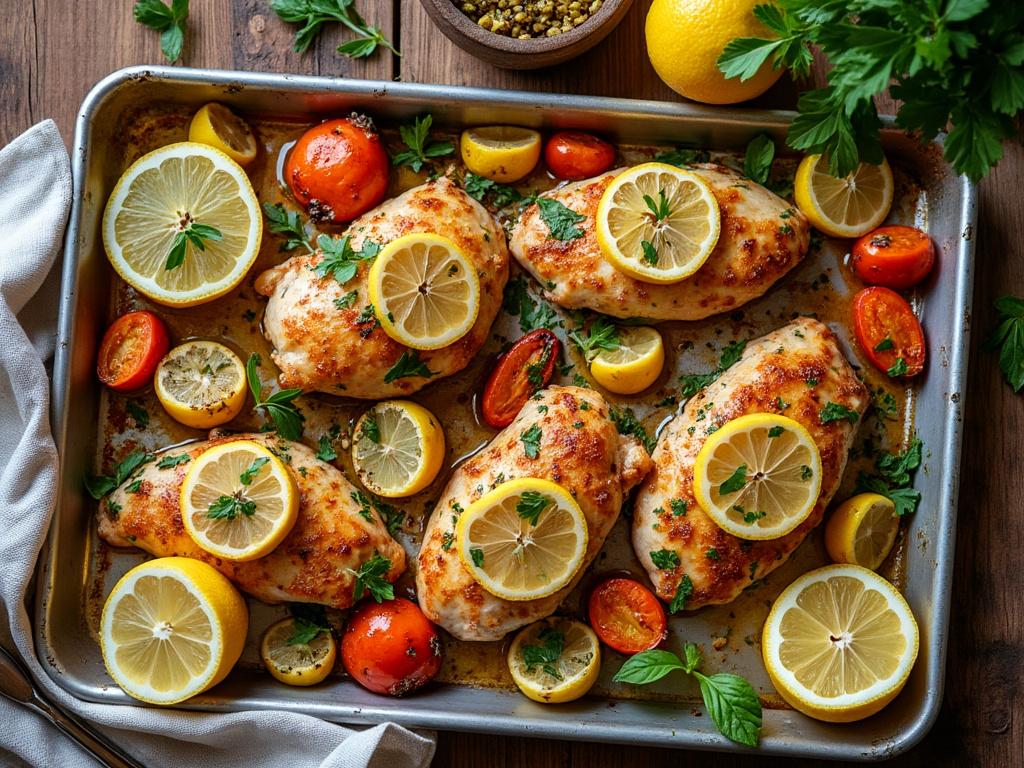
Crispy Sheet Pan Lemon Garlic Chicken with Roasted Vegetables
One pan, 45 minutes: crispy lemon garlic chicken with roasted potatoes, broccoli, and blistered tomatoes finished with balsamic. Real weeknight cooking.
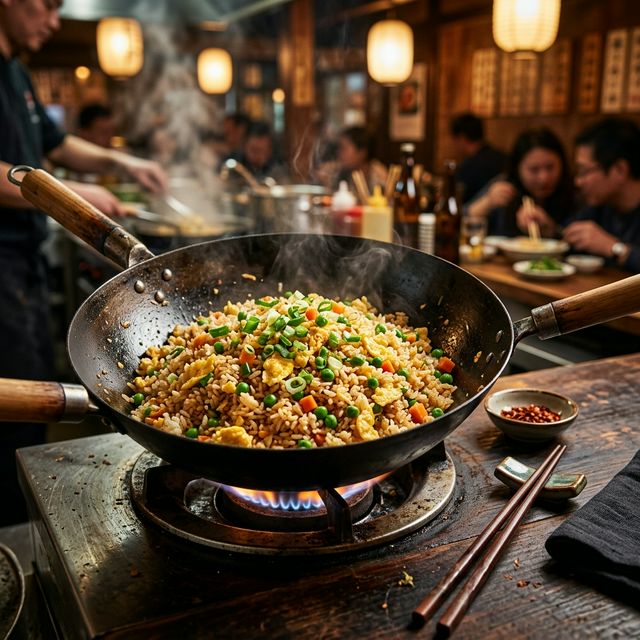
10-Minute Egg Fried Rice
Fast, crispy egg fried rice made in one wok in 10 minutes. Day-old rice, scrambled eggs, sesame oil — the technique that actually works on a home stove.
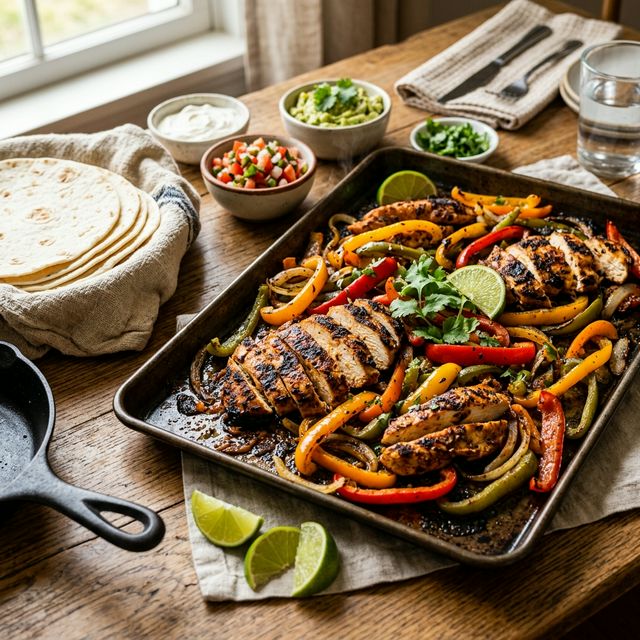
Sheet Pan Fajitas
Juicy chicken strips, charred peppers and onions on one pan in 20 minutes. Smoked paprika, chili powder, double lime — real weeknight fajitas.