Tunisian Shakshuka with Merguez and Feta
Spiced tomato sauce, crumbled merguez sausage, and soft-set eggs topped with feta. A bold one-skillet breakfast ready in 45 minutes.
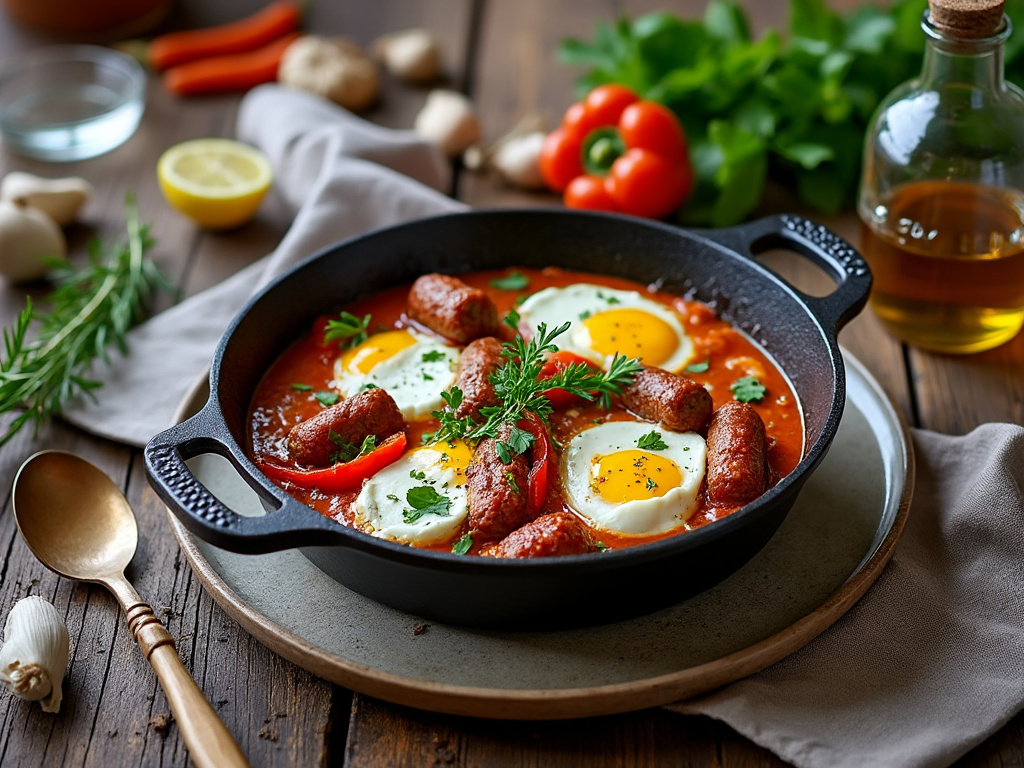
Shakshuka is eggs poached in a spiced tomato sauce — straightforward in concept, but the version most people make is timid. This one uses merguez, the North African lamb sausage spiked with harissa and cumin, which renders its fat directly into the sauce and gives it a deep, rusty heat that canned tomatoes alone never reach. A crumble of feta on top adds salt and a creamy contrast to the acidic base.
The technique that matters here: brown the merguez hard before building the sauce. You want a dark fond on the bottom of the pan — that's where the flavor lives. Expect a sauce that's thick, aromatic, and slightly smoky, with eggs that are just set on the whites but still runny-yolked. This works for a weekend brunch with four people or a fast weeknight dinner served with flatbread. If the sauce looks too thick before you add the eggs, splash in 2–3 tbsp of water and stir to loosen it.
Ingredients
- ▸ 6 oz merguez sausage, casings removed
- ▸ 2 tbsp olive oil
- ▸ 1 medium yellow onion, finely diced
- ▸ 1 red bell pepper, finely diced
- ▸ 4 garlic cloves, thinly sliced
- ▸ 1.5 tbsp harissa paste
- ▸ 1 tsp ground cumin
- ▸ 1 tsp smoked paprika
- ▸ 0.5 tsp ground coriander
- ▸ 0.25 tsp cayenne pepper
- ▸ 1 can (28 oz) whole peeled San Marzano tomatoes, crushed by hand
- ▸ 0.5 tsp Diamond Crystal kosher salt, plus more to taste
- ▸ 0.25 tsp black pepper
- ▸ 1 tsp granulated sugar
- ▸ 8 large eggs
- ▸ 2.5 oz feta cheese, crumbled
- ▸ 2 tbsp flat-leaf parsley, roughly chopped
- ▸ 1 tbsp fresh mint leaves, torn
- ▸ 1 tbsp extra-virgin olive oil, for finishing
🛒 Links may earn us a small commission at no cost to you.
Recommended Gear
🛒 We may earn a small commission at no extra cost to you. We only recommend gear we'd use ourselves.
Instructions
Prep
- 1. Remove the merguez from its casing if not already done and break it into rough 1-inch chunks. Finely dice the onion and red bell pepper. Slice the garlic thin. Crush the canned tomatoes by hand directly over the can — squeeze each tomato until it's broken into chunks and the juice is released, about 30 seconds of work. Set everything near the stove.
- 2. Measure out the harissa, cumin, smoked paprika, coriander, and cayenne into a small bowl so you can add them in one shot. This matters — spices burn fast and you don't want to be measuring while the pan is screaming hot.
Build the Sauce
- 1. Heat a 12-inch skillet over medium-high until a drop of water evaporates on contact, about 2 minutes. Add 2 tbsp olive oil, then add the merguez pieces. Press them down lightly with a spatula. Cook undisturbed for 3–4 minutes until deeply browned on the bottom — you should hear a steady sizzle and see rendered fat pooling around the edges. Flip and cook 2 more minutes. The sausage doesn't need to be fully cooked through at this point.
- 2. Reduce heat to medium. Add the onion and red bell pepper directly to the rendered fat in the pan. Stir to coat. Cook 7–9 minutes, stirring every 2 minutes, until the onion is completely soft and translucent and the edges are starting to turn golden — the mixture should smell sweet and caramelized, not sharp.
- 3. Add the sliced garlic and cook 1 minute, stirring constantly, until fragrant — it should smell nutty, not raw. Don't let it brown or it will turn bitter.
- 4. Add the spice bowl (harissa, cumin, smoked paprika, coriander, cayenne) all at once. Stir hard for 45–60 seconds until the paste is coating everything and darkening slightly — you'll smell the spices bloom and the harissa turning slightly toasty. This step is what builds depth; don't skip it.
- 5. Pour in the crushed tomatoes with all their juices. Add the kosher salt, black pepper, and sugar. Stir everything together and bring to a vigorous simmer. Cook uncovered over medium heat for 12–15 minutes, stirring occasionally, until the sauce has thickened to a chunky, almost jammy consistency — drag a spoon through the center and the line should hold for a few seconds before filling back in.
Cook the Eggs
- 1. Use the back of a ladle or a large spoon to make 8 evenly spaced wells in the sauce, pressing down to the bottom of the pan. Crack one egg into each well. The egg whites will start to turn opaque around the edges within 30 seconds — that's your sign the pan is at the right temperature.
- 2. Cover the skillet with a tight-fitting lid. Cook on medium-low for 6–8 minutes. At 6 minutes, lift the lid and check: the whites should be fully set (matte white, no jiggling), and the yolks should still dome upward and wobble when you gently shake the pan. If the whites are still translucent, recover and cook 1–2 minutes more. Pull off heat as soon as they're just set — carry-over will finish the yolks.
Finish and Serve
- 1. Scatter the crumbled feta evenly over the top while the pan is still hot — it won't melt fully, just soften slightly at the edges. Finish with the chopped parsley, torn mint, and a drizzle of extra-virgin olive oil. Taste the exposed sauce at the edge of the pan and adjust salt if needed.
- 2. Bring the skillet directly to the table and serve immediately with warm pita or crusty bread. Shakshuka waits for no one — the eggs continue cooking in the residual heat of the pan.
Cook's Notes
- Don't rush the sauce reduction in step 7 — if the sauce is too loose when you add the eggs, the whites will spread out thinly and overcook before the yolks set. You want the sauce thick enough that the egg whites sit in a pool rather than run.
- Harissa brands vary wildly in heat. DEA and Mina are mild-to-medium; New York Shuk is more intense. Start with 1 tbsp if using a hot brand, taste, and add more after the sauce simmers.
- If your eggs are cold from the fridge, let them sit at room temperature for 10 minutes before using — cold eggs slow down the cook time unevenly and can cause rubbery whites.
- The sauce can be made 3–4 days ahead and refrigerated. Reheat fully before adding eggs.
- Merguez can be found at Middle Eastern grocery stores, Whole Foods, and many butcher counters. If buying from a butcher, ask for it loose rather than in casing to save prep time.
Pro Tips
- → The fond (browned bits) from the merguez is flavor — don't clean the pan between browning the sausage and sweating the onion. That layer of rendered fat and caramelized meat juice is what separates a dull shakshuka from a great one.
- → If the sauce breaks and looks greasy or separated, it usually means the heat is too high and the tomato solids have scorched slightly. Lower the heat immediately, add 3 tbsp of water, and stir vigorously — it should come back together. Don't add olive oil to fix it.
- → For perfectly round yolks, crack each egg into a small ramekin first, then slide it into the well. Cracking directly into the pan risks breaking yolks and getting shell into the sauce.
- → If you're feeding more than 4 people, don't try to squeeze 10+ eggs into one pan — the whites crowd and steam rather than set cleanly. Run two pans simultaneously instead of scaling up.
- → The sugar in the sauce is non-negotiable when using canned tomatoes. It doesn't make the sauce sweet — it rounds out the metallic sharpness that canned tomatoes often carry. Start with 1 tsp and add up to 1.5 tsp if the sauce still tastes harsh after simmering.
- → Residual heat in a cast iron skillet will continue cooking eggs for 2–3 minutes after you pull it off the burner. If using cast iron, pull the pan when the whites are 80% set — they'll finish on the way to the table. Stainless steel retains less heat, so wait until they're fully set.
What to Serve With This
Serve this straight from the skillet with warm pita or a torn hunk of crusty sourdough — you need something to drag through the sauce. A simple cucumber and tomato salad dressed with red wine vinegar, 1 tsp olive oil, and dried oregano cuts the richness of the merguez fat and resets your palate between bites.
For drinks at brunch, a dry sparkling wine like Cava or Crémant d'Alsace works well — the bubbles and acidity lift the spice without competing. If you want something still, a glass of chilled Picpoul de Pinet (a crisp southern French white) handles the tomato acidity cleanly. Skip anything oaky or heavily fruity; it fights the harissa.
For a non-alcoholic option, serve a tall glass of mint lemonade — juice of 1 lemon, 1 tsp honey, 8 oz cold water, torn fresh mint — which echoes the North African profile of the dish. Strong black tea with sugar, Moroccan-style, also works and is arguably more traditional.
If you're serving this for dinner, a simple arugula salad with shaved radish and lemon vinaigrette alongside makes it feel complete without adding much work. The peppery arugula mirrors the heat in the sauce.
Variations & Substitutions
For a vegetarian version, skip the merguez entirely and add 1 tsp smoked paprika, 1/2 tsp ground cumin, and 1/4 tsp cayenne directly to the oil when you sauté the onion — this approximates the spice profile the sausage provides. Add 1 cup drained canned chickpeas with the tomatoes to bulk it up and add texture.
If you can't find merguez at your supermarket, use 6 oz of fresh chorizo (not the cured Spanish type — look for Mexican-style fresh chorizo). It's a different flavor profile, less lamb-forward and more pork-sweet, but it still renders into the oil beautifully. Reduce the cumin by half since chorizo already carries significant spice.
For a dairy-free version, skip the feta and finish with a drizzle of good olive oil and a handful of torn fresh herbs — parsley and mint together work better than either alone. The olive oil adds the richness that feta otherwise provides.
To scale this for two people, use a 10-inch skillet, halve all quantities, and use 4 eggs instead of 8. The cook time on the sauce drops to about 12 minutes since there's less volume to reduce. Scaling up past 4 servings is tricky in a single skillet — better to run two pans simultaneously than to crowd the eggs.
Frequently Asked Questions
Can I make the tomato sauce ahead of time? ▼
Yes — the sauce keeps in the fridge for up to 4 days in an airtight container. Reheat it in the skillet over medium until it's bubbling, then crack your eggs directly in. Don't add the eggs until the sauce is back up to temperature or they'll take much longer to set and the whites will be rubbery.
What if I can't find merguez sausage? ▼
Fresh Mexican-style chorizo is the best substitute — same ratio, 6 oz. In a pinch, use 4 oz of loose Italian sausage plus 1/2 tsp harissa paste and 1/4 tsp smoked paprika to approximate the spice profile. Avoid pre-cooked or cured sausages; you need one that renders fat when browned.
How do I know when the eggs are done without breaking the yolks to check? ▼
Gently shake the pan — the whites should be fully opaque and set with no jiggling, while the yolks will still wobble slightly in the center. Another cue: the whites right around the yolks will go from translucent to matte white when they're just done. Pull the pan off heat at that point; carry-over cooking will finish them.
Can I freeze shakshuka? ▼
Freeze the sauce only — without the eggs. Eggs don't freeze well and turn rubbery after reheating. Cool the sauce completely, portion it into freezer-safe containers, and freeze for up to 2 months. Thaw overnight in the fridge, reheat in the skillet, and add fresh eggs to order.
My sauce is too watery. What went wrong and how do I fix it? ▼
The most common cause is not cooking the onion and peppers long enough before adding tomatoes — they release water as they cook. Fix it by increasing the heat to medium-high with the lid off and cooking the sauce an extra 5–8 minutes, stirring often, until it thickens to a paste-like consistency before adding the eggs.
Can I use fresh tomatoes instead of canned? ▼
You can, but only in peak summer when tomatoes are ripe and sweet. Use 1.5 lbs of roma tomatoes, roughly chopped, in place of the canned tomatoes. The sauce will take an extra 10–15 minutes to reduce since fresh tomatoes carry more water. Out of season, canned San Marzano tomatoes will give you a better result than pale fresh ones.
What pan works best if I don't have a 12-inch skillet? ▼
A wide, shallow braiser or a 12-inch stainless steel sauté pan both work well. Avoid a pan that's too deep — you want the sauce to reduce quickly and the steam to escape so the eggs set rather than steam-cook. A 10-inch pan works for a 2-person portion but will be too crowded for 8 eggs.
How do I reheat leftovers without overcooking the eggs? ▼
Reheat gently in the skillet over low heat with a lid on for 4–5 minutes, just until warmed through. The microwave works in a pinch — cover loosely and use 50% power in 30-second intervals. Either way, the yolks will set further during reheating, so expect them to be firmer than when first cooked.
Can I add more vegetables to the sauce? ▼
Diced zucchini, sliced roasted red peppers (jarred is fine), or a handful of baby spinach stirred in at the end all work well. Add zucchini with the onion and pepper so it has time to soften. Stir spinach in right before you add the eggs — it wilts in about 30 seconds. Don't add more than one extra vegetable or the sauce gets crowded and watery.
Enjoyed this recipe?
Daily Home Cookery is self-funded. If something you cooked here made dinner a little better, a coffee keeps the kitchen running.
☕ Buy me a coffeeYou Might Also Like
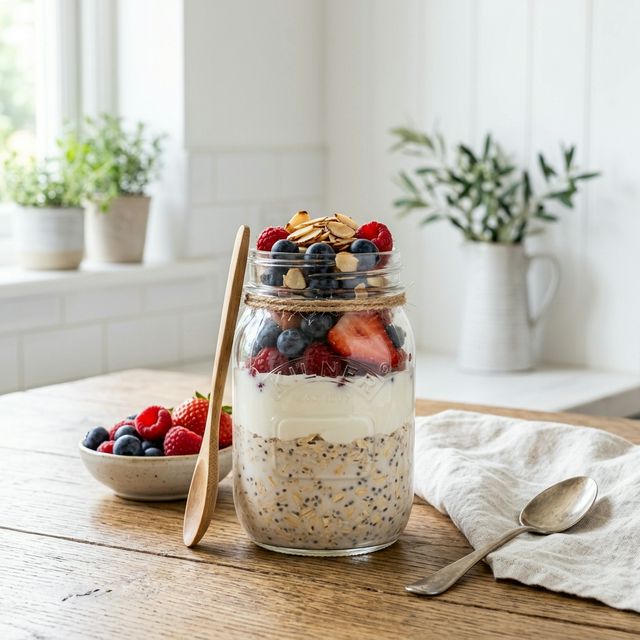
Overnight Oats with Berries
Thick, creamy overnight oats made with Greek yogurt, chia seeds, and mixed berries. 5 minutes of prep, 4 jars ready for the week.
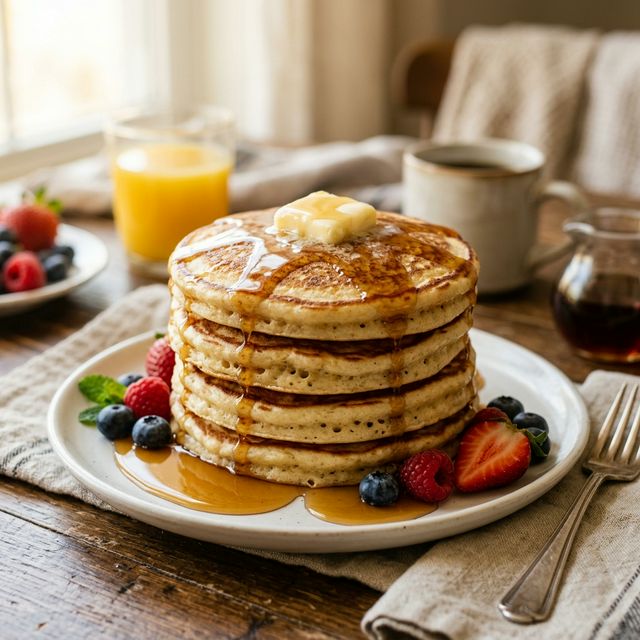
Classic Buttermilk Pancakes
Tender, golden buttermilk pancakes with a crisp edge and open crumb. Undermix the batter, rest it 5 minutes, and cook on medium heat.
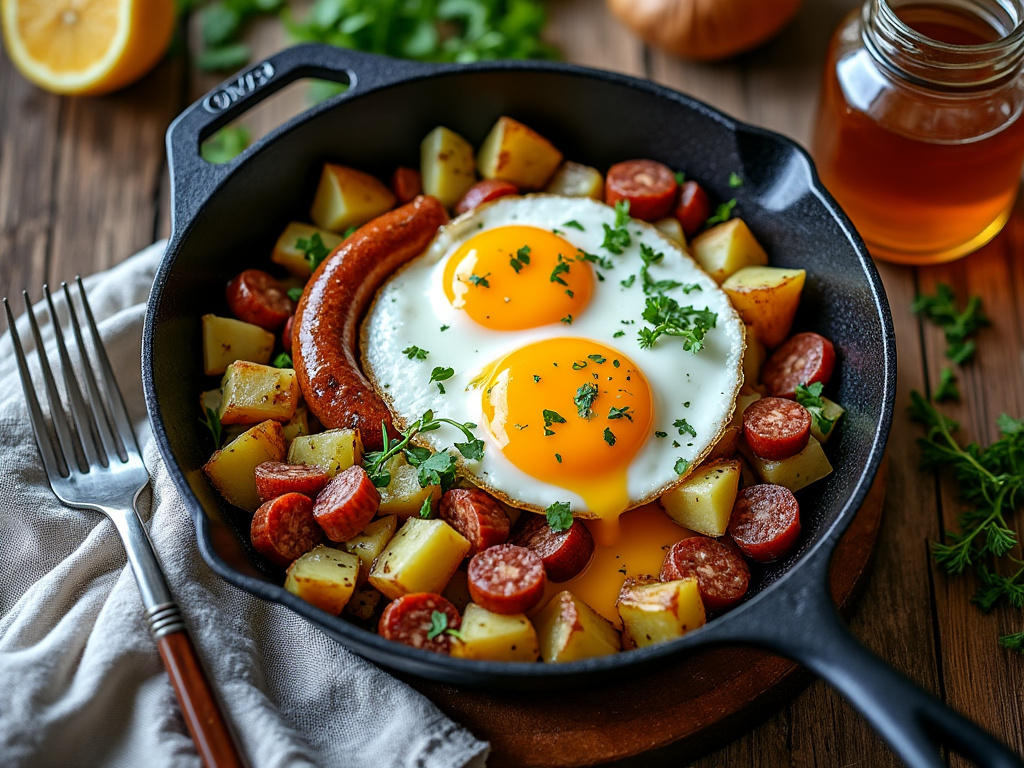
Crispy Cabbage and Andouille Hash with Fried Eggs and Hot Honey
Smoky andouille, caramelized cabbage, and crispy potatoes topped with fried eggs and hot honey. A fast, savory skillet breakfast worth waking up for.