Brown Butter Scallops with Sweet Corn Purée and Crispy Prosciutto
Perfectly seared scallops on sweet corn purée with crispy prosciutto and brown butter — an elegant dinner in under 45 minutes.
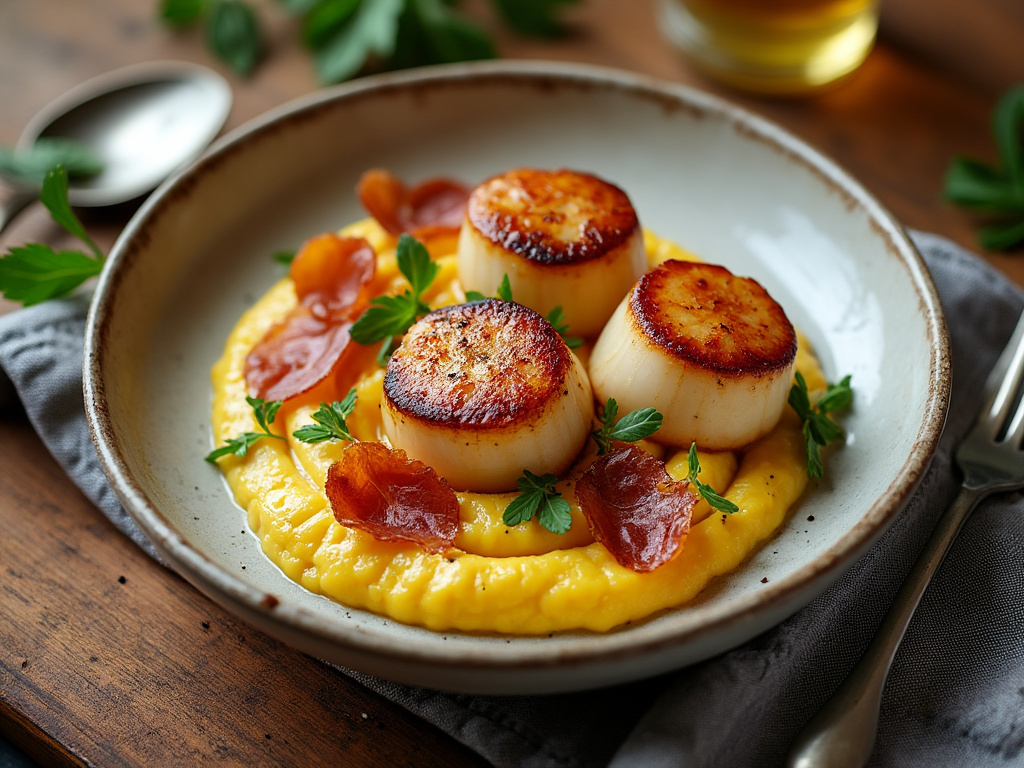
Scallops are unforgiving in one specific way: moisture. A wet scallop won't sear — it steams, turns rubbery, and stays pale. The fix is simple — buy dry-packed sea scallops, pat them aggressively with paper towels, and make sure your pan is screaming hot before anything touches it. That single step is the difference between a golden, caramelized crust and disappointment.
This recipe pairs those seared scallops with a silky sweet corn purée — made fast on the stovetop, not roasted — and shards of oven-crisped prosciutto that shatter when you cut into them. The brown butter ties everything together with its nutty, slightly caramel edge. It's a dinner-party plate that takes under 45 minutes, but it works just as well for a Tuesday when you want something that feels more considered than pasta. If your scallops release a lot of liquid in the pan, your heat wasn't high enough — pull them, wipe the pan, crank it back up, and re-sear.
Ingredients
- ▸ 12 large dry-packed sea scallops (about 1.5 lbs), side muscle removed
- ▸ 1 tsp Diamond Crystal kosher salt, divided
- ▸ 0.5 tsp freshly ground black pepper, divided
- ▸ 2 tbsp neutral oil (grapeseed or avocado), divided
- ▸ 4 slices prosciutto di Parma
- ▸ 4 ears fresh sweet corn, kernels cut off (about 3 cups kernels)
- ▸ 1 medium shallot, roughly chopped
- ▸ 2 cloves garlic, smashed
- ▸ 1 cup low-sodium chicken stock
- ▸ 0.25 cup heavy cream
- ▸ 4 tbsp Kerrygold unsalted butter, divided
- ▸ 0.5 tsp white pepper
- ▸ 1 tbsp fresh lemon juice
- ▸ 1 tbsp fresh flat-leaf parsley, finely chopped
- ▸ 0.5 tsp flaky sea salt, for finishing
🛒 Links may earn us a small commission at no cost to you.
Recommended Gear
🛒 We may earn a small commission at no extra cost to you. We only recommend gear we'd use ourselves.
Instructions
Prep
- 1. Preheat your oven to 400°F. Lay the 4 prosciutto slices flat in a single layer on a parchment-lined rimmed half sheet pan — don't overlap them. Slide into the oven and bake for 10–12 minutes until deep reddish-brown and completely rigid; they'll crisp further as they cool. Set aside on the pan at room temperature.
- 2. Pat the scallops completely dry with multiple layers of paper towels — press firmly and repeat until no moisture transfers to the towel. This is the most important step. Season one side only with 1/2 tsp kosher salt and 1/4 tsp black pepper. Let them sit uncovered at room temperature for 10 minutes while you make the purée.
Make the Corn Purée
- 1. Heat 1 tbsp butter in your medium saucepan over medium heat. Add the shallot and garlic and cook, stirring occasionally, until softened and just starting to turn golden at the edges — about 4 minutes. You should smell the shallot turn sweet and faintly nutty.
- 2. Add the corn kernels and cook, stirring, for 3 minutes until the corn brightens to a vivid yellow and smells slightly toasted. Pour in the chicken stock and bring to a simmer. Cook uncovered for 8 minutes — the liquid will reduce by about half and the corn will be fully tender when pressed between your fingers.
- 3. Transfer the corn mixture to a blender. Add the heavy cream, remaining 1 tbsp butter, and white pepper. Blend on high for 90 seconds until completely smooth — the purée should look silky and pale yellow, with no visible corn pieces. Pass through a fine mesh strainer into a clean saucepan, pressing with a spoon to extract every bit. Taste and season with 1/4 tsp kosher salt. Keep warm on the lowest heat setting, stirring occasionally.
Sear the Scallops
- 1. Heat your 12-inch stainless steel skillet over high heat for 2 full minutes — the pan should be visibly smoking when you hold your hand 6 inches above it. Add 2 tbsp neutral oil and swirl to coat. The oil should shimmer and ripple immediately.
- 2. Place the scallops seasoned-side down in the pan, working in a clockwise pattern so you know which to flip first. Do not move them. After 2 minutes, check the first scallop — the bottom crust should be deep amber and release cleanly from the pan without pulling. If it resists, wait another 30 seconds. Sear a second side for 90 seconds — the scallop should feel slightly firm with a gentle spring when pressed. Transfer immediately to a warm plate and tent loosely with foil.
Make the Brown Butter
- 1. Wipe out the scallop pan (or use your small saucepan) and add the remaining 2 tbsp butter over medium heat. Swirl constantly. The butter will foam, then the foam will subside — at that moment, the milk solids will begin to turn golden and you'll smell toasted hazelnuts. Remove from heat immediately after 3–4 minutes total. Add the lemon juice carefully (it will spatter), then swirl to combine. The butter should be the color of strong black tea.
Assemble
- 1. Spoon a generous pool of corn purée onto each of 4 warmed plates — about 1/2 cup per plate, spread into a wide circle with the back of the spoon. Place 3 scallops on each plate, seared-side up. Drizzle brown butter over the scallops and the purée — about 1.5 tsp per plate. Break the crispy prosciutto into large irregular shards and tuck 1 slice worth of shards around and between the scallops. Finish with a pinch of flaky sea salt over the scallops and a scatter of fresh parsley.
Cook's Notes
- Dry-packed scallops are non-negotiable. If you can only find wet-packed, soak them in a quart of cold water mixed with 1 tbsp lemon juice for 30 minutes, then pat extremely dry — this won't fully fix the problem but helps significantly.
- The corn purée can be made up to 2 days ahead. Reheat gently over low heat with a splash of cream, stirring constantly — don't microwave it cold or it goes grainy.
- Don't crowd the scallops in the pan. If your pan is smaller than 12 inches, sear in two batches, wiping and reheating the pan between them. Crowding drops the pan temperature and causes steaming.
- Season only the side that goes down first — salting too early draws moisture out and sabotages the sear. Season the second side right before flipping.
- If the prosciutto comes out chewy rather than crisp, it had too much moisture — return it to the oven for 3–4 more minutes and let it cool completely before breaking it apart.
Pro Tips
- → The single biggest failure mode with scallops is insufficient pan heat. Use a stainless or cast iron pan — not nonstick — and let it preheat on high for a full 2 minutes before adding oil. If the scallop doesn't sizzle loudly on contact, the pan isn't hot enough; pull the scallop and wait.
- → If your scallops release a pool of white liquid into the pan after 30 seconds, you have wet-packed scallops or didn't dry them sufficiently. Remove them, boil off the liquid, wipe the pan, and reheat before continuing — cooking in that liquid will never produce a crust.
- → Brown butter goes from perfect to burnt in under 30 seconds once the milk solids start to color. Pull the pan from the heat the instant you smell toasted hazelnuts, even if it looks slightly underdone — the residual heat in the pan will carry it home.
- → For the smoothest purée, blend while the corn mixture is still hot. Cold corn seizes up and the blender has to work harder, resulting in a slightly grainy texture. A Vitamix-style blender will give you a restaurant-smooth result; a standard blender gets you 80% of the way there.
- → Warm your plates before plating — a cold plate will cause the corn purée to skin over and the scallops to cool in under 90 seconds. Run them under hot tap water for 30 seconds and dry with a towel, or hold them in a 170°F oven while you cook.
- → If the brown butter breaks or the solids burn before the butter colors, start over — there's no rescue move. Burnt brown butter is acrid and bitter, and it will ruin the plate. Keep a fresh stick of butter nearby as insurance.
What to Serve With This
A white Burgundy or a California Chardonnay with restrained oak — something like a Mâcon-Villages or a Sonoma Coast bottling — is the natural call here. The wine's stone fruit and mild butter notes echo the brown butter without competing with the corn's sweetness. Avoid anything heavily oaked; it will flatten the scallop's delicate brine.
If you'd rather go white without Chardonnay, a dry Alsatian Pinot Gris works beautifully. Its slight body and honeyed finish bridge the sweet corn and the savory prosciutto in a way a leaner Sauvignon Blanc can't quite manage. On the beer side, a Belgian Tripel or a well-made Kölsch keeps things light enough not to overwhelm the seafood.
For a non-alcoholic option, sparkling water with a squeeze of fresh grapefruit and a few mint leaves gives your palate the same cleansing acidity a glass of wine would. Avoid anything sweet — the corn purée already provides that.
For sides, keep it simple: a small bitter green salad with shaved fennel and a lemon-caper vinaigrette gives contrast against the richness of the butter and the sweetness of the corn. Crusty sourdough to drag through the leftover brown butter on the plate is not optional.
Variations & Substitutions
For a dairy-free version, replace the butter in the corn purée with full-fat coconut milk (use 1/3 cup in place of the 2 tbsp butter and 1/4 cup cream) and use refined coconut oil for browning in the scallop pan. The coconut flavor is faint enough that it reads as richness rather than tropical. Skip the final brown butter drizzle and use a chili oil finish instead.
If prosciutto isn't available, swap in 4 slices of thinly sliced speck or pancetta laid flat on a parchment-lined baking sheet. The cook time stays the same. Bacon works too, but chop it into thin lardons and render it in a skillet instead — it'll be chewier, not crisp-shattered, which changes the texture of the plate noticeably.
To make this gluten-free, the recipe is already there — just double-check your chicken stock label. Most store-bought stocks are GF, but some add flour as a stabilizer.
For a more substantial meal, spoon the corn purée over a base of soft creamy polenta and nestle the scallops on top. Add 1/2 cup quick-cooking polenta cooked with 2 cups stock and 2 tbsp butter, then use the corn purée as a sauce rather than a base. This feeds 4 generously as a main without needing any additional sides.
Frequently Asked Questions
What's the difference between dry-packed and wet-packed scallops, and does it really matter? ▼
Wet-packed scallops are treated with sodium tripolyphosphate, which causes them to absorb water — up to 30% of their weight. That extra moisture steams off in the pan instead of allowing a crust to form, leaving you with pale, rubbery scallops. Dry-packed scallops have a natural ivory or faintly pinkish color (not stark white) and sear properly. Ask your fishmonger specifically, or look for 'dry' on the package label.
Can I make the corn purée ahead of time? ▼
Yes — make it up to 2 days ahead and refrigerate in an airtight container. Reheat gently in a small saucepan over low heat with a splash of water or cream to loosen it, stirring constantly. Don't microwave it directly from the fridge; it tends to break and go grainy.
Can I use frozen corn instead of fresh? ▼
Frozen corn works well — use 3 cups of thawed, drained corn kernels in place of 4 fresh ears. The purée will be slightly less sweet and a touch more starchy, but still very good. Don't use canned corn; the sodium and softer texture will make the purée taste flat.
How do I know when the scallops are done? ▼
The bottom crust should be deep golden-brown — the color of a toasted marshmallow — before you flip, usually 2 minutes. After flipping, the scallop is done when it feels slightly firm but still has a gentle give in the center, about 90 seconds more. An overcooked scallop turns fully opaque and stiff. Pull them a little early; carryover heat finishes the job.
Can I substitute sea scallops with bay scallops? ▼
Technically yes, but the technique changes entirely. Bay scallops are tiny and cook in under a minute — you can't achieve the same thick crust. Toss them in hot butter and cook for 45–60 seconds total, shaking the pan. They're delicious, just a different dish.
How should I store and reheat leftover scallops? ▼
Honestly, scallops don't reheat well. They turn rubbery and lose their crust almost completely. If you have leftovers, serve them cold over a salad or sliced thin on toast with the corn purée. The purée refrigerates and reheats perfectly for up to 3 days; the scallops are best eaten the day they're made.
Can I freeze the corn purée? ▼
Yes — freeze it flat in a zip-lock bag for up to 2 months. Thaw overnight in the fridge and reheat low and slow with a splash of cream. It may look slightly separated after freezing; whisk it steadily over low heat and it will come back together.
What if I don't have a stainless steel or cast iron pan — can I use nonstick? ▼
You can, but the crust will be less pronounced because nonstick surfaces don't conduct or hold heat as aggressively. If using nonstick, use medium-high heat (not high) to avoid damaging the coating, and accept a slightly lighter sear. A 12-inch stainless skillet is strongly preferred here.
How do I keep the scallops warm while I make the brown butter? ▼
Tent them loosely with foil on a warm plate — don't stack them or the bottom crust will steam and soften. The brown butter takes under 2 minutes, so they won't cool down significantly. Don't put them back on heat or in the oven; they'll overcook.
Enjoyed this recipe?
Daily Home Cookery is self-funded. If something you cooked here made dinner a little better, a coffee keeps the kitchen running.
☕ Buy me a coffeeYou Might Also Like
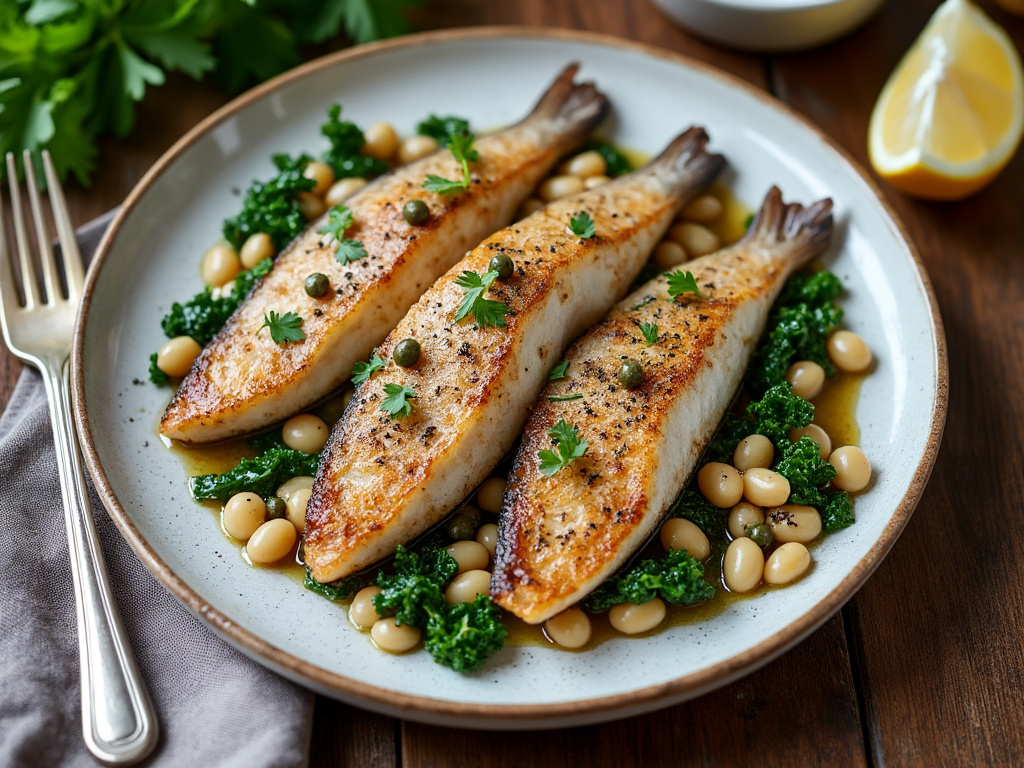
Crispy Skin Branzino with Brown Butter Capers, White Beans, and Wilted Escarole
Pan-seared branzino with crackling skin, nutty brown butter capers, creamy white beans, and wilted escarole — weeknight-ready in 45 minutes.
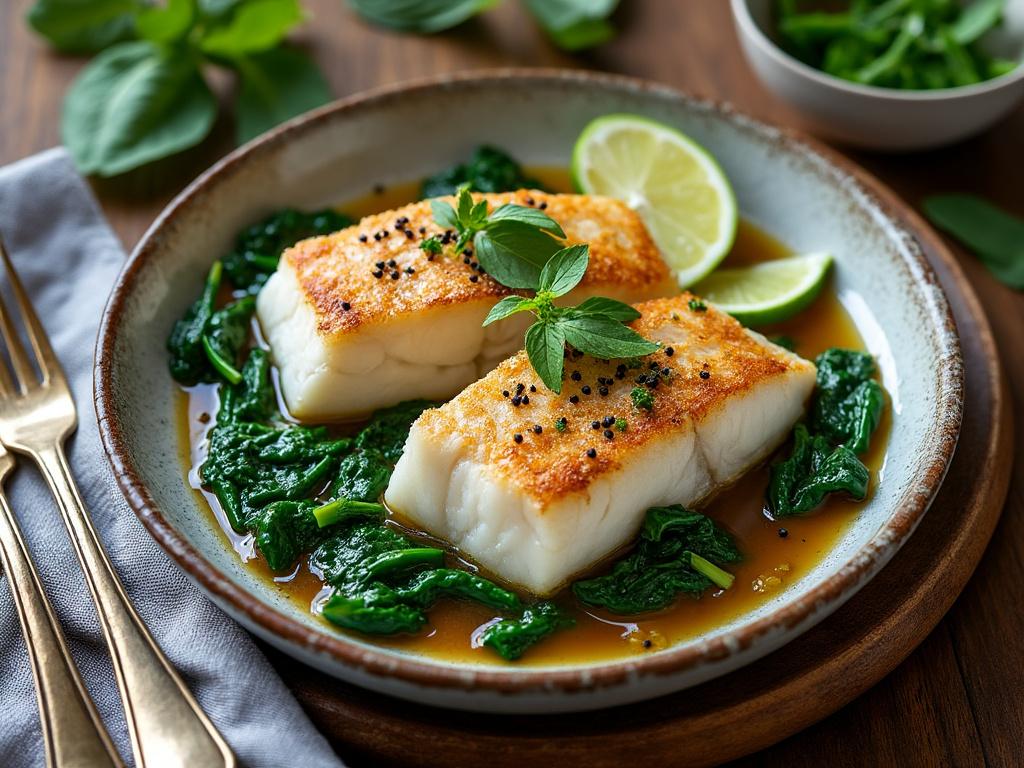
Coconut-Braised Cod with Ginger, Lime, and Wilted Spinach
Flaky cod braised in ginger-lime coconut milk with wilted spinach. Ready in 40 minutes — weeknight dinners don't get more satisfying.
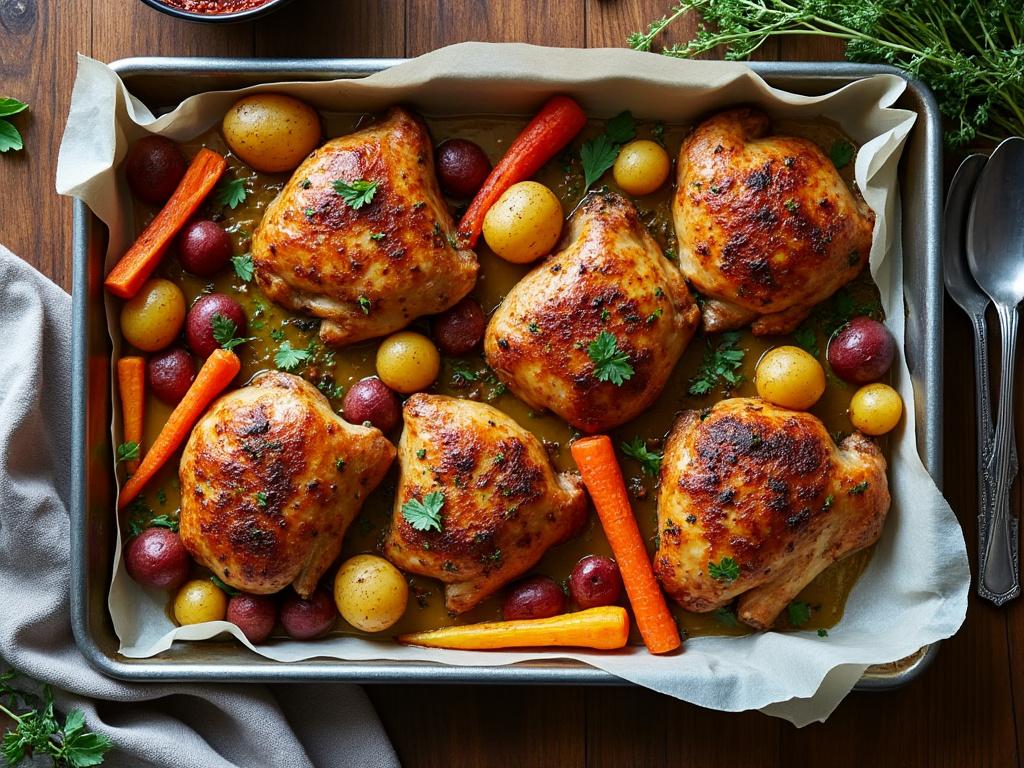
Sheet Pan Harissa Chicken with Roasted Root Vegetables
Bone-in chicken thighs roasted at 425°F with harissa, honey, and root vegetables. One pan, 35 minutes, crispy skin every time.