Caramelized Shallot and Gruyère Beef Stroganoff
Rich beef stroganoff with caramelized shallots, Gruyère, and tender sirloin — a weeknight dinner that tastes like it took all day.
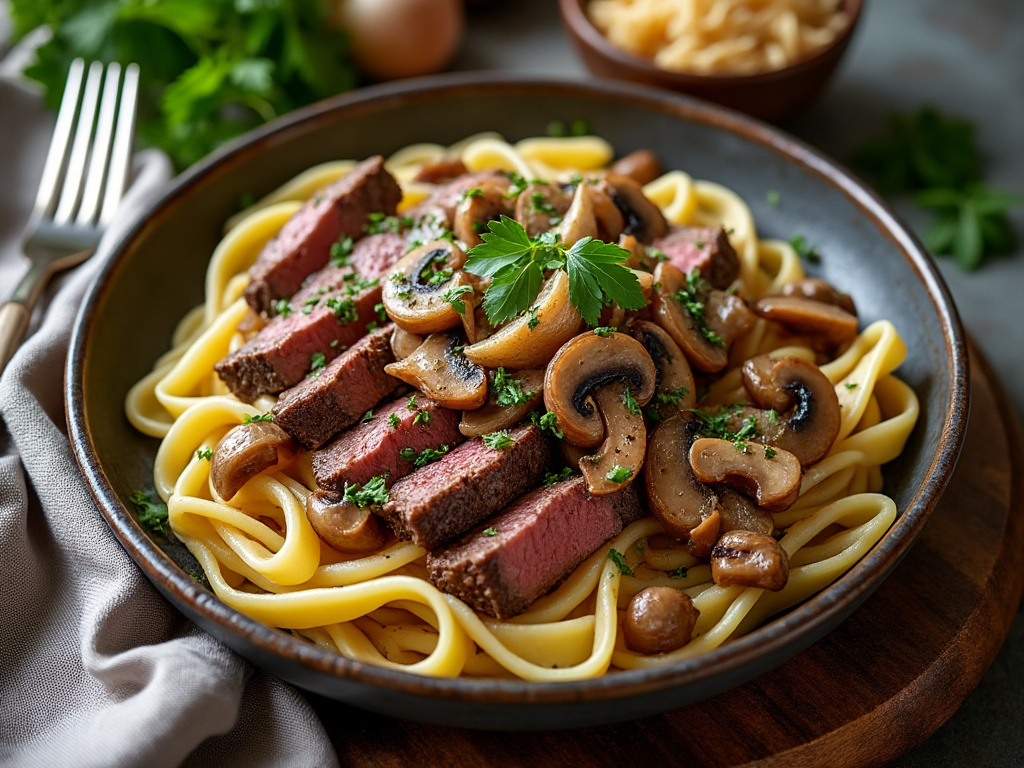
Stroganoff is one of those dishes that lives or dies by two things: the quality of the beef and the depth of the sauce. Most versions fall flat because the onions are barely softened and the sour cream is dumped in cold, breaking the sauce instantly. This recipe fixes both. Caramelizing shallots low and slow for 15 minutes builds a sweetness that anchors the whole dish, and finishing with Gruyère — not traditional, but worth it — adds a nutty richness that thickens the sauce without making it heavy. You get tender strips of seared sirloin in a glossy, deeply savory sauce that coats every ribbon of egg noodle.
This is a reliable weeknight dinner that comes together in about 55 minutes, but it reads like something you spent the afternoon on. If your sauce looks grainy after adding the sour cream, the heat was too high — pull the pan off the burner for 60 seconds, stir vigorously, and it will come back together.
Ingredients
- ▸ 1.25 lbs beef sirloin, sliced 1/4-inch thick against the grain
- ▸ 8 oz wide egg noodles
- ▸ 8 oz cremini mushrooms, sliced 1/4-inch thick
- ▸ 6 medium shallots, thinly sliced (about 1.5 cups)
- ▸ 3 cloves garlic, minced
- ▸ 2 tbsp unsalted butter
- ▸ 1 tbsp neutral oil (such as canola or avocado oil)
- ▸ 2 tbsp all-purpose flour
- ▸ 1 cup beef broth (low-sodium)
- ▸ 1 tbsp Worcestershire sauce
- ▸ 1 tbsp Dijon mustard
- ▸ 1/2 cup full-fat sour cream, at room temperature
- ▸ 1.5 oz Gruyère, finely grated (about 1/3 cup packed)
- ▸ 1 tsp Diamond Crystal kosher salt, plus more to taste
- ▸ 1/2 tsp freshly ground black pepper
- ▸ 1/4 tsp smoked paprika
- ▸ 2 tbsp fresh flat-leaf parsley, finely chopped
🛒 Links may earn us a small commission at no cost to you.
Recommended Gear
🛒 We may earn a small commission at no extra cost to you. We only recommend gear we'd use ourselves.
Instructions
Prep
- 1. Place the sirloin in the freezer for 20 minutes. While it chills, slice the shallots thinly, mince the garlic, and slice the mushrooms. Grate the Gruyère on the fine side of a box grater and set aside. Pull the sour cream out of the fridge now — it needs to come to room temperature before it goes into the sauce.
- 2. Remove the sirloin from the freezer and slice it 1/4-inch thick against the grain into strips about 2-3 inches long. Pat the strips completely dry with paper towels — any surface moisture will steam the beef instead of searing it. Season with 1/2 tsp kosher salt and 1/4 tsp black pepper.
Cook the Noodles
- 1. Bring a large pot of heavily salted water to a boil. Cook the egg noodles 1 minute less than the package directions — they'll finish absorbing in the sauce. Reserve 1/4 cup of pasta water before draining. Toss the drained noodles with a tiny drizzle of oil to prevent sticking and set aside.
Sear the Beef
- 1. Heat the skillet over high heat until a drop of water evaporates on contact, about 2 minutes. Add the neutral oil and swirl to coat. Working in two batches to avoid crowding, lay the beef strips flat in a single layer. Sear undisturbed for 90 seconds per side — you're looking for a deep brown crust and a slightly caramelized smell. The strips should release easily from the pan when ready. Transfer to a plate and tent loosely with foil.
Build the Sauce
- 1. Reduce heat to medium and add the butter to the same skillet. Once it foams and the foam begins to subside, add the shallots. Cook, stirring every 2-3 minutes, for 12-15 minutes total — you want them deeply golden, jammy, and sweet-smelling, not just translucent. Don't rush this step; it's the backbone of the sauce.
- 2. Add the mushrooms and increase heat to medium-high. Cook without stirring for 3-4 minutes until the mushrooms release their liquid and that liquid evaporates — you'll hear the sizzling go from wet and bubbling to a dry, crackling sound. Then stir and cook another 2 minutes until the mushrooms are golden at the edges.
- 3. Add the garlic, smoked paprika, and remaining 1/2 tsp kosher salt. Stir constantly for 60 seconds until the garlic is fragrant and just starting to turn golden.
- 4. Sprinkle the flour over the mushroom-shallot mixture and stir well to coat everything evenly. Cook for 90 seconds, stirring constantly — the flour should smell faintly nutty and the mixture will look dry and clumped. This step removes the raw flour taste.
- 5. Pour in the beef broth, Worcestershire sauce, and Dijon mustard. Scrape the bottom of the pan vigorously with a wooden spoon to lift any browned bits — that's flavor. Bring to a simmer and cook for 4-5 minutes, stirring occasionally, until the sauce thickens enough to coat the back of a spoon.
Finish and Combine
- 1. Remove the skillet from heat entirely. Wait 30 seconds, then add the room-temperature sour cream and grated Gruyère. Stir quickly and constantly until fully incorporated and the sauce is smooth and glossy — about 60-90 seconds. If the sauce looks too thick, add a splash of the reserved pasta water.
- 2. Return the seared beef strips and any resting juices to the skillet. Fold gently to combine and let the beef warm through in the sauce for 1 minute — do not return to high heat or the sour cream will break.
- 3. Add the drained noodles to the skillet and toss to coat. The sauce should cling to every strand; if it's too tight, add another tablespoon of pasta water. Taste and adjust salt and pepper. Finish with a generous scatter of fresh parsley and serve immediately in warm bowls.
Cook's Notes
- Room-temperature sour cream is non-negotiable — cold sour cream added to a hot pan is the single most common reason this sauce breaks. Take it out of the fridge at least 30 minutes before you need it.
- Don't skip the two-batch sear on the beef. Crowding the pan drops the temperature and you get gray, steamed meat instead of a brown crust — the fond left behind is what flavors the sauce.
- Caramelizing the shallots properly takes a full 12-15 minutes on medium heat. If they're browning in under 5 minutes, your heat is too high and they'll taste bitter rather than sweet.
- The noodles will continue to absorb sauce as they sit, so serve this immediately. If you need to hold it for 10 minutes, add an extra 1/4 cup of broth before covering the skillet.
Pro Tips
- → If the sauce breaks — looks greasy and separated — pull the pan off heat, add 2 tbsp of warm (not boiling) broth, and whisk hard for 60 seconds. Adding cold liquid or returning to high heat makes it worse.
- → Gruyère must be grated fresh and fine; pre-shredded bags contain cellulose that prevents clean melting and leaves the sauce grainy regardless of technique.
- → Resist the urge to add the sour cream over any heat at all. The residual heat in the pan is enough to melt the Gruyère and warm the sour cream through — adding heat actively is what causes the proteins to seize.
- → For the deepest beef flavor, don't wipe the skillet between searing and building the sauce. Those dark, stuck bits — the fond — dissolve into the broth and are worth more than any single ingredient you could add.
- → If your shallots start to burn before they caramelize (dark spots appearing under 8 minutes), add 1 tbsp of water to the pan and reduce heat. The water deglazes the bottom and buys you time without steaming the shallots to mush.
- → Slice the beef while it's still slightly firm from the freezer chill — if it warms back up before you finish, it'll slide around under the knife and you'll end up with uneven strips that cook at different rates.
What to Serve With This
A simple green salad with a sharp red wine vinaigrette cuts through the richness of the sauce without competing with it. Something like butter lettuce with shaved radish and Dijon vinaigrette takes five minutes and does exactly what you need. Avoid creamy dressings here — the plate doesn't need more fat.
For bread, a crusty sourdough baguette works better than anything soft. You want something with enough structure to drag through the sauce without falling apart. Warm it in the oven for 5 minutes while the stroganoff finishes.
On the wine side, a medium-bodied Pinot Noir — Willamette Valley or Burgundy-style — is the move. The earthiness echoes the mushrooms and the acidity keeps the richness in check. If you want white, a dry Alsatian Riesling handles the sour cream and shallot sweetness well. Beer drinkers should look for a Munich Dunkel or a malty amber ale — avoid anything too hoppy, which will clash with the Gruyère.
For a non-alcoholic option, sparkling water with a squeeze of lemon and a few drops of apple cider vinegar sounds odd but acts as a palate cleanser between bites, mimicking the tartness of a dry wine without overpowering the food.
Variations & Substitutions
For a gluten-free version, swap the egg noodles for wide rice noodles or certified gluten-free pasta. Replace the 2 tbsp all-purpose flour with 1 tbsp cornstarch whisked directly into the beef broth before adding — this prevents clumping. Everything else in the recipe stays the same, including the Worcestershire sauce, so check the label if celiac disease is a concern; Lea & Perrins is gluten-free, some store brands are not.
To make this dairy-free, replace the sour cream with full-fat coconut cream (not coconut milk — too thin) and skip the Gruyère. Add 1 tsp of nutritional yeast and an extra 1/2 tsp of Dijon mustard to compensate for the lost depth. The sauce will be slightly sweeter and less tangy, so add a small squeeze of lemon juice at the end to brighten it.
For a mushroom-forward vegetarian version, cut the beef entirely and use 1.5 lbs of mixed mushrooms — cremini, shiitake, and oyster work well together. Sear them in two batches in the same high-heat method as the beef; crowding kills the browning. Use vegetable broth instead of beef broth and add 1 tbsp of soy sauce to deepen the umami. The texture won't replicate beef, but the sauce will be just as rich.
If you want to scale this up for six people, increase the sirloin to 2 lbs and use a full 12 oz of noodles. Keep all other quantities the same except the broth — go up to 1.5 cups — and the sour cream, which should increase to 3/4 cup.
Frequently Asked Questions
Can I make this ahead of time? ▼
You can make the sauce up to 2 days ahead and refrigerate it separately from the noodles. Reheat the sauce gently in a skillet over low heat with 2-3 tbsp of beef broth to loosen it, then stir in the sour cream off heat. Cook the noodles fresh when ready to serve — they turn mushy if stored in the sauce overnight.
Can I freeze beef stroganoff? ▼
Freezing is not recommended for this recipe. Sour cream-based sauces break badly on thawing, turning grainy and separated in a way that's difficult to fix. If you need a make-ahead freezer meal, make and freeze just the beef-and-mushroom base (before adding the sour cream and Gruyère), then thaw, reheat, and finish with the dairy components fresh.
What cut of beef works best? ▼
Sirloin or ribeye are the top choices — both stay tender with a quick sear because they don't need long braising. Flank steak works if sliced very thin against the grain. Avoid stew beef or chuck cut into strips; those cuts need 2+ hours of low, slow cooking to become tender and will be chewy here.
My sauce broke and looks grainy — what do I do? ▼
This happens when the sour cream hits a pan that's too hot. Remove the skillet from the heat entirely, add 2 tbsp of warm (not cold) beef broth, and stir constantly for about 60 seconds. The sauce should re-emulsify. If it doesn't fully smooth out, strain it and whisk in a small knob of cold butter — that usually rescues it.
Can I use Greek yogurt instead of sour cream? ▼
Full-fat plain Greek yogurt is a solid substitute — same tangy profile, slightly less richness. Temper it the same way you would sour cream: remove the pan from heat before adding and stir quickly. Low-fat yogurt will break faster due to lower fat content, so stick with full-fat (5% or higher) if you're making that swap.
What if I can't find Gruyère? ▼
Comté is the closest substitute and works seamlessly. Swiss Emmental is milder but functional. Avoid pre-shredded cheese for this recipe — the anti-caking agents prevent it from melting smoothly into the sauce. If cost is the issue, a good sharp white cheddar will change the flavor profile but still produce a cohesive, melty sauce.
Can I use chicken or turkey instead of beef? ▼
Thinly sliced chicken breast or turkey cutlets work fine. Sear them the same way — 2 minutes per side in a very hot pan until golden — but don't overcook; they'll finish in the sauce. The flavor will be lighter and you'll lose the deep beef-broth backbone, so add an extra 1 tsp of Worcestershire sauce to compensate.
How do I reheat leftovers without the sauce breaking? ▼
Reheat leftovers in a skillet over low heat with a splash of beef broth — about 2 tbsp per serving — and stir constantly as it warms. Don't use the microwave; the uneven heat turns the sour cream grainy. If you do need to microwave it, go at 50% power in 45-second intervals, stirring between each.
How thinly should I slice the beef? ▼
Aim for strips about 1/4 inch thick and 2-3 inches long. The easiest way to achieve this is to put the sirloin in the freezer for 20-25 minutes before slicing — it firms up enough to cut cleanly without sliding. Slice against the grain so the strips stay tender rather than chewy.
Enjoyed this recipe?
Daily Home Cookery is self-funded. If something you cooked here made dinner a little better, a coffee keeps the kitchen running.
☕ Buy me a coffeeYou Might Also Like
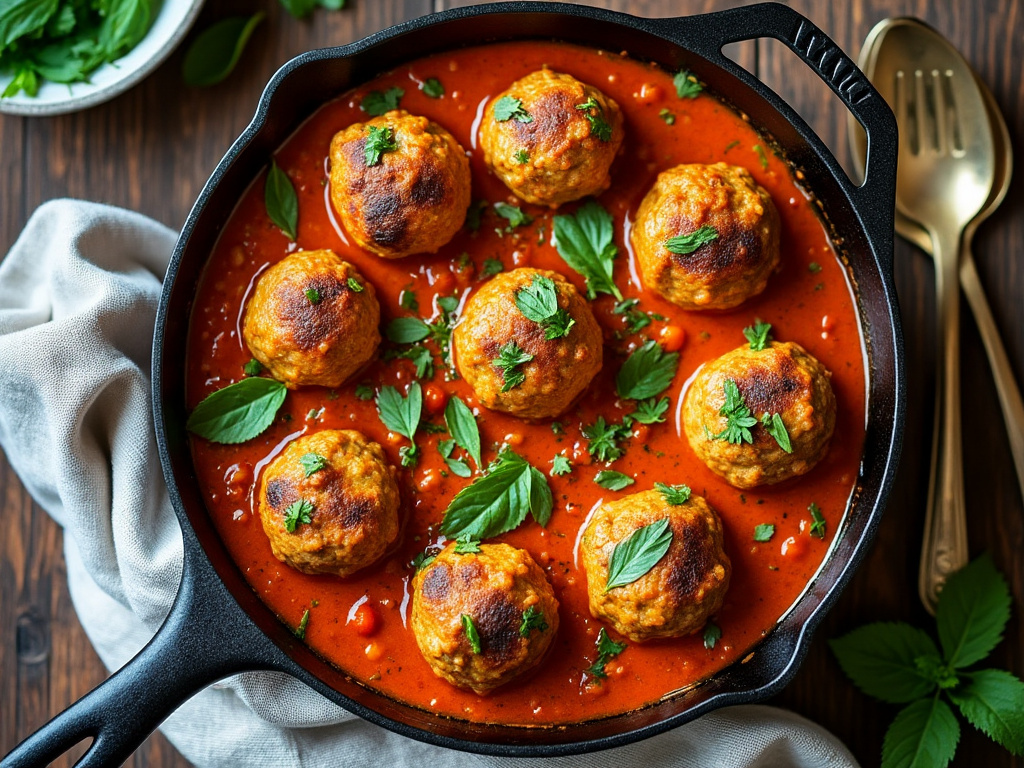
Skillet Butter Chicken Meatballs with Spiced Tomato Cream Sauce
Tender spiced chicken meatballs simmered in a rich, garam masala tomato cream sauce — weeknight dinner done in one skillet, 55 minutes total.
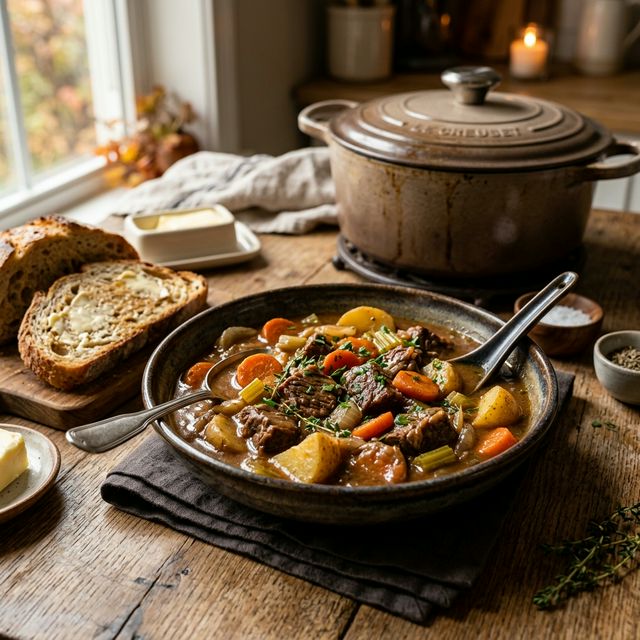
Slow Cooker Beef Stew
Tender beef chuck, potatoes, and carrots in a thick, savory broth. 20 min prep, 8 hrs on LOW. Real searing step included — no bland shortcuts.
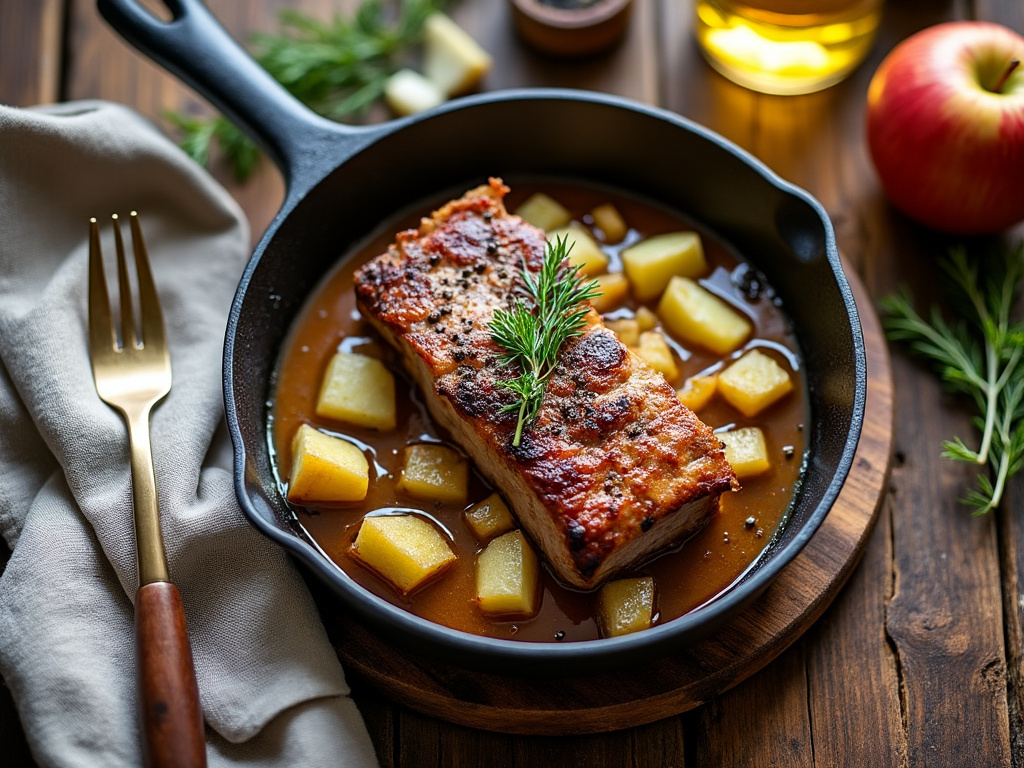
Cider-Braised Pork Shoulder with Fennel and Apple
Tender braised pork shoulder slow-cooked in hard cider with fennel and apple. A hands-off Sunday dinner with incredible pan sauce.