Creamy Tuscan Chicken Pasta
One-pot Tuscan chicken pasta with penne, sun-dried tomatoes, spinach, and parmesan in a cream sauce. Ready in 35 minutes, one pan, no draining.
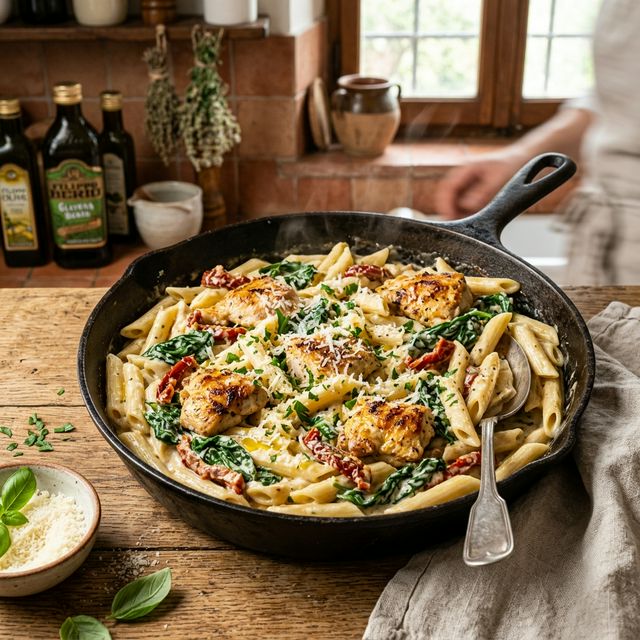
This is a single-skillet pasta where the penne actually cooks in the broth and cream — which means the starch released during cooking thickens the sauce naturally, no separate draining or roux required. The sun-dried tomatoes pull double duty here: their concentrated tang cuts through the richness of the cream, and their oil (if you use the jarred kind packed in oil) adds another layer of depth to the sauté. You end up with tender chicken, glossy pasta, and wilted spinach all in one pan in under 35 minutes. This is a weeknight workhorse — fast enough for Tuesday, substantial enough that nobody's hunting for snacks an hour later. If the sauce looks too thin when the pasta hits al dente, just pull the lid off and let it bubble for another 2 minutes before adding the chicken back — it tightens fast.
Ingredients
- ▸ 1 lb chicken breast, sliced
- ▸ 12 oz penne pasta
- ▸ 3 cups chicken broth
- ▸ 1 cup heavy cream
- ▸ 1/2 cup sun-dried tomatoes, chopped
- ▸ 3 cups fresh spinach
- ▸ 3 cloves garlic, minced
- ▸ 1/2 cup parmesan, grated
- ▸ 1 tsp Italian seasoning
- ▸ 2 tbsp olive oil
- ▸ Salt and pepper
🛒 Links may earn us a small commission at no cost to you.
Recommended Gear
🛒 We may earn a small commission at no extra cost to you. We only recommend gear we'd use ourselves.
Instructions
One-Pot Method
- 1. Season chicken with Italian seasoning, salt, and pepper. Heat olive oil in a large deep skillet over medium-high heat.
- 2. Cook chicken 3-4 minutes per side until golden. Remove to a plate.
- 3. In the same pan, sauté garlic 30 seconds. Add broth, cream, and sun-dried tomatoes. Bring to a boil.
- 4. Add pasta. Cover and cook 12-14 minutes, stirring occasionally, until pasta is al dente and sauce has thickened.
- 5. Return chicken. Stir in spinach and parmesan until spinach wilts.
Cook's Notes
- Use sun-dried tomatoes packed in oil, not dry-packed — the oil-packed kind is softer and more intensely flavored, and they integrate into the sauce without any chewy, leathery texture.
- Grate your own parmesan from a block. Pre-shredded parmesan contains anti-caking agents that prevent it from melting smoothly into the sauce.
- Pull the spinach straight from the bag — no need to chop it. It wilts down to almost nothing in about 60 seconds once it hits the hot pan.
- Let the chicken rest on the plate while the pasta cooks, don't rush it back into the pan. A few minutes of rest keeps it juicier when you slice or shred it before returning it.
Pro Tips
- → Don't skip browning the chicken properly — you want real golden color on the outside, not gray. That crust adds flavor to the fond left in the pan, which gets scraped up when you add the broth. A pan that's not hot enough will steam the chicken instead of sear it.
- → Stir the pasta every 3 to 4 minutes while it cooks covered — penne has a tendency to stick to the bottom of the pan in a cream-based liquid. If you hear it starting to sizzle against the pan bottom, it's time to stir.
- → If your sauce breaks (looks greasy and separated rather than creamy), it means the heat was too high. Pull the pan off the heat for 60 seconds, then stir in a tablespoon of cold water or broth — it usually comes back together.
- → Add the parmesan off the heat or on very low heat. High heat causes parmesan to clump and turn grainy instead of melting into the sauce smoothly.
- → Taste the sauce before adding any extra salt — the parmesan and chicken broth both carry significant sodium. In most cases you'll need very little additional salt at the end.
- → Slice the chicken breast against the grain and at a slight diagonal before cooking. This shortens the muscle fibers and keeps the pieces tender even after they go back into the hot sauce at the end.
What to Serve With This
A simple arugula salad dressed with lemon juice and olive oil is the sharpest contrast you can put next to this dish. The bitterness of the arugula and the acid cut right through the cream. Avoid anything dressed with a creamy or Caesar-style dressing — it'll compete rather than balance.
For bread, a crusty ciabatta or a sliced sourdough baguette does exactly what you want: something sturdy enough to drag through the sauce at the bottom of the bowl. Garlic bread works too, but keep it light on butter so you're not doubling down on richness.
On the wine side, this dish wants acidity. A Pinot Grigio or a Vermentino from Sardinia will hold up against the cream without being overpowered by it. If you prefer red, a light Sangiovese — something like a basic Chianti Classico — gives you enough fruit and acid without tannins that clash with cream-based sauces. Avoid oaky Chardonnays; they'll make the whole thing taste heavy.
For a non-alcoholic option, sparkling water with a squeeze of lemon or a cold glass of San Pellegrino keeps the palate clean between bites. A lightly sweetened iced tea with lemon also works well for a more casual table.
Variations & Substitutions
To make this vegetarian, swap the chicken for 1 lb of quartered cremini mushrooms and use vegetable broth instead of chicken broth. Sear the mushrooms hard in the olive oil — don't crowd the pan — until they're deeply browned before proceeding with the garlic. The mushrooms won't need to be removed and returned; just leave them in the pan when you add the broth and cream.
For a gluten-free version, use a brown rice penne or a chickpea-based penne. Be aware that gluten-free pasta absorbs liquid differently — start checking for doneness at the 10-minute mark and have an extra ¼ cup of warm broth nearby in case it drinks up the sauce before it's fully cooked.
To go dairy-free, replace the heavy cream with full-fat coconut cream (the kind from a can, not coconut milk) and use 3 tablespoons of nutritional yeast in place of the parmesan. The flavor profile shifts slightly tropical, so add an extra ½ teaspoon of Italian seasoning and a pinch of red pepper flakes to keep it savory and grounded.
For a spicier version, add ½ teaspoon of crushed red pepper flakes with the garlic. In summer, swap the sun-dried tomatoes for 1 cup of halved cherry tomatoes added with the broth — they'll blister and break down into the sauce.
Frequently Asked Questions
How do I store leftovers? ▼
Transfer cooled leftovers to an airtight container and refrigerate for up to 3 days. The pasta will continue to absorb the sauce as it sits, so the texture will be thicker on day two — that's normal and still good.
What's the best way to reheat this? ▼
Reheat in a skillet over medium-low heat with a splash of chicken broth or water — 2 to 3 tablespoons is usually enough to loosen the sauce back up. Stir frequently and don't rush it with high heat, or the cream will break and look greasy.
Can I make this ahead of time? ▼
You can cook the chicken ahead and refrigerate it separately for up to 2 days. The pasta is best cooked fresh because it continues to soak up the sauce — making it fully ahead leaves you with a very thick, stodgy result. If you do make it ahead, hold back about ½ cup of broth to stir in when reheating.
Can this be frozen? ▼
Cream-based pasta sauces don't freeze well — the dairy separates when thawed and the pasta turns mushy. Skip the freezer on this one. It's fast enough to make fresh when you need it.
Can I use chicken thighs instead of breast? ▼
Yes, and boneless skinless thighs are actually more forgiving here because they won't dry out if they cook a minute too long. Slice them to roughly the same thickness as you would the breast. The cook time stays the same — 3 to 4 minutes per side.
What if I don't have heavy cream? ▼
Half-and-half will work but the sauce will be noticeably thinner and may not coat the pasta as well. If using half-and-half, reduce the chicken broth by ¼ cup to compensate. Don't use milk — it won't thicken properly and the sauce will taste thin.
Can I use a different pasta shape? ▼
Yes — rigatoni and rotini both work well because they have ridges or tubes that trap the sauce. Avoid long pasta like spaghetti or fettuccine; it doesn't cook evenly in the one-pot method and tends to clump.
My sauce is too thin — what went wrong? ▼
The most common cause is too much liquid or not enough cooking time. Remove the lid and let it simmer uncovered for 2 to 3 minutes — it thickens quickly once exposed to open heat. Also make sure your parmesan is finely grated, not the coarse shredded kind, which doesn't incorporate as smoothly.
What pan size works best? ▼
A 12-inch deep skillet or a 5-quart sauté pan is ideal. You need enough surface area that the pasta isn't piled high, and enough depth that the broth doesn't boil over when it's covered. A standard 10-inch skillet is too small for this volume.
Can I scale this up for a crowd? ▼
You can scale to 6 servings by increasing the chicken to 1.5 lb, pasta to 18 oz, broth to 4.5 cups, and cream to 1.5 cups. Use a 7-quart Dutch oven or the widest skillet you have. Cooking time may increase by 2 to 3 minutes — go by texture, not the clock.
Enjoyed this recipe?
Daily Home Cookery is self-funded. If something you cooked here made dinner a little better, a coffee keeps the kitchen running.
☕ Buy me a coffeeYou Might Also Like
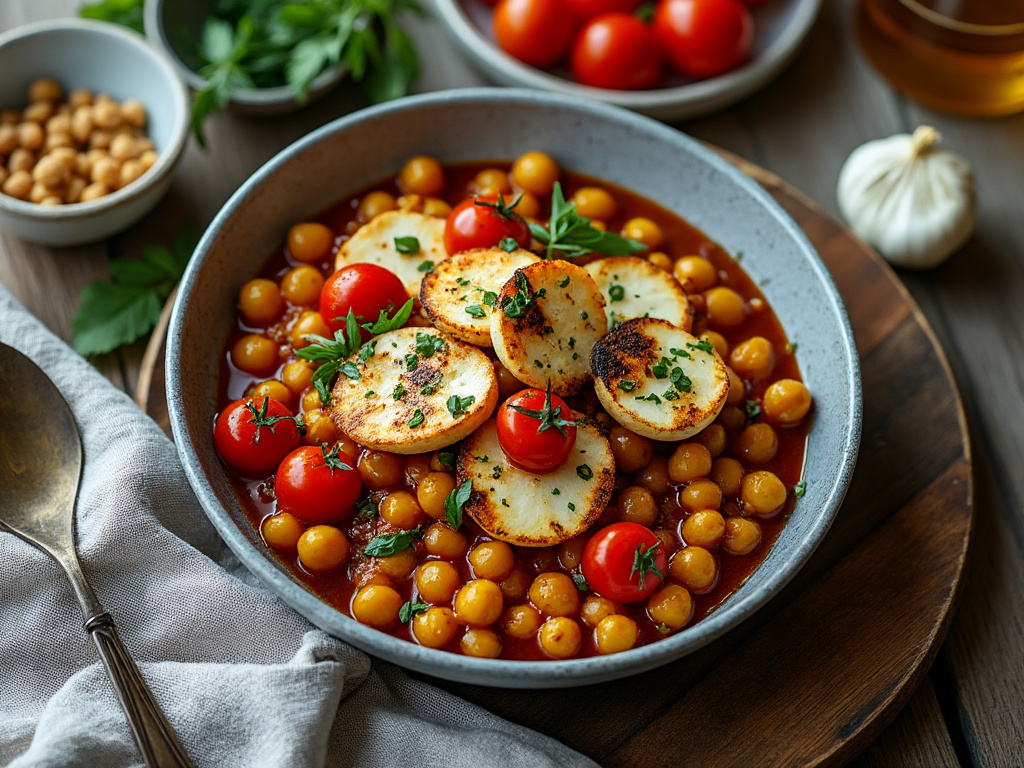
Spicy Coconut Braised Chickpeas with Charred Tomatoes and Crispy Halloumi
Creamy coconut-braised chickpeas with charred tomatoes and golden halloumi. A bold, vegetarian one-pot dinner ready in 45 minutes.
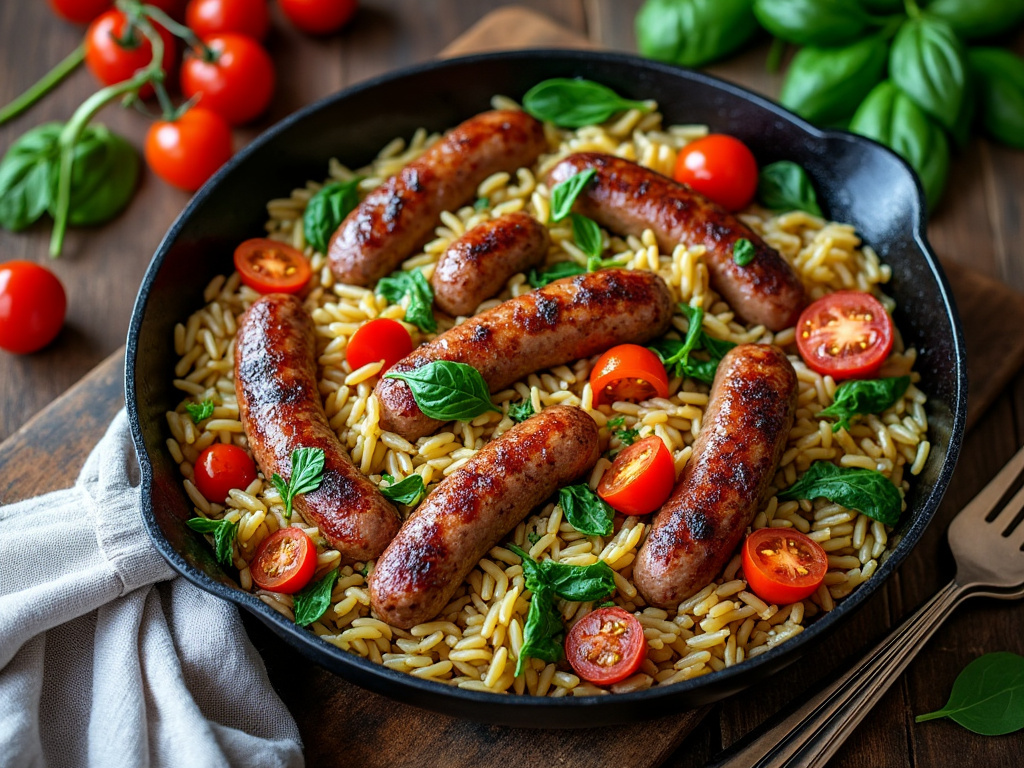
Smoked Sausage and Orzo Skillet with Blistered Tomatoes and Spinach
One-skillet smoked sausage and orzo with blistered cherry tomatoes and spinach — ready in 35 minutes, minimal cleanup.
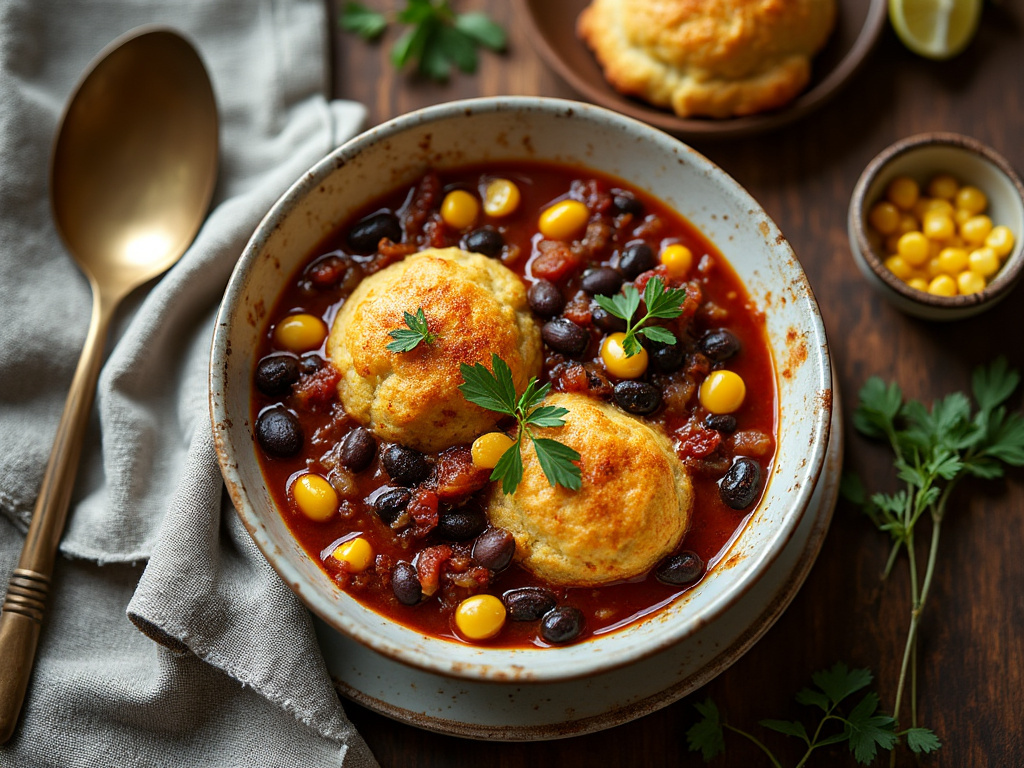
Smoked Paprika Black Bean and Corn Chili with Cheddar Cornbread Dumplings
A smoky vegetarian black bean and corn chili topped with fluffy cheddar cornbread dumplings — all cooked in one pot in under an hour.