Creamy White Wine Mussels with Fennel and Leeks
Steam mussels in a white wine cream broth with fennel and leeks — ready in 35 minutes, stunning enough for a dinner party.
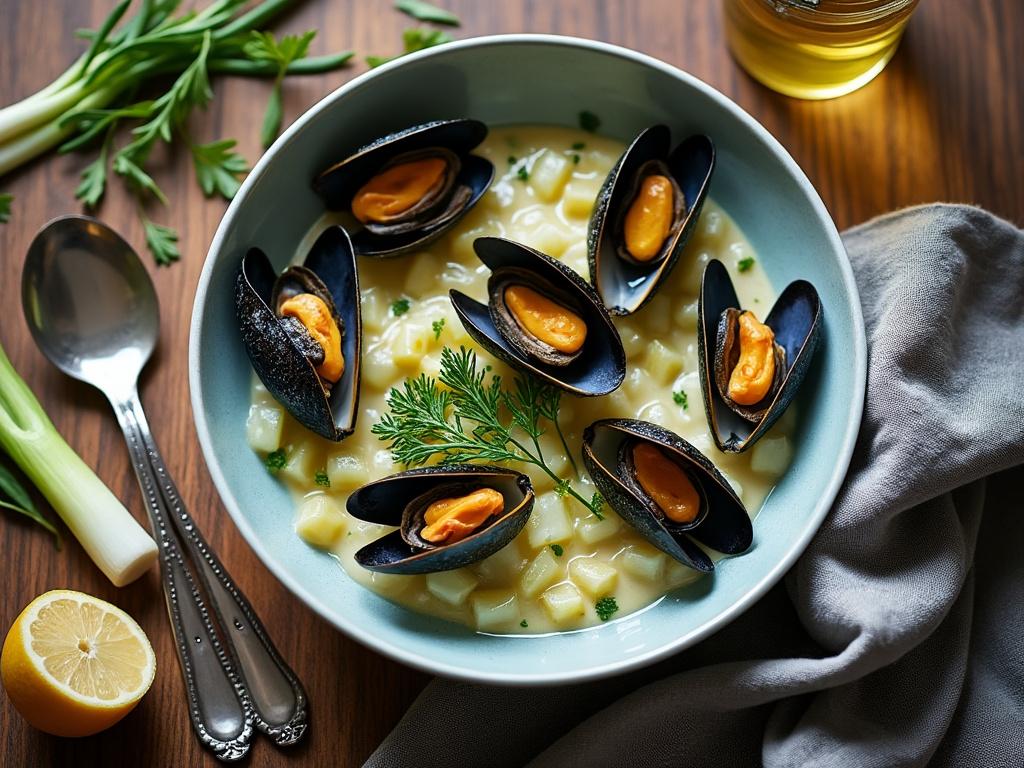
Mussels cook faster than almost anything else you'll put on a stove — two minutes of hard steam and they're done. The real work is in the broth, and this one earns its place: dry white wine, heavy cream, and a base of slowly softened fennel and leeks that turns sweet and almost silky before the mussels ever hit the pot. That aromatic base is what separates this from a thin, forgettable broth.
Expect a rich but not heavy sauce — the cream rounds the wine's acidity without drowning it, and the fennel fronds stirred in at the end add a fresh anise note. This is a weeknight dinner that looks impressive: one wide pot, one loaf of crusty bread, done in 35 minutes. If your mussels aren't opening after 3-4 minutes of covered steaming, crank the heat — they need a hard boil, not a simmer. Any mussel that stays shut after 6 minutes, discard it.
Ingredients
- ▸ 2 lbs fresh live mussels
- ▸ 2 tbsp Kerrygold unsalted butter
- ▸ 1 tbsp olive oil
- ▸ 1 medium fennel bulb, thinly sliced (about 2 cups), fronds reserved
- ▸ 2 medium leeks, white and light green parts only, halved and thinly sliced (about 1.5 cups)
- ▸ 4 cloves garlic, minced
- ▸ 1/2 tsp Diamond Crystal kosher salt
- ▸ 1/4 tsp black pepper, freshly ground
- ▸ 1/4 tsp crushed red pepper flakes
- ▸ 1 cup dry white wine (Sauvignon Blanc or Pinot Grigio)
- ▸ 1/2 cup heavy cream
- ▸ 1 tbsp fresh lemon juice
- ▸ 1 tsp lemon zest
- ▸ 3 tbsp fresh flat-leaf parsley, roughly chopped
- ▸ 2 tbsp fennel fronds, roughly chopped
🛒 Links may earn us a small commission at no cost to you.
Recommended Gear
🛒 We may earn a small commission at no extra cost to you. We only recommend gear we'd use ourselves.
Instructions
Prep
- 1. Rinse the mussels under cold running water in a colander. Scrub each shell with a stiff brush to remove grit. Pull away any beards — the fibrous threads at the flat seam — by gripping them and tugging firmly toward the hinge. Discard any mussels with cracked shells or any that stay open after a firm tap on the counter. Keep cleaned mussels cold in the colander set over a bowl until needed.
- 2. Halve the fennel bulb lengthwise, cut out the tough core, and slice thinly crosswise — about 1/4 inch thick. Halve the leeks lengthwise, rinse thoroughly between the layers under cold water to remove grit, then slice crosswise into thin half-moons. Mince the garlic. Roughly chop the parsley and reserved fennel fronds. Zest and juice the lemon.
Build the Broth
- 1. Set the Dutch oven over medium heat. Add the butter and olive oil together. When the butter is fully melted and just starting to foam — about 1 minute — add the sliced fennel and leeks. Season with the salt and pepper.
- 2. Cook the fennel and leeks, stirring occasionally, until they soften completely and the leeks turn translucent and sweet-smelling, about 8-10 minutes. Don't rush this step; you want them limp and golden at the edges, not just wilted. Adjust heat to medium-low if they're browning too fast.
- 3. Add the minced garlic and red pepper flakes. Stir and cook 60-90 seconds until the garlic is fragrant and just starting to turn golden — it should smell nutty and sweet, not sharp. Watch it; garlic burns fast at this stage.
- 4. Pour in the white wine. It will sizzle and steam immediately. Scrape the bottom of the pot to lift any stuck aromatics. Raise the heat to medium-high and let the wine reduce by about half, about 3 minutes — the sharp alcohol smell will soften and the liquid will look slightly syrupy at the edges.
- 5. Pour in the heavy cream and stir to combine. Bring the broth to a steady simmer — small bubbles breaking the surface consistently, not a gentle steam. The broth will look pale and slightly thickened, about 2 minutes.
Steam the Mussels
- 1. Add all the cleaned mussels to the pot in one go. Give the pot a quick stir to submerge as many as possible in the broth. Put the lid on immediately and crank the heat to high.
- 2. Steam the mussels, covered and undisturbed, for 3-4 minutes. You'll hear active bubbling and the lid will rattle slightly — that's the right amount of steam. At 3 minutes, lift the lid quickly: most mussels should be open and fragrant with seafood steam. If more than a quarter are still closed, cover and give them 1-2 more minutes at high heat.
- 3. Discard any mussels that remain tightly shut after 6 total minutes of steaming. They will not open and should not be eaten.
Finish and Serve
- 1. Remove the pot from heat. Stir in the lemon juice, lemon zest, chopped parsley, and fennel fronds. The broth should look glossy, pale golden, and fragrant — taste it and adjust salt if needed. It should be bright and briny with a clean cream finish.
- 2. Ladle the mussels and all the broth into wide, deep bowls immediately. Serve with thick-cut toasted crusty bread on the side for soaking up the broth. Eat right away — mussels wait for no one.
Cook's Notes
- Buy mussels the day you plan to cook them. Store them in the fridge in a bowl covered loosely with a damp towel — never in a sealed container or submerged in water, which kills them faster.
- The broth base (steps 3-7) can be made up to 4 hours ahead. Reheat it to a hard simmer before adding the mussels.
- Slice the fennel thin — 1/4 inch or less. Thick slices won't soften fully in 10 minutes and you'll end up with crunchy pieces in a silky broth, which is jarring.
- Don't skip reducing the wine before adding the cream. If you add cream to raw wine, the acid can cause the cream to curdle slightly and the raw alcohol flavor lingers unpleasantly.
- If your pot isn't wide enough and you need to pile the mussels deep, increase the steam time by 1-2 minutes and shake the pot (with lid on) halfway through to redistribute the mussels.
Pro Tips
- → If the broth looks broken or greasy when you add the cream — thin with a weirdly separated surface — the heat was too high when the cream went in. Pull the pot off the heat, let it cool 30 seconds, then whisk vigorously. It will come back together.
- → The leeks are the hidden flavor backbone here. If they're not fully softened and sweet before the wine goes in, the broth will taste raw and vegetal no matter how good your wine is. Ten minutes feels long, but it matters.
- → Use a wide pot, not a tall narrow one. A wide base means the mussels sit in a shallower layer, so steam circulates evenly. In a narrow pot, the bottom mussels overcook and break open while the top ones barely steam.
- → Taste the broth for salt after the wine reduces but before the cream goes in. Wine varies in saltiness and acidity, so this is your best adjustment window — cream mutes your ability to taste clearly.
- → If you accidentally overcook the mussels and they're chewy and shrunken, you can't fix the texture — but serving them in extra broth with plenty of bread disguises it well. For next time: once the lid goes on and the heat goes high, set a timer. Don't walk away.
- → Fennel fronds are worth saving and using — don't toss them. They have a fresher, more delicate anise flavor than the bulb and they visually signal what's in the dish. If your fennel came without fronds, 1 tbsp of fresh tarragon is a direct swap.
What to Serve With This
A cold, crisp Muscadet from the Loire Valley is the default pairing here and it earns that status — its mineral salinity and low alcohol mirror the brine of the mussels without competing with the cream. If Muscadet is unavailable, reach for a Picpoul de Pinet or a dry Vermentino. Avoid oaked Chardonnay; the butter and vanilla notes will clash with the fennel and make the broth taste muddy.
For a non-alcoholic option, sparkling water with a squeeze of lemon and a splash of white grape juice gets surprisingly close to the palate-cleansing role wine plays here. The carbonation cuts through the cream in the same way acidity does.
The bread situation is non-negotiable: you need something with a tight, chewy crumb to drag through the broth. A sourdough baguette or a good ciabatta from a bakery works best — the open crumb soaks up the sauce without falling apart in your hand. A soft sandwich loaf will turn to mush. If you have time, slice the bread thick, brush with olive oil, and toast it under the broiler for 2 minutes per side until deeply golden.
A simple green salad with a sharp shallot vinaigrette rounds out the meal without adding richness. Frisée or butter lettuce dressed with Dijon, red wine vinegar, and a minced shallot gives your palate a clean reset between spoonfuls of broth.
Variations & Substitutions
For a dairy-free version, swap the heavy cream for full-fat coconut cream (the thick, unsweetened kind in a can — not coconut milk). Use exactly the same quantity: 1/2 cup. The flavor profile shifts slightly tropical, which actually works well if you add a small knob of fresh ginger to the aromatics and a squeeze of lime at the end instead of lemon. Skip the butter and use 3 tbsp of good olive oil throughout.
To make this gluten-free, the recipe is already naturally gluten-free as written — just confirm your white wine doesn't contain added sulfites that cause reactions (most dry European wines are fine), and serve with gluten-free bread or rice instead of a wheat baguette.
If mussels are unavailable or you want to stretch the recipe, littleneck clams are a direct 1:1 substitute by weight. They take 2-3 minutes longer to open and need slightly more liquid — add an extra 1/4 cup of wine. A mix of mussels and clams works well too; add the clams to the pot 2 minutes before the mussels since they take longer.
For a spicier version, add 1/2 tsp crushed red pepper flakes with the fennel and leeks, and stir in 1 tsp of Calabrian chili paste with the cream. This version pairs better with a slightly off-dry Riesling that can handle the heat, rather than the bone-dry Muscadet.
Frequently Asked Questions
How do I know if a mussel is safe to eat before cooking? ▼
Live mussels should be closed, or close when you tap them firmly on the counter. If a mussel stays open after tapping, discard it — it's dead. Also discard any with cracked or broken shells. A mussel that smells strongly of ammonia rather than clean ocean brine should also be thrown out.
Can I make this ahead of time? ▼
The aromatic broth base — softened fennel, leeks, garlic, wine, and cream — can be made up to 4 hours ahead and kept covered at room temperature or refrigerated for up to 24 hours. Reheat it to a hard simmer before adding the mussels. Do not cook the mussels ahead; they must be eaten immediately after cooking. Reheated mussels turn rubbery and unpleasant.
What white wine should I use for cooking? ▼
Use a dry, crisp white that you'd actually drink — a basic Sauvignon Blanc, Pinot Grigio, or Muscadet works well and costs $8-12. Avoid anything labeled 'cooking wine' (it contains added salt and tastes metallic) and avoid oaked or buttery wines like many California Chardonnays, which will make the broth taste heavy and muddled.
My mussels aren't opening — what's wrong? ▼
Almost always, the heat is too low. You need the liquid at a hard, rolling boil with the lid on to generate enough steam. If after 4 minutes some are still closed, give them another 2 minutes at high heat. Any that remain closed after 6 total minutes of hard steaming should be discarded — they were likely dead before cooking.
How do I store and reheat leftovers? ▼
Leftover mussels don't reheat well in their shells — the meat gets tough. If you have leftover broth, strain it and refrigerate for up to 2 days; it makes an excellent base for a quick seafood pasta or a fish chowder. If you must store cooked mussels, remove them from the shells, store in the broth in an airtight container for up to 1 day, and warm very gently over low heat — just until heated through, not simmering.
How do I clean mussels properly? ▼
Rinse the mussels under cold running water and scrub any visible grit off the shells with a stiff brush. Pull or cut away the 'beard' — the fibrous strands sticking out from the flat side of the shell — by gripping it and pulling toward the hinge end of the mussel. Do this right before cooking; debearding too early can kill the mussel faster.
Can I double this recipe for a larger group? ▼
Yes, but use two wide pots rather than one overfilled pot. Overcrowding prevents even steaming and the mussels on the bottom layer overcook while the top layer struggles to open. If you only have one large pot (8-quart or bigger), you can do 4 lbs of mussels, but add an extra 1/4 cup wine to ensure enough steam and increase the covered steam time to 5-6 minutes.
Can I use frozen mussels? ▼
Frozen mussels (sold on the half shell, already cooked) work as a shortcut — thaw them fully in the fridge overnight before using. Since they're pre-cooked, they only need 1-2 minutes in the hot broth to heat through; do not steam them for 4-5 minutes or they'll be rubbery. The flavor is noticeably less briny and fresh than live mussels, but the dish is still very good.
What's the best pot to use? ▼
A wide, heavy-bottomed pot — at least 6 quarts — with a tight-fitting lid is ideal. Wide diameter means more surface area, so the mussels stack shallower and steam more evenly. A Dutch oven works perfectly. Avoid a narrow stockpot where mussels pile up deep; they'll cook unevenly and the bottom layer will overcook before the top opens.
Enjoyed this recipe?
Daily Home Cookery is self-funded. If something you cooked here made dinner a little better, a coffee keeps the kitchen running.
☕ Buy me a coffeeYou Might Also Like

Skillet-Charred Merguez with Burst Tomatoes, Chickpeas, and Herbed Yogurt
Spiced merguez sausage, burst cherry tomatoes, and chickpeas in one skillet — topped with cool herbed yogurt. Ready in 45 minutes.
One-Pan Lemon Herb Salmon
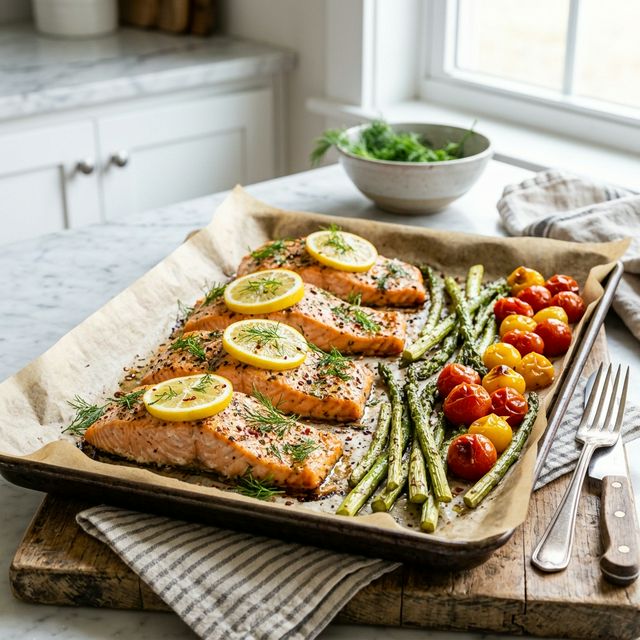
Sheet pan salmon with asparagus, cherry tomatoes, and a Dijon-lemon-dill glaze. Ready in 30 minutes, one pan to wash.
Creamy Tuscan Chicken Pasta
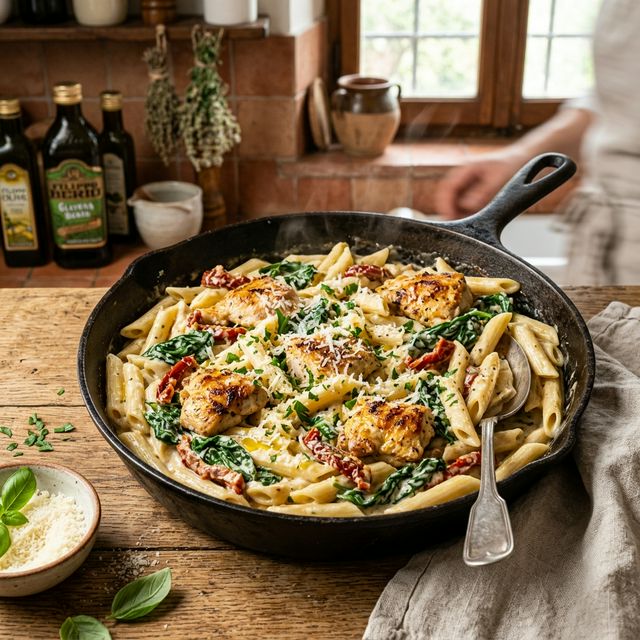
One-pot Tuscan chicken pasta with penne, sun-dried tomatoes, spinach, and parmesan in a cream sauce. Ready in 35 minutes, one pan, no draining.