One-Pan Lemon Herb Salmon
Sheet pan salmon with asparagus, cherry tomatoes, and a Dijon-lemon-dill glaze. Ready in 30 minutes, one pan to wash.
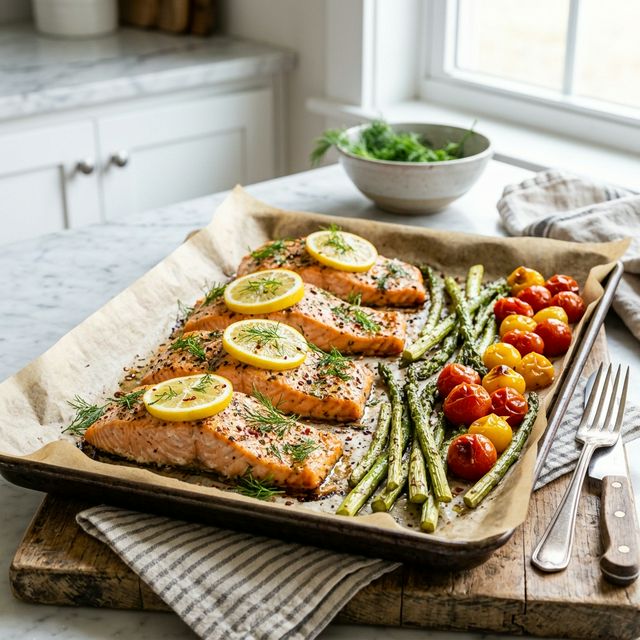
Sheet pan salmon is one of those dinners that looks like you tried harder than you did. Everything roasts together at 400°F — the salmon, asparagus, and cherry tomatoes — so you're not managing multiple pans or timing three separate components. The Dijon mustard in the glaze is the move here: it acts as an emulsifier, helping the olive oil, lemon juice, and dill cling to the fish instead of sliding off in the oven. The result is a fillet with a lightly set, herb-flecked crust and flesh that stays moist through the full roast time. Asparagus gets tender at the tips with a little char, and the tomatoes collapse into jammy, concentrated pockets.
This is a weeknight recipe — 30 minutes total, one pan to wash. It also works well for casual dinner guests since everything goes into the oven at once and you're not standing at the stove. If your salmon fillets are on the thinner side (under an inch), check at 13 minutes to avoid overcooking; dry salmon is the main failure mode here and it happens fast.
Ingredients
- ▸ 4 salmon fillets (6 oz each)
- ▸ 1 bunch asparagus, trimmed
- ▸ 1 pint cherry tomatoes
- ▸ 3 tbsp olive oil
- ▸ 3 cloves garlic, minced
- ▸ 2 tbsp fresh dill, chopped
- ▸ 1 lemon, half sliced and half juiced
- ▸ Salt and pepper
- ▸ 1 tbsp Dijon mustard
🛒 Links may earn us a small commission at no cost to you.
Recommended Gear
🛒 We may earn a small commission at no extra cost to you. We only recommend gear we'd use ourselves.
Instructions
Prep and Roast
- 1. Preheat oven to 400°F. Line a sheet pan with parchment paper.
- 2. Toss asparagus and tomatoes with 1 tbsp olive oil, salt, and pepper. Spread on the pan.
- 3. Mix remaining olive oil, garlic, lemon juice, dill, and Dijon. Brush over salmon fillets.
- 4. Nestle salmon among the vegetables. Top with lemon slices.
- 5. Roast 15-20 minutes until salmon flakes easily with a fork.
Cook's Notes
- Pat the salmon fillets dry before brushing on the glaze — surface moisture is the main reason glazes slide off during roasting.
- Arrange the asparagus spears in a single layer rather than piling them; overlapping stalks steam each other instead of roasting.
- If your cherry tomatoes are large, halve them cut-side up so they release moisture downward into the pan rather than onto the fish.
- Parchment paper is non-negotiable here — foil can work in a pinch, but the salmon skin tends to stick without a thin coat of oil on the foil surface.
Pro Tips
- → Pull the salmon from the fridge 15 minutes before roasting. Cold fish goes into a hot oven unevenly — the outside tightens and overcooks before the center comes up to temperature.
- → The failure mode with sheet pan salmon is almost always overcooking. Set a timer for 13 minutes on the first attempt, then check and add time as needed rather than trusting the full 20-minute window blindly.
- → If the glaze starts to darken too aggressively before the fish is done, tent the pan loosely with foil. It traps steam but protects the surface from burning.
- → Use skin-on fillets when possible — the skin acts as a buffer between the hot pan and the delicate flesh, and you can simply slide a spatula between the skin and flesh to serve if you don't want to eat it.
- → For even cooking, try to buy fillets that are uniform in thickness. If you're working with a tail piece that tapers thin, fold the thin end under itself to match the height of the rest of the fillet.
- → After the salmon comes out, squeeze the remaining lemon half (the non-sliced half from the ingredient list) directly over the pan while everything is still hot. The fresh juice brightens the whole dish in a way the roasted lemon slices can't replicate.
What to Serve With This
Crusty bread is the obvious choice alongside this — something like a sourdough boule or a simple baguette from Pepperidge Farm if you're not baking your own. The tomatoes collapse into a light pan juice that's worth mopping up, and no other starch is needed.
If you want to add a grain, white rice or Israeli couscous fits naturally. Both are neutral enough not to compete with the lemon-dill profile. Cook the couscous in low-sodium chicken broth instead of water and it picks up enough flavor to stand on its own.
For wine, a crisp white with decent acidity is the right call. Sauvignon Blanc — especially from Marlborough, New Zealand — mirrors the lemon and herb notes without overpowering the fish. A dry Provençal rosé is another strong option if you want something with a little more body. If you're skipping alcohol, sparkling water with a squeeze of lemon or a chilled green tea keeps the palate clean between bites.
A simple green salad with butter lettuce and a shallot vinaigrette rounds the meal out without adding any competing cook time. Avoid anything heavily dressed with Caesar or blue cheese — the salmon glaze is already doing a lot of flavor work.
Variations & Substitutions
To make this gluten-free, check your Dijon mustard label — most are naturally gluten-free, but some brands process in shared facilities. Grey Poupon and Annie's both have clean labels. Everything else in the recipe is already GF-safe.
For a dairy-free swap, there's nothing to change — this recipe doesn't use butter or cream. If you've seen versions of sheet pan salmon that finish with a compound butter, skip that here; the olive oil glaze handles the richness on its own.
For a vegetarian version, swap the salmon for extra-firm tofu cut into 1-inch slabs. Press it for at least 20 minutes first, then apply the same Dijon-lemon glaze. Roast time stays similar — about 20 minutes at 400°F — but watch the tofu at 15 minutes since it can go from golden to dry quickly.
Seasonal flavor variation: in fall, swap the asparagus for halved Brussels sprouts or thin-sliced fennel, and replace the dill with fresh thyme. The lemon and Dijon glaze holds up across all of those. For a spicier profile, add 1 teaspoon of smoked paprika and a pinch of cayenne to the glaze — it shifts the dish toward a bolder, almost Cajun direction without requiring any other changes. Scaling up to 6 or 8 fillets: use two sheet pans and rotate them halfway through the roast.
Frequently Asked Questions
How do I store leftover salmon? ▼
Transfer cooled leftovers to an airtight container and refrigerate for up to 2 days. Cold salmon is actually good the next day — flake it over a salad or tuck it into a wrap with Greek yogurt and cucumber.
What's the best way to reheat the salmon without drying it out? ▼
Reheat gently in a 275°F oven for about 10-12 minutes, covered loosely with foil. Avoid the microwave if you can — it creates steam in uneven bursts and tends to overcook the outer edges while the center is still cold.
Can I make this ahead of time? ▼
You can mix the glaze and store it in the fridge up to 24 hours ahead. Trim the asparagus and halve any larger tomatoes the night before as well. Don't brush the glaze onto the salmon until right before roasting — the lemon juice will start to cure the fish if it sits too long.
Can I freeze cooked salmon? ▼
Yes, but the texture changes noticeably. Cooked salmon freezes for up to 1 month; thaw overnight in the fridge and use it in salmon cakes or pasta rather than serving it as-is. The asparagus and tomatoes don't freeze well — they go mushy.
Can I use frozen salmon fillets? ▼
Yes, but thaw them completely in the refrigerator first and pat them very dry with paper towels before glazing. Excess moisture on the surface will steam the fish instead of roasting it, and the glaze won't adhere properly.
What if I don't have fresh dill? ▼
Use 2 teaspoons of dried dill — dried herbs are more concentrated, so use about two-thirds of the fresh amount. Fresh flat-leaf parsley or tarragon are good substitutes if you have them and prefer not to use dill at all.
Can I use a different mustard instead of Dijon? ▼
Whole grain mustard works well and adds a little texture to the glaze. Avoid yellow mustard — it's sharper and more vinegary, which throws off the balance of the lemon and dill.
My salmon stuck to the pan. What went wrong? ▼
Either the parchment wasn't used, or the fillets were moved too soon. Salmon naturally releases from a well-lined pan once the surface has had time to set — usually after 10-12 minutes. If it's sticking, give it another 2 minutes before trying to lift it.
How do I know when the salmon is done? ▼
The fillet should flake cleanly when pressed with a fork at the thickest point, and the flesh should be opaque almost all the way through with just a slightly translucent center. Internal temp of 125°F is medium; 145°F is fully cooked per FDA guidelines.
Can I cook this in a regular baking dish instead of a sheet pan? ▼
A 9x13 baking dish works, but the vegetables will steam more than roast since they're in closer quarters. You'll lose some of the caramelization on the asparagus and tomatoes. A rimmed half-sheet pan (18x13) gives everything room to breathe.
Enjoyed this recipe?
Daily Home Cookery is self-funded. If something you cooked here made dinner a little better, a coffee keeps the kitchen running.
☕ Buy me a coffeeYou Might Also Like

Skillet-Charred Merguez with Burst Tomatoes, Chickpeas, and Herbed Yogurt
Spiced merguez sausage, burst cherry tomatoes, and chickpeas in one skillet — topped with cool herbed yogurt. Ready in 45 minutes.
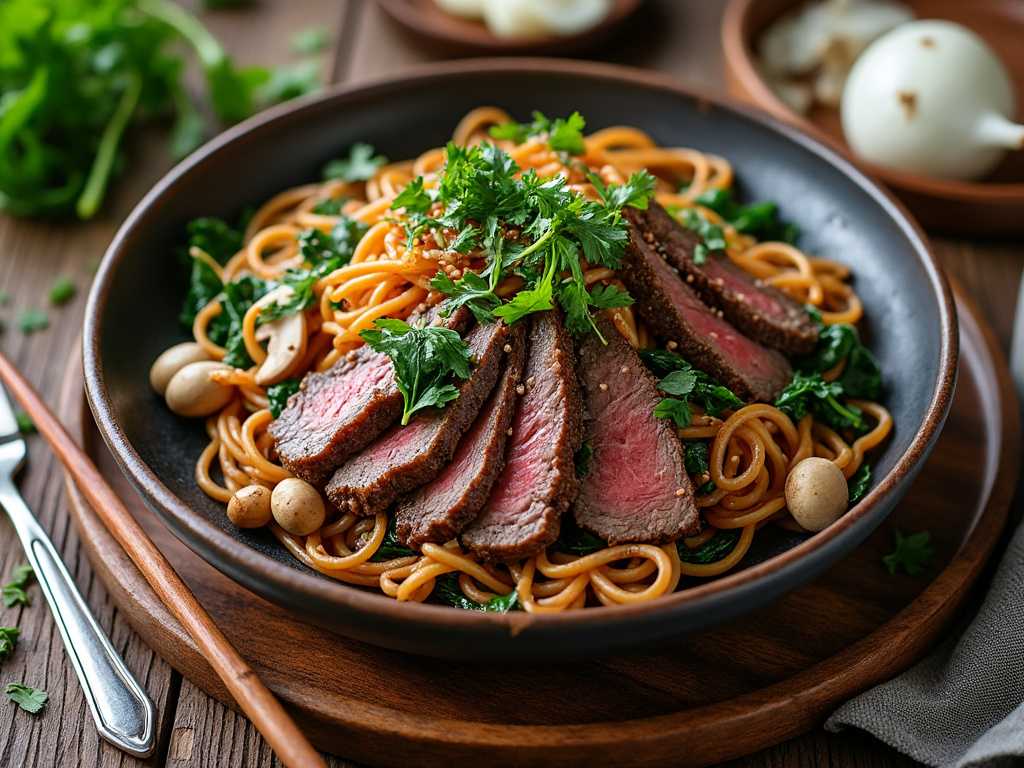
Japchae with Shiitake Mushrooms, Spinach, and Sesame-Soy Beef
Silky Korean glass noodles tossed with sesame-soy beef, shiitake mushrooms, and spinach. A weeknight-friendly japchae recipe with step-by-step technique.

Smoked Paprika Black Bean and Corn Chili with Cheddar Cornbread Dumplings
A smoky vegetarian black bean and corn chili topped with fluffy cheddar cornbread dumplings — all cooked in one pot in under an hour.