Japchae with Shiitake Mushrooms, Spinach, and Sesame-Soy Beef
Silky Korean glass noodles tossed with sesame-soy beef, shiitake mushrooms, and spinach. A weeknight-friendly japchae recipe with step-by-step technique.
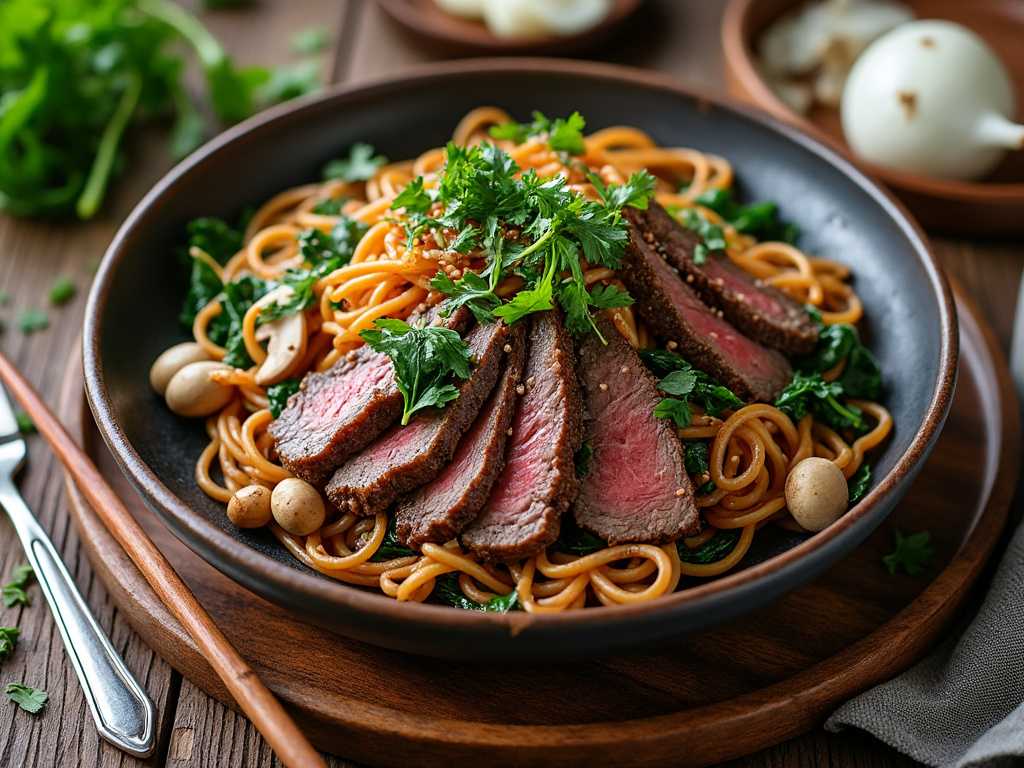
Japchae is built around dangmyeon — Korean sweet potato glass noodles — which cook to a slippery, chewy texture that absorbs soy and sesame sauce without turning heavy. Unlike wheat pasta, they're naturally glassy and translucent, which is why the dish looks as good as it tastes. The technique that makes this version work is cooking every component separately before the final toss: the beef, mushrooms, vegetables, and noodles each spend time in the pan alone, so nothing steams or crowds out into mush.
The finished dish is savory, faintly sweet, and deeply nutty from toasted sesame oil — substantial enough for a dinner party but easy enough for a Tuesday. Serve warm or at room temperature; japchae holds beautifully on a platter for an hour, which makes it genuinely useful for feeding a crowd. If your noodles clump after draining, toss them immediately with 1 tsp sesame oil — that fixes it every time.
Ingredients
- ▸ 8 oz dangmyeon Korean sweet potato glass noodles
- ▸ 6 oz flank steak or top sirloin, sliced 1/8-inch thin against the grain
- ▸ 8 oz fresh shiitake mushrooms, stems removed, caps sliced 1/4-inch thick
- ▸ 4 oz baby spinach (about 4 packed cups)
- ▸ 1 medium yellow onion, halved and thinly sliced (about 1 cup)
- ▸ 2 medium carrots, julienned into 2-inch matchsticks (about 1 cup)
- ▸ 4 scallions, cut into 2-inch pieces
- ▸ 3 cloves garlic, minced
- ▸ 3 tbsp soy sauce (for beef marinade)
- ▸ 1 tbsp toasted sesame oil (for beef marinade)
- ▸ 1 tbsp granulated sugar (for beef marinade)
- ▸ 1/2 tsp freshly ground black pepper (for beef marinade)
- ▸ 3 tbsp soy sauce (for main sauce)
- ▸ 2 tbsp toasted sesame oil (for main sauce)
- ▸ 1.5 tbsp granulated sugar (for main sauce)
- ▸ 1 tbsp neutral oil such as grapeseed or avocado, divided use
- ▸ 1 tsp Diamond Crystal kosher salt, divided use
- ▸ 1 tbsp toasted sesame seeds
🛒 Links may earn us a small commission at no cost to you.
Recommended Gear
🛒 We may earn a small commission at no extra cost to you. We only recommend gear we'd use ourselves.
Instructions
Prep
- 1. Slice the beef 1/8-inch thin against the grain — freeze it for 20 minutes first if your knife is dragging. Combine the beef with 3 tbsp soy sauce, 1 tbsp sesame oil, 1 tbsp sugar, and 1/2 tsp black pepper in a bowl. Toss to coat and marinate at room temperature for at least 15 minutes while you prep the vegetables. The beef should look glossy and deeply coated.
- 2. Whisk together the main sauce in a small bowl: 3 tbsp soy sauce, 2 tbsp sesame oil, and 1.5 tbsp sugar. Stir until the sugar is fully dissolved. Set aside.
- 3. Bring a large pot of water to a rolling boil over high heat. Add the dangmyeon noodles and cook for 6–7 minutes, stirring once or twice, until the noodles are translucent, slippery, and just tender with no chalky center — bite one to check. Drain in a colander, rinse briefly with cold water, and immediately toss with 1 tsp sesame oil to prevent sticking. Use scissors to cut the noodles roughly into 6-inch lengths — easier to eat and to toss. Set aside.
Cook the Components
- 1. Heat 1/2 tsp neutral oil in your wok or skillet over high heat until it shimmers and just begins to smoke. Add the marinated beef in a single layer — you should hear an immediate, sharp sizzle. Sear without touching for 90 seconds until the underside is deeply caramelized and brown at the edges, then stir-fry for another 60–90 seconds until just cooked through and fragrant with toasted soy. Transfer to the large mixing bowl. Do not wipe the pan.
- 2. Add another 1/2 tsp neutral oil to the pan over high heat. Add the shiitake mushrooms in a single layer and leave them completely alone for 2 minutes — they'll shrink and develop a dark, spotted sear. Season with 1/4 tsp kosher salt, toss once, and cook another 60 seconds until deeply golden and slightly chewy at the edges. Transfer to the bowl with the beef.
- 3. Add the julienned carrots to the same pan over medium-high heat with a splash of water (about 1 tbsp) and 1/4 tsp kosher salt. Stir-fry for 2–3 minutes until the carrots are just tender but still have a slight snap — they should be bright orange and no longer raw-smelling. Transfer to the bowl.
- 4. Add the sliced onion and scallion pieces to the pan over medium-high heat with 1/4 tsp kosher salt. Cook, stirring occasionally, for 3–4 minutes until the onion is soft, translucent, and just starting to develop golden edges at the tips. Add the minced garlic and stir constantly for 30 seconds until fragrant — it should smell sharp and toasty, not burnt. Transfer to the bowl.
- 5. Add the baby spinach directly to the hot pan with no additional oil over medium heat. Toss with tongs for 60–90 seconds until wilted, dark green, and collapsed — you should no longer see any raw, bright green puffiness. Season with the remaining 1/4 tsp kosher salt. Transfer to the bowl.
Final Toss and Serve
- 1. Add the cooked noodles to the large bowl with all the cooked components. Pour the main sauce evenly over everything. Using tongs, toss firmly and thoroughly for 2–3 minutes until the noodles are evenly coated in sauce, the vegetables and beef are well distributed, and everything is glossy and dark — the noodles should taste savory, faintly sweet, and nutty, not bland.
- 2. Taste and adjust: if it needs more salt, add a few drops of soy sauce. If it's too salty, a pinch of sugar balances it. Transfer to a serving platter or individual bowls. Finish with 1 tbsp toasted sesame seeds scattered over the top. Serve warm or at room temperature.
Cook's Notes
- Don't skip cutting the cooked noodles with scissors — long glass noodles are slippery and difficult to eat, and they tangle into a mass that's hard to distribute evenly through the other components.
- Cook every component in its own round; crowding the pan is the single biggest mistake with japchae — moisture released from cramped vegetables will steam everything instead of searing it.
- The dish can sit at room temperature for up to an hour before serving; just cover loosely with foil. Don't refrigerate and then serve cold — the noodles stiffen significantly.
- Shiitake stems are too fibrous to eat here, but don't discard them — freeze them and add to your next batch of stock.
- Pre-slicing all vegetables before you start cooking is essential; once the wok is hot, you won't have time to prep mid-recipe.
Pro Tips
- → The single best tool for japchae is a large wok over a high-BTU burner — that blast of heat is what gives each component its sear. On a standard electric range, work in smaller batches and crank the burner as high as it goes; trying to sear a full portion of mushrooms on a weak electric element just steams them.
- → If the sauce tastes thin or doesn't cling to the noodles, it's usually because the noodles were rinsed too aggressively or are still wet — wet noodles dilute everything. Shake the colander well after rinsing and let the noodles drain for a full minute before tossing.
- → Sesame oil is a finishing oil, not a cooking oil — it burns and turns bitter at high heat. For cooking the vegetables, always use a neutral oil; sesame oil goes in only the marinade and the main toss-sauce.
- → For the most cohesive final toss, warm the noodles in the empty wok for 60 seconds before adding the other components and sauce — room-temperature noodles tighten up the toss and help the sauce cling more evenly.
- → The sugar in the sauce isn't optional — without it, the soy comes across as flat and salty rather than rounded. If you want less sweetness, reduce to 1 tbsp, but don't go to zero.
- → Flank steak sliced with the grain (instead of against it) will turn rubbery the instant it hits the hot pan — always cut perpendicular to the muscle fibers. When in doubt, look for the long lines running through the meat and cut across them.
What to Serve With This
Japchae is a complete dish on its own, but a few sides round it into a proper spread. A simple bowl of steamed short-grain rice alongside is traditional and practical — it stretches the dish further for bigger appetites and gives you something to soak up extra sauce with. Cucumber kimchi (oi sobagi) adds a cold, crunchy contrast to the warm noodles, and its fermented funk cuts through the sesame richness without competing.
For a fresh vegetable side, try blanched bean sprouts dressed with a few drops of sesame oil, 1 tsp rice vinegar, and a pinch of salt. It takes four minutes and mirrors the flavor profile of the japchae without duplicating any textures. Korean pickled radish (danmuji) — the yellow, sliced kind sold in most Asian grocery stores — works the same way: acidic, crunchy, palate-cleansing.
For drinks, a lightly chilled Korean makgeolli (rice wine) is the most natural pairing — its mild carbonation and slight sweetness echo the sesame-soy sauce. If you prefer beer, go for a Korean lager like Hite or a clean Japanese-style lager; both are dry enough to not fight the dish. Non-alcoholic: barley tea (boricha), served cold, is earthy and subtly bitter — a good counterpoint to the sweet soy sauce. Sparkling water with a squeeze of yuzu or lime works well too.
Variations & Substitutions
To make this vegetarian, simply omit the beef and increase the shiitake mushrooms to 12 oz. Marinate the mushrooms in the same sesame-soy beef marinade for 15 minutes before searing — they absorb it quickly and develop a meaty, caramelized edge. Add a second vegetable for substance: thin-sliced zucchini or firm tofu cut into matchsticks, seared until golden, both integrate well.
For a gluten-free version, the dish is almost there already — swap regular soy sauce for tamari (use the same 3 tbsp quantity) and double-check your sesame oil label. Dangmyeon noodles themselves are gluten-free by nature, so no noodle swap needed.
To scale up for a party, double every ingredient but cook the beef and vegetables in the same batch sizes — don't crowd the pan trying to do it all at once. The noodles can be cooked in two batches in the same pot back-to-back. The final toss works best in a 14-inch or larger wok when doubled; a 12-inch skillet gets cramped and you'll lose control of the toss.
For a spicy variation, add 1–2 tsp gochugaru (Korean red pepper flakes) to the beef marinade and 1 tbsp gochujang to the main sauce. This shifts the flavor profile toward a bolder, hotter version sometimes called "spicy japchae" — still completely traditional.
Frequently Asked Questions
What are dangmyeon noodles and where do I find them? ▼
Dangmyeon are Korean sweet potato starch glass noodles — they're sold dried in clear plastic packages at most Asian grocery stores and increasingly at large supermarkets in the international aisle. Look for 'Korean glass noodles' or 'sweet potato noodles' on the label. They're usually 6–8 oz bundles, and the noodles will be a dark grayish-brown when dry, turning clear and slippery when cooked.
Can I make japchae ahead of time? ▼
Yes — japchae is one of the few noodle dishes that holds well. Cook and toss everything, then store in an airtight container in the refrigerator for up to 2 days. The noodles will firm up and clump when cold, which is normal. Reheat in a skillet over medium heat with 1–2 tbsp water or broth, tossing until loosened and warmed through, about 3–4 minutes.
Can I freeze japchae? ▼
Technically yes, but the noodle texture suffers — glass noodles become slightly gummy and lose their signature slipperiness after freezing and thawing. It's better to store in the fridge for up to 2 days. If you want to prep components ahead for freezing, the marinated beef freezes raw for up to 1 month; thaw overnight in the fridge before cooking.
Can I use a different protein? ▼
Yes. Thinly sliced chicken thigh works with the same marinade — cook it first over high heat until just cooked through and lightly caramelized, about 3–4 minutes. Pork tenderloin, sliced thin against the grain, is another solid option. For a seafood version, large shrimp seasoned simply with salt and sesame oil work well, though skip the soy marinade so they don't overpower.
My noodles are sticking together in a clump. What do I do? ▼
Toss the drained noodles immediately with 1 tsp toasted sesame oil the moment they come out of the pot — this is the most reliable fix. If they're already clumped, add them to the pan with 2 tbsp water over medium heat and use tongs to work them apart as the water steams off; they'll loosen within 60–90 seconds.
The dish tastes flat. How do I fix the seasoning? ▼
Japchae tends to need more seasoning than you'd expect because the noodles absorb a lot of salt. Taste after the final toss and adjust: a few drops more soy sauce sharpens the savory note, a pinch of sugar balances if it tastes too salty, and a few extra drops of sesame oil deepens the nuttiness. Always add in small increments and toss well before tasting again.
Can I use regular mushrooms instead of shiitake? ▼
Cremini mushrooms work as a substitute — use the same 8 oz quantity, sliced about 1/4 inch thick. They won't have the same woodsy depth as shiitake, but they'll caramelize well and absorb the sauce. Avoid button mushrooms; they release too much water and tend to turn soft rather than searing properly.
How do I slice the beef thin enough? ▼
Freeze the flank steak or sirloin for 20–25 minutes before slicing — it firms up just enough to cut cleanly into 1/8-inch slices against the grain. A sharp chef's knife is non-negotiable here; a dull blade drags and tears. Slice on a slight bias for more surface area, which helps it caramelize faster in the hot pan.
Is this dish served hot or cold? ▼
Japchae is traditionally served at room temperature in Korean home cooking and at celebrations — it's designed to sit on a table and be eaten over time without losing quality. It can also be served warm straight from the pan. Avoid serving it cold straight from the fridge; the noodles will be stiff and the sesame fat will be dull.
Enjoyed this recipe?
Daily Home Cookery is self-funded. If something you cooked here made dinner a little better, a coffee keeps the kitchen running.
☕ Buy me a coffeeYou Might Also Like
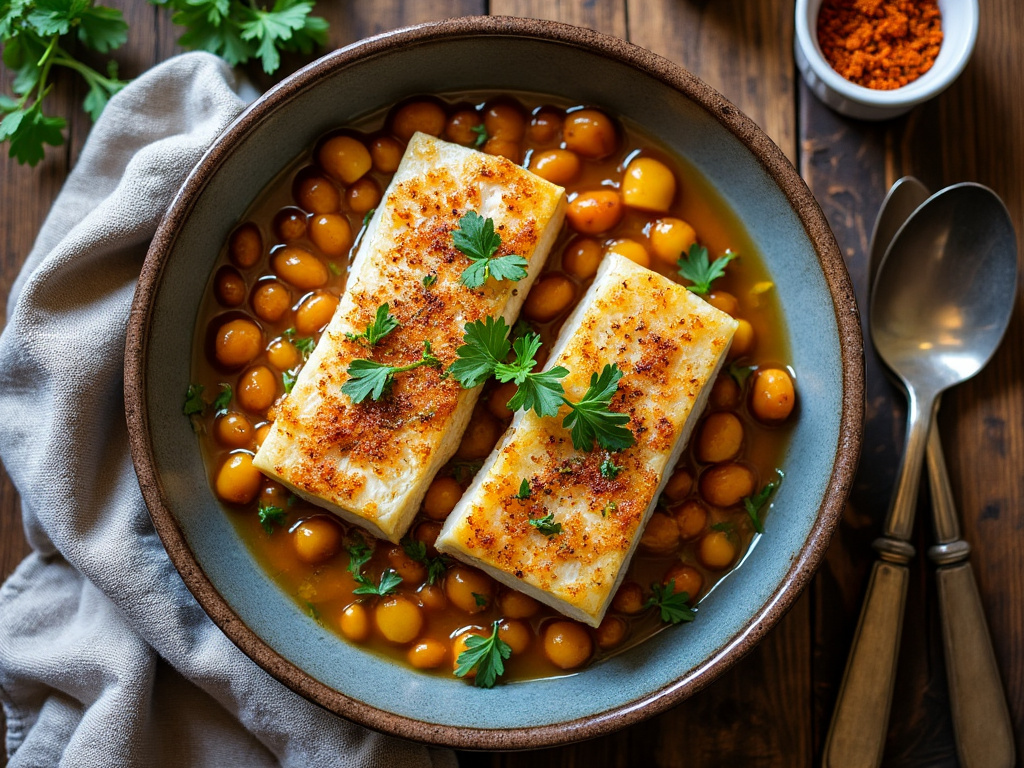
Smoked Paprika and Lemon Braised White Fish with Saffron Butter Beans
Tender cod braised over saffron-stained butter beans with smoked paprika and lemon — a one-pot weeknight dinner ready in 50 minutes.

Tuscan White Bean and Sausage Skillet with Wilted Greens
A hearty one-pan dinner of Italian sausage, cannellini beans, and wilted greens with a garlicky tomato broth. Done in 45 minutes.
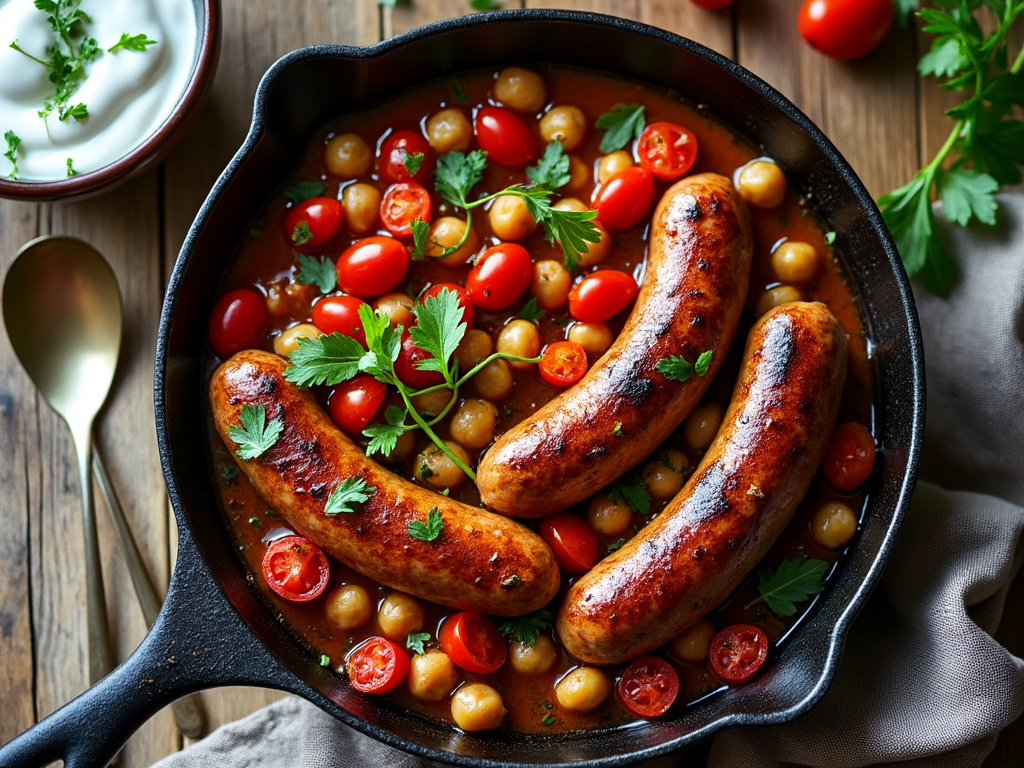
Skillet-Charred Merguez with Burst Tomatoes, Chickpeas, and Herbed Yogurt
Spiced merguez sausage, burst cherry tomatoes, and chickpeas in one skillet — topped with cool herbed yogurt. Ready in 45 minutes.