Mafaldine with Slow-Cooked Fennel Sausage, Nduja, and Burrata
Mafaldine pasta with slow-cooked fennel sausage, spreadable nduja, and torn burrata. Rich, spicy, and ready in under an hour.
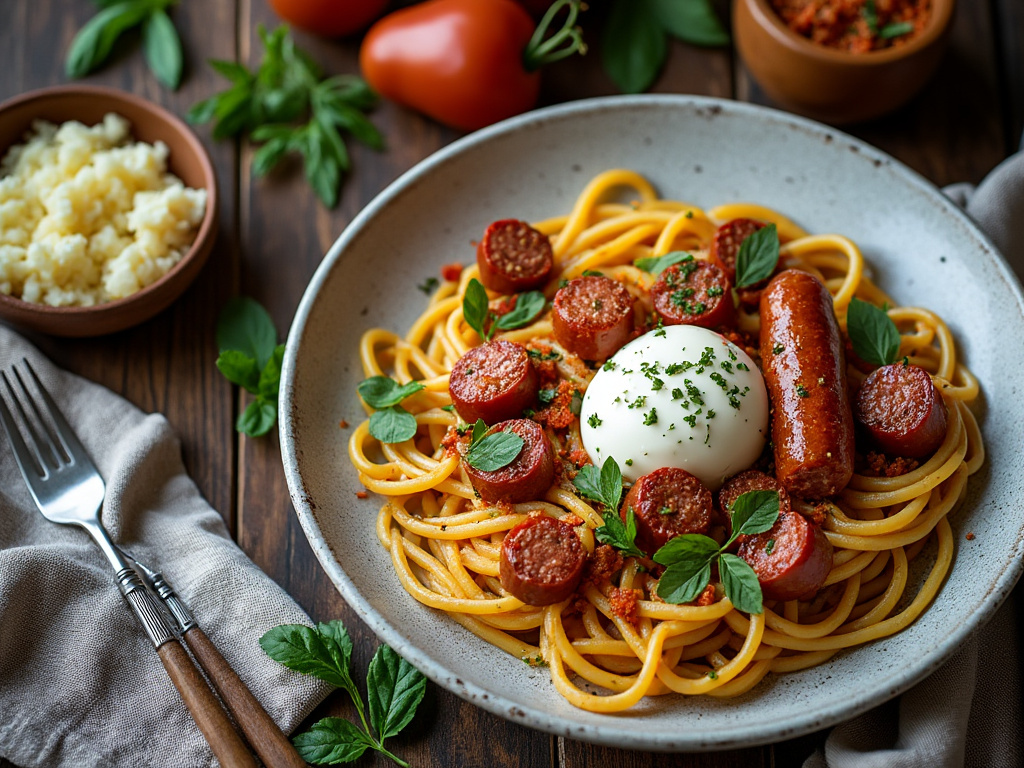
Nduja — the spreadable, fiery Calabrian salumi — melts directly into hot fat and turns a simple tomato sauce into something deeply red, porky, and genuinely spicy. That's the move here. Combined with crumbled fennel sausage and finished with torn burrata, this is a pasta with real backbone: fat, heat, acid, and cream all working together in the same bowl.
Mafaldine's ruffled edges grip the sauce better than rigatoni or penne would — every ribbon picks up pork, oil, and tomato in equal measure. This is a Friday-night dinner for four, or an impressive but totally manageable dinner party first course for six. If your sauce gets too thick before the pasta finishes cooking, splash in a quarter cup of pasta water and stir hard — it'll come right back together.
Ingredients
- ▸ 12 oz mafaldine pasta
- ▸ 3 tbsp extra-virgin olive oil
- ▸ 12 oz fennel pork sausage (casings removed)
- ▸ 2 oz nduja
- ▸ 1 medium yellow onion, finely diced
- ▸ 4 garlic cloves, thinly sliced
- ▸ 1/2 tsp chili flakes
- ▸ 1/2 tsp fennel seeds
- ▸ 1/4 cup dry white wine
- ▸ 1 can (14 oz) whole San Marzano tomatoes, crushed by hand
- ▸ 1/2 tsp Diamond Crystal kosher salt, plus more for pasta water
- ▸ 1/4 tsp freshly ground black pepper
- ▸ 1/2 tsp sugar
- ▸ 8 oz fresh burrata (2 balls)
- ▸ 1/4 cup reserved pasta water
- ▸ 1/4 cup fresh basil leaves, torn
- ▸ 2 tbsp high-quality extra-virgin olive oil, for finishing
🛒 Links may earn us a small commission at no cost to you.
Recommended Gear
🛒 We may earn a small commission at no extra cost to you. We only recommend gear we'd use ourselves.
Instructions
Prep
- 1. Bring a large pot of water to a rolling boil — salt it aggressively with at least 2 tablespoons of kosher salt. The water should taste like mild seawater. Set aside a ladle or measuring cup next to the stove to catch pasta water before draining.
- 2. Remove fennel sausage from its casings by slitting them lengthwise and pulling the meat free. Break the sausage into rough, uneven chunks with your fingers — irregular pieces brown more interestingly than uniform crumbles. Set aside. Measure out the nduja and have it near the stove; it melts fast once it hits heat.
Build the Sauce
- 1. Heat 3 tablespoons of olive oil in a 12-inch skillet over medium-high heat until it shimmers and flows easily across the pan, about 90 seconds. Add the sausage in a single layer — resist the urge to move it immediately. Let it sear undisturbed for 3-4 minutes until the bottom side is deeply golden-brown and releases from the pan on its own.
- 2. Break the sausage apart with a wooden spoon and continue cooking, stirring occasionally, for another 3 minutes until cooked through with a mix of browned and crumbled pieces. The pan should smell like rendered pork fat and toasted fennel. Use a slotted spoon to transfer the sausage to a plate, leaving the drippings in the pan.
- 3. Reduce heat to medium. Add the onion to the same pan and cook, stirring every 2 minutes, for 6-8 minutes until the onion is soft, translucent, and just starting to turn pale gold at the edges. Don't rush this step — you want sweetness, not raw bite.
- 4. Add the sliced garlic, chili flakes, and fennel seeds directly to the onion. Cook, stirring constantly, for 60-90 seconds until the garlic is fragrant and golden — watch it carefully, it moves from golden to burnt in under 30 seconds at this heat.
- 5. Add the nduja to the center of the pan. Stir and press it with the back of your spoon — it will melt into a pool of deep red-orange fat within 60-90 seconds, staining everything a vivid brick red. The pan will sizzle and smell intensely of cured pork and chili.
- 6. Pour in the white wine and let it bubble hard for 90 seconds, scraping up any browned bits from the bottom of the pan. Add the crushed San Marzano tomatoes (crush them fully in the can with your hand before adding), sugar, salt, and black pepper. Stir to combine. Return the browned sausage to the pan.
- 7. Reduce heat to medium-low and simmer the sauce, uncovered, for 18-20 minutes, stirring every few minutes. The sauce should thicken noticeably — when you drag your spoon through the center, the line should hold for a full second before the sauce closes in. Taste and adjust salt.
Cook the Pasta and Finish
- 1. While the sauce simmers, drop the mafaldine into the boiling salted water and cook until 2 minutes shy of the package's al dente time — the pasta should still have a chalky center when you bite it. Before draining, scoop out at least 1/2 cup of starchy pasta water.
- 2. Drain the pasta and transfer directly to the skillet with the sauce over medium heat. Add 1/4 cup of the reserved pasta water. Toss aggressively with tongs for 2-3 minutes until the pasta finishes cooking in the sauce and everything is glossy and cohesive — the pasta should look lacquered, not soupy.
- 3. Remove from heat. Drizzle with 2 tablespoons of finishing olive oil and scatter the torn basil over the top.
Serve
- 1. Divide the pasta into four wide, shallow bowls. Tear each ball of burrata in half and nestle one half on top of each serving — the cream inside will spill over the hot pasta as you set it down. Add a few more basil leaves, a crack of black pepper, and a thin thread of olive oil over the burrata. Serve immediately while the burrata is still cold against the hot pasta.
Cook's Notes
- Don't over-crumble the sausage — leaving some larger, ragged chunks means you get occasional bites of concentrated, browned pork rather than a uniform meat sauce.
- The nduja fat is bright red and will stain cookware and clothing; have a paper towel nearby and be mindful when stirring.
- Burrata must go on at the very last second — it should be cold from the refrigerator so it provides temperature contrast against the hot pasta. If you tear it into the sauce, it will dissolve into a grainy mess.
- If your sauce reduces too quickly and looks dry before the pasta is done, add pasta water a tablespoon at a time to loosen it — do not add plain water, which will dilute flavor.
- Mafaldine can be finicky to stir without breaking; use wide tongs rather than a spoon to toss it in the pan.
Pro Tips
- → The single most important step is the initial sausage sear — if you crowd the pan or stir too early, the meat steams instead of browns. Brown sausage equals fond on the pan; fond equals flavor in the sauce. Use a pan that's actually hot before the meat goes in.
- → If the sauce breaks and looks greasy rather than emulsified, you're missing starch: add 2 tablespoons of pasta water and stir hard over medium heat for 30 seconds. The starch bonds fat and water back into a glossy, unified sauce.
- → Nduja varies significantly by brand in salt and heat level — Tutto Calabria and Nduja Artisans are the two most consistent brands in U.S. supermarkets. Taste the sauce after adding the nduja before adding any more salt; some brands are aggressively salted.
- → Finishing the pasta in the sauce (rather than dumping sauce over drained pasta in a bowl) is non-negotiable for proper texture. Those final 2-3 minutes in the pan allow the pasta to absorb the sauce and the starch to thicken the remaining liquid into a coating — not a puddle.
- → If you're making this for guests, cook everything through step 7 (finished sauce, sausage back in) and hold it on the lowest heat setting. Drop the pasta to order and finish in the pan just before serving — the sauce holds for 30-40 minutes without issue.
- → White wine adds acidity and deglazes the pan — don't skip it even if you're cooking for someone avoiding alcohol, since it cooks off almost entirely. A dry vermouth like Noilly Prat is a strong substitute and adds a faint herbal note that complements the fennel seeds.
What to Serve With This
A lightly chilled Cerasuolo d'Abruzzo — the dry, salmon-pink rosé from central Italy — cuts through the fat from the nduja and sausage without overwhelming the spice. It has enough acidity to mirror the tomatoes and enough body to stand up to the burrata. If you'd rather go red, a Frappato from Sicily works beautifully: low tannin, bright cherry, and an earthy quality that echoes the fennel.
For beer, a crisp Italian lager like Nastro Azzurro or Peroni acts as a palate cleanser between bites of rich pork and cream. The carbonation scrubs the fat off your tongue, which is exactly what you want with a sauce this unctuous. Avoid anything hoppy — IPAs will fight the chili heat in the nduja.
On the table alongside: a simple radicchio salad dressed with red wine vinegar, a pinch of sugar, and good olive oil. The bitter leaves are a textural and flavor contrast to the richness of the pasta. A loaf of crusty semolina bread is mandatory for swiping the bowl clean — look for a Sicilian-style loaf at your local Italian bakery if you can find one.
If you're skipping alcohol, a glass of San Pellegrino with a squeeze of blood orange achieves the same fat-cutting effect as the rosé: acid and bubbles doing the work.
Variations & Substitutions
For a dairy-free version, skip the burrata and finish instead with 2 tablespoons of good extra-virgin olive oil drizzled at the table. The sauce is rich enough on its own that you won't miss the cream — just make sure your pasta water is well-salted and you're using a generous hand with the olive oil throughout. Nduja is naturally dairy-free, so no swap needed there.
If nduja is unavailable (check Italian delis or Whole Foods — it's increasingly common), substitute 2 oz of finely chopped Calabrian chilies in oil plus an extra tablespoon of olive oil. You'll lose some of the fermented, spreadable pork quality, but the heat level will be comparable. A teaspoon of smoked paprika stirred in at the same stage helps approximate that deep, cured-meat flavor.
For a vegetarian version, drop both the sausage and nduja entirely. Instead, blister 6 oz of quartered cherry tomatoes in the pan with 3 tablespoons of olive oil and 1 teaspoon of chili flakes until they collapse and char slightly, about 8 minutes. Add one 14 oz can of San Marzano tomatoes and proceed as written. The burrata still anchors the dish; a drizzle of calabrian chili oil at the end brings the heat back.
To scale up for six, increase pasta to 1.5 lbs, sausage to 1 lb, nduja to 3.5 oz, and tomatoes to two 14 oz cans. Use a 12-inch skillet or wide Dutch oven — you need surface area for the sausage to brown rather than steam.
Frequently Asked Questions
Where do I find nduja? ▼
Nduja is sold at most Whole Foods, Italian delis, and specialty grocers — look for it near the cured meats or salumi section. Online retailers like Calabria Food Co. or Amazon carry it as well. It comes in a casing or a jar; both work here, though the casing variety is more common and easier to portion.
Can I use a different pasta shape? ▼
Yes — rigatoni, paccheri, or pappardelle all work well with this sauce. Avoid thin pasta like spaghetti or angel hair; the sauce is too chunky and heavy to coat delicate strands properly. Mafaldine is the first choice because the ruffled edges act like little sauce catchers.
Can I make this sauce ahead of time? ▼
Yes. Cook the sauce through step 7 (before adding pasta), cool completely, and refrigerate for up to 3 days. Reheat over medium-low with a splash of water before adding your freshly cooked pasta. Do not add the burrata to the reheated sauce — always tear it on fresh at serving.
How do I store leftovers? ▼
Store leftover pasta (without burrata) in an airtight container in the refrigerator for up to 2 days. Reheat in a skillet over medium heat with 2 tablespoons of water or chicken stock, stirring frequently until hot. The sauce will tighten in the fridge — the added liquid is non-negotiable for texture.
Can I freeze this dish? ▼
Freeze the sauce only — not assembled pasta, and never with burrata. Freeze the sausage-nduja tomato sauce in a zip-lock bag or container for up to 2 months. Thaw overnight in the refrigerator and reheat gently on the stove. Cook fresh pasta when ready to serve.
How spicy is this dish? ▼
With 2 oz of nduja, this registers as medium-hot — noticeable heat that builds with each bite but isn't overwhelming. Reduce nduja to 1 oz for a milder result, or increase to 3 oz if you want genuine fire. The burrata cools the heat considerably at the table.
What if I can't find mafaldine? ▼
Mafaldine (also sold as mafalda or reginette) is available at most Italian grocery stores and some larger supermarkets. If unavailable, substitute pappardelle — it has a similar wide, flat surface and performs well with chunky meat sauces. Cook pappardelle 1-2 minutes less than mafaldine since it's thinner.
Can I use sweet Italian sausage instead of fennel sausage? ▼
Sweet Italian sausage works fine; the flavor will be slightly less anise-forward. If using sweet sausage, add an additional half teaspoon of fennel seeds to the pan with the garlic and onion to approximate that flavor. Hot Italian sausage is also a good choice and amplifies the heat alongside the nduja.
My sauce looks too oily — what happened? ▼
The nduja releases a significant amount of red fat when it melts — this is normal and expected. If it looks separated, add 3-4 tablespoons of pasta water and stir vigorously over medium heat for 30 seconds; the starch will emulsify the fat back into the sauce. Don't drain the red oil out — it's flavor.
Can I substitute fresh tomatoes for canned? ▼
In summer, yes — use 1.5 lbs of ripe San Marzano or Roma tomatoes, crushed by hand. Peel them first by scoring an X and blanching in boiling water for 30 seconds, then shocking in ice water. Outside peak season, stick with canned whole San Marzano tomatoes; they'll outperform most fresh tomatoes available year-round.
Enjoyed this recipe?
Daily Home Cookery is self-funded. If something you cooked here made dinner a little better, a coffee keeps the kitchen running.
☕ Buy me a coffeeYou Might Also Like
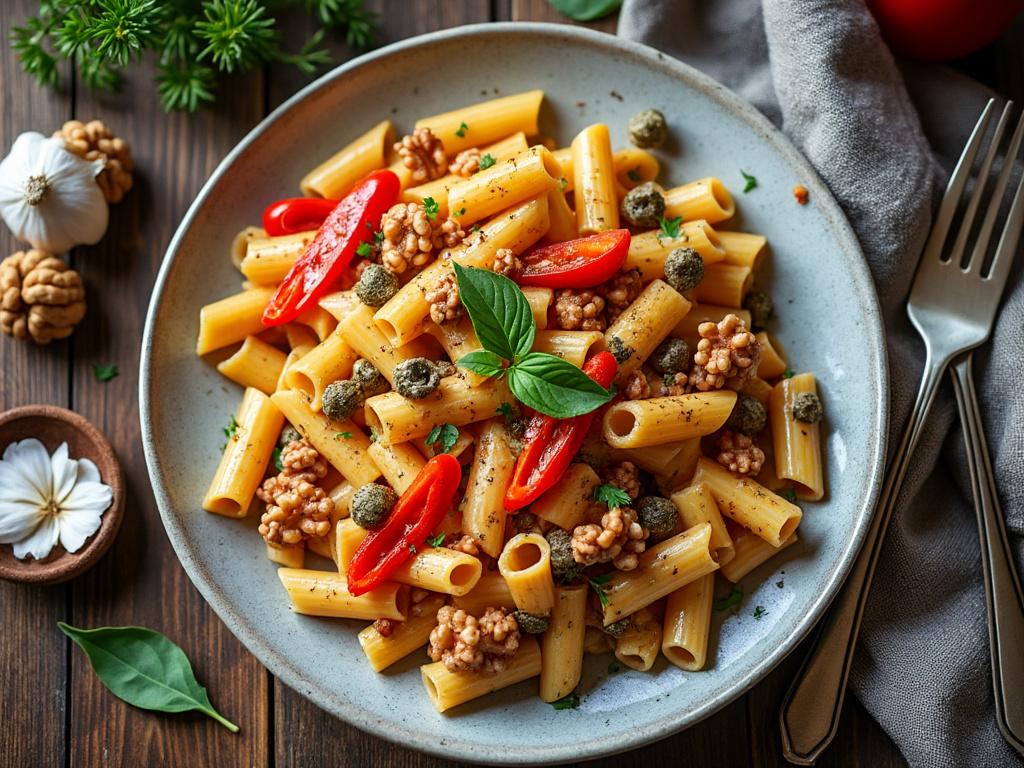
Creamy Roasted Red Pepper and Walnut Pasta with Crispy Capers
A bold, nutty pasta sauce built on charred peppers and toasted walnuts — weeknight-fast, pantry-friendly, and completely vegetarian.
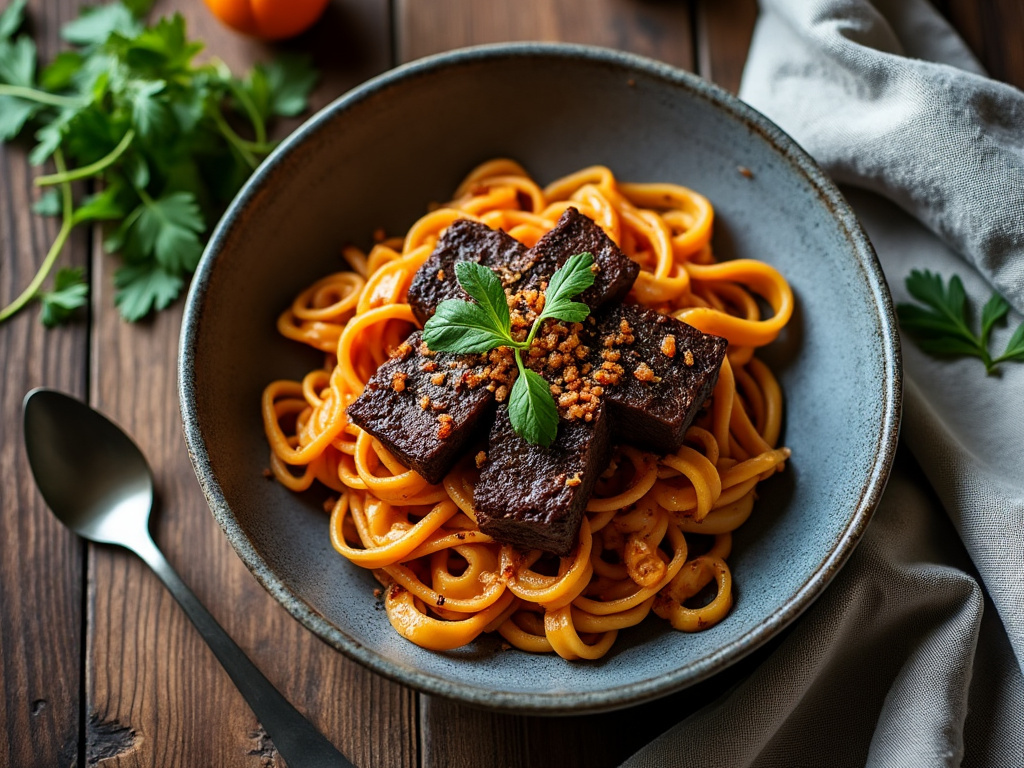
Gochujang Braised Beef Short Rib Ragu with Pappardelle and Crispy Shallots
Deep, sticky short rib ragu with gochujang heat and wide pappardelle. A slow braise that pays off hard on a weekend dinner table.
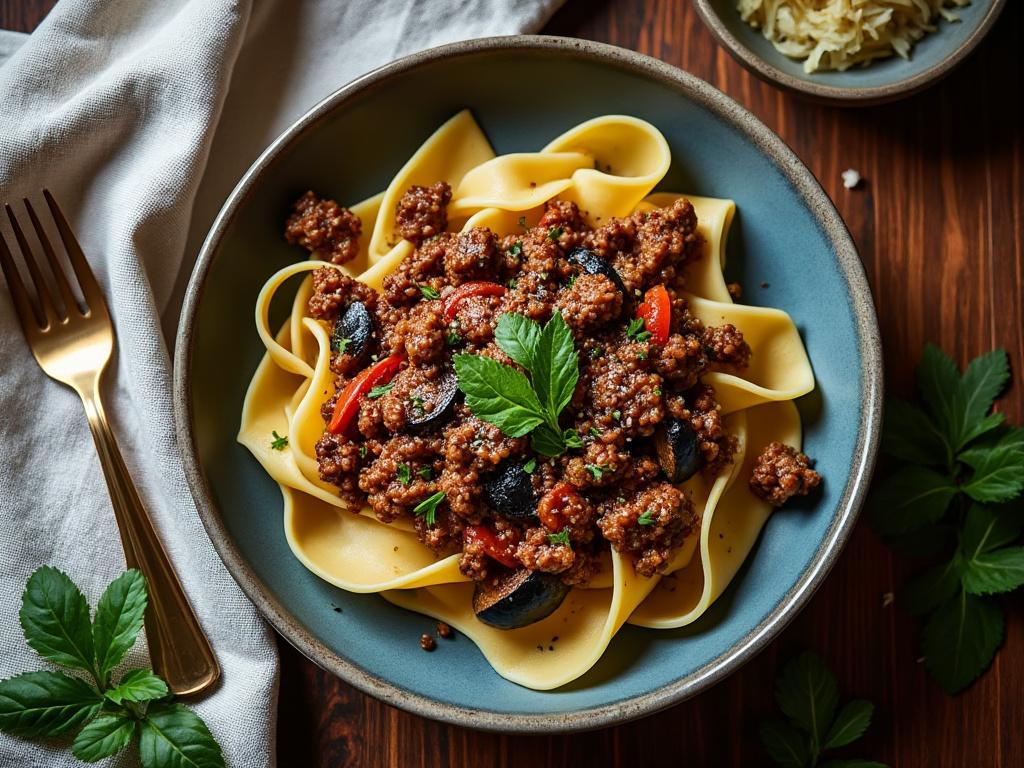
Smoky Eggplant and Lamb Bolognese
Ground lamb and charred eggplant make a deeply savory bolognese. Rich, meaty sauce with pappardelle — ready in under 80 minutes.