Mediterranean Quinoa Bowl
A meal-prep-friendly Mediterranean quinoa bowl with chickpeas, Kalamata olives, feta, and a sharp lemon-oregano dressing. Ready in 30 minutes.
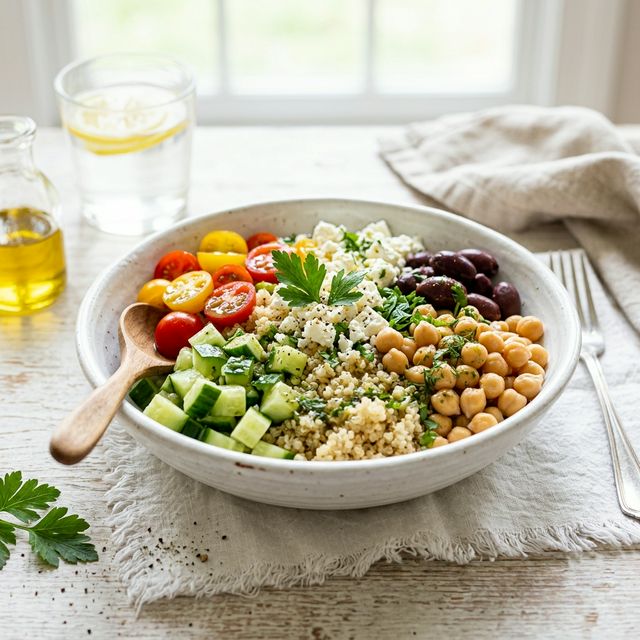
This Mediterranean quinoa bowl is a no-heat-required assembly job once the quinoa cools — which makes it one of the most practical things you can cook on a Sunday for the week ahead. The move that actually makes it work is the dressing: lemon juice and olive oil whisked with dried oregano and poured over everything while the quinoa is still slightly warm. Warm grain absorbs dressing far better than cold, so you get seasoning all the way through instead of a bland base with a salty top layer.
The result is chewy, briny, and acidic with creamy pockets of feta breaking through. Kalamata olives and chickpeas give it enough substance to stand as a full meal, not a side salad. This works equally well as a weeknight dinner or portioned into containers for four days of lunches. One thing to watch: if your quinoa turns out waterlogged or mushy, you used too much water or didn't let it steam off the heat — next time, pull the lid at 15 minutes and let it sit uncovered for 5 minutes before fluffing.
Ingredients
- ▸ 1 cup quinoa
- ▸ 1 can (15 oz) chickpeas, drained
- ▸ 1 cucumber, diced
- ▸ 1 pint cherry tomatoes, halved
- ▸ 1/2 red onion, thinly sliced
- ▸ 1/2 cup Kalamata olives, halved
- ▸ 4 oz feta cheese, crumbled
- ▸ Juice of 2 lemons
- ▸ 3 tbsp olive oil
- ▸ 2 tbsp fresh parsley, chopped
- ▸ 1 tsp dried oregano
- ▸ Salt and pepper
🛒 Links may earn us a small commission at no cost to you.
Recommended Gear
🛒 We may earn a small commission at no extra cost to you. We only recommend gear we'd use ourselves.
Instructions
Cook Quinoa
- 1. Rinse quinoa. Combine with 2 cups water in a saucepan. Bring to a boil, reduce to low, cover, and cook 15 minutes. Fluff with a fork and let cool slightly.
Assemble
- 1. In a large bowl, combine quinoa, chickpeas, cucumber, tomatoes, red onion, and olives.
- 2. Whisk together lemon juice, olive oil, oregano, salt, and pepper. Pour over the bowl and toss.
- 3. Top with crumbled feta and fresh parsley.
Cook's Notes
- Toast dry quinoa in the saucepan for 2 minutes over medium heat before adding water — it adds a slightly nutty note and reduces any lingering bitter smell.
- Slice the red onion thin and soak it in cold water for 10 minutes before adding it to the bowl if you find raw red onion too sharp — this takes the bite down without sacrificing the flavor.
- Use a block of feta packed in brine and crumble it yourself rather than buying pre-crumbled — the texture is creamier and it won't dry out the bowl.
- The dressing doubles well and keeps in the fridge for up to a week — make extra and use it on roasted vegetables or grain salads later in the week.
Pro Tips
- → Dress the quinoa while it's still warm, not cold. Warm grain is porous and pulls the lemon-oil dressing in; cold quinoa just gets a wet surface coating. This is the single biggest difference between a bowl that tastes seasoned and one that tastes like it was dressed as an afterthought.
- → If your lemon dressing tastes flat, it's almost always under-salted — add a pinch more kosher salt and taste again before pouring it over the bowl. You can't rescue an under-seasoned dressing once everything is tossed.
- → Don't halve the tomatoes and then let them sit at room temperature for more than 20 minutes before assembling — they'll weep liquid into the bowl and dilute the dressing. Cut them right before you need them.
- → Kalamata olives vary significantly in saltiness by brand. Taste one before you assemble and adjust the salt in your dressing accordingly. Some jars are packed in a highly salted brine and don't need any additional salt contribution from the dressing.
- → If the bowl tastes muddy or flat after assembly, a small hit of lemon zest (from the lemons you're already juicing) stirred in right before serving will sharpen everything without adding more acid volume.
- → For meal prep, layer the container with quinoa on the bottom and the watery vegetables (tomatoes, cucumber) on top — don't mix until you're ready to eat. This keeps the quinoa from getting soggy over multiple days.
What to Serve With This
Warm pita or flatbread is the most natural companion here — something like Joseph's lavash or a thick store-bought pita you've toasted directly on a gas burner until it blisters. It gives you something to scoop with and rounds out the meal without adding prep time.
For a drink, a crisp, unoaked white wine works well — Greek Assyrtiko is the obvious regional choice and its sharp acidity mirrors the lemon dressing without competing with it. If you'd rather stay with something more accessible, a dry Albariño or Vermentino does the same job. Non-alcoholic, sparkling water with a squeeze of lemon keeps the palate clean between bites.
If you're serving this as part of a larger spread, a simple grilled protein on the side makes sense — spiced chicken thighs, grilled shrimp, or lamb kofta all slot in without requiring you to rethink the bowl itself. The quinoa is filling enough that you don't need a lot.
A cold cucumber-yogurt soup or a bowl of hummus with crudités also works well as a starter if this is going to a dinner table rather than a meal-prep container. Both are cool, light, and won't fight the flavors already in the bowl.
Variations & Substitutions
This recipe is already vegetarian and naturally gluten-free, so no structural changes needed there. To make it fully vegan, drop the feta and replace it with either a good store-bought vegan feta (Violife is the most convincing option) or simply add a handful of toasted pine nuts for fat and texture. The flavor won't be identical, but the bowl still holds together.
For a protein swap, swap the chickpeas 1:1 by weight with cooked lentils (French green lentils hold their shape best), white beans, or even drained canned tuna if you're not keeping it vegetarian. Each one changes the texture slightly — tuna makes it richer, lentils make it earthier — but the dressing ratio stays the same.
Seasonally, this bowl adapts well to what's fresh. In summer, swap cherry tomatoes for heirloom tomatoes cut into rough chunks and add thinly sliced radishes. In fall, roasted butternut squash cubes folded in with the chickpeas adds sweetness and body. In winter when tomatoes are tasteless, skip them entirely and double the olives.
For scaling: this recipe doubles cleanly. Use a 10-inch deep sauté pan instead of a saucepan when cooking 2 cups of quinoa — the wider surface helps it steam evenly. Dressing scales at 1.5 tbsp olive oil and 1 lemon per cup of dry quinoa.
Frequently Asked Questions
How long does this bowl keep in the fridge? ▼
Stored in an airtight container, it keeps well for up to 4 days. The cucumber softens slightly by day 3, but the overall bowl still eats well. If you want to preserve texture longer, store the cucumber and tomatoes separately and add them when serving.
Can I make this ahead for meal prep? ▼
Yes — this is one of its strongest use cases. Cook the quinoa, make the dressing, and assemble everything except the feta and parsley. Store those separately and add them fresh when you're ready to eat. The dressing-soaked base actually improves overnight as the flavors settle.
Can I freeze this bowl? ▼
Not recommended. Cucumber and tomatoes turn watery and unpleasant after freezing and thawing. The quinoa itself freezes fine on its own, so if you want to prep ahead for longer than a week, freeze just the cooked quinoa and build the rest fresh.
My quinoa turned out mushy. What went wrong? ▼
Most likely the ratio was off or the lid came off too early. Use exactly 2 cups water per 1 cup dry quinoa, keep the lid on for the full 15 minutes on the lowest heat your burner allows, then remove from heat and let it sit covered for 5 minutes before fluffing. Opening the lid early releases the steam the grain needs to finish.
Can I use pre-rinsed quinoa and skip the rinse? ▼
Yes, brands like Bob's Red Mill sell pre-washed quinoa. If yours is labeled pre-rinsed, you can skip that step. If there's no label, rinse it — unrinsed quinoa has a bitter, soapy coating called saponin that survives cooking.
Can I use bottled lemon juice instead of fresh? ▼
You can, but fresh lemon juice is noticeably brighter here — the dressing is simple enough that every ingredient shows. If you only have bottled, start with slightly less than the recipe calls for since bottled juice is often more concentrated and sharper.
Can I serve this warm instead of at room temperature? ▼
You can serve it while the quinoa is still warm, and some people prefer it that way. Just know that warm feta gets softer and releases more moisture, and the cucumber will wilt faster. It's better at room temperature or slightly chilled.
Do I need to rinse the canned chickpeas? ▼
Yes. Drain and rinse them under cold water to remove the starchy liquid from the can, which is salty and slightly thick. It would make the dressing murky and oversalt the bowl. Pat them lightly dry with a paper towel if you want them to hold their texture better.
What's a good substitute for Kalamata olives? ▼
Castelvetrano olives are the next best option — they're buttery and mild rather than briny, which changes the flavor profile but works well. Avoid black olives from a standard salad bar can; they lack flavor and turn the bowl generic.
Can I double the recipe for a crowd? ▼
Yes, it doubles easily. Cook 2 cups of quinoa in a wide, deep pan with 4 cups of water. Double all dressing and topping ingredients. Use the largest bowl you have for tossing — a sheet pan works if you don't have a bowl big enough, just toss carefully.
Enjoyed this recipe?
Daily Home Cookery is self-funded. If something you cooked here made dinner a little better, a coffee keeps the kitchen running.
☕ Buy me a coffeeYou Might Also Like
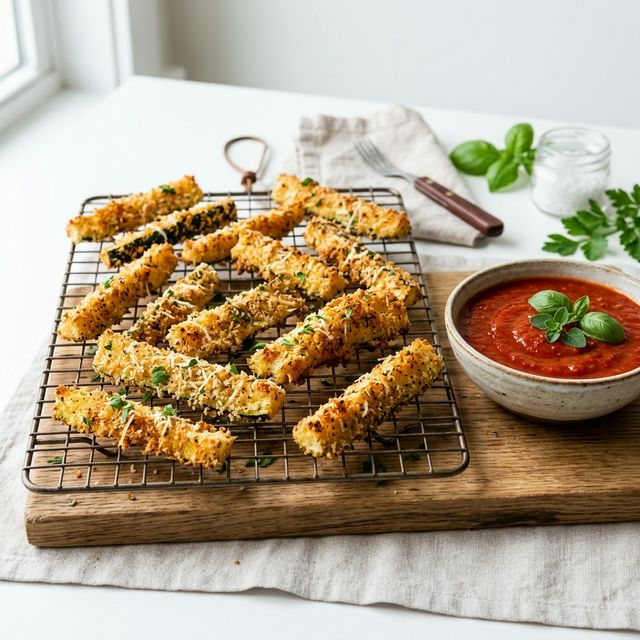
Crispy Baked Parmesan Zucchini Fries
Wire rack baking gives these parmesan-panko zucchini fries real crunch on all sides. Ready in 35 minutes. Serve with warm marinara.
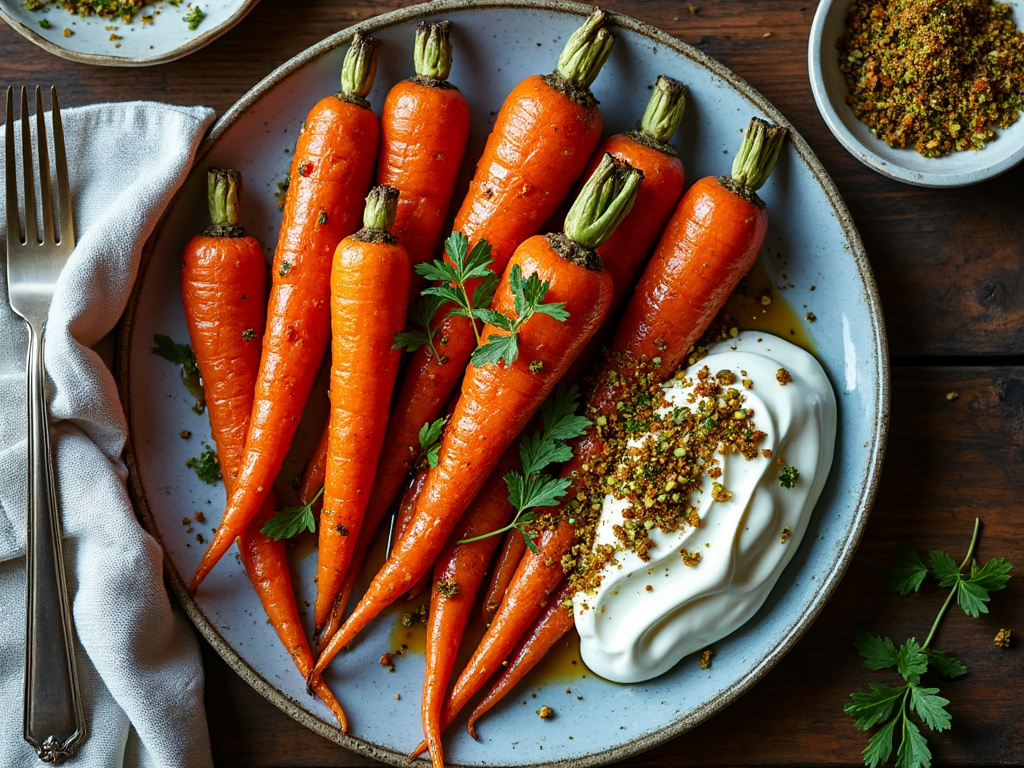
Harissa-Glazed Roasted Carrots with Whipped Ricotta and Pistachio Dukkah
Harissa-glazed carrots roasted until caramelized, served on whipped ricotta with homemade pistachio dukkah. A stunning vegetarian dinner or side.
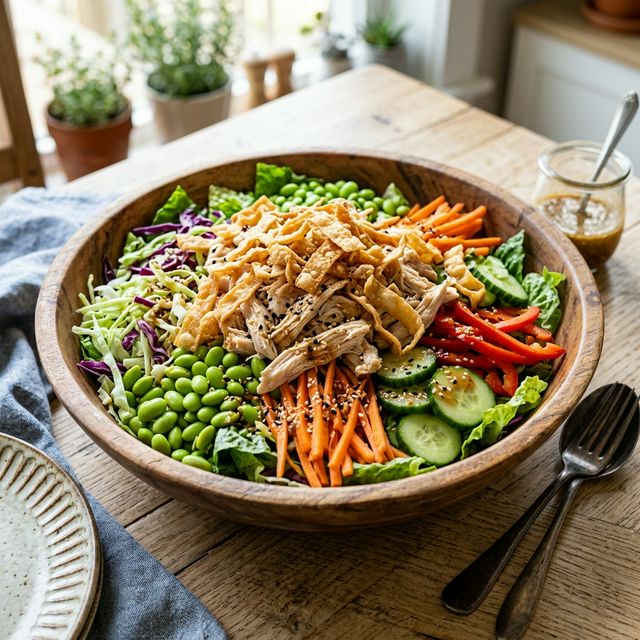
Asian Sesame Chicken Salad
Shredded rotisserie chicken, napa cabbage, edamame, and crispy wonton strips with a ginger-sesame dressing. Ready in 15 minutes, great for meal prep.