Ricotta Dumplings with Brown Butter, Sage, and Toasted Hazelnuts
Pillowy ricotta dumplings tossed in nutty brown butter with crispy sage and toasted hazelnuts. Ready in 45 minutes, no pasta machine needed.
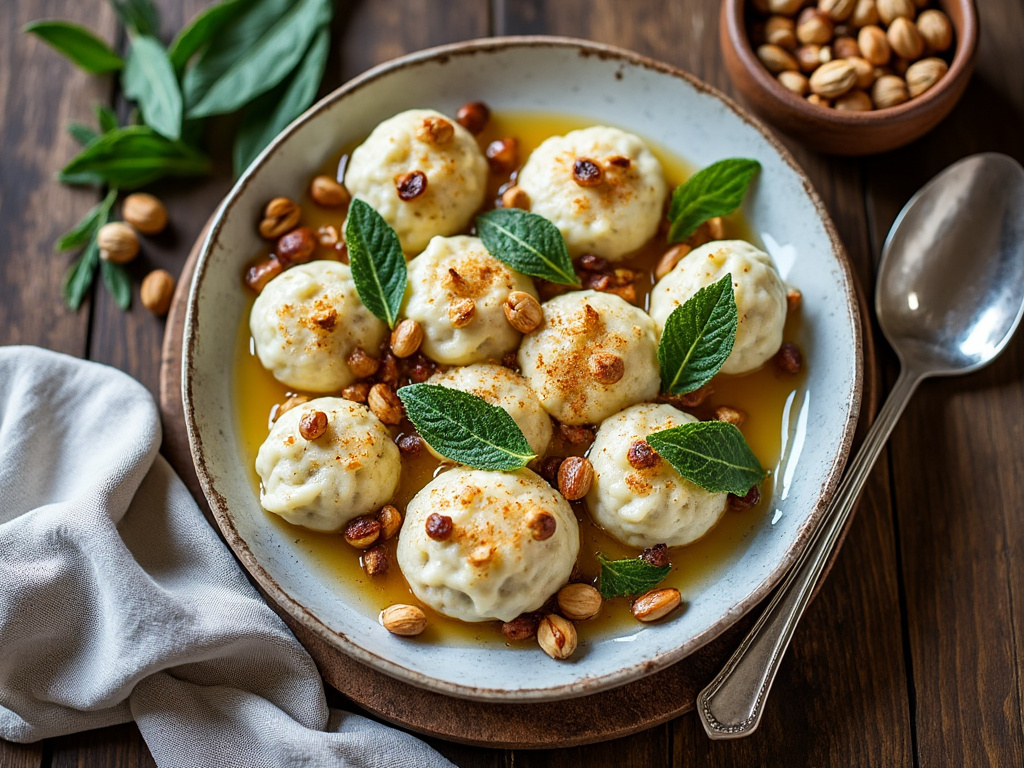
Ricotta dumplings — sometimes called gnudi — are softer and more delicate than gnocchi, and they come together without a potato ricer or any special equipment. The texture lives or dies by one thing: draining your ricotta properly. Wet ricotta makes sticky, collapsing dumplings that dissolve in the pot. Drain it for at least 15 minutes through a fine-mesh strainer and the dough will be workable, silky, and light.
The sauce is pure simplicity: brown butter, whole sage leaves fried until papery-crisp, and hazelnuts toasted until their skins crack and the kitchen smells like praline. Expect pillowy, tender dumplings with a faintly cheesy center and edges that soak up the nutty butter. This is a weeknight-capable dinner that also holds its own at a dinner party — plates land in under an hour. If your dumplings sink but don't float after 90 seconds, turn the heat up; a weak simmer is the most common failure point.
Ingredients
- ▸ 500 g whole milk ricotta, drained
- ▸ 1 large egg
- ▸ 50 g all-purpose flour, plus extra for dusting
- ▸ 40 g finely grated Parmigiano-Reggiano
- ▸ 1/2 tsp Diamond Crystal kosher salt
- ▸ 1/4 tsp freshly grated nutmeg
- ▸ 1/4 tsp freshly ground black pepper
- ▸ 90 g unsalted Kerrygold butter
- ▸ 16 fresh sage leaves
- ▸ 60 g blanched hazelnuts
- ▸ 1 tbsp fresh lemon juice
- ▸ 1/4 tsp flaky sea salt, for finishing
- ▸ 2 tbsp finely grated Parmigiano-Reggiano, for serving
🛒 Links may earn us a small commission at no cost to you.
Recommended Gear
🛒 We may earn a small commission at no extra cost to you. We only recommend gear we'd use ourselves.
Instructions
Prep
- 1. Set the fine-mesh strainer over a bowl and add the 500g of ricotta. Let it drain at room temperature for at least 15 minutes — you want it dry enough to hold a slight mound when scooped, not pool with liquid. Press it lightly with the back of a spoon once or twice to speed drainage.
- 2. While the ricotta drains, toast the 60g blanched hazelnuts in a dry small skillet over medium heat, shaking the pan every 30 seconds, for 4-5 minutes until they're deep golden-brown and smell like warm praline. Tip them onto a cutting board and roughly chop — aim for pieces no larger than a lentil. Set aside.
- 3. Bring a large wide pot of heavily salted water to a boil (it should taste like mild seawater). Keep it at a full boil while you make the dough, then reduce to a steady simmer once you're ready to cook.
Make the Dough
- 1. In a large bowl, combine the drained ricotta, 1 egg, 40g Parmigiano, 1/2 tsp kosher salt, 1/4 tsp nutmeg, and 1/4 tsp black pepper. Mix with a fork until just combined — about 20 strokes. Add the 50g flour and fold gently with a rubber spatula until no dry streaks remain. The dough should be soft and slightly tacky but hold its shape when scooped. If it slumps completely, add flour 1 tbsp at a time.
- 2. Flour a rimmed sheet pan lightly. Using two soup spoons or a cookie scoop, portion the dough into roughly 1.5-tbsp rounds — you should get 20-24 pieces. Drop each one directly onto the floured pan without rolling into tight balls. A rustic, soft shape is correct.
Cook the Dumplings
- 1. Reduce the boiling water to a steady simmer — you want active bubbles but not a rolling boil that will batter the dumplings. Working in two batches of 10-12, lower the dumplings into the water using a spider or slotted spoon. They'll sink first, then float to the surface after about 60-90 seconds. Once floating, cook for 1 minute more — they should look slightly puffed and feel set when nudged with a spoon. Transfer to a lightly oiled plate and repeat with the second batch.
Make the Brown Butter
- 1. In the 12-inch stainless skillet over medium heat, melt the 90g butter. It will foam heavily — watch for that foam to subside, which takes about 3-4 minutes. Once the foam clears, the milk solids at the bottom will turn amber and the butter will smell like toasted hazelnuts and caramel. That's your cue: immediately add the 16 sage leaves. They'll sizzle loudly and turn crisp and translucent in about 30-45 seconds. Don't walk away — sage burns fast.
- 2. Remove the skillet from heat. Add the 1 tbsp lemon juice — it will spatter, so tilt the pan away from you first. Swirl to combine. The sauce should be glossy, nutty, and smell bright from the lemon cutting through the richness.
Assemble
- 1. Working quickly, add the cooked dumplings to the skillet with the brown butter sauce. Return the pan to low heat and toss gently — or spoon the butter over the dumplings rather than stirring aggressively — for about 1 minute until everything is coated and the dumplings are heated through. They should glisten and soak up the butter at the edges.
- 2. Divide among four warm plates. Scatter the toasted hazelnuts and crispy sage leaves over the top. Finish with a pinch of flaky sea salt and the remaining 2 tbsp of grated Parmigiano. Serve immediately — ricotta dumplings soften and stick as they cool.
Cook's Notes
- Don't skip draining the ricotta — this is the single most important step. Even 10 minutes of draining makes a measurable difference in dough workability.
- Use a light-colored pan (stainless steel or enameled) for the brown butter so you can actually see the solids changing color. A dark nonstick pan hides the browning and leads to burnt butter.
- Flour your hands and spoons lightly before shaping — the dough is intentionally soft and will stick to dry hands.
- If cooking for a dinner party, boil the dumplings up to 20 minutes ahead and hold them on a lightly oiled baking sheet. Make the brown butter fresh to order — it takes 5 minutes and should be made right before serving.
- A wide pot matters here. Dumplings need room to float freely; a narrow pot causes crowding, which leads to sticking and uneven cooking.
Pro Tips
- → If the dough is too wet to scoop without smearing, chill it in the bowl for 15 minutes in the fridge — cold dough is firmer and much easier to portion.
- → The most common failure mode is a weak simmer. If your dumplings sit on the bottom for more than 2 minutes without floating, the water is too cool. Turn up the heat; a timid simmer isn't enough to cook the egg in the dough and set the structure.
- → Brown butter continues cooking off the heat — pull the pan the moment the solids hit deep amber and add the sage immediately. The residual heat finishes the browning while the sage crisps.
- → If the sauce looks greasy and separated rather than glossy when you add the lemon juice, add 1-2 tbsp of the hot pasta water and swirl vigorously. The starchy water emulsifies the butter back into a cohesive sauce.
- → For the best texture, don't use pre-grated Parmigiano from a can. The cellulose coating on pre-grated cheese interferes with how the dough binds — grate it fresh on the smallest holes of a box grater.
- → If you're scaling this recipe up for 8 people, make two separate batches of dough rather than doubling into one bowl. A larger volume makes the dough harder to mix evenly without overworking it, which toughens the dumplings.
What to Serve With This
A crisp white wine cuts right through the richness of the brown butter. Reach for a Friulian Pinot Grigio — something with mineral backbone and a slight savory edge, like Livio Felluga — rather than a fruit-forward California style. The wine's acidity resets the palate between bites. Alternatively, a dry Chenin Blanc from the Loire Valley (Savennières or a good Vouvray sec) has the waxy, nutty quality that echoes the hazelnut in the dish without competing.
For beer drinkers, a saison works well here. The style's natural peppery, slightly funky character complements the sage, and the carbonation does the same palate-cleansing work as the white wine. Avoid anything hoppy — IPAs will clash with the delicate dairy in the dumplings.
On the plate, serve alongside a bitter green salad — radicchio dressed with a sharp red wine vinaigrette and shaved Parmigiano works especially well. The bitterness and acidity of the salad balance the fat-forward dumplings. Avoid starchy or creamy sides; you don't need more richness on the table.
For a non-alcoholic option, sparkling water with a squeeze of Meyer lemon and a few fresh sage leaves muddled in is clean and genuinely refreshing. The effervescence and citrus lift do the same structural work as wine without feeling like a compromise.
Variations & Substitutions
For a gluten-free version, substitute the all-purpose flour with an equal weight (50g) of fine white rice flour. The dumplings will be slightly more fragile — handle them with a slotted spoon rather than a spider when transferring. The texture is marginally denser but still holds together well. Don't use almond flour; it's too coarse and the fat content makes the dough unworkable.
To make these dairy-free, swap the ricotta for a firm, well-drained cashew ricotta (store-bought or homemade from soaked cashews blended with lemon juice and nutritional yeast). Reduce the flour to 40g since cashew ricotta tends to be drier. Use vegan butter — Miyoko's cultured version browns properly, unlike most others — and skip the Parmigiano or use a tablespoon of nutritional yeast in the dough instead.
For a flavor variant, add 2 tbsp of finely chopped sun-dried tomatoes and 1 tsp lemon zest to the dumpling dough. Swap the brown butter sauce for a simple warm cherry tomato and caper situation: halve 200g cherry tomatoes, blister them in 2 tbsp olive oil, add 1 tbsp capers, and spoon directly over the cooked dumplings. This summer version skips the hazelnuts entirely.
Scaling up: this recipe doubles cleanly. Use two pots for boiling — overcrowding drops the water temperature and causes sticking. Make and refrigerate the shaped dumplings up to 4 hours ahead, uncovered on a lightly floured tray.
Frequently Asked Questions
Can I make the dumpling dough ahead of time? ▼
Yes, but only by a few hours. Shape the dumplings and refrigerate them on a lightly floured tray, uncovered, for up to 4 hours. Any longer and the moisture from the ricotta starts to make them sticky and difficult to handle. Don't freeze raw dumplings — the texture degrades significantly when thawed.
Can I freeze cooked ricotta dumplings? ▼
You can, but results are mediocre. The texture turns slightly gummy after freezing and reheating. If you must, freeze them in a single layer on a parchment-lined sheet, then transfer to a zip-lock bag once solid. Reheat directly from frozen in gently simmering salted water for about 3-4 minutes. Don't microwave them.
My dumplings are falling apart in the water. What went wrong? ▼
Almost certainly the ricotta was too wet. Even 'whole milk' ricotta from most supermarkets holds excess liquid. Always drain through a fine-mesh strainer or cheesecloth for at least 15 minutes, pressing lightly. If the dough feels slack after mixing, add flour one tablespoon at a time until it just holds its shape when rolled.
What ricotta brand works best? ▼
BelGioioso whole milk ricotta has a consistently lower moisture content than most grocery brands and gives good results. Calabro is another solid option. Avoid Polly-O or generic store brands — they're wetter and produce sticky dough. If the only ricotta available is very wet, increase draining time to 30 minutes and squeeze gently in a clean kitchen towel.
How do I know when the brown butter is done without burning it? ▼
Watch for the milk solids at the bottom of the pan to turn deep amber — the color of iced tea. The butter will foam heavily first, then the foam subsides, and you'll see the solids. It should smell like toasted nuts and caramel. Pull the pan immediately off the heat at that point; residual heat keeps cooking it. If it smells acrid or looks black, discard and start over — burnt butter ruins the dish.
Can I use a different nut instead of hazelnuts? ▼
Yes. Toasted walnuts are the closest substitute and work very well with sage and brown butter. Pine nuts are another option — toast them in a dry skillet over medium heat, stirring constantly, for about 3-4 minutes until golden. Skip almonds; their texture is too firm and the flavor doesn't integrate as naturally.
Do I need a piping bag to shape the dumplings? ▼
No. Two lightly floured soup spoons work perfectly — scoop with one, use the other to scrape and push the dumpling into the simmering water. A small ice cream scoop (1.5 tbsp size) also works well for consistent sizing. Don't roll them extensively in your hands; warmth from your palms softens the dough and makes it sticky.
How do I reheat leftovers? ▼
The best method is to warm a skillet over medium heat with a tablespoon of butter and a splash of water. Add the cooked dumplings and let them heat through, about 2-3 minutes, turning once. The butter re-crisps the exterior slightly. Avoid microwaving if possible — it makes the texture rubbery and steams out the flavor.
Can I make this without eggs? ▼
The egg is critical here — it binds the ricotta and flour together and gives the dumplings structure. Without it, they collapse in the water. There's no reliable egg substitute for this specific recipe; the dough chemistry depends on the protein in the yolk.
Enjoyed this recipe?
Daily Home Cookery is self-funded. If something you cooked here made dinner a little better, a coffee keeps the kitchen running.
☕ Buy me a coffeeYou Might Also Like
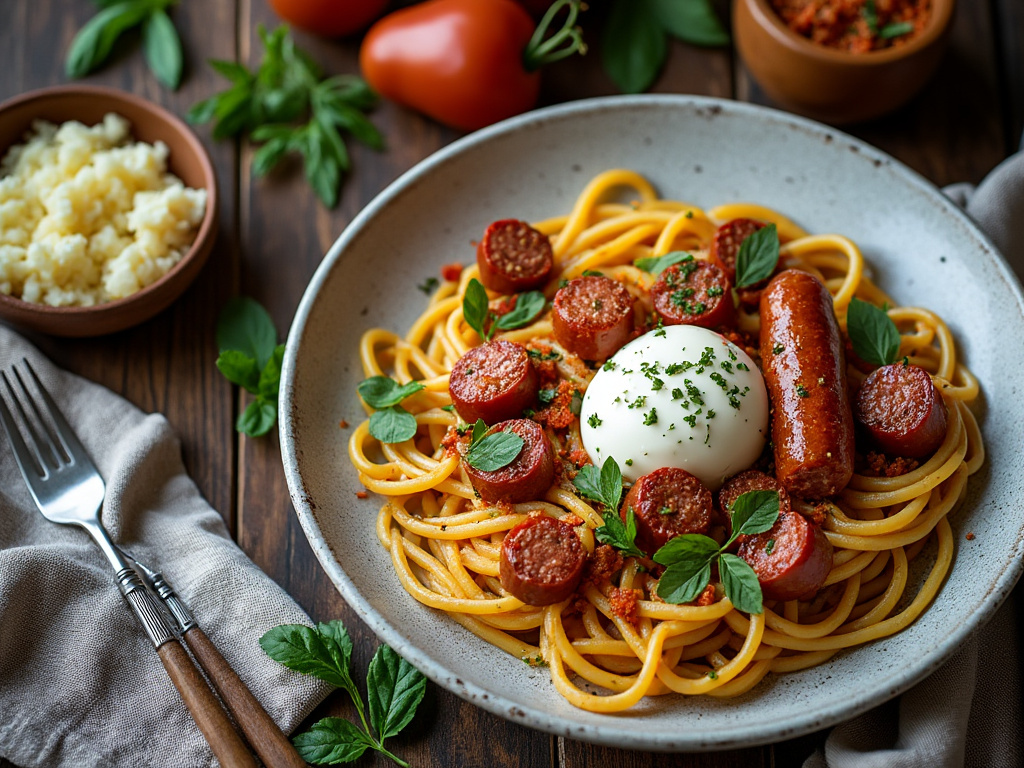
Mafaldine with Slow-Cooked Fennel Sausage, Nduja, and Burrata
Mafaldine pasta with slow-cooked fennel sausage, spreadable nduja, and torn burrata. Rich, spicy, and ready in under an hour.
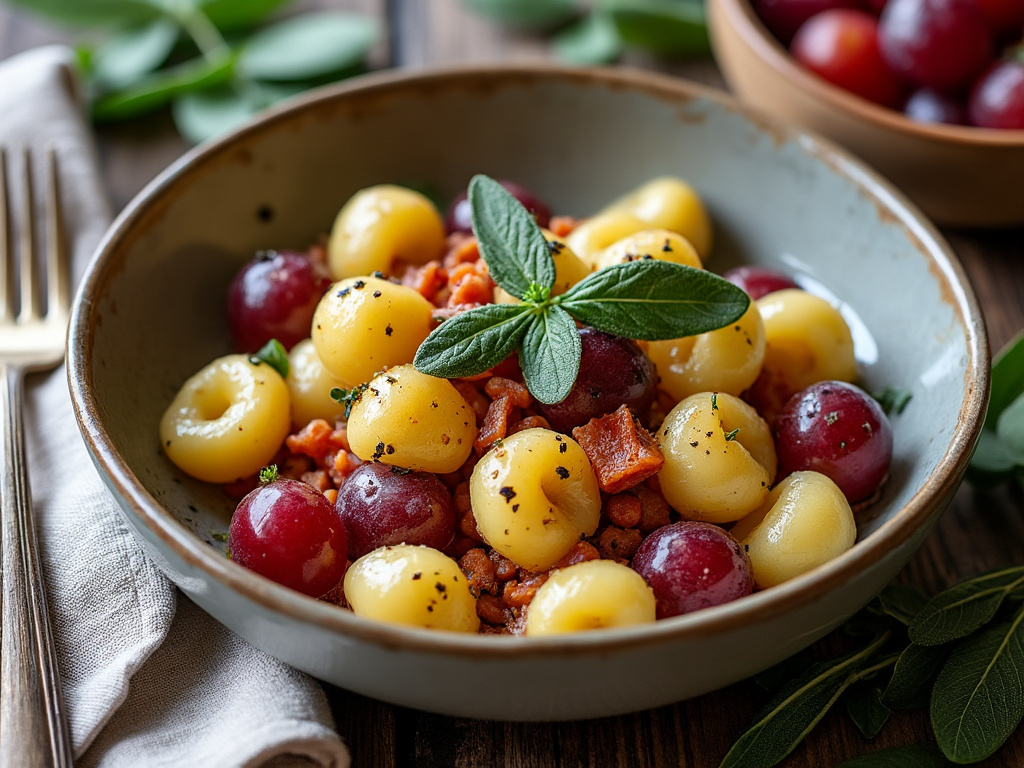
Brown Butter Gnocchi with Pancetta, Roasted Grapes, and Sage
Pan-seared gnocchi in brown butter with crispy pancetta, blistered roasted grapes, and fried sage. A 45-minute skillet dinner that actually delivers.
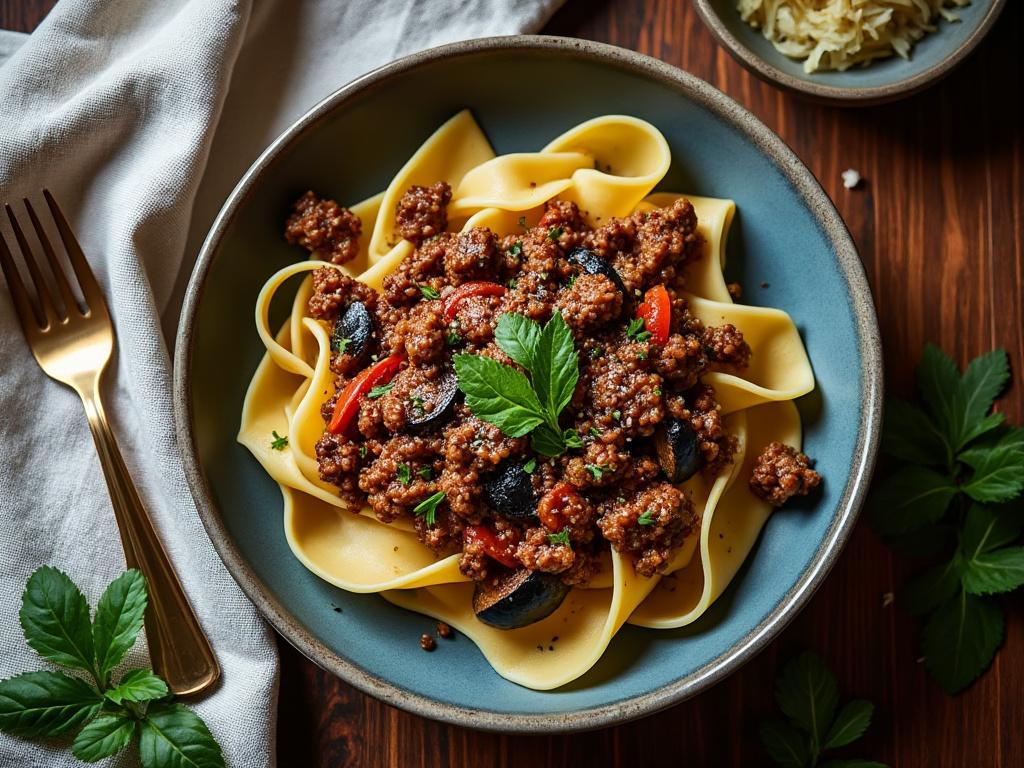
Smoky Eggplant and Lamb Bolognese
Ground lamb and charred eggplant make a deeply savory bolognese. Rich, meaty sauce with pappardelle — ready in under 80 minutes.