Skillet Creamed Corn with Crispy Bacon and Jalapeño Butter
Real creamed corn made from scratch in one skillet — sweet, smoky, spicy, and ready in 40 minutes. Crispy bacon and jalapeño butter finish it off.
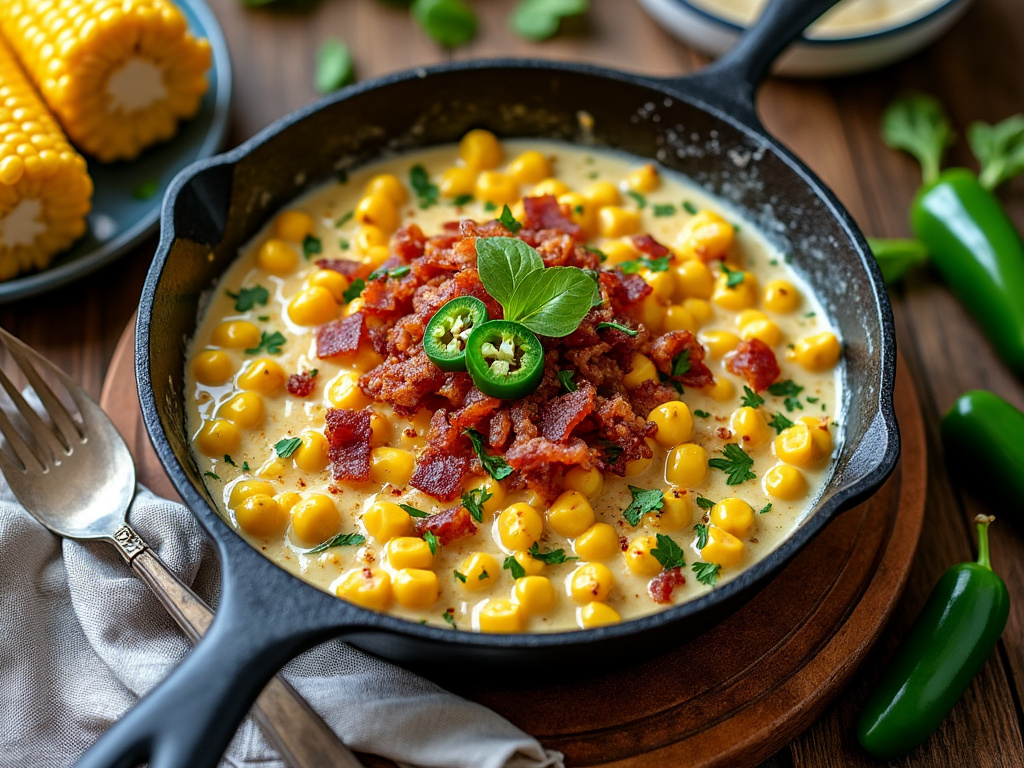
Creamed corn from a can tastes like nothing. Real creamed corn — made by scraping the milky starch directly from the cob and reducing it in a hot skillet — is a completely different dish. The corn's own liquid thickens the sauce naturally, so there's no need for flour or heavy cream. Fat rendered from bacon does the heavy lifting flavor-wise, and a compound jalapeño butter stirred in at the end adds heat and richness without muddying the corn's sweetness.
This works as a weeknight side next to grilled steak or pork chops, but it's substantial enough to serve over toasted cornbread or alongside fried eggs for a weekend brunch. Use fresh summer corn when it's in season — 6 ears is the sweet spot for 4 servings. If your corn is starchy and dull (a common February problem), add 1 teaspoon of sugar when you add the cream to compensate. If the sauce looks too thin after 8 minutes, turn the heat up to medium-high and let it reduce for another 2 minutes — the starch from the cob scrapings will tighten it fast.
Ingredients
- ▸ 6 ears fresh corn, husked
- ▸ 5 strips thick-cut bacon, cut into 1/2-inch lardons
- ▸ 2 medium shallots, finely minced (about 1/3 cup)
- ▸ 3 cloves garlic, minced
- ▸ 1/2 cup heavy cream
- ▸ 1/2 tsp kosher salt, plus more to taste
- ▸ 1/4 tsp freshly ground black pepper
- ▸ 1/4 tsp smoked paprika
- ▸ 4 tbsp unsalted butter, softened (Kerrygold preferred)
- ▸ 1 large jalapeño, seeded and very finely minced
- ▸ 1 tbsp fresh chives, finely sliced
- ▸ 1 tsp fresh lime juice
- ▸ 1/4 tsp Diamond Crystal kosher salt (for the compound butter)
🛒 Links may earn us a small commission at no cost to you.
Recommended Gear
🛒 We may earn a small commission at no extra cost to you. We only recommend gear we'd use ourselves.
Instructions
Make the Jalapeño Compound Butter
- 1. In a small bowl, combine 4 tbsp softened butter, minced jalapeño, fresh chives, lime juice, and 1/4 tsp Diamond Crystal kosher salt. Mash everything together with a fork until fully incorporated — the butter should be pale green and flecked throughout. Set aside at room temperature. This can be made up to 5 days ahead and refrigerated.
Strip and Scrape the Corn
- 1. Stand one husked ear of corn upright in the center hole of a Bundt pan. Using a sharp chef's knife, cut downward along the cob in long strokes, rotating the ear until all kernels are off — they'll fall into the pan. Repeat with all 6 ears. You should have roughly 4 to 4-1/2 cups of kernels.
- 2. Flip the knife to the dull spine and press it firmly down each stripped cob, rotating as you go, to scrape out the milky starch. Add every drop of this liquid to the bowl of kernels — it's what thickens the sauce without flour.
Render the Bacon
- 1. Place the skillet over medium heat and add the bacon lardons in a single layer. Cook, stirring occasionally, until the fat is fully rendered and the bacon is deep golden brown and crispy, 7-9 minutes — you should hear a steady sizzle and the fat should run clear in the pan. Use a slotted spoon to transfer the bacon to a paper towel-lined plate. Leave all the rendered fat in the skillet.
Build the Base
- 1. With the skillet still over medium heat and the bacon fat shimmering, add the minced shallots. Cook, stirring frequently, until softened and translucent, 3-4 minutes — they should smell sweet and slightly caramelized, not raw and sharp.
- 2. Add the minced garlic and smoked paprika. Stir constantly for 60 seconds until fragrant and the paprika darkens slightly — it should smell toasty, not bitter. If the garlic starts browning too fast, pull the pan off the heat for a few seconds.
Cook the Corn
- 1. Add all the corn kernels and their scraped starchy liquid to the skillet. Stir well to coat everything in the fat and spices. Spread into an even layer and cook over medium heat, stirring every minute or so, until the corn softens and begins to release its liquid, about 5 minutes — the mixture will look wet and slightly chalky from the starch.
- 2. Pour in the heavy cream, season with 1/2 tsp kosher salt and 1/4 tsp black pepper, and stir to combine. Raise the heat to medium-high and cook, stirring frequently, until the cream reduces and the sauce thickens enough to coat the back of a spatula, 6-8 minutes. The mixture should bubble steadily and look glossy and cohesive — not soupy, not dry.
Finish and Serve
- 1. Remove the skillet from the heat. Add the jalapeño compound butter in pieces, stirring after each addition until fully melted and incorporated — the sauce will turn silky and bright. Taste and adjust salt.
- 2. Spoon into a warm serving bowl or serve directly from the skillet. Scatter the reserved crispy bacon over the top and finish with a few extra snipped chives if you have them. Serve immediately — this dish cools quickly and thickens as it sits.
Cook's Notes
- Fresh corn is essential here. Corn starts converting sugar to starch within hours of being picked, so buy it the day you plan to cook it and keep it unhusked in the fridge until you're ready.
- Don't skip scraping the cob. The milky starch is not optional — it's the thickening agent. Press the dull spine of your knife firmly enough to see white liquid coming out.
- Make the jalapeño butter first. Having it ready means you can finish the dish in seconds and serve it immediately while it's hot.
- The dish thickens significantly as it cools. If serving buffet-style or with a delay, stir in an extra 2 tablespoons of cream just before serving to loosen it back up.
- Leftover creamed corn makes an excellent pasta sauce — toss with 8 oz of cooked rigatoni, a handful of Parmesan, and the remaining jalapeño butter.
Pro Tips
- → If the bacon is releasing steam instead of crisping, the skillet isn't hot enough — raise to medium-high until you hear an aggressive sizzle, then lower back to medium once the fat starts rendering.
- → The compound butter will break and look greasy if the skillet is still on the heat when you add it. Pull the pan off the burner completely before stirring it in; residual heat is enough to melt the butter evenly.
- → If you accidentally scorch the garlic and it turns bitter, there's no saving it — wipe out the skillet, start fresh with a tablespoon of the bacon fat, and go lower and slower. Burnt garlic bleeds through everything.
- → Stainless steel gives you better fond (the browned bits on the bottom of the pan) than nonstick, which translates to deeper flavor. Cast iron works too, but its heat retention means the cream reduces faster — watch it closely in the last 3 minutes.
- → For the smoothest, creamiest texture, pulse half the finished corn in a blender for 20 seconds, then stir it back into the skillet. This creates a range of textures — some whole kernels, some creamy purée — without any additional cream.
- → If you're using frozen corn and the sauce won't thicken even with the cornstarch slurry, the problem is usually excess water from the thawed corn. Next time, pat the thawed kernels very dry with a kitchen towel before they go in the pan.
What to Serve With This
Grilled or pan-seared pork chops are the natural partner here. The sweetness of the corn mirrors the slight sweetness in pork, and the jalapeño butter cuts the richness of the meat's fat. A simple 1-inch-thick bone-in chop seared in the same skillet before you start the corn means you can deglaze the pan with the bacon drippings and not waste a drop of flavor.
For drinks, a cold lager — specifically a Mexican lager like Modelo Especial — is the right call. Its light bitterness keeps the dish from feeling heavy. If you want wine, go with an off-dry Riesling from the Mosel; the residual sugar echoes the corn's sweetness, and the acidity slices through the butter. Non-alcoholic: sparkling water with a squeeze of lime and a pinch of Tajín keeps the palate clean between bites.
On the side, a simple green salad with an aggressive vinaigrette — sherry vinegar and Dijon — provides contrast. Something crunchy and acidic is exactly what this dish needs. Avoid starchy sides like mashed potatoes; the corn is already rich and the plate gets muddy fast.
For a full spread, serve with warm flour tortillas or skillet cornbread. The tortillas are especially good for scooping — the creamed corn works almost like a dip when the bread is fresh and hot.
Variations & Substitutions
To make this vegetarian, skip the bacon entirely and start by melting 2 tablespoons of Kerrygold butter directly in the skillet over medium heat. Add 1 teaspoon of smoked paprika to replicate the smoky depth the bacon provides. The jalapeño butter at the end still carries the dish — don't skip it. You can also add 1/4 cup of finely diced sun-dried tomatoes with the shallots for another layer of umami.
For a dairy-free version, replace the heavy cream with full-fat coconut cream (the kind that comes in a can, not coconut milk — Chaokoh is reliable). Use 3 tablespoons of refined coconut oil in place of butter in the jalapeño compound. The coconut adds a subtle sweetness that works well with the corn and jalapeño, though it shifts the dish slightly tropical. Skip it if that direction feels wrong for your menu.
If you want to push the heat further, swap the jalapeño in the compound butter for 1-2 serranos (keeping the same 2 tablespoon quantity after mincing). Serranos are significantly hotter and have a brighter, grassier flavor than jalapeños. For a smoky-sweet variation, add 1 chipotle pepper in adobo sauce, minced, directly to the skillet when you add the cream — it adds smokiness without competing with the bacon.
This recipe doubles well: use a 12-inch skillet at minimum when doubling, or split across two skillets. Cooking time stays roughly the same; the reduction just takes about 3 extra minutes.
Frequently Asked Questions
Can I use frozen corn instead of fresh? ▼
Yes, but the results are noticeably different. Frozen corn lacks the milky starch from the cob that naturally thickens the sauce. To compensate, whisk 1 teaspoon of cornstarch into your heavy cream before adding it to the skillet. Use 4 cups (about 20 oz) of frozen corn, thawed and patted dry, in place of 6 fresh ears. The flavor will be milder and less sweet than fresh corn.
How do I store and reheat leftovers? ▼
Transfer leftovers to an airtight container and refrigerate for up to 3 days. Reheat in a small saucepan over medium-low heat, adding a splash of cream or milk — about 2 tablespoons per cup of corn — to loosen it up, since the starch will have thickened further in the fridge. Stir constantly; it can scorch quickly on the bottom if you walk away.
Can I make the jalapeño butter ahead of time? ▼
Absolutely — this is one of the best make-ahead moves in the recipe. Prepare the jalapeño butter up to 5 days ahead and store it wrapped tightly in plastic wrap in the fridge, or freeze it for up to 2 months. Having it ready means the last step of the recipe takes 30 seconds instead of 5 minutes.
Can I freeze the finished creamed corn? ▼
Technically yes, but the texture suffers — the corn kernels get a bit watery after thawing, and the sauce can separate. If you need to freeze it, do so before adding the jalapeño butter. Reheat from frozen over low heat, stirring frequently, then finish with the compound butter fresh. It'll be 80% as good as the original.
What if I don't have a corn stripper or the right tool for scraping the cob? ▼
A large chef's knife and a Bundt pan work perfectly. Stand the husked ear upright in the center of the Bundt pan — the tube holds the cob steady — and run the knife downward along the cob. The pan catches the kernels and juices without them scattering across the counter. Then flip the knife to the dull spine and scrape down the cob firmly to get the milky starch.
My sauce isn't thickening — what went wrong? ▼
The most common cause is underdeveloped cob scrapings — you didn't press the knife hard enough against the cob to release the starchy milk. If you're already at the reduction stage and the sauce is thin, raise the heat to medium-high and cook, stirring frequently, for 2-3 more minutes. If it still won't tighten, whisk 1/2 teaspoon cornstarch into 1 tablespoon of cold water and stir it in — it'll thicken within 60 seconds.
How spicy is this dish? ▼
With one jalapeño in the butter and the seeds removed, the heat is mild — a gentle warmth that builds over a few bites rather than upfront spice. If you want zero heat, omit the jalapeño entirely and add 1 teaspoon of lemon zest to the butter instead for brightness. For more heat, leave the seeds in or use serranos as described in the variations section.
Can I make this without bacon? ▼
Yes — see the vegetarian variation above. If you want the bacon flavor without pork, 3 strips of turkey bacon or 2 tablespoons of rendered duck fat work as substitutes. Turkey bacon produces less fat, so add an extra tablespoon of butter to the pan to prevent the shallots from scorching.
Is this recipe gluten-free? ▼
Yes, as written, this recipe contains no gluten. All the thickening comes from the corn's natural starch. Just double-check your bacon label — some brands use additives that contain gluten, though most standard supermarket strips (like Oscar Mayer or Applegate) are gluten-free.
Can I serve this as a main dish? ▼
It's rich enough to work as a main for 2 people, especially served over toasted cornbread or alongside fried eggs. For 4 people as a main, consider adding 1 cup of cooked white beans or a handful of shrimp sautéed in the same skillet before you start the corn — both add protein without overwhelming the corn's flavor.
Enjoyed this recipe?
Daily Home Cookery is self-funded. If something you cooked here made dinner a little better, a coffee keeps the kitchen running.
☕ Buy me a coffeeYou Might Also Like
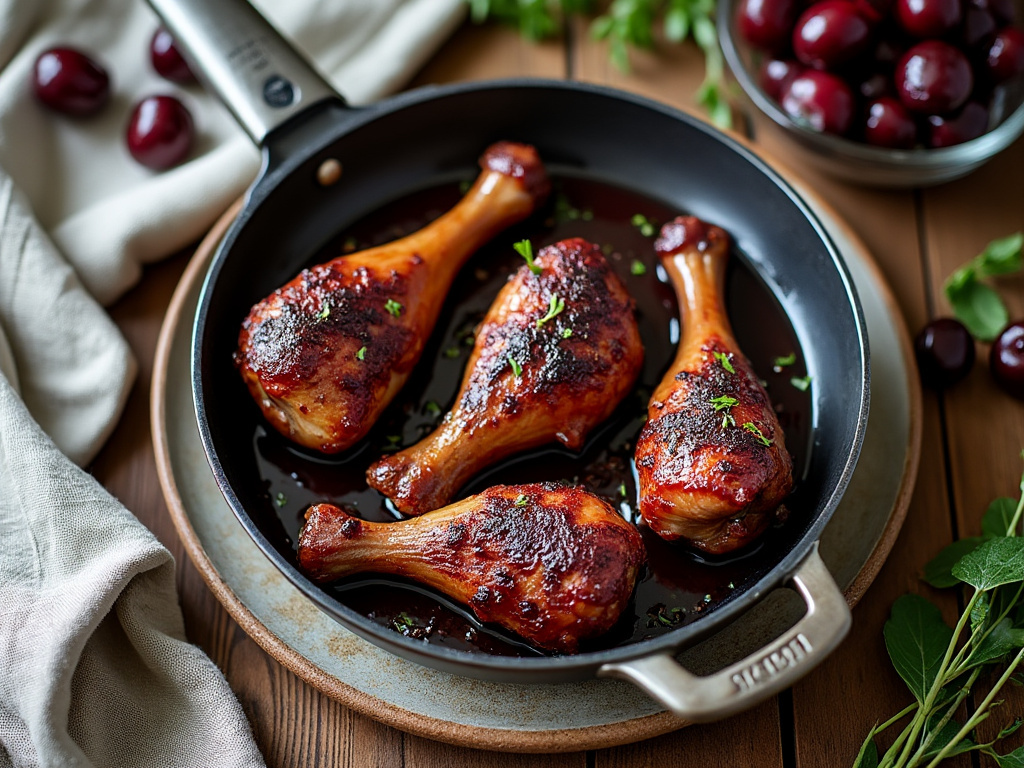
Crispy Skin Duck Legs with Cherry-Red Wine Pan Sauce
Duck legs with shatteringly crispy skin and a glossy cherry-red wine pan sauce — a restaurant-worthy dinner you can nail at home.

Butter-Poached Radishes and Spring Onions with Soft Polenta and Fried Capers
Butter-poached radishes and spring onions over creamy polenta with fried capers — an elegant, vegetarian weeknight dinner ready in 50 minutes.
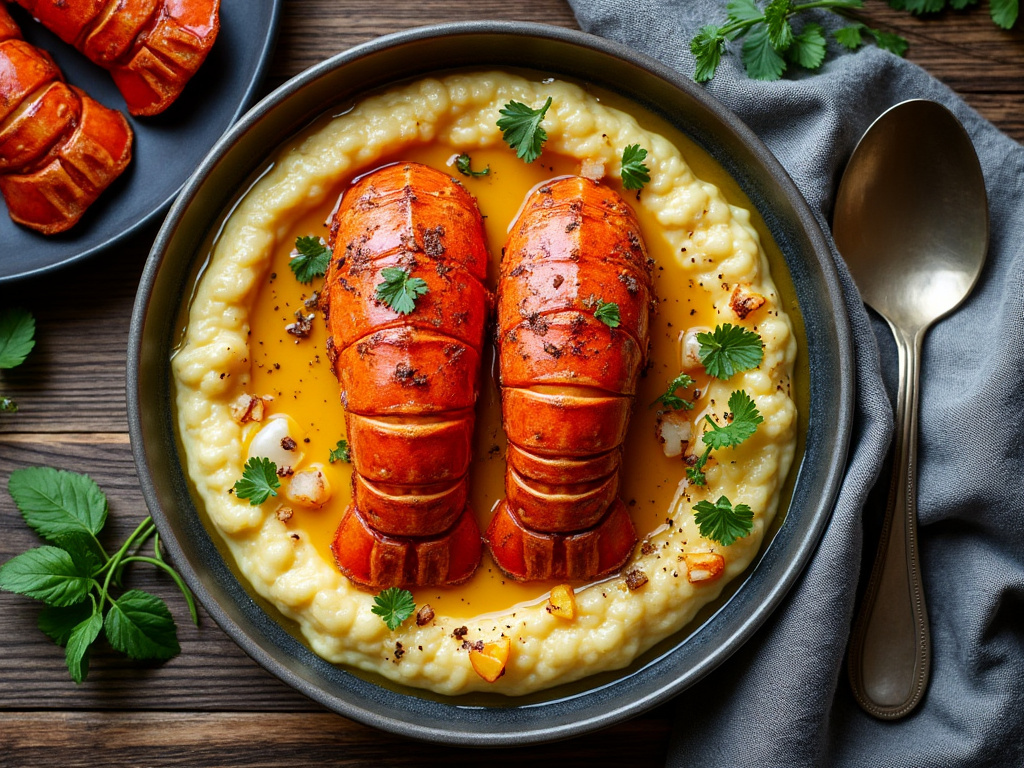
Smoked Paprika Butter Poached Lobster Tails with Saffron Corn Grits
Silky butter-poached lobster tails over saffron-scented stone-ground corn grits — a special-occasion dinner built in under an hour.