Smoked Paprika and Dill Creamed Spinach Stuffed Shells with Brown Butter Walnut Breadcrumbs
Giant pasta shells stuffed with smoked paprika ricotta and wilted spinach, baked in a garlicky cream sauce with brown butter walnut breadcrumbs.
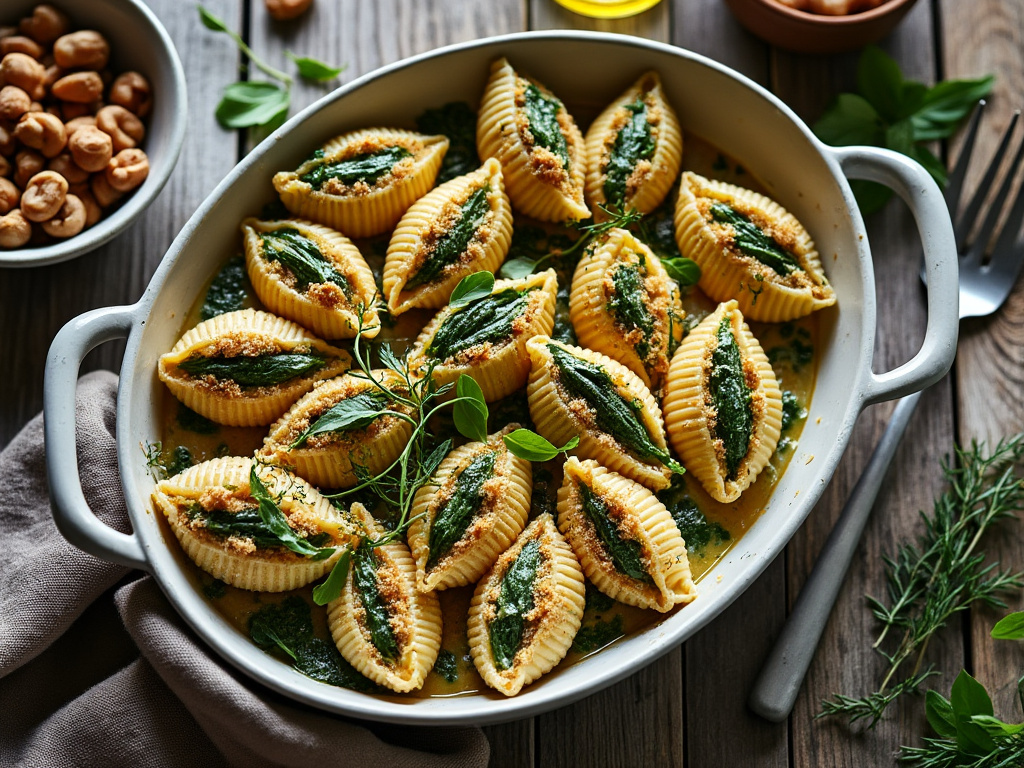
Stuffed shells are usually bland in the middle and watery at the bottom — this recipe fixes both problems. The filling combines whole-milk ricotta with sautéed spinach that's been squeezed genuinely dry (not patted, squeezed), smoked paprika, fresh dill, and a full egg yolk to bind it. The result holds its shape when you cut through the shell instead of collapsing into mush. The shells bake in a simple garlic cream sauce — just heavy cream, chicken stock, and Parmigiano — which thickens around them in the oven and prevents the rubbery texture you get when shells bake dry.
This is a confident weeknight-to-dinner-party crossover. You can stuff the shells up to 24 hours ahead and refrigerate them unbaked, then sauce and crumb them just before they go in the oven. The brown butter walnut breadcrumbs on top add crunch and a slight bitterness that cuts the richness of the filling. If the cream sauce looks thin when it goes into the pan, that's correct — it tightens significantly during the 25-minute covered bake.
Ingredients
- ▸ 24 jumbo pasta shells (from a 12-oz box, Barilla or De Cecco)
- ▸ 1 tbsp kosher salt (for pasta water)
- ▸ 1 tbsp olive oil
- ▸ 10 oz fresh baby spinach
- ▸ 4 garlic cloves, minced (divided)
- ▸ 1 1/2 cups whole-milk ricotta
- ▸ 1 large egg yolk
- ▸ 1 1/2 tsp smoked paprika
- ▸ 2 tbsp fresh dill, finely chopped
- ▸ 1/2 tsp freshly grated nutmeg
- ▸ 3/4 tsp Diamond Crystal kosher salt (for filling)
- ▸ 1/2 tsp freshly ground black pepper
- ▸ 1/2 cup finely grated Parmigiano-Reggiano (divided)
- ▸ 1 cup heavy cream
- ▸ 3/4 cup low-sodium chicken stock
- ▸ 2 tbsp unsalted butter (for sauce)
- ▸ 1/4 tsp crushed red pepper flakes
- ▸ 3 tbsp unsalted Kerrygold butter (for breadcrumbs)
- ▸ 1/3 cup panko breadcrumbs
- ▸ 1/3 cup walnuts, finely chopped
- ▸ 1 tsp fresh thyme leaves
- ▸ 1/4 tsp flaky sea salt (for finishing)
🛒 Links may earn us a small commission at no cost to you.
Recommended Gear
🛒 We may earn a small commission at no extra cost to you. We only recommend gear we'd use ourselves.
Instructions
Prep
- 1. Preheat the oven to 375°F. Bring a large pot of water to a rolling boil and add 1 tbsp kosher salt. Cook the jumbo shells for 2 minutes less than the package directions — they should be pliable but still firm, with a slight raw bite at the center. Drain immediately, rinse under cold water until cool enough to handle, and spread them on a lightly oiled baking sheet in a single layer so they don't stick together.
- 2. Heat 1 tbsp olive oil in a 12-inch skillet over medium-high heat until shimmering. Add the baby spinach in two or three batches, stirring each handful down until fully wilted, about 4 minutes total — the pan will look crowded at first, then the spinach will collapse to a fraction of its original volume and smell grassy and bright. Add half the minced garlic (2 cloves) in the last 30 seconds and stir until fragrant, about 20 seconds. Transfer the spinach to a clean kitchen towel, gather the corners, and wring tightly over the sink until no more liquid drips out. The spinach should feel almost crumbly. Set aside to cool for 5 minutes.
- 3. In a medium mixing bowl, combine the ricotta, egg yolk, smoked paprika, fresh dill, nutmeg, 3/4 tsp kosher salt, black pepper, and 1/4 cup of the grated Parmigiano. Finely chop the wrung spinach and fold it in. The filling should be thick, pale orange-pink, and hold its shape when you scoop a spoonful — if it looks wet or slides off the spoon, your spinach needed more wringing.
Make the Cream Sauce
- 1. In a small saucepan over medium heat, melt 2 tbsp butter until foaming. Add the remaining 2 cloves of minced garlic and the red pepper flakes. Cook, stirring, for 60 seconds until the garlic smells toasted but hasn't browned — it should sizzle gently and turn from sharp-raw to mellow. Pour in the heavy cream and chicken stock. Stir to combine, then add the remaining 1/4 cup Parmigiano. Simmer for 3 minutes, stirring occasionally, until the cheese melts and the sauce coats a spoon lightly. It will look thin — that's correct. Season with a small pinch of salt and remove from heat.
Make the Brown Butter Walnut Breadcrumbs
- 1. In the same 12-inch skillet (no need to wash), melt 3 tbsp Kerrygold butter over medium heat. Swirl the pan constantly as the butter foams — after about 2-3 minutes, the foam will subside and you'll see golden-brown specks forming on the bottom of the pan. The smell should shift from dairy-fresh to deeply nutty. Immediately add the panko, chopped walnuts, and fresh thyme. Stir constantly for 2-3 minutes until the crumbs are deep golden and the walnuts smell toasted. Spread onto a plate to stop the cooking — breadcrumbs left in a hot pan will burn quickly.
Assemble and Bake
- 1. Pour the cream sauce into the bottom of the 9x13-inch baking dish and tilt to coat evenly. The sauce will pool in the bottom — this is intentional and prevents the shells from sticking and burning.
- 2. Fill each cooled shell with a generous tablespoon of ricotta-spinach filling using a small spoon or piping bag. The filling should mound slightly above the opening of the shell. Nestle each filled shell snugly into the baking dish, open-side up, in a single layer. You should have enough filling for 20-24 shells depending on how generously you fill them.
- 3. Cover the baking dish tightly with aluminum foil and bake for 25 minutes. The dish should be bubbling actively around the edges and steaming when you lift the foil — if it's not bubbling, give it 5 more minutes covered.
- 4. Remove the foil. Scatter the brown butter walnut breadcrumbs evenly over the shells and return the dish to the oven, uncovered, for 10-12 minutes until the breadcrumbs are deep amber and the cream sauce has reduced to a glossy consistency that clings to the shells. Finish with a pinch of flaky sea salt over the top. Rest for 5 minutes before serving — this lets the cream sauce settle so it doesn't run all over the plate when you scoop.
Cook's Notes
- Wring the spinach more than you think you need to. Even a small amount of residual moisture will make the filling wet and cause it to slide out of the shells during baking.
- Cook extra shells — 5 or 6 more than you need. Jumbo shells tear occasionally when boiling; having spares means you're not short when it comes time to fill.
- The filling can be made up to 2 days ahead and refrigerated. Cold filling is actually easier to spoon into shells cleanly than room-temperature filling.
- If you're feeding more than 4 people, use an additional small baking dish for the overflow shells rather than crowding them into the 9x13 — overcrowding causes uneven cooking and shells that steam rather than bake.
- Fresh dill is non-negotiable here. Dried dill has a completely different character and will make the filling taste dusty rather than bright.
Pro Tips
- → If the cream sauce breaks during baking — you'll see pools of separated butter and grainy, curdled cream — it's almost always because the oven temperature was too high or the dish was left uncovered too early. To rescue it, add 2 tablespoons of cold stock directly into the dish, stir gently around the edges, and return covered for 5 more minutes.
- → The difference between a golden brown butter and a burnt one is about 15 seconds at medium heat. Watch for the color of the milk solids in the pan to shift from yellow to hazelnut-brown, and pull the pan off heat half a beat before it looks fully done — residual heat finishes it.
- → Using whole-milk ricotta is not optional. Part-skim ricotta releases more water during baking, which thins the filling and makes the shells slip. Drain whole-milk ricotta in a fine-mesh strainer lined with cheesecloth for 30 minutes if it looks very wet in the container.
- → If your shells won't sit upright in the dish, place them filling-side up at a 45-degree angle, leaning against each other — they'll steam-bake just as well, and the filling won't spill during the covered phase.
- → For more pronounced smokiness without adding more smoked paprika (which can get bitter in large quantities), add 1/4 tsp of sweet paprika alongside the smoked. The combination gives depth without the acrid edge you get from overshooting smoked paprika alone.
- → Toast the walnuts in the breadcrumb stage — do not use pre-toasted walnuts from the bag. Walnuts that have been sitting toasted lose their oil-fresh flavor quickly. The brown butter breadcrumb step in the skillet both toasts and coats them simultaneously, which is what gives them their crunch after baking.
What to Serve With This
A crisp, unoaked white wine is the right move here. Vermentino from Sardinia — try Argiolas Costamolino — has enough acidity to cut through the cream sauce without competing with the dill or paprika. Pinot Grigio from Friuli also works, specifically the more textured, mineral styles rather than the watery supermarket bottles. Avoid heavily oaked Chardonnay; the butteriness doubles up on the brown butter and makes the whole plate feel heavy.
For beer, a Czech-style Pilsner like Pilsner Urquell or Notch Session Pils is ideal. The soft bitterness and carbonation scrub cream from the palate between bites. A Belgian witbier with coriander notes would also complement the dill without overwhelming it.
On the table, serve a sharply dressed bitter green salad — radicchio, endive, and arugula with a red wine vinaigrette — alongside. The bitterness of the greens contrasts the rich filling directly, and you need something acidic to balance the cream sauce. Skip Caesar here; the anchovies and extra dairy are too much.
If you want bread, keep it simple: a sliced baguette or plain focaccia for sauce mopping. The walnuts in the breadcrumbs already provide textural interest on the plate, so you don't need anything elaborate alongside.
Variations & Substitutions
For a fully vegetarian version, swap the chicken stock in the cream sauce for vegetable stock — use Swanson vegetable broth or a homemade scrap stock. The sauce will be slightly less savory, so add an extra tablespoon of grated Parmigiano and a small pinch of MSG (about 1/4 tsp) to the sauce to compensate. The filling is already meat-free.
To make this gluten-free, use Jovial gluten-free jumbo shells (they hold up better in baking than most GF pasta), and replace the breadcrumbs with a 50/50 mix of crushed gluten-free crackers (like Simple Mills almond flour crackers) and finely chopped walnuts toasted in brown butter the same way. The texture will be slightly coarser but still provides good contrast.
For a dairy-free adaptation, substitute the ricotta with 1 1/2 cups of well-drained cashew cream (soak 1 cup raw cashews for 4 hours, blend with 1/4 cup water until smooth). Replace the cream sauce with full-fat coconut cream thinned with vegetable stock (1 cup coconut cream to 1/2 cup stock), and use nutritional yeast instead of Parmigiano — 3 tablespoons. The filling will be slightly denser, so bake covered for the full 25 minutes.
To scale to 6 servings, increase the filling by 50% (use 1 1/2 cups ricotta, 15 oz spinach), cook 36 shells, and use a 9x13-inch baking dish. The sauce quantities scale 1:1 — just add an extra 1/4 cup each of cream and stock.
Frequently Asked Questions
Can I stuff the shells the night before? ▼
Yes — this is actually the best way to do it. Stuff the shells, lay them in the baking dish without the sauce, cover tightly with plastic wrap, and refrigerate for up to 24 hours. When ready to bake, make the cream sauce fresh, pour it over, add the breadcrumbs, and bake as directed. Add 5 extra minutes to the covered bake time since the shells will be cold from the fridge.
My shells keep tearing when I try to stuff them. What am I doing wrong? ▼
Two common causes: overcooking the shells before stuffing, or trying to stuff them while they're too hot. Cook them just to al dente — about 1 minute less than the box time — and rinse under cold water immediately to stop cooking. Let them cool on a lightly oiled baking sheet for 5 minutes before handling. Cold shells tear less than warm ones.
Can I freeze these after baking? ▼
Freeze them before baking, not after. Baked cream sauces tend to break and become grainy when frozen and reheated. Stuff the shells, place them in a freezer-safe baking dish without sauce, cover tightly, and freeze for up to 2 months. Thaw overnight in the fridge, then add fresh cream sauce and breadcrumbs and bake as directed, adding 8-10 minutes to the covered bake time.
The cream sauce looks really thin when I pour it over the shells. Is that right? ▼
Yes — this is intentional. The sauce thickens considerably during the covered 25-minute bake as the cream reduces and the starch from the pasta shells is released into it. If you thicken it on the stovetop first, you'll end up with a gluey, over-reduced sauce by the time the shells finish baking. Trust the process and keep the lid on for the full first phase.
What if I can't find jumbo pasta shells at my store? ▼
Large pasta tubes like manicotti work as a direct substitute — use the same filling quantity and pipe it in with a zip-lock bag with the corner snipped. If you're using manicotti, the bake time stays the same. Avoid cannelloni tubes, which are smaller and harder to work with.
Can I use frozen spinach instead of fresh? ▼
Yes, and it's actually easier to get dry enough than fresh. Use one 10-oz package of frozen chopped spinach, thaw it completely, then wring it out in a clean kitchen towel until you've extracted as much liquid as possible — you should get the spinach down to about 3/4 cup packed. Skip the sautéing step and mix it directly into the ricotta filling. Season it with the same amounts of garlic, smoked paprika, and dill.
How do I store and reheat leftovers? ▼
Store leftover baked shells in an airtight container in the fridge for up to 3 days. To reheat, place shells in an oven-safe dish, add a splash of heavy cream or milk (about 2 tablespoons per 4 shells) to loosen the sauce, cover with foil, and bake at 350°F for 15-18 minutes until heated through. The microwave works in a pinch at 60% power, covered, but the breadcrumbs will soften.
Can I make this without nuts due to allergies? ▼
Absolutely. Replace the walnuts in the breadcrumbs with an equal weight of panko (1/3 cup), and brown it in the same amount of butter with the same timing. You'll lose the slight bitterness that walnuts contribute, but the breadcrumbs will still provide good crunch. Alternatively, use toasted sunflower seeds for a similar nuttiness without tree nuts.
What's the best way to get the spinach dry enough so the filling isn't watery? ▼
Wring it, don't just squeeze it. After sautéing the fresh spinach until fully wilted, transfer it to a clean kitchen towel, gather the corners, and twist the bundle tightly over the sink. Keep twisting — you'll be surprised how much liquid comes out. The spinach should feel almost crumbly when it's dry enough. Watery filling is the single most common reason stuffed shells turn soggy.
Do I need to cover the dish while baking? ▼
Yes for the first 25 minutes, then uncovered for the last 10-12 minutes. The covered phase steams the shells through and lets the cream sauce thicken without burning. The uncovered phase gives the breadcrumbs their crunch and browns the edges. If you skip the cover, the top breadcrumbs will burn before the center shells are heated through.
Enjoyed this recipe?
Daily Home Cookery is self-funded. If something you cooked here made dinner a little better, a coffee keeps the kitchen running.
☕ Buy me a coffeeYou Might Also Like
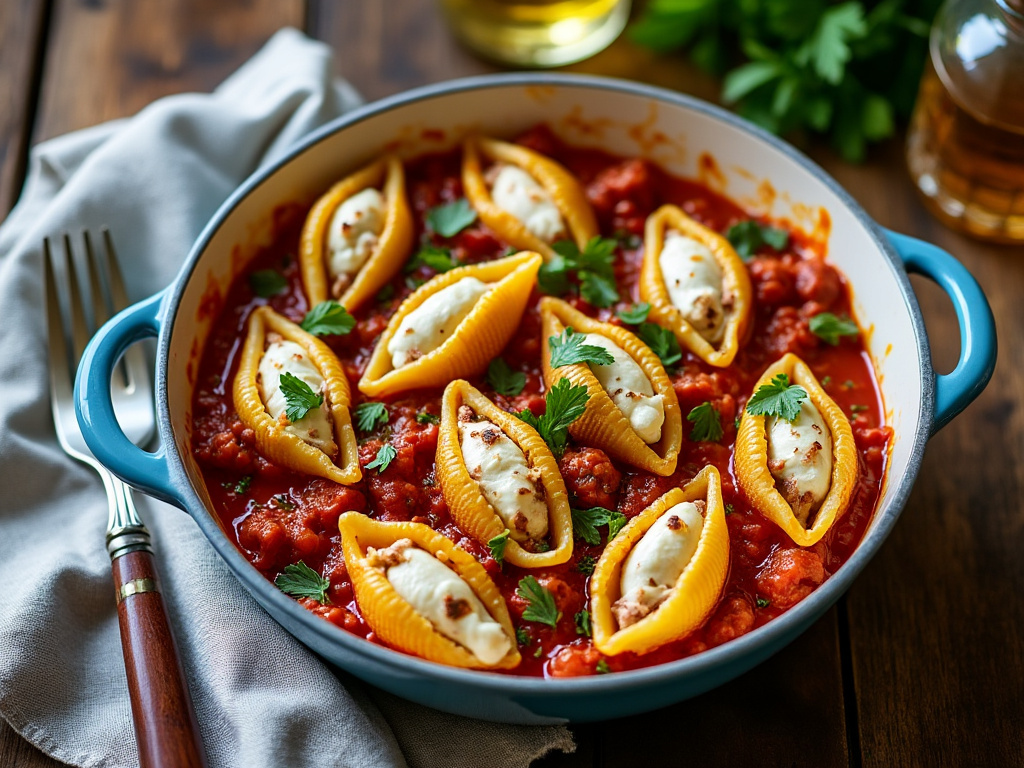
Baked Ricotta-Stuffed Shells with Spicy Sausage Ragù
Giant pasta shells stuffed with herbed ricotta, baked in a spicy Italian sausage ragù. A crowd-ready dinner that reheats beautifully.
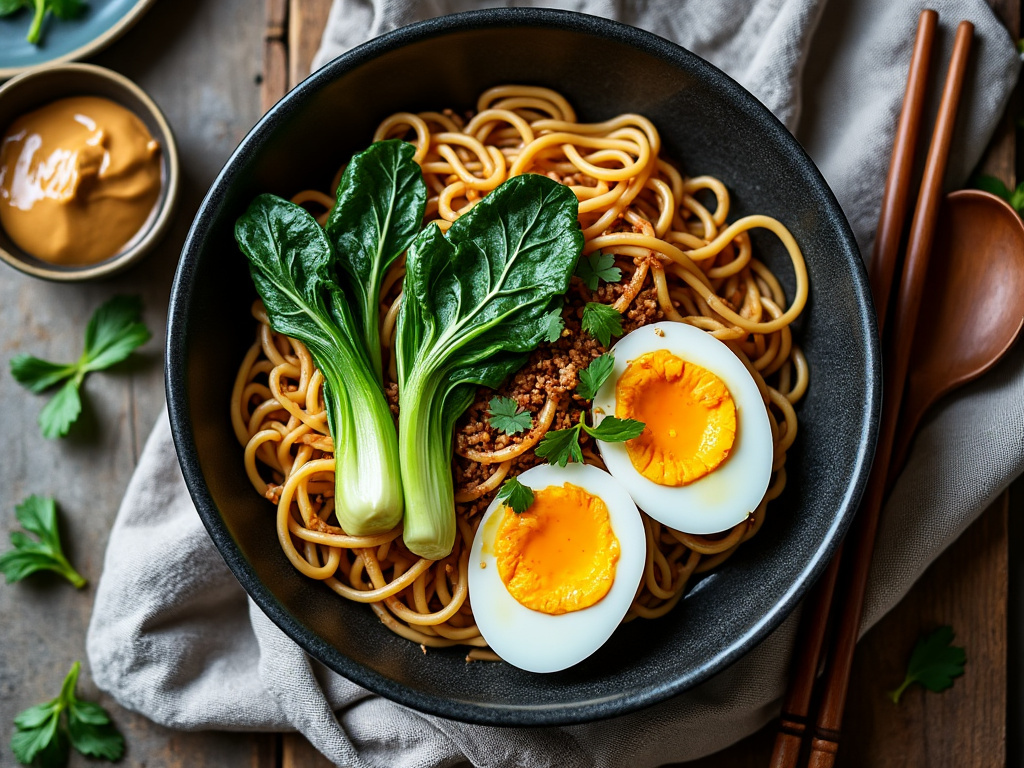
Spicy Peanut Noodles with Charred Bok Choy and Soft-Boiled Eggs
Bold, nutty peanut noodles with charred bok choy and jammy soft-boiled eggs. Ready in 45 minutes — weeknight-friendly and deeply satisfying.
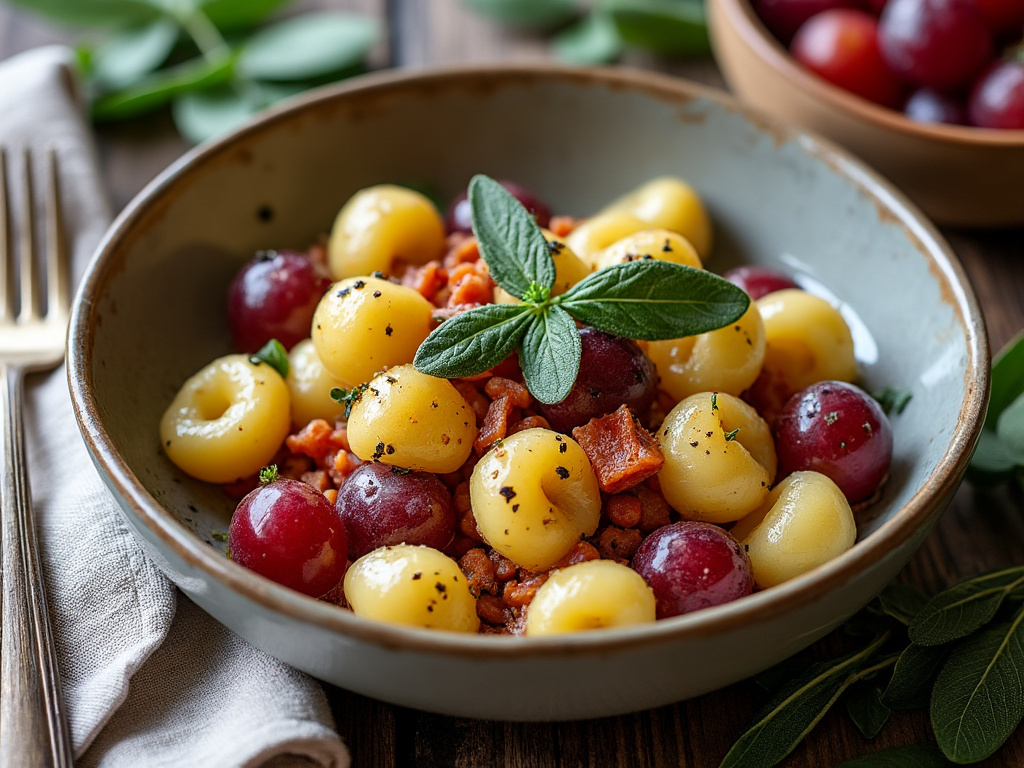
Brown Butter Gnocchi with Pancetta, Roasted Grapes, and Sage
Pan-seared gnocchi in brown butter with crispy pancetta, blistered roasted grapes, and fried sage. A 45-minute skillet dinner that actually delivers.