Spiced Red Lentil and Coconut Dahl with Crispy Curry Leaf Tadka
Silky red lentil dahl simmered with coconut milk and finished with a sizzling curry leaf tadka. Ready in 55 minutes, weeknight-friendly.
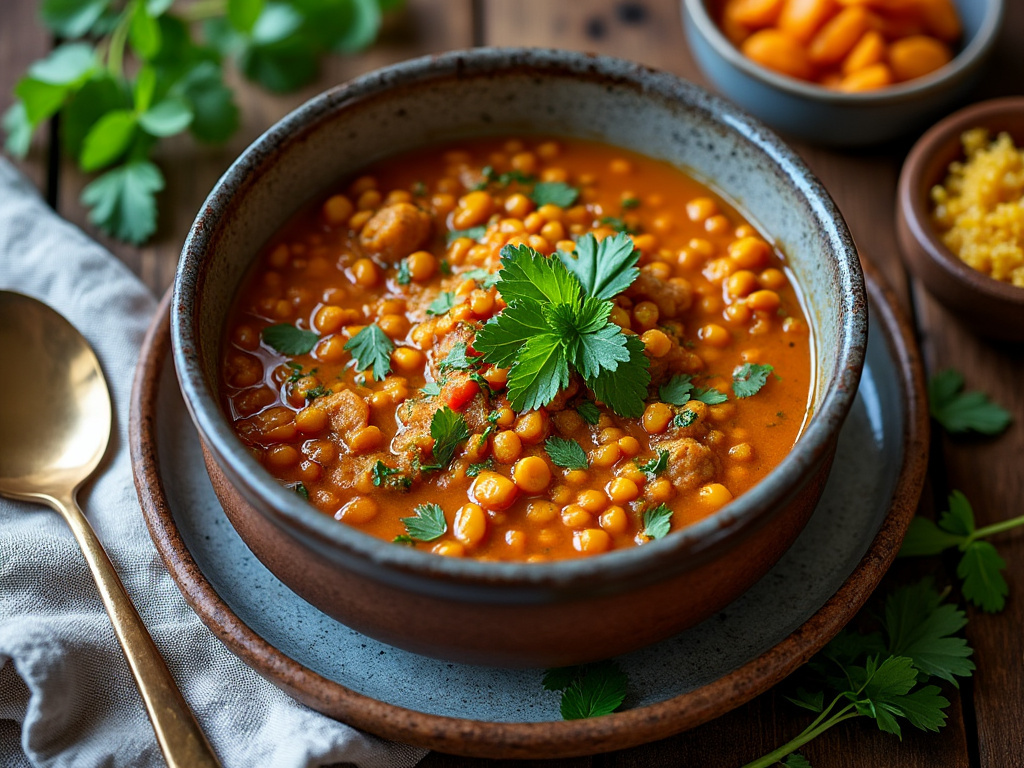
Red lentils dissolve into a thick, creamy base in under 40 minutes — no soaking, no overnight planning. That's the structural fact that makes dahl such a reliable weeknight dinner. This version leans into a South Indian flavor profile: mustard seeds, fresh curry leaves, and a fat pour of coconut milk keep it rich without being heavy. The tadka — hot oil bloomed with whole spices poured directly over the finished dahl — is the technique that separates a flat pot of lentils from something that smells like it took all afternoon.
Expect a texture somewhere between a thick soup and a loose stew — spoonable, not pourable. The coconut milk rounds out the heat from the chillies and adds a subtle sweetness that balances the earthy turmeric. This is a meal prep workhorse: it thickens as it sits and reheats beautifully. Serve it over basmati rice or with torn naan to soak up the pot. If the dahl tightens up too much during cooking, add warm water a splash at a time — never cold water, which shocks the lentils and muddies the texture.
Ingredients
- ▸ 1.5 cups red lentils
- ▸ 1 can (13.5 oz) full-fat coconut milk
- ▸ 2.5 cups vegetable broth
- ▸ 1 cup water
- ▸ 1 medium yellow onion, finely diced
- ▸ 4 garlic cloves, minced
- ▸ 1 tbsp fresh ginger, finely grated
- ▸ 2 medium Roma tomatoes, roughly chopped
- ▸ 1 tsp ground turmeric
- ▸ 1.5 tsp ground cumin
- ▸ 1 tsp ground coriander
- ▸ 0.5 tsp cayenne pepper
- ▸ 1 tsp Diamond Crystal kosher salt, plus more to taste
- ▸ 2 tbsp neutral oil (such as avocado or sunflower), for the base
- ▸ 1 tbsp fresh lemon juice
- ▸ 0.25 cup fresh cilantro, roughly chopped
- ▸ 3 tbsp coconut oil or ghee, for the tadka
- ▸ 1 tsp black mustard seeds
- ▸ 1 tsp cumin seeds
- ▸ 2 dried red chillies, de-seeded and broken in half
- ▸ 15 fresh curry leaves
- ▸ 3 garlic cloves, thinly sliced, for the tadka
- ▸ 0.5 tsp Aleppo pepper or mild chilli flakes, for finishing
🛒 Links may earn us a small commission at no cost to you.
Recommended Gear
🛒 We may earn a small commission at no extra cost to you. We only recommend gear we'd use ourselves.
Instructions
Prep
- 1. Rinse the red lentils in a fine-mesh strainer under cold running water, swishing them with your hand until the water runs nearly clear — about 45 seconds. This removes surface starch that would otherwise make the dahl gluey. Set aside to drain.
- 2. Dice the onion, mince the garlic, and grate the ginger. Roughly chop the tomatoes. Measure out all ground spices into a small bowl together so you can add them in one motion.
Build the Base
- 1. Heat 2 tbsp neutral oil in your Dutch oven over medium heat until shimmering, about 1 minute. Add the diced onion and cook, stirring occasionally, until soft and translucent with golden edges, 7–9 minutes — the onion should smell sweet and slightly caramelized, not sharp.
- 2. Add the minced garlic and grated ginger. Stir constantly for 60–90 seconds until fragrant and the raw edge is gone — you'll smell a warm, toasty shift. Don't let the garlic brown; if it's moving quickly, reduce the heat to medium-low.
- 3. Add the chopped tomatoes and cook, stirring and breaking them down with the spoon, until they collapse into a rough paste and most of the liquid has evaporated, 5–6 minutes. The mixture should look jammy and dark orange.
- 4. Add the bowl of ground spices (turmeric, cumin, coriander, cayenne) and the salt. Stir constantly for 60 seconds, coating the tomato mixture — the spices will smell toasted and fragrant, not raw. This step blooms the fat-soluble spice compounds before liquid is added.
Simmer
- 1. Add the drained lentils and stir to coat them in the spiced base. Pour in the vegetable broth, water, and coconut milk. Stir to combine, scraping any caramelized bits off the bottom of the pot.
- 2. Raise the heat to medium-high and bring to a gentle boil, then reduce to a low simmer. Cook uncovered, stirring every 5 minutes, for 25–30 minutes, until the lentils are completely dissolved and the dahl is thick enough that a spoon dragged across the surface leaves a trail for 2–3 seconds before filling in. The surface should bubble lazily, not vigorously — adjust heat as needed.
- 3. Stir in the lemon juice. Taste and adjust salt. Remove from heat and cover to keep warm while you make the tadka.
Make the Tadka
- 1. Heat the coconut oil or ghee in a small 1-quart saucepan over medium-high heat until shimmering and hot, about 1.5 minutes. Add the mustard seeds — they should pop and sputter almost immediately, within 10–15 seconds. If nothing happens for 30 seconds, the oil isn't hot enough; wait longer.
- 2. Once the mustard seeds are popping steadily, add the cumin seeds and dried chillies. Swirl the pan and cook for 20–30 seconds until the cumin seeds are golden and the chillies have darkened to deep red — the whole kitchen should smell smoky-spiced.
- 3. Add the sliced garlic. Stir continuously for 30–45 seconds until the garlic is golden at the edges but not brown — it turns bitter fast. Immediately add the fresh curry leaves (stand back — they will spit violently in the hot oil). Fry for 15 seconds until they crisp up and the sputtering subsides.
- 4. Pour the entire tadka — oil and all — directly over the dahl in the pot. It will sizzle loudly on contact. Stir gently to partially incorporate while leaving some of the aromatics visible on top. Scatter the Aleppo pepper and fresh cilantro over the surface and serve immediately from the pot.
Cook's Notes
- Rinse the lentils thoroughly — surface starch is the primary reason dahl turns gluey instead of creamy. Thirty seconds under the tap is not enough; rinse until the water is mostly clear.
- The tadka goes on at the very last second, right before the bowls hit the table. The sizzle and fragrance fade quickly once the hot oil hits the cooler dahl.
- If your curry leaves are fresh from the fridge, pat them dry with a paper towel before adding to the hot oil — excess moisture causes extreme spattering.
- For a smoother, more restaurant-style texture, use an immersion blender to partially blend the dahl — about 8–10 pulses — before adding the tadka. This creates a silkier base while leaving some texture.
- This recipe scales well: double everything except the salt, which you should add to taste incrementally when scaling up.
Pro Tips
- → The tadka oil temperature is critical — if the mustard seeds don't pop within 15 seconds of hitting the oil, the oil is too cool and your spices will steep rather than fry, producing a muted, oily result instead of crisp, bloomed aromatics. Pull the pan off heat and wait another minute before trying.
- → If the curry leaves are old or dry, they won't crisp — they'll turn leathery and slightly bitter. Fresh leaves should be bright green and smell citrusy when you tear one. Leaves more than 10 days old are past their prime for tadka.
- → Dahl catches and burns on the bottom easily in the final 10 minutes as it thickens — stir all the way down to the bottom of the pot every few minutes and lower the heat if you hear a crackling sound from below the simmer bubbles.
- → The lemon juice goes in off-heat or just as you remove the pot from the burner. Acid added earlier in cooking gets muted by the heat; added at the end, it brightens the whole pot and makes the spices taste sharper and more defined.
- → If the dahl tastes flat despite correct salt levels, it almost always means the spices weren't toasted long enough in step 4. A full 60 seconds of constant stirring over medium heat is needed to drive off the raw, powdery edge. A flat-tasting dahl can be partially rescued by making the tadka with an extra pinch of cumin seeds.
- → Coconut milk brands vary significantly in fat content and consistency. Chaokoh and Aroy-D are thicker and richer; Thai Kitchen is thinner. If using a thin coconut milk, reduce the added water from 1 cup to 1/2 cup to compensate and prevent a watery dahl.
What to Serve With This
Basmati rice is the obvious base, and it earns that status — the long-grain texture and clean flavor don't compete with the spiced dahl. Cook it with a cardamom pod and a bay leaf in the water for a subtle aromatic backdrop. Alternatively, charred naan (30 seconds directly over a gas flame, flipped once) gives you something to drag across the bowl.
For a vegetable side, roasted cauliflower with cumin and a squeeze of lime works well. The dry, caramelized edges of the cauliflower contrast the saucy dahl, and cumin echoes the spice profile without duplicating it. A simple cucumber and red onion salad dressed with rice vinegar and a pinch of salt cuts through the richness.
On the drinks side, a cold Kingfisher lager is the classic match — light, slightly bitter, and carbonated enough to reset the palate between bites. If you want wine, an off-dry German Riesling (Kabinett level) handles the spice well; the residual sugar cools the chilli heat and the acidity keeps each sip clean. For non-alcoholic, a mango lassi made with full-fat yogurt and a pinch of cardamom is the counterpoint the dahl needs — cool, creamy, and sweet against the heat.
Variations & Substitutions
To make this vegan (it already is, as written), verify your coconut milk has no added dairy — most canned brands like Thai Kitchen are clean. The recipe needs no other adjustments. For a higher-protein version, stir in one 15-oz can of drained chickpeas during the last 10 minutes of simmering; they absorb the sauce and add bite without altering the flavor.
For a smoky variation, swap 1 tsp of the ground cumin for 1 tsp smoked paprika and add one chipotle pepper in adobo sauce, finely minced, with the aromatics. This pulls the dahl in a loosely Mexican-spiced direction — untraditional but genuinely good. Skip the curry leaf tadka and finish with a drizzle of crema instead.
To scale up for meal prep or feeding a crowd, double every ingredient and use a 6-quart Dutch oven. The cook time increases by about 10 minutes to accommodate the larger volume of liquid. Make the tadka in two separate batches rather than one — a single tadka batch won't have enough oil to coat a doubled portion of dahl. Refrigerated leftovers keep for 5 days; the dahl thickens significantly in the fridge, so add 2–3 tbsp of water per serving when reheating on the stovetop.
Frequently Asked Questions
Can I use green or brown lentils instead of red? ▼
You can, but the texture will be fundamentally different. Green and brown lentils hold their shape after cooking and won't dissolve into the creamy, thick consistency this recipe is designed around. If you use them, expect a more chunky, soup-like result. Increase the simmer time to 35–45 minutes and add an extra 1/2 cup of water.
Where do I find fresh curry leaves? ▼
Most Indian grocery stores carry fresh curry leaves in the produce or refrigerated section. Some larger Asian supermarkets stock them as well. Fresh is strongly preferred — dried curry leaves lose almost all of their citrusy, aromatic punch. If you genuinely can't find fresh, omit them entirely rather than using dried; the dahl is still good without them.
Can I make this ahead of time? ▼
Yes, and it actually improves overnight as the spices continue to bloom. Make the dahl base up to 3 days ahead and refrigerate. Store the tadka separately in a small jar at room temperature and reheat it in the pan right before serving — pouring a day-old cold tadka over reheated dahl loses the dramatic sizzle and the fresh-bloomed aroma that makes it worth the step.
Can I freeze dahl? ▼
Dahl freezes well for up to 3 months. Portion it into airtight containers and freeze without the tadka. Thaw overnight in the fridge, reheat in a saucepan over medium-low with a splash of water, and make a fresh tadka when you're ready to serve. The coconut milk may separate slightly after freezing but will re-emulsify with gentle stirring as it heats.
What if my dahl is too thin? ▼
Continue simmering uncovered for 5–10 more minutes, stirring frequently to prevent sticking on the bottom. Red lentils thicken quickly once the extra liquid cooks off. If it's drastically watery, it likely means the lentils weren't rinsed thoroughly enough and absorbed excess starch water, or the heat was too low and the lentils didn't fully break down.
What if my dahl is too thick and sticking to the pot? ▼
Add warm water, 1/4 cup at a time, stirring between each addition. Never add cold water directly to a hot pot of lentils — the temperature shock makes them gluey. Reduce the heat to low and keep a lid partially on if you're not serving immediately to slow further thickening.
How spicy is this recipe? ▼
At medium heat — two dried red chillies de-seeded — this is warm but not aggressive, around a 4 out of 10 for most palates. To tone it down for kids or spice-sensitive eaters, use one chilli and keep the seeds out. To push the heat up, add a third chilli or stir in 1/4 tsp cayenne with the ground spices.
Can I use lite coconut milk to reduce calories? ▼
Yes, lite coconut milk works but produces a thinner, less rich dahl. The fat in full-fat coconut milk carries fat-soluble flavor compounds from the spices, so you'll notice a flatter spice profile as well as a lighter body. If you use lite, add 1 tbsp of coconut cream stirred in at the end to partially compensate for the missing richness.
Do I need a specific pan for the tadka? ▼
A small, heavy-bottomed saucepan or a traditional tadka pan (a small steel vessel with a long handle, sold at Indian grocery stores) works best — the small surface area lets you heat a small quantity of oil quickly and evenly without burning. A 1-quart saucepan works as a substitute. Avoid nonstick for the tadka; the high heat required can damage the coating.
Enjoyed this recipe?
Daily Home Cookery is self-funded. If something you cooked here made dinner a little better, a coffee keeps the kitchen running.
☕ Buy me a coffeeYou Might Also Like
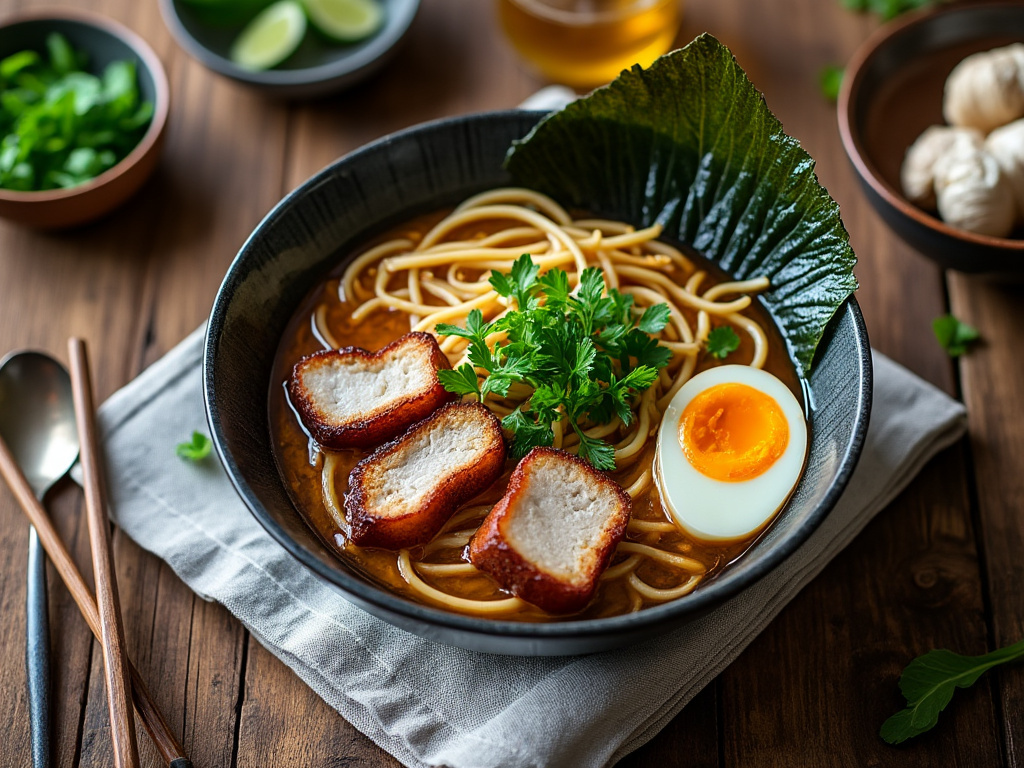
Miso Caramel Pork Belly Ramen with Soft-Boiled Eggs and Scallion Oil
Rich miso broth, lacquered caramel pork belly, and scallion oil come together in this deeply satisfying homemade ramen. Weeknight-achievable in 2 hours.
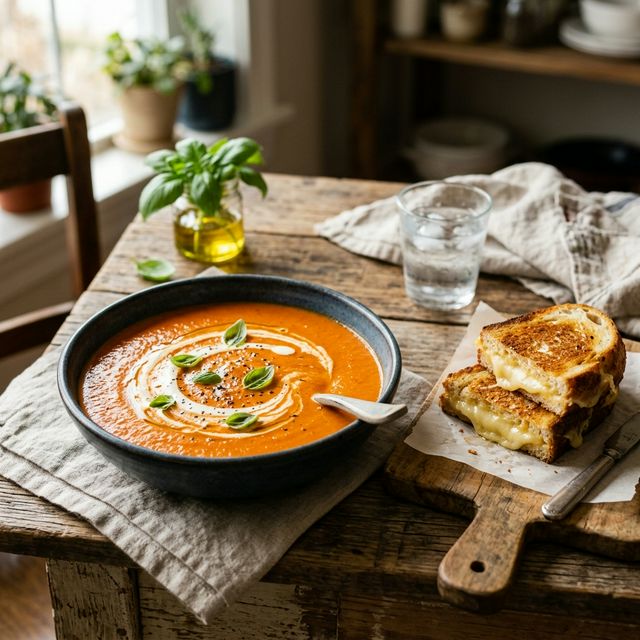
Roasted Tomato Basil Soup
Roma tomatoes roasted at 425°F until charred, then blended with cream and fresh basil. Rich, silky, and ready in 40 minutes.
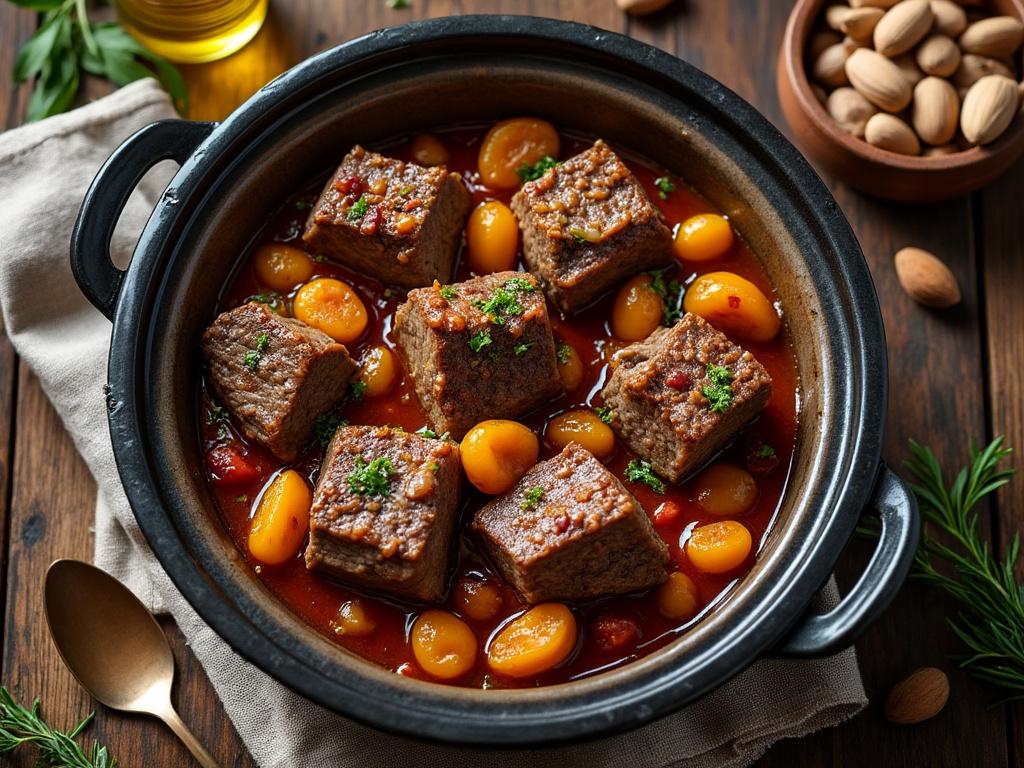
Moroccan Spiced Lamb Tagine with Apricots and Almonds
Braised lamb shoulder with saffron, dried apricots, cumin, and cinnamon — a make-ahead tagine with deep flavor and a sauce worth soaking up.